
Ce-Psz Powder is not one universal material. It is a family of ceria-stabilized zirconia powders designed for demanding ceramic applications. Buyers may encounter different grades for dental ceramics, oxygen sensors, thermal barriers, structural parts, and advanced grinding media. The differences can appear small on a datasheet. They are not always small in production.
As zirconia researcher Michel Piconi has noted, “The final properties depend strongly on composition, microstructure, and processing.” This principle matters when comparing powder suppliers across regions. A higher ceria content can improve phase stability, while a finer particle size may support smoother sintering. Yet, fine powder can also increase handling difficulty and agglomeration. That trade-off is easy to overlook.
This guide examines ten common Ce-Psz Powder types and their practical uses. It considers ceria content, purity, particle size, calcination level, granulation, and surface condition. It also connects each grade with realistic buyer needs, such as pressing, injection molding, coating, or laboratory development. Product names vary between manufacturers, so technical certificates deserve more attention than marketing labels.
Look closely at the details. Bulk density, moisture, zirconia phase composition, and sintering data can change purchasing results. Supplier experience matters too, especially when shipping powder across climates and long distances. Some recommendations may remain uncertain without application testing. That is an unavoidable weakness.
A small trial batch is wiser than a confident assumption. This overview aims to support informed comparison, not replace validation, quality audits, or process-specific engineering judgment.
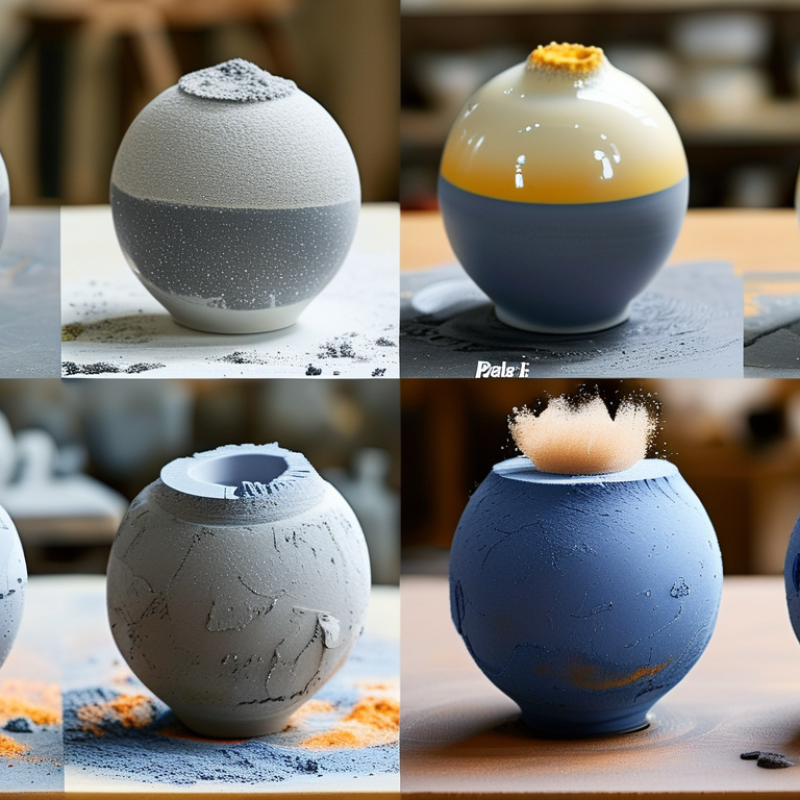
Ce-PSZ powder is ceria-stabilized zirconia used to produce strong, damage-tolerant ceramic components. Its composition helps retain tetragonal zirconia phases at room temperature. Under stress, these phases can transform and absorb crack energy. This mechanism improves fracture toughness and resistance to sudden failure. Powder types usually differ in ceria content, purity, particle size, and granule structure. These differences affect pressing, sintering, density, and final performance.
For global buyers, common uses include pump seals, valve parts, grinding media, medical components, and wear-resistant tools. Ce-PSZ also offers good thermal-shock resistance and chemical stability. Its relatively low thermal conductivity can support selected thermal applications. However, performance depends on processing conditions. Poor granule flow may create hidden pores. Excessive firing can reduce strength. A higher ceria level is not automatically better. It may improve phase stability but reduce transformation toughening. This balance needs testing.
Tips: Request a technical datasheet, particle-size distribution, powder flow data, and impurity limits. Ask for sintering curves and representative density results. Compare test samples under your actual load, temperature, and chemical environment. A small trial batch is safer than relying on catalog values. Check packaging carefully, because moisture and contamination can change powder behavior. Some specifications appear precise, but they may not predict production results.
Ce-PSZ powders are classified by composition first, then by measurable performance. The main family contains zirconia stabilized with about 8–12 mol% ceria. Lower-ceria grades usually retain more transformable tetragonal phase. They can deliver higher fracture toughness. Higher-ceria grades generally offer better thermal stability, but toughness may decrease. This balance is not universal.
The ten practical types include 8, 10, and 12 mol% Ce-PSZ; high-purity grades; nano-scale powders; submicron powders; spray-dried granules; press-ready granules; high-toughness grades; thermal-shock grades; alumina-modified grades; and wear-focused grades. Their uses range from ceramic cutting parts and pump components to kiln furniture, dental frameworks, and precision seals. Particle size matters. A 0.2–0.5 micrometre powder can support dense, smooth bodies, while larger granules improve pressing flow. The final result depends strongly on sintering control.
Industry data also gives useful context. The USGS Mineral Commodity Summaries 2025 reported roughly 1.5 million metric tons of global zirconium mineral concentrate production in 2024. Grand View Research has projected continued growth in the global zirconia market, driven by technical ceramics and healthcare. These reports cover broader zirconia markets, not Ce-PSZ alone. That distinction matters.
Tips: Ask for CeO2 content, phase composition, BET surface area, particle-size distribution, tap density, and sintered density. Request batch data. A supplier’s “high toughness” claim is incomplete without test conditions, specimen direction, and standard method. Even experienced buyers can overvalue powder fineness. It may reduce flow and complicate pressing.
How ceria-stabilized zirconia powders are classified by representative CeO₂ composition and typical application focus.
Ce-PSZ powder grades are commonly differentiated by ceria content, phase stability, toughness, strength, sintering behavior, and intended application. Lower-to-mid ceria compositions are generally selected for structural toughness, while higher ceria compositions are used when phase stability and thermal or ionic performance are prioritized. Composition ranges may vary by supplier and processing route.
Ce-PSZ powder is ceria-stabilized zirconia, valued for toughness, thermal stability, and resistance to repeated stress. Global buyers should compare composition, particle size, purity, and forming method. Typical options include fine powder for laboratory ceramics, submicron powder for dense parts, high-purity powder for electrical components, low-silica powder for wear applications, spray-dried granules for pressing, flowable granules for automated molding, injection-molding powder for complex shapes, coating-grade powder for thermal protection, dental-grade powder for prosthetic components, and coarse powder for heavy-duty structural ceramics. Each type supports a different production requirement.
Fine and submicron grades suit seals, pump parts, valves, and cutting components. High-purity grades support sensors and insulating assemblies. Low-silica grades help maintain strength at elevated temperatures. Spray-dried and flowable granules improve die filling and reduce dust during pressing. Injection-molding grades produce small, detailed parts, although binder removal requires careful control. Coating grades protect metal surfaces from heat and oxidation. Dental grades require strict consistency and documented testing. Coarse grades fit impact-resistant liners and industrial wear plates. These uses overlap. A perfect match is rare.
Tips: Request a certificate showing ceria content, impurity levels, moisture, particle distribution, and batch consistency. Check whether the powder is calcined, granulated, or ready for direct forming. Ask for application data, not only a technical datasheet. Pilot testing matters because pressing pressure, sintering temperature, and part geometry can change final performance. I would not select powder from particle size alone. Its flow behavior may still disappoint.
Ce-PSZ powder is not one uniform product. Global buyers may compare high-purity grades, fine-particle grades, spray-dried granules, low-sodium grades, and powders designed for pressing or casting. Each type serves different uses, including wear-resistant ceramics, structural components, dental parts, and precision engineering products. The key question is not simply, “Which powder is cheapest?”
Check the ceria content, zirconia purity, phase composition, particle-size distribution, BET surface area, moisture, and trace impurities. A reliable technical data sheet should show measured values, not broad promises. Ask for the D50 value and agglomerate range. A powder may look fine under basic inspection but still press poorly. Request a recent certificate of analysis, batch number, production date, and storage guidance. Small details matter.
Supplier evaluation needs practical evidence. Review sample consistency, packaging strength, export experience, quality-control procedures, and batch traceability. Compare test samples using your own milling, forming, and sintering conditions. Do not rely only on a polished sample report. A low price can hide unstable calcination or excessive agglomeration. I have seen specifications that looked excellent but failed during scale-up. That possibility deserves attention. Also check response speed and technical communication; unclear answers often predict later problems. No certificate replaces a fired test.
| No. | Ce PSZ Powder Type | Typical CeO₂ Content (mol%) |
Typical Powder D50 (µm) |
Typical BET (m²/g) |
Typical Phase or Form | Main Uses | Critical Quality Checks | Buyer Comparison Focus |
|---|---|---|---|---|---|---|---|---|
| 1 | General-purpose Ce-TZP powder | 10–16 | 0.2–0.8 | 5–20 | Predominantly tetragonal after sintering; spray-dried or granulated feedstock may also be available | Wear parts, valve seats, pump components, structural ceramic prototypes | CeO₂/ZrO₂ ratio, phase composition, agglomeration, moisture, sintered density | Balance toughness, strength, shrinkage, and total delivered cost |
| 2 | High-toughness Ce-TZP powder | 12–16 | 0.1–0.5 | 8–25 | Fine, highly dispersible tetragonal zirconia precursor designed for transformation toughening | Impact-resistant components, cutting tools, wear liners, mechanical parts | Particle-size distribution, green density, fracture toughness, tetragonal stability | Check toughness and aging behavior rather than comparing price per kilogram alone |
| 3 | Fine-grade Ce PSZ nanopowder | 8–12 | 0.03–0.15 | 15–60 | Nanocrystalline zirconia-based powder; often supplied with dispersant or surface-treatment guidance | Thin coatings, advanced composites, fine-feature injection molding, research formulations | Primary crystallite size, hard agglomerates, slurry stability, impurity profile | Request both primary particle data and laser-diffraction agglomerate data |
| 4 | Coarse-grade Ce PSZ granulated powder | 10–14 | 20–100 | 3–12 | Engineered granules made from finer primary particles for pressing or high-solids forming | Uniaxial pressing, die compaction, large wear plates, industrial ceramic shapes | Granule flowability, compressibility, binder content, granule strength, burnout behavior | Match granule size and binder system to the buyer's press and mold design |
| 5 | High-purity Ce PSZ powder | 10–16 | 0.1–0.6 | 8–30 | Low-contamination zirconia-ceria powder with controlled metallic and silica impurities | Electrical insulation parts, precision ceramics, laboratory components, high-reliability products | Fe, Si, Al, Na, Ca, Mg, chloride/sulfate residues, loss on ignition | Compare ICP-OES or equivalent impurity reports using the same detection limits |
| 6 | Press-ready Ce PSZ powder | 8–14 | 30–120 | 3–10 | Spray-dried formulation containing a controlled organic binder and, where required, lubricant | High-volume pressing of discs, rings, sleeves, seals, and wear components | Moisture, bulk density, tap density, flow rate, binder distribution, compact strength | Request forming-pressure curves and recommended debinding schedules |
| 7 | CIP-grade Ce PSZ powder | 10–16 | 0.1–0.7 | 6–25 | Low-agglomeration powder optimized for aqueous or nonaqueous slurry preparation | Complex-shaped parts, long components, laboratory isostatic pressing, near-net-shape forming | Slurry viscosity, sedimentation, solids loading, de-airing response, green uniformity | Evaluate slurry behavior with the buyer's dispersant and equipment, not only dry-powder data |
| 8 | Injection-molding-grade Ce PSZ powder | 8–14 | 0.1–0.5 | 8–25 | Fine powder compounded with a removable thermoplastic or wax-based binder system | Small precision parts, gears, miniature housings, laboratory and fluid-control components | Feedstock homogeneity, rheology, binder removal, dimensional control, warpage | Confirm compatibility with the buyer's screw, mold temperature, and debinding process |
| 9 | Coating and thermal-spray-grade Ce PSZ powder | 8–12 | 15–90 | 2–12 | Flowable, classified granules engineered for plasma spray or related coating processes | Thermal-barrier and wear-resistant coatings, thermal processing equipment, specialized surfaces | Particle morphology, flowability, apparent density, phase stability, coating porosity | Compare spray yield, coating adhesion, porosity, thermal cycling, and powder recovery rate |
| 10 | Ce PSZ powder for advanced composite formulations | 8–16 | 0.05–1.0 | 5–40 | Unmodified or surface-treated powder designed for blending with alumina, polymers, metals, or other ceramic matrices | Toughened ceramics, catalytic supports, polishing media, composite research and development | Surface chemistry, dispersion, interfacial compatibility, phase transformation, thermal expansion | Run a formulation trial and compare final composite performance rather than powder specifications only |
Choosing Ce-PSZ powder starts with the forming process, not the product label. Start with the process. Fine, high-purity powder suits laboratory ceramics, dental components, and small precision parts. Spray-dried granules support pressing larger components, including wear plates, pump parts, and sealing rings. Their flowability helps reduce filling differences inside the die.
Particle shape matters. Submicron powder can improve sintering and surface quality, but it may require careful dispersion control. Coarser granules are easier to press, although they can leave internal pores when binder removal is poorly managed. For thermal shock applications, buyers should examine ceria content, particle-size distribution, calcination history, and sintered toughness. These details matter more than a simple “high performance” description.
Different uses demand different priorities. High-purity Ce-PSZ may fit medical or analytical components where contamination must remain low. Tougher grades can serve impact-prone fixtures and industrial wear parts. Powders designed for injection molding need controlled granulation and binder compatibility. Ceria concentration also affects phase stability, machinability, and final strength. Testing is essential. A common mistake is assuming higher purity always produces better performance. Production trials often show otherwise. The choice is rarely perfect on the first trial, especially when humidity, pressing pressure, and furnace atmosphere change. Buyers should request a technical data sheet, test samples, and sintering guidance before placing a large international order.
Ce-PSZ is ceria-stabilized zirconia powder for strong ceramic components. It can retain tetragonal phases at room temperature. Under stress, these phases absorb crack energy. This improves toughness and resistance to sudden failure.
Lower ceria levels often retain more transformable tetragonal phase. This can increase fracture toughness. Higher ceria levels may improve thermal stability. However, toughness can decrease. More ceria is not always better.
Spray-dried or press-ready granules usually provide better flow. They can fill a die more evenly. This suits wear plates, pump parts, and sealing rings. Poor flow may create hidden pores.
Fine powders can support dense, smooth ceramic bodies. A particle size around 0.2–0.5 micrometres may improve sintering. They suit small precision parts and laboratory ceramics. But dispersion control becomes more demanding.
Request ceria content, phase composition, and impurity limits. Also check particle-size distribution, surface area, and tap density. Ask for flow data and representative sintered density. Request batch-specific results. Catalog numbers can mislead.
Examine ceria content, particle-size distribution, and calcination history. Check sintered toughness and thermal-shock test conditions. Thermal stability matters, but it is only one factor. The best grade depends on the furnace and load.
No. High purity can reduce contamination in medical or analytical components. However, forming behavior and sintering control also affect final performance. A very fine, pure powder may flow poorly. That can create pressing defects. Purity alone is insufficient.
Uneven granule flow can leave internal pores. Poor binder removal may damage larger pressed parts. Excessive firing can reduce strength. Humidity, pressure, and furnace atmosphere also matter. The first trial may fail.
Request technical documents, test samples, and sintering guidance. Test samples under the actual load, temperature, and chemical environment. Compare density, toughness, shrinkage, and surface quality. Inspect packaging for moisture or contamination. A small trial batch is safer.
Ce-Psz Powder is a ceria-stabilized zirconia material valued for its strength, fracture toughness, thermal stability, and resistance to wear and chemical corrosion. Its performance depends on factors such as ceria content, particle size, purity, phase composition, surface treatment, and sintering behavior. These characteristics allow different Ce-PSZ powder grades to serve varied industrial needs, including structural ceramics, wear-resistant components, precision parts, dental materials, thermal barrier applications, and advanced engineering products.
For global buyers, comparing Ce-Psz Powder requires more than reviewing price alone. Buyers should examine technical specifications, batch consistency, powder flowability, moisture control, packaging, quality documentation, production capacity, and supplier reliability. The best selection should match the powder’s composition and performance with the intended forming method, sintering temperature, mechanical demands, and operating environment. A clear understanding of application requirements helps buyers choose a suitable grade, reduce processing risks, improve product durability, and achieve stable results across international supply chains.
