
Choosing among China’s top 10 Cordierite Ceramic manufacturers requires more than comparing product prices. Performance depends on raw-material purity, forming accuracy, firing control, and final inspection. These details influence thermal shock resistance, dimensional stability, porosity, and service life.
A useful industry principle comes from ceramic scientist W. David Kingery: “Processing determines properties.” This short statement remains highly relevant. Two suppliers may offer similar cordierite compositions, yet produce very different results. One may deliver clean honeycomb channels and even wall thickness. Another may show warping after repeated heating. Small differences matter.
This guide examines ten Chinese manufacturers through practical purchasing criteria. It considers production experience, technical documentation, laboratory capacity, customization, export reliability, and quality consistency. It also looks beyond polished websites. Factory audits, sample testing, inspection records, and customer feedback deserve attention.
The comparison is not absolute. Rankings can change with application, batch size, and required tolerances. A supplier suited to kiln furniture may not fit catalytic substrates or electrical insulation. That limitation is worth admitting.
For buyers, the best manufacturer is not always the largest. It is the company that can prove stable performance under real operating conditions. Ask for thermal shock data. Request dimensional reports. Examine the surface under strong light. These simple checks can reveal more than a sales presentation.
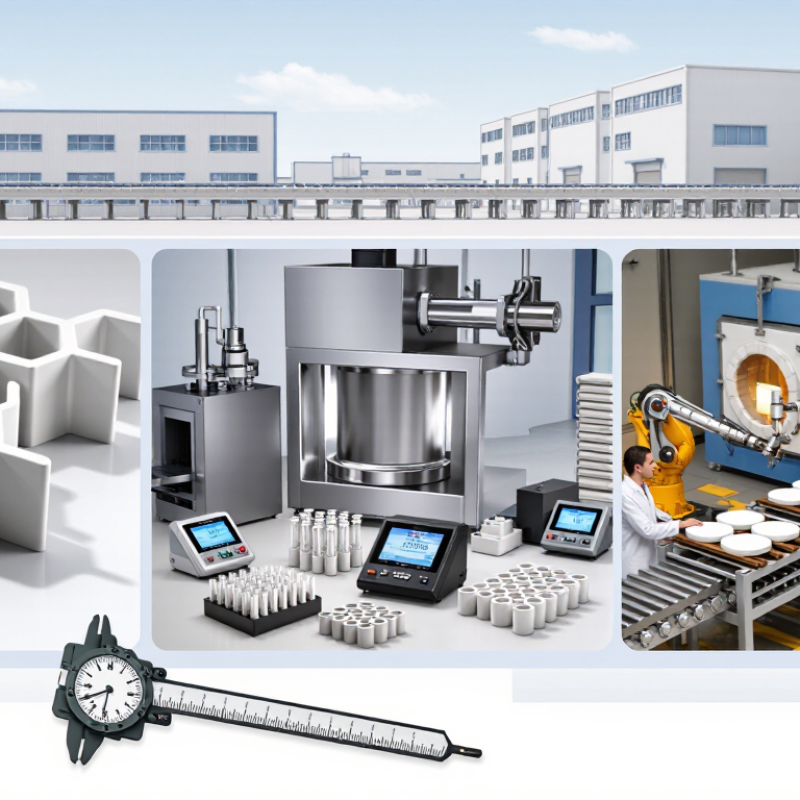
China Top 10 Cordierite Ceramic Manufacturers?
What Is Cordierite Ceramic and Where Is It Used?
Cordierite ceramic is a magnesium-aluminosilicate material with unusually low thermal expansion. Its typical composition contains magnesium oxide, alumina, and silica. This chemistry helps the ceramic resist cracking during rapid temperature changes. It also provides useful electrical insulation and stable performance at elevated temperatures.
It is widely formed into honeycomb structures. Thin channels increase surface area while keeping exhaust flow resistance low. These substrates support catalytic coatings in gasoline and diesel exhaust systems. OICA reported 93.5 million motor vehicles produced worldwide in 2023. That production volume supports continued demand for heat-resistant ceramic components. However, cordierite is not automatically suitable for every exhaust environment. Temperature peaks, vibration, coating weight, and pore structure must be tested together.
Cordierite also appears in kiln furniture, furnace supports, burner components, and laboratory ware. Its low expansion reduces warping during repeated heating and cooling. A 2024 advanced ceramics market analysis by Fortune Business Insights projects steady industry growth through 2032, with demand linked to automotive, energy, and industrial processing applications. The estimate covers advanced ceramics broadly, not cordierite alone. That distinction matters. Manufacturing quality depends on powder purity, extrusion control, drying, and firing accuracy. Small channel defects can reduce filtration efficiency. Some suppliers publish impressive specifications, but independent thermal-shock and strength testing remains essential.
Evaluating cordierite ceramic manufacturers in China requires more than comparing catalog prices. Start with process evidence. Request raw-material specifications, forming records, firing curves, and batch-level inspection reports. Key data should include porosity, water absorption, flexural strength, dielectric performance, thermal expansion, and thermal-shock resistance. Cordierite’s low expansion is valuable, but unstable firing can create hidden cracks. The International Energy Agency reports that China remains the world’s largest manufacturing base, so production capacity alone does not prove technical control.
Independent testing matters. Ask whether laboratories follow ISO/IEC 17025 procedures and whether the factory operates an ISO 9001 quality system. MarketsandMarkets’ advanced ceramics research identifies electronics, automotive, and industrial applications as major demand areas. These sectors require repeatable dimensions, not attractive samples. A reliable supplier should provide capability data, such as Cp and Cpk results, rather than only a pass-rate percentage. Check inspection equipment physically. A calibrated thermal-shock furnace and digital dimensional gauges reveal more than polished presentations.
Factory audits should examine kiln loading, moisture control, worker training, and traceability labels. In practical evaluations, I would test three separate production lots, not one sample. Small differences may appear after repeated heating and cooling. No manufacturer is perfect. That is acceptable. However, a supplier that hides warping or rejects deserves caution. One weakness remains easy to overlook: long-term service data may be limited for customized shapes. Buyers should record this uncertainty and require pilot testing before large orders.
This chart presents a practical 100-point evaluation framework for comparing cordierite ceramic manufacturers. The highest weights are assigned to technical compliance and thermal-shock performance because cordierite ceramics are commonly selected for their low thermal expansion and resistance to rapid temperature changes. The framework does not rank individual companies or brands.
China’s Top 10 Cordierite Ceramic Manufacturers
China’s top 10 cordierite ceramic manufacturers are best compared through measurable production evidence. Useful criteria include thermal-shock resistance, porosity control, dimensional accuracy, and export experience. Cordierite is widely used in kiln furniture, catalytic substrates, electrical insulation, and heat-resistant components. Fortune Business Insights valued the global technical ceramics market at about US$10.28 billion in 2023. Its forecast indicates continued growth through 2032. Cordierite remains a specialized segment, so market rankings can vary.
A reliable supplier should provide test data, not only attractive product images. Check thermal expansion, water absorption, flexural strength, and maximum service temperature. In practical factory audits, inspect kiln uniformity and edge damage on finished plates. A small crack near a corner may become a serious failure during repeated heating. ISO 9001 certification supports process control, but it does not replace product testing. Independent laboratory verification is still necessary. Some published rankings also rely on company profiles rather than audited shipment data. That weakness deserves attention.
Tips: Request three recent test reports and one batch sample. Compare values under the same testing standard. Ask about mold replacement intervals, packaging protection, and complaint handling. According to Grand View Research, advanced ceramics demand is supported by energy, electronics, and industrial applications. However, cost-only purchasing can hide inconsistent density. The cheapest quotation may become expensive after breakage, delays, and rework.
The table below presents anonymized manufacturer profiles based on common cordierite ceramic product capabilities in China. Technical values are representative ranges and may vary by material grade, design, and production process.
| Rank | Anonymous Manufacturer Profile | Main Product Forms | Typical Service Temperature | Typical Thermal Expansion (20–800°C) |
Typical Open Porosity | Common Applications | Common Production Method |
|---|---|---|---|---|---|---|---|
| 01 | Profile A — High-volume technical ceramics producer | Kiln furniture, setter plates, saggers | 1,200–1,300°C | Approximately 2.0–4.0 × 10⁻⁶/K | 15–30% | Ceramic firing, powder processing, laboratory furnaces | Pressing, extrusion, and controlled sintering |
| 02 | Profile B — Custom refractory component specialist | Tubes, rings, plates, custom supports | 1,150–1,280°C | Approximately 1.5–3.5 × 10⁻⁶/K | 12–25% | Heat-treatment equipment and thermal insulation assemblies | Isostatic pressing and precision machining |
| 03 | Profile C — Honeycomb substrate manufacturer | Honeycomb blocks and catalyst substrates | 900–1,200°C | Approximately 1.0–3.0 × 10⁻⁶/K | 35–55% | Automotive exhaust treatment and industrial emissions control | Precision extrusion and high-temperature firing |
| 04 | Profile D — Electrical and heating-component supplier | Insulating tubes, terminal blocks, heater supports | 1,000–1,250°C | Approximately 2.0–4.5 × 10⁻⁶/K | 10–25% | Industrial heaters, electrical insulation, and temperature sensors | Dry pressing, extrusion, and finish grinding |
| 05 | Profile E — Laboratory and analytical ware producer | Crucibles, boats, trays, and sample holders | 1,100–1,300°C | Approximately 1.8–4.0 × 10⁻⁶/K | 8–20% | Materials testing, laboratory furnaces, and chemical analysis | Slip casting, pressing, and precision finishing |
| 06 | Profile F — Industrial kiln furniture supplier | Beams, posts, shelves, and burner components | 1,200–1,350°C | Approximately 2.0–5.0 × 10⁻⁶/K | 18–32% | Tableware, sanitaryware, tile, and advanced ceramic kilns | Extrusion, casting, and batch sintering |
| 07 | Profile G — Precision-machined ceramic component producer | Gaskets, spacers, washers, and precision rings | 1,000–1,250°C | Approximately 1.5–4.0 × 10⁻⁶/K | 5–18% | Vacuum equipment, semiconductor tools, and thermal systems | Near-net shaping followed by diamond machining |
| 08 | Profile H — Porous cordierite filter manufacturer | Wall-flow filters and porous filter elements | 900–1,150°C | Approximately 0.8–2.5 × 10⁻⁶/K | 45–65% | Diesel particulate filtration and industrial gas cleaning | Extrusion with controlled pore-forming additives |
| 09 | Profile I — Research-grade custom ceramics supplier | Prototype parts, furnace fixtures, and special shapes | 1,100–1,300°C | Approximately 1.5–4.0 × 10⁻⁶/K | 8–28% | Universities, R&D laboratories, and pilot production lines | CNC forming, slip casting, and small-batch sintering |
| 10 | Profile J — High-temperature household appliance component supplier | Grills, supports, spacers, and burner plates | 900–1,200°C | Approximately 2.0–5.0 × 10⁻⁶/K | 12–30% | Gas appliances, electric heating systems, and cooking equipment | Press forming, glazing where required, and kiln firing |
Note: Cordierite ceramics are valued for low thermal expansion, thermal-shock resistance, and good dimensional stability. Final specifications should be confirmed through technical datasheets, drawings, samples, and inspection reports.
China’s leading cordierite ceramic manufacturers serve kiln, automotive, electrical, and laboratory applications. Their product ranges include kiln shelves, setter plates, furnace tubes, honeycomb substrates, catalyst carriers, and custom insulating parts. Grand View Research estimates that the global advanced ceramics market will continue growing strongly through 2030, supported by thermal, electrical, and environmental applications. Demand is practical, not cosmetic.
Manufacturing capability separates serious suppliers from simple traders. Strong producers usually operate controlled powder preparation, precision pressing, extrusion, CNC machining, and high-temperature sintering. Some provide cordierite products with thermal expansion near 2–4 × 10⁻⁶/K, depending on formulation and testing method. MarketsandMarkets identifies thermal management and industrial processing as important advanced-ceramic growth areas. However, reported figures vary by market definition. Buyers should ask for batch-level data.
Quality evidence should include dimensional inspection, bulk density, water absorption, thermal-shock testing, and chemical-resistance results. ASTM C20 can support apparent porosity and absorption testing, while ISO 9001 indicates a documented quality system, not perfect product quality. For automotive or electrical projects, traceability and process capability deserve closer review. A factory tour should show clean powder storage, calibrated furnaces, and retained samples. Ask for failure records too. Few suppliers volunteer them. That omission deserves reflection. A lower quoted price may hide wider tolerances, uneven firing, or inconsistent thermal performance. Reliable selection depends on verified samples, third-party testing, and clear acceptance criteria.
Choosing among China’s top 10 cordierite ceramic manufacturers requires more than comparing prices. Supplier ranking lists rarely show process stability, mold accuracy, or firing discipline. Grand View Research reported that the global advanced ceramics market reached about USD 11.8 billion in 2022. This growth increases supplier choices, but it also makes technical screening more important.
Ask for recent test data on thermal expansion, porosity, flexural strength, and thermal shock resistance. Cordierite parts may look identical, yet small density differences can cause cracking after repeated heating.
Request samples from the same production route, not laboratory prototypes. Check whether the factory controls powder preparation, forming pressure, kiln temperature, and final inspection.
ISO 9001 certification is useful, but it does not replace process evidence. A supplier should also explain its measurement equipment and calibration records.
Tips:
Compare at least three samples under identical conditions. Review a third-party report when the application is critical. Confirm dimensional tolerance with a signed drawing.
Ask for batch traceability, packaging details, and a clear replacement policy. A factory visit can reveal dusty storage areas or manual inspection gaps. These details matter more than polished brochures.
Do not accept vague claims such as “high thermal resistance.” Request numerical limits and test methods.
MarketsandMarkets projects continued growth in advanced ceramics through this decade, but market reports cannot predict one supplier’s consistency. Even a careful checklist can miss hidden process variation.
Request raw-material specifications, forming records, firing curves, and batch inspection reports. The reports should include porosity, water absorption, flexural strength, and thermal expansion. Ask for thermal-shock results too. Catalog photos prove very little.
Cordierite has low thermal expansion, but unstable firing can create hidden cracks. A small corner crack may worsen after repeated heating and cooling. Inspect kiln temperature uniformity and firing records. Looks can mislead.
A quality system certification supports process control, but it does not replace product testing. Ask whether testing follows recognized laboratory procedures. Independent verification remains important for critical dimensions and thermal performance. Certification is not proof of perfection.
Test samples from three separate production lots when possible. One attractive sample may hide variation between batches. Compare results under the same testing standard. Three lots reveal more.
Check thermal expansion, thermal-shock resistance, porosity, water absorption, and flexural strength. Also confirm dimensional accuracy and maximum service temperature. These values should match the intended kiln, electrical, or industrial application. Do not compare unrelated test methods.
Inspect kiln loading, moisture control, worker training, inspection equipment, and traceability labels. Look for calibrated thermal-shock furnaces and digital dimensional gauges. Examine finished edges for chips, warping, and hairline cracks. Walk the production floor.
Ask for capability data, including Cp and Cpk results, instead of only pass-rate percentages. Review mold replacement intervals and dimensional records. A high pass rate may still hide unstable measurements. I would question unusually perfect results.
No. Start with pilot testing and service simulations before placing a large order. Long-term data may be limited for unusual shapes. Record that uncertainty in writing. Pilot batches reduce expensive surprises.
This article provides a practical guide to Cordierite Ceramic, explaining its key properties, such as low thermal expansion, excellent thermal shock resistance, and reliable performance at high temperatures. It also introduces common applications in kiln furniture, industrial heating systems, catalyst supports, electrical insulation, and other demanding environments where dimensional stability and heat resistance are essential.
The guide outlines how to evaluate Chinese Cordierite Ceramic manufacturers by reviewing material consistency, production technology, quality control systems, testing capabilities, customization services, delivery reliability, and technical support. It presents a structured overview of leading manufacturers without focusing on specific brands, while comparing their product ranges, manufacturing capabilities, certifications, and quality standards. Finally, it offers practical suggestions for selecting the right supplier according to application requirements, order volume, tolerance specifications, budget, communication efficiency, and long-term cooperation goals.
