
For global buyers, choosing a Zirconia Ceramic supplier means more than comparing prices and product catalogs. A component that looks flawless can still fail if its density, grain size, or surface finish varies between batches. Small details matter. A shaft seal, dental blank, or insulating part each demands different material properties and quality checks.
Zirconia’s performance has deep roots in materials science. In 1975, researcher Robert C. Garvie and his co-authors posed the question “Ceramic steel?” in a landmark Nature paper on zirconia’s transformation toughening. That phrase captures its unusual combination of strength and fracture resistance. It does not mean every grade suits every job. Buyers should confirm composition, tolerances, test methods, and batch traceability with each supplier.
This guide introduces ten suppliers for buyers assessing technical capability, production consistency, customization, and international service. Look for clear specifications, documented inspection processes, and responsive engineering support. Ask how suppliers manage defects and maintain consistency across repeat orders. Requesting samples can reveal practical differences that brochures miss. Not always. Certifications and polished websites cannot answer every question; buyers should verify claims against their own application requirements. Choosing well takes careful comparison—and sometimes a second look.
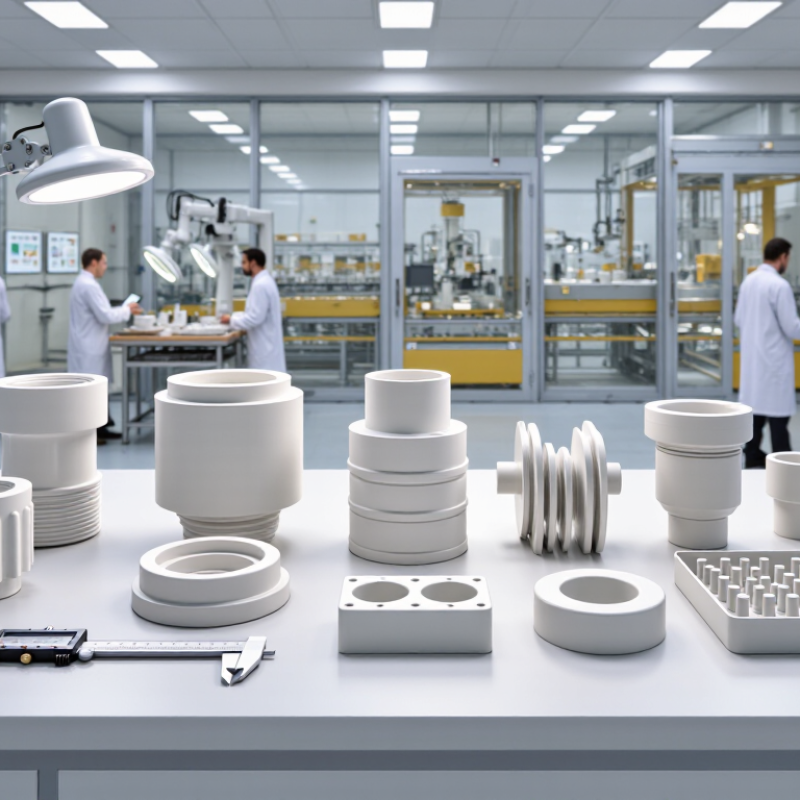
What Zirconia Ceramics Are and Where They Are Used
Zirconia ceramics are advanced materials made from zirconium dioxide. They combine high fracture toughness with strong wear resistance. Unlike ordinary ceramics, stabilized zirconia can resist sudden cracking under demanding loads. Yttria-stabilized zirconia is widely used because it maintains strength through repeated heating and cooling.
According to the U.S. Geological Survey’s Mineral Commodity Summaries 2024, global zirconium mineral concentrate production reached roughly 1.5 million metric tons in 2023. This raw-material base supports applications across engineering, healthcare, and electronics. Market research from Grand View Research identifies dental restorations, industrial components, and electronic parts as major zirconia ceramic segments. The figures differ between reports. Market boundaries are not always consistent.
In dental laboratories, zirconia appears as crowns, bridges, and implant components. Its tooth-like color and resistance to chewing forces make it practical for visible restorations. In factories, zirconia parts may guide wire, seal pumps, or protect cutting tools. A smooth white valve seat can tolerate abrasion where polymer parts quickly deform. Zirconia also supports oxygen sensors, thermal barriers, and precision grinding media.
Selection requires more than checking hardness. Engineers must compare density, stabilizer content, porosity, surface finish, and thermal expansion. A strong grade can still fail after poor machining. That lesson is easy to overlook. Global buyers should request test data, batch traceability, and application-specific performance records before comparing suppliers.
Zirconia ceramics are advanced oxide ceramics known for high strength, fracture toughness, wear resistance, and chemical stability. The chart compares representative flexural-strength midpoints for common zirconia material families. Actual values vary by composition, processing method, porosity, and testing standard. These materials are widely used in dental restorations, cutting tools, precision components, wear parts, medical devices, sensors, and thermal-resistant components.
A reliable evaluation starts with the part’s actual job. Zirconia used in a wear component may need different properties from a precision-insulated component. Share operating temperature, load, chemical exposure, dimensions, and expected service life. Ask suppliers to identify the material grade and provide technical data, including test methods. Numbers without test conditions are hard to compare.
Tips: Request a sample from a production-representative batch. Check dimensions, surface finish, packaging, and accompanying inspection records. Small details matter. Ask how the supplier controls forming, sintering, and machining variation, and whether critical dimensions are measured consistently. Confirm lead times and how changes to specifications are reviewed.
Review traceability and communication, not just price. A capable supplier should explain tolerances, inspection limits, and practical design trade-offs in clear terms. Compare quotations against the same drawing and acceptance criteria. If possible, evaluate samples under conditions close to real use. A polished brochure is not proof of consistency; even a strong supplier may need clarification on a difficult feature. That uncertainty is worth addressing before placing a larger order.
Supplier One focuses on dental-grade zirconia blanks, with shade options and batch certificates. Supplier Two serves laboratories needing consistent discs for milling. Its strength is reliable stock, though buyers should confirm lead times. Supplier Three produces wear-resistant components for pumps and valves. Ask for test data tied to the actual grade. Supplier Four offers custom-shaped parts and supports drawing reviews. Small design changes can still affect cost.
Supplier Five specializes in ceramic beads and grinding media, where size consistency matters. Supplier Six supplies electrical insulators and can discuss dielectric performance. Supplier Seven makes kiln furniture for repeated high-temperature cycles. Check how its products handle thermal shock. Supplier Eight works with medical-device manufacturers and documents material traceability. Documentation matters. Supplier Nine offers small production runs for research and prototyping. That flexibility is useful, but capacity may be limited. Supplier Ten combines standard components with custom machining, a practical fit for mixed orders.
These profiles describe supplier types, not endorsements. A capable supplier should explain zirconia grade, density, tolerances, and inspection methods in plain terms. Request samples when surface finish or fit is critical. Compare quotations using the same drawing and acceptance criteria. One detail buyers sometimes overlook is packaging; chipped edges can complicate inspection before parts reach the production floor. No supplier fits every application. A careful technical discussion often reveals gaps that a polished catalogue will not.
The profiles below are non-company-specific supplier archetypes, not a verified ranking or claims about named businesses. Product ranges and capabilities vary by supplier; confirm specifications, certifications, and quality records directly before purchasing.
| Profile | Typical Products | Common Zirconia Materials | Relevant Capabilities | Common Buyer Applications | What Buyers Should Verify |
|---|---|---|---|---|---|
| Dental Zirconia Blank Supplier | CAD/CAM discs, blocks, and pre-shaded or multilayer blanks | Yttria-stabilized zirconia, including 3Y-, 4Y-, and 5Y-based grades | Powder preparation, blank forming, presintering, shade control, and lot traceability | Crowns, bridges, and other dental restorations | Indications, compatibility with milling systems, shade range, sintering instructions, and applicable regulatory documentation |
| Precision Zirconia Component Manufacturer | Custom-engineered small parts, insulators, spacers, and structural components | Y-TZP and other stabilized zirconia grades selected for the application | Forming, sintering, precision grinding, dimensional inspection, and drawing-based production | Instrumentation, electronics, machinery, and industrial equipment | Dimensional tolerances, surface finish, material grade, inspection method, and consistency between production lots |
| Zirconia Wear-Part Supplier | Wear plates, liners, guides, plungers, and replaceable wear components | Commonly Y-TZP or other zirconia grades chosen for wear and toughness requirements | Near-net-shape forming, grinding, edge finishing, and custom geometry production | Abrasive processing, material handling, and machinery subject to wear | Wear-test conditions, operating environment, impact exposure, fit, and replacement-part interchangeability |
| Zirconia Grinding-Media Supplier | Grinding beads, balls, and milling media in multiple sizes | Yttria-stabilized or ceria-stabilized zirconia media | Media forming, sintering, size classification, and bulk packaging | Wet and dry milling of ceramics, pigments, minerals, and other materials | Media size distribution, density, contamination limits, wear performance, and compatibility with the mill and process |
| Ceramic Seal and Pump-Part Supplier | Seal faces, valve components, sleeves, and pump parts | Stabilized zirconia grades selected for the fluid and mechanical conditions | Precision machining, lapping, dimensional control, and surface-finish inspection | Pumps, valves, fluid handling, and chemical-processing equipment | Fluid compatibility, operating temperature, pressure, mating-material requirements, and leakage-test criteria |
| High-Temperature Process-Part Supplier | Supports, fixtures, setters, and other kiln or process-furnace components | Stabilized zirconia or zirconia-based compositions suitable for the intended thermal conditions | Ceramic forming, controlled firing, machining, and thermal-cycle evaluation | Thermal processing, laboratory equipment, and selected industrial furnace applications | Maximum service conditions, thermal-shock limits, atmosphere compatibility, and expected service life |
| Zirconia Tube and Rod Supplier | Custom or standard tubes, rods, sleeves, and protection components | Stabilized zirconia grades matched to the required electrical, thermal, or mechanical properties | Extrusion or other forming methods, sintering, cutting, and finish machining | Sensors, furnaces, electrical insulation, and laboratory equipment | Dimensions, straightness, wall thickness, end finish, material properties, and achievable production tolerances |
| Zirconia Powder and Feedstock Supplier | Zirconia powders, granulated powders, and prepared ceramic feedstocks | Stabilized zirconia compositions, with grade and stabilizer content specified by the product | Powder processing, granulation or feedstock preparation, batch testing, and technical data reporting | Ceramic component manufacturers, research laboratories, and powder-processing operations | Composition, particle-size data, purity, moisture, flow or forming properties, and batch-to-batch documentation |
| Custom-Molded Zirconia Supplier | Complex-shaped components made to customer drawings or tooling | Zirconia compositions selected according to design and end-use requirements | Custom tooling, injection or other molding processes, debinding, sintering, and finishing | High-volume or geometrically complex industrial and technical components | Tooling ownership, shrinkage allowances, achievable tolerances, minimum order quantities, and change-control procedures |
| Advanced Ceramic Machining and Finishing Supplier | Finished zirconia parts made from formed or sintered blanks | Customer-specified zirconia grades, subject to the supplier’s available material options | Diamond grinding, drilling, lapping, polishing, and inspection of finished ceramic components | Prototypes, replacement components, and precision parts for industrial equipment | Starting-material traceability, machining limits, surface and edge requirements, inspection reports, and packaging protection |
A useful comparison starts with the part, not the catalogue. Zirconia suppliers may offer different grades for wear resistance, strength, translucency, or thermal performance. Ask which grade suits your operating conditions. Then compare sample dimensions, tolerances, surface finish, and machining options. A small ring or nozzle can reveal edge chipping and finish quality before a larger order.
Capabilities matter after material selection. Check whether the supplier handles forming, sintering, precision grinding, and inspection in-house. Request drawings with measured tolerances, not just general claims. For complex parts, ask how they manage shrinkage during sintering. The answer should be specific. A polished sample is useful, but it cannot prove consistent production across a full batch.
Certifications deserve the same scrutiny. Review the certificate’s scope, issuing body, validity dates, and relevance to the actual production site. Quality-system certification does not automatically certify every ceramic component. Ask for inspection records, material traceability, and a clear process for handling defects. These checks take time. They can also expose gaps: public supplier information may be incomplete, and a neat capability sheet is not a substitute for verified samples and direct technical discussion.
Global buyers should match zirconia ceramic properties to the actual working conditions, not just compare price per piece. Identify the required grade, dimensions, tolerances, and operating environment. A component exposed to repeated friction may need different surface and strength requirements than an insulating part. Ask how density, hardness, and surface finish are measured, and request test results tied to the quoted specification. Small differences matter. A shaft that looks correct on a drawing may still cause assembly problems if its tolerance or finish is unsuitable.
Supplier evaluation should include process controls, inspection methods, and the ability to keep batches consistent. Request samples and check them with the same gauges or fit tests used in production. Confirm packaging, lead times, minimum order quantities, and how changes to materials or processes are communicated. Clear records help buyers trace a lot when a defect appears. The paperwork is useful, but it cannot replace a practical fit check. Even a careful specification can miss a real-world issue; buyers should review results after trial assembly and revise requirements where needed. Ask for written clarification whenever a supplier’s test method or acceptance limit is unclear.
They are made from zirconium dioxide. Stabilized grades can resist sudden cracking under demanding loads.
It combines fracture toughness with wear resistance. Yttria-stabilized zirconia can retain strength through repeated heating and cooling.
They are used in crowns, bridges, and implant components. Their tooth-like color suits visible restorations, while their strength helps withstand chewing forces.
Examples include wire guides, pump seals, valve seats, and cutting-tool protectors. A smooth valve seat may tolerate abrasion better than a polymer part.
Consider density, stabilizer content, porosity, surface finish, and thermal expansion. Hardness alone is not enough.
A small ring or nozzle can reveal edge chipping, dimensions, and finish quality. Still, one polished sample cannot prove an entire batch is consistent.
Ask whether forming, sintering, precision grinding, and inspection happen in-house. For complex parts, request a specific explanation of shrinkage control.
Review the certificate’s scope, issuing body, validity dates, and production-site relevance. A quality-system certificate does not automatically cover every component.
Request test data, inspection records, batch traceability, and application-specific performance evidence. Public information may be incomplete, so direct technical discussion matters.
This article introduces Zirconia Ceramic, explaining its key properties and its use in applications that require strength, wear resistance, dimensional stability, or reliable performance at elevated temperatures. It outlines how buyers can assess suppliers by reviewing manufacturing capabilities, product range, quality-control processes, technical support, and experience with different component requirements. The article also profiles ten suppliers in a neutral, buyer-focused format, highlighting the types of products and services they offer without relying on brand promotion.
A side-by-side comparison helps global buyers understand differences in capabilities, available certifications, customization options, production scale, and delivery support. The final section discusses practical considerations such as defining specifications, requesting samples and technical documentation, confirming quality expectations, and evaluating communication and supply-chain reliability. Together, these points provide a structured starting point for identifying a supplier whose products and services match a project’s technical needs, purchasing priorities, and long-term sourcing goals.
