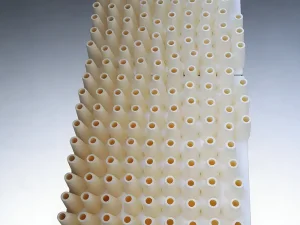
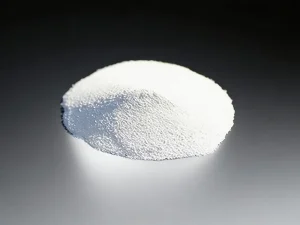
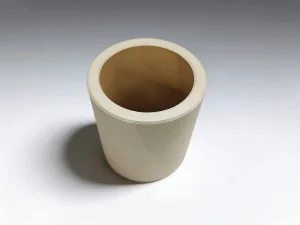
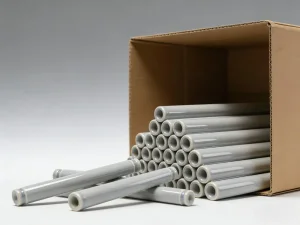
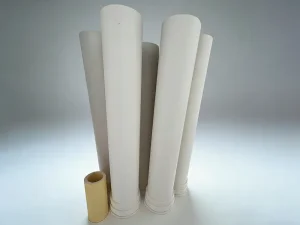
High-Performance Technical Ceramics & Injection Molding Tooling Components Engineered for Extreme Thermal & Chemical Environments
Decoding the Synergy Between China’s Injection Molding Machinery, Advanced Powder Metallurgy, and Technical Ceramics Integration
In modern high-precision manufacturing, the domain of China Aluminium Injection Machines, Metal Injection Molding (MIM), and Ceramic Injection Molding (CIM) has evolved into an interconnected industrial backbone. Procurement engineers and global enterprise buyers searching for reliable Chinese suppliers demand more than standard machinery specifications; they require complete industrial ecosystems capable of delivering high-density feedstocks, wear-resistant barrel and nozzle components, thermally conductive substrates, and robust after-sales compliance.
Advanced injection molding processes operate under extreme mechanical stress, continuous heat cycles, and corrosive molten fluid flows. To guarantee zero-defect production in sectors such as New Energy Vehicles (NEVs), laser semiconductors, aerospace, and medical device manufacturing, leading equipment suppliers collaborate with tier-1 material innovators like Yixing Qiangguang Ceramic Materials Co., Ltd. to integrate wear-resistant Zirconia (YSZ), high-purity Alumina ($Al_2O_3$), Silicon Nitride ($Si_3N_4$), and Aluminum Nitride ($AlN$) into the injection unit core.
Full-Chain R&D, Precision Sintering, and Material Engineering Excellence Since 2003
Founded in 2003, Yixing Qiangguang Ceramic Materials Co., Ltd. is a professional provider dedicated to the research and development (R&D), manufacturing, and application solutions of high-performance advanced ceramic materials. It is among the few enterprises in China that possess a complete industrial chain, covering key links from powder forming, sintering and precision machining to the provision of integrated application solutions.
The company is also a rare domestic manufacturer engaged in the R&D, production, and supply of a comprehensive portfolio of ceramic materials. Its product range covers zirconia, yttria, alumina, magnesia, aluminum nitride, boron nitride, silicon nitride, silicon carbide, aluminum titanate and other key ceramic materials for industrial use.
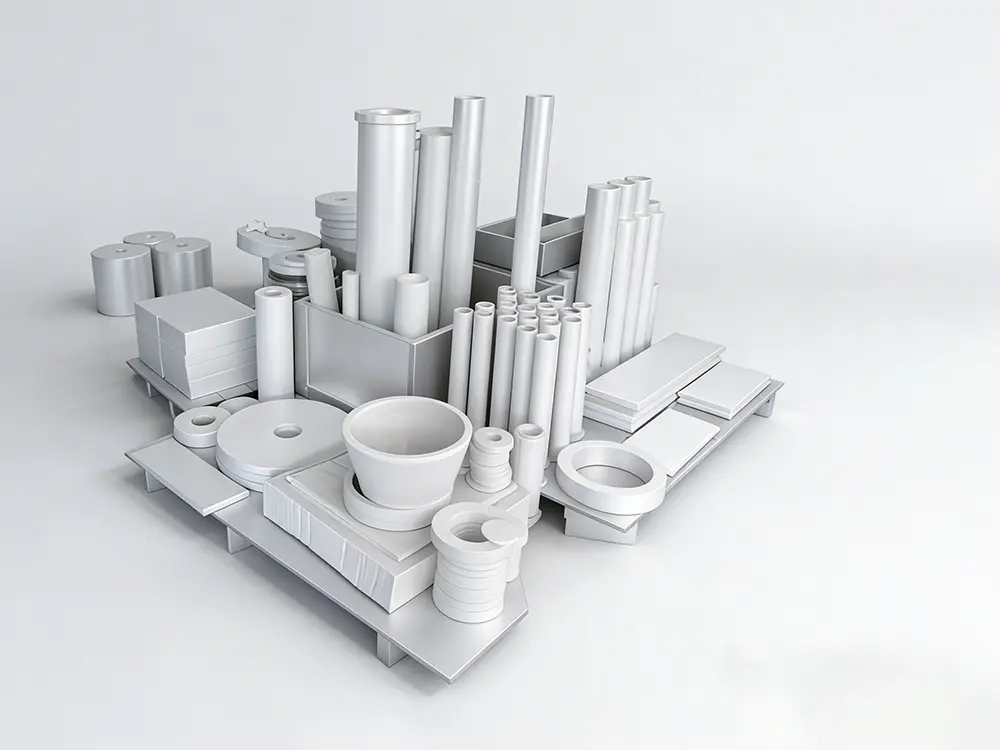
Benefiting from excellent product performance and stable quality, its products are extensively utilized in various high-end fields, such as food and medical industries, new energy vehicles, laser semiconductors, petrochemical engineering, powder metallurgy, national defense and military, as well as aerospace sectors.
By implementing real-time laser interferometers, automated ultrasonic cleaning lines, and digital coordinate measurement machines (CMM), every batch of material—whether stabilizing powder or fully sintered injection components—meets strict international industrial standards.
Adhering to the core principle of "creating value for customers", Qiangguang provides customized and cost-efficient advanced ceramic solutions tailored to the specific demands of different customers. It is supported by high-quality after-sales services and a strict full-process tracking system, which effectively enhances cooperation efficiency and promotes continuous quality improvement.
At present, the company's products are sold well across the country and exported to Italy, the United Kingdom, Australia, Japan, Malaysia, Thailand, Hungary and other countries and regions. Committed to delivering high-quality products at reasonable prices, Qiangguang sincerely looks forward to establishing long-term and stable cooperative relations with global partners.
Continuous investment in nanometer-scale grain size control, vacuum hot pressing sintering (HP), and hot isostatic pressing (HIP) guarantees superior mechanical strength, thermal shock resistance, and zero internal porosity for demanding OEM injection applications.
Why Global Engineering Enterprises Partner with Chinese Injection & Ceramic Manufacturers
Situated in the Yixing ceramic capital and Yangtze River Delta manufacturing corridor, suppliers benefit from immediate raw powder access, rapid mold tooling fabrication, and localized heat-treatment facilities, cutting lead times by up to 40%.
Economies of scale coupled with automated cold/hot pressing and CNC green-state machining deliver high precision at a fraction of Western production costs without compromising structural reliability.
From 95%-99.8% Alumina, Yttria-partially stabilized Zirconia (3Y-TZP), to tailored metal feedstocks, China factories offer tailored rheological properties for optimal injection flowability and shrinkage control.
Utilizing high-speed ceramic 3D printing and rapid mold tooling, prototype cycles are compressed from months to days, allowing rapid design iteration prior to mass production.
| Material Type | Density (g/cm³) | Thermal Conductivity (W/m·K) | Flexural Strength (MPa) | Key Application in Injection Machines |
|---|---|---|---|---|
| Aluminum Nitride (AlN) | 3.26 | 170 - 230 | 350 - 450 | High-power semiconductor heat sinks & thermal management plates |
| Yttria Stabilized Zirconia (YSZ) | 6.05 | 2.5 - 3.0 | 900 - 1200 | High-wear injection nozzles, plungers, and non-return valves |
| Silicon Nitride (Si3N4) | 3.25 | 30 - 90 | 800 - 1000 | Molten aluminium pumps, riser tubes, and thermocouple protection tubes |
| 99.5% Alumina (Al2O3) | 3.92 | 30 | 380 | Electrical insulation rings, wear liners, and furnace structural supports |
Seamless Procurement Experience Backed by Rigorous International Quality Systems
Operating under ISO 9001:2015, ISO 14001, and REACH/RoHS compliance, our manufacturing protocols guarantee material purity, heavy-metal-free processing, and strict batch-to-batch consistency for regulated medical and food applications.
Dedicated engineering hubs in Europe, Australia, and Asia-Pacific provide localized technical support, rapid spare part dispatch, tooling redesign, and on-site debugging for injection machinery integration.
Closed-loop water recycling, solar-assisted kilns, and eco-friendly binder extraction technologies minimize carbon footprint during high-temperature sintering, supporting global scope-3 emissions reduction goals.
Next-Generation Advances Shaping the Future of Injection Molding Machinery & Materials
Modern injection machines incorporate neural network algorithms that monitor cavity pressure, melt viscosity, and mold temperature in real-time, automatically compensating for feedstock variances.
The demand for miniaturized components in medical implants and fiber optics has driven micro-powder injection molding, achieving part weights below 0.01g with sub-micron detail replication.
Transitioning from solvent-based debinding to supercritical $CO_2$ and thermal catalytic debinding dramatically reduces VOC emissions and processing time for complex ceramic and metal injection parts.
Deploying Engineering Ceramics and Injection Components Across Critical High-Tech Sectors
Used in EV motor thermal management substrates, sensor housing, ceramic valve discs, and injection molded turbocharger rotors subjected to high rotational speeds.
Aluminum Nitride (AlN) ceramic substrates and plasma-resistant Silicon Nitride components ensure ultra-high thermal dissipation and dielectric insulation in wafer processing tools.
Biocompatible YSZ zirconia components for surgical instruments, dental implants, micro-fluidic valves, and endoscopic tools produced via high-precision ceramic injection.
Lightweight, thermal-shock-resistant ceramic matrix composite (CMC) liners, nozzle rings, and radar radomes engineered to withstand temperatures exceeding 1500°C.
Addressing Common Technical & Procurement Inquiries Regarding Aluminium Injection Machines and Technical Ceramics
Technical ceramics such as Yttria-Stabilized Zirconia (YSZ) and Silicon Nitride ($Si_3N_4$) are used in high-wear zones including injection nozzles, shot sleeves, non-return valves, and plungers. Their superior resistance to molten metal erosion, chemical corrosion, and thermal shock vastly extends machine uptime compared to conventional tool steel.
Aluminum Nitride offers exceptionally high thermal conductivity (170-230 W/m·K), which is roughly 7 to 8 times higher than standard Alumina ($Al_2O_3$), while maintaining a coefficient of thermal expansion (CTE) closely matched to Silicon. This makes AlN ideal for high-power semiconductor substrates and intense thermal dissipators in injection machinery electronics.
Key parameters include powder grain size distribution (nanometer to micron scale), binder system compatibility (wax-based, catalytic, or water-soluble), solid loading percentage, rheological viscosity stability, and predictable linear shrinkage rates during sintering.
We combine near-net-shape green-body CNC machining with post-sintering diamond grinding, ultrasonic drilling, and 5-axis CNC finishing. This enables us to consistently achieve dimensional tolerances down to ±0.002 mm and surface roughness as fine as Ra 0.05 $\mu m$.
Rapid prototyping using green-state machining or ceramic 3D printing takes approximately 7 to 12 working days. Steel/Carbide injection mold tooling fabrication for mass production typically requires 3 to 4 weeks, followed by automated batch sintering.
Yes. All products undergo full chemical trace analysis and comply with ISO 9001, REACH, RoHS, and CE guidelines. Complete material safety data sheets (MSDS) and certificate of analysis (COA) documentation accompany every shipment.
Complete Range of Powder Engineering, Stabilized Powders, and High-Performance Structural Components