Factory-direct technical ceramic powders, grinding media, and structural elements engineered for thermal, chemical, and wear resistance.
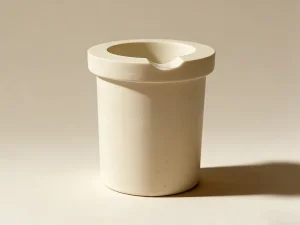
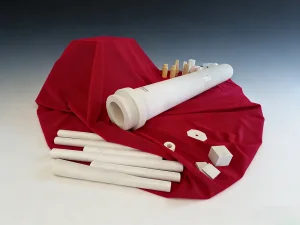
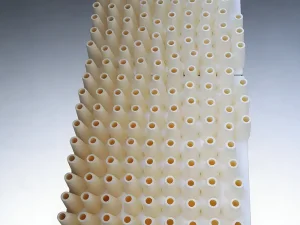
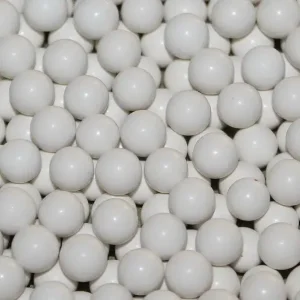
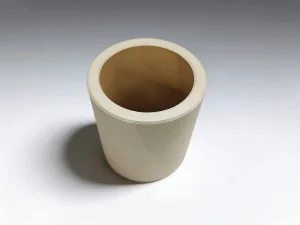
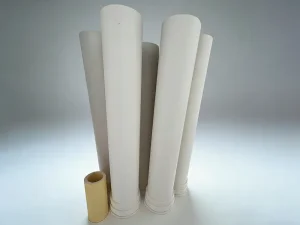
In the domain of modern ultra-high performance technical ceramics, Silicon Carbide Nitride (Si3N4-SiC composites and Nitride-Bonded Silicon Carbide / N-SiC) stands out as a paramount class of material designed to surpass the intrinsic thermomechanical limitations of monolithic single-phase ceramics. By leveraging the superior fracture toughness and high dielectric strength of Silicon Nitride ($\text{Si}_3\text{N}_4$) alongside the extreme hardness, chemical inertness, and exceptional thermal conductivity of Silicon Carbide ($\text{SiC}$), engineering teams achieve unprecedented reliability under harsh thermal shock, severe molten metal corrosion, and high velocity mechanical wear environments.
As a premier wholesale silicon carbide nitride manufacturer, Yixing Qiangguang Ceramic Materials Co., Ltd. applies advanced thermodynamic modeling, microstructural grain boundary engineering, and precision atmosphere-controlled sintering (such as Pressureless Sintering, Gas Pressure Sintering - GPS, and Hot Isostatic Pressing - HIP) to produce advanced ceramic bodies tailored for mission-critical industrial applications.
The incorporation of nano-scale or sub-micron $\text{SiC}$ particles within a $\beta\text{-Si}_3\text{N}_4$ self-reinforced elongated grain matrix drastically alters crack propagation paths. Rather than undergoing catastrophic transgranular fracture, microcracks are deflected, pinned, or bridged at the grain boundaries. This microstructural synergy yields flexural strengths exceeding 850 MPa and fracture toughness ($K_{IC}$) values beyond 7.5 $\text{MPa}\cdot\text{m}^{1/2}$, making it an essential replacement for traditional metallic alloys in extreme operating environments.
To assist global procurement officers and material engineers in raw material selection, the table below delineates the key technical parameters of Silicon Nitride, Silicon Carbide, and composite Silicon Carbide Nitride formulations manufactured at our Yixing facilities:
| Material Metric / Property | Monolithic $\text{Si}_3\text{N}_4$ (GPS) | Sintered $\text{SiC}$ (SSiC) | Silicon Carbide Nitride (N-SiC / Composite) | Industrial Advantage |
|---|---|---|---|---|
| Density ($\text{g/cm}^3$) | 3.20 - 3.25 | 3.10 - 3.15 | 2.75 - 3.18 | Lightweight structural weight reduction |
| Flexural Strength ($\text{MPa}$) | 800 - 950 | 400 - 500 | 650 - 880 | High load bearing & flexural fatigue resistance |
| Fracture Toughness ($K_{IC}, \text{MPa}\cdot\text{m}^{1/2}$) | 6.5 - 8.5 | 3.5 - 4.5 | 5.8 - 7.2 | Superior impact shock deflection |
| Thermal Conductivity ($\text{W/m}\cdot\text{K}$) | 30 - 90 | 110 - 130 | 60 - 105 | Rapid thermal dissipation capabilities |
| Max Operating Temp (Oxidizing, °C) | 1,250 | 1,600 | 1,450 - 1,550 | Sustained ultra-high temperature tolerance |
| Thermal Expansion Coeff ($10^{-6}/\text{K}$) | 3.2 | 4.0 | 3.5 - 3.8 | Exceptional thermal shock parameter ($R$) |
Founded in 2003, Yixing Qiangguang Ceramic Materials Co., Ltd. is a professional provider dedicated to the research and development (R&D), manufacturing, and application solutions of high-performance advanced ceramic materials. It is among the few enterprises in China that possess a complete industrial chain, covering key links from raw powder synthesis, forming, sintering, and ultra-precision diamond machining to the provision of integrated application solutions.
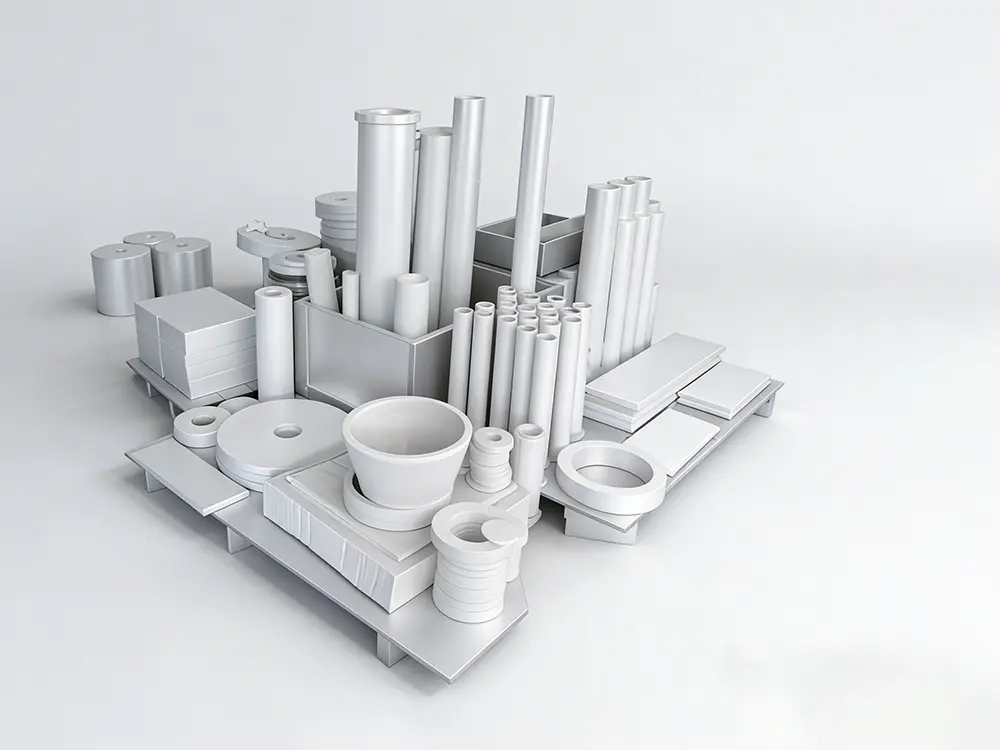
The company is also a rare domestic manufacturer engaged in the R&D, production, and supply of a comprehensive portfolio of ceramic materials. Its product range covers zirconia ($\text{ZrO}_2$), yttria ($\text{Y}_2\text{O}_3$), alumina ($\text{Al}_2\text{O}_3$), magnesia ($\text{MgO}$), aluminum nitride ($\text{AlN}$), boron nitride ($\text{BN}$), silicon nitride ($\text{Si}_3\text{N}_4$), silicon carbide ($\text{SiC}$), aluminum titanate ($\text{Al}_2\text{TiO}_5$) and other key technical ceramic materials for industrial use.
By controlling every tier of production—from raw powder synthesis to CNC ultrasonic grinding—Qiangguang eliminates supplier friction, guarantees dimensional tolerances down to $\pm 0.001 \text{ mm}$, and reduces production lead times for global B2B buyers by up to 35% compared to western ceramic fabricators.
Benefiting from excellent product performance and stable quality, Qiangguang's products are extensively utilized in various high-end fields, such as food and medical industries, new energy vehicles (NEVs), laser semiconductors, petrochemical engineering, powder metallurgy, national defense and military, as well as aerospace sectors.
At present, the company's products are sold well across the country and exported to Italy, the United Kingdom, Australia, Japan, Malaysia, Thailand, Hungary and other countries and regions. Committed to delivering high-quality products at reasonable prices, Qiangguang sincerely looks forward to establishing long-term and stable cooperative relations with global partners.
Adhering to the core principle of "creating value for customers", Qiangguang provides customized and cost-efficient advanced ceramic solutions tailored to the specific demands of different customers. It is supported by high-quality after-sales services and a strict full-process tracking system, which effectively enhances cooperation efficiency and promotes continuous quality improvement.
Every batch of Silicon Carbide Nitride components undergoes rigorous Quality Control (QC) protocols, including X-ray diffraction (XRD) phase purity analysis, CMM coordinate dimensional validation, liquid penetrant testing for surface micro-cracks, and helium mass spectrometer leak detection for vacuum feedthrough components.
Discover how custom-designed Silicon Carbide Nitride components resolve severe operational bottlenecks across modern high-tech sectors.
In aluminum low-pressure die casting (LPDC) and copper metallurgy, standard metallic or graphite protective tubes suffer from rapid erosion and thermal fatigue. Nitride-Bonded Silicon Carbide (N-SiC) riser tubes, stalk tubes, and thermocouple protection sheaths offer non-wetting characteristics against molten aluminum, resisting chemical attack and extending component lifespan up to 5-10x.
During plasma etching, CVD, and high-temperature wafer annealing, silicon carbide nitride ceramic rings, end-effectors, and wafer boats prevent metallic contamination while exhibiting exceptional resistance to aggressive fluorine and chlorine plasma gases, ensuring zero micro-particle contamination during sub-3nm chip fabrication.
With 800V EV architectures demanding maximum thermal conductivity and mechanical strength under harsh automotive vibration profiles, $\text{Si}_3\text{N}_4$ substrates offer superior thermal shock capability and flexural strength, outperforming alumina ($\text{Al}_2\text{O}_3$) and aluminum nitride ($\text{AlN}$) in power inverter module reliability.
Severe-service slurry valves, mechanical seal faces, and centrifugal pump impellers exposed to abrasive sands, concentrated acids, and high-pressure cavitation utilize Silicon Carbide Nitride inserts to eliminate pump seal failure, dramatically reducing plant downtime in chemical processing plants.
Used in scramjet combustion chamber liners, rocket nozzle inserts, and high-speed rotary gas bearings where temperatures exceed 1,400°C under severe aerodynamic shear stress. The ultra-low coefficient of thermal expansion limits thermal strain mismatch during rapid altitude variations.
High-purity Silicon Carbide Nitride components serve as structural insulating supports, thermal shields, and gas distribution nozzles in Siemens-process polysilicon reactors, preventing iron impurity migration into solar-grade silicon ingots.
A technical roadmap for Senior Procurement Managers, Supply Chain Directors, and OEM Design Engineers evaluate ceramic suppliers.
When procuring technical ceramics at scale, global enterprises must move beyond simple unit-price metrics to evaluate Total Cost of Ownership (TCO), material purity consistency, dimensional reliability, and emergency lead-time responsiveness. Below is our standard engineering qualification breakdown:
Stereolithography (SLA) and Selective Laser Sintering (SLS) of $\text{Si}_3\text{N}_4/\text{SiC}$ ceramics are breaking design barriers. Complex internal cooling channels for turbine blades and lightweight lattice structures can now be fabricated without high initial tooling costs.
Incorporating carbon nanotubes (CNTs) or graphene nanoplatelets into the silicon carbide nitride matrix is pushing fracture toughness beyond $10 \ \text{MPa}\cdot\text{m}^{1/2}$, expanding ceramic usage into heavy mechanical impact shock applications.
As primary metal smelters move toward green hydrogen reduction processes, refractory liners and component materials must withstand extreme hydrogen atmospheres. Silicon Nitride-bonded ceramics are leading this green energy transition.
Expert answers to common engineering, customization, and logistics inquiries regarding Silicon Carbide Nitride ceramics.
Explore our full spectrum of ultra-durable ceramic beads, structured components, and refractory solutions.