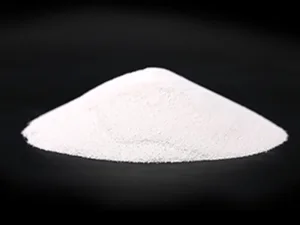
Engineered to meet rigorous high-temperature, wear, and chemical resistance requirements for international enterprise clients.
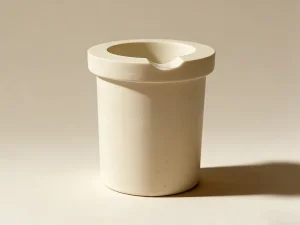
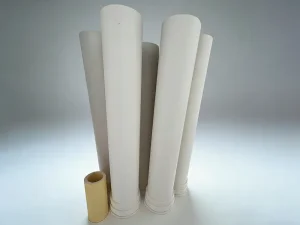
In the era of rapid technological miniaturization, extreme thermal challenges, and high-wear operational environments, traditional single-material injection molding and conventional machining face severe mechanical limitations. As global industries transition toward electrification, advanced semiconductor packaging, and aerospace structural integration, the global industrial demand for co-injection molding (CIM) and multi-material co-firing technologies has surged exponentially.
China has emerged as the global epicenter for advanced ceramic co-injection manufacturing, capitalizing on fully integrated raw material supply chains, advanced powder synthesis technologies, and state-of-the-art co-sintering infrastructure. Co-injection manufacturing—which involves the simultaneous or sequential injection of distinct ceramic formulations, or ceramic-metal combinations into a single precision mold—allows engineers to engineer components with functional gradient properties. By integrating a wear-resistant exterior shell with a thermally conductive interior core, or pairing insulating ceramics with conductive pathways, co-injection eliminates structural interface failures typical of glued or mechanical assemblies.
Founded in 2003, Yixing Qiangguang Ceramic Materials Co., Ltd. is a professional provider dedicated to the research and development (R&D), manufacturing, and application solutions of high-performance advanced ceramic materials. It is among the few enterprises in China that possess a complete industrial chain, covering key links from powder forming, sintering and precision machining to the provision of integrated application solutions.
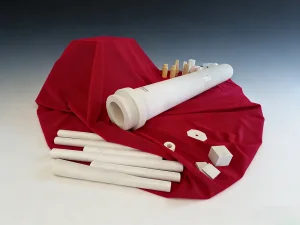
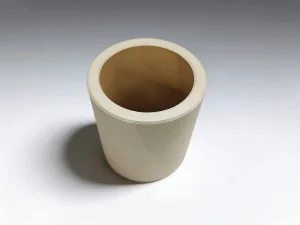
The company is also a rare domestic manufacturer engaged in the R&D, production, and supply of a comprehensive portfolio of ceramic materials. Its product range covers zirconia, yttria, alumina, magnesia, aluminum nitride, boron nitride, silicon nitride, silicon carbide, aluminum titanate and other key ceramic materials for industrial use.
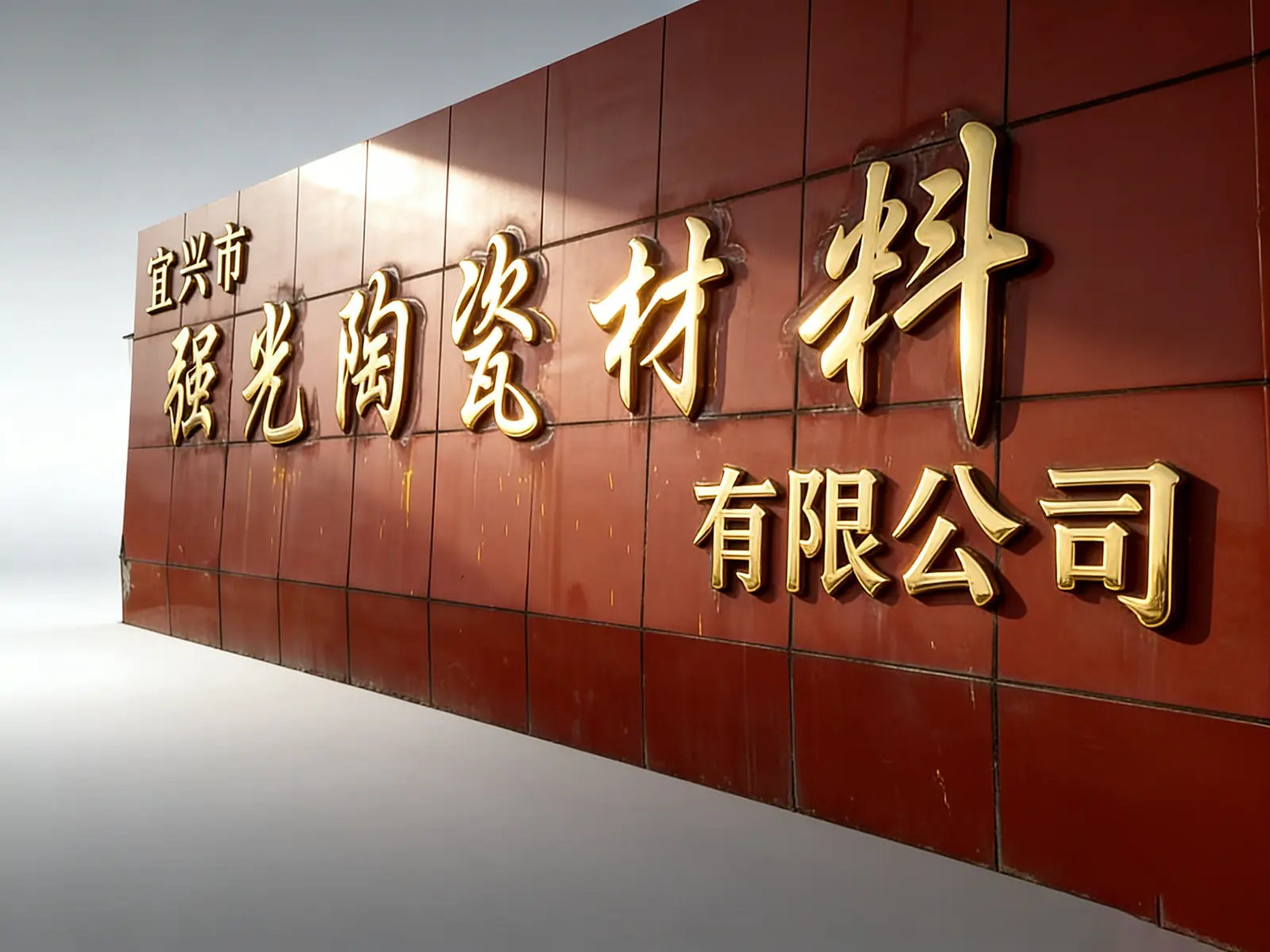
Benefiting from excellent product performance and stable quality, its products are extensively utilized in various high-end fields, such as food and medical industries, new energy vehicles, laser semiconductors, petrochemical engineering, powder metallurgy, national defense and military, as well as aerospace sectors.
Adhering to the core principle of "creating value for customers", Qiangguang provides customized and cost-efficient advanced ceramic solutions tailored to the specific demands of different customers. It is supported by high-quality after-sales services and a strict full-process tracking system, which effectively enhances cooperation efficiency and promotes continuous quality improvement.
At present, the company's products are sold well across the country and exported to Italy, the United Kingdom, Australia, Japan, Malaysia, Thailand, Hungary and other countries and regions. Committed to delivering high-quality products at reasonable prices, Qiangguang sincerely looks forward to establishing long-term and stable cooperative relations with global partners.
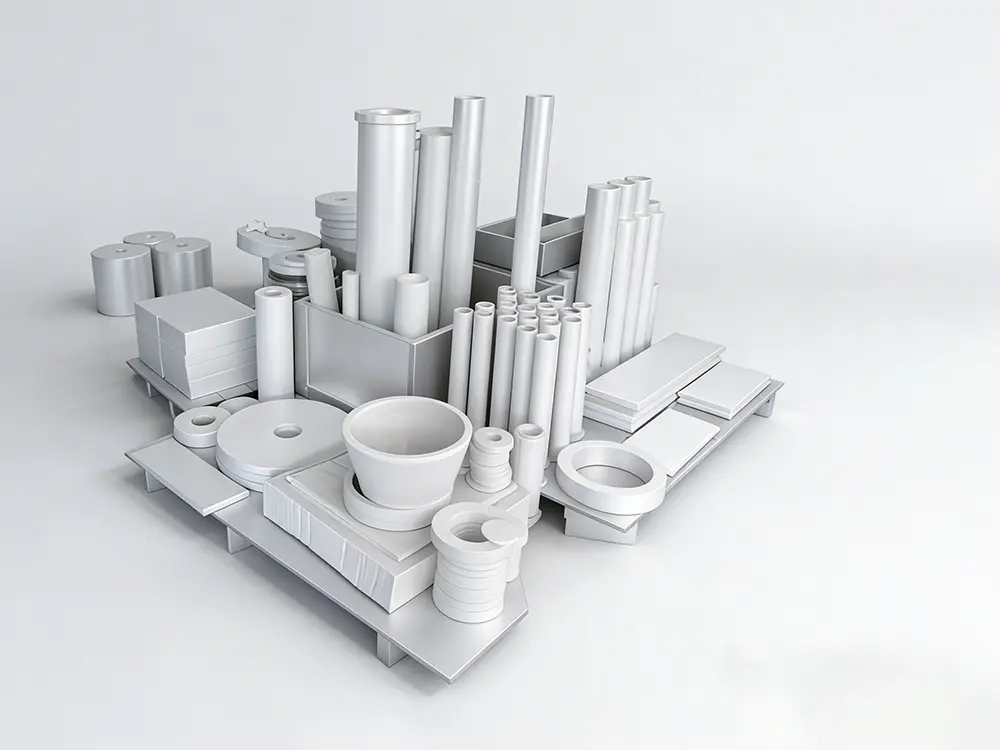
Ceramic Co-Injection Molding (CIM) is a sophisticated powder metallurgy process that allows two distinct feedstock materials—such as Yttria-Stabilized Zirconia (YSZ) and High-Purity Alumina ($Al_2O_3$), or conductive metal powders with ceramic insulations—to be injected sequentially or simultaneously into a single multi-cavity tool. The objective is to yield a single green body with unified structural integrity, eliminating mechanical mechanical joints, fasteners, or secondary adhesive bonding.
To prevent structural voids, flow delamination, or jetting during co-injection, both primary and secondary ceramic feedstocks must exhibit synchronized shear viscosities across varying shear rates (100 to 10,000 s⁻¹) and injection temperatures (140°C–190°C).
Multi-material green bodies contain multi-component binder systems (wax, polymer, surfactant). Multi-stage solvent debinding combined with thermal pyrolysis ensures binder removal without causing interfacial micro-cracking.
The ultimate key to successful ceramic co-injection is controlling linear volumetric shrinkage (typically 15% to 22%). By tailoring powder particle size distributions ($D_{50}$) and dopant concentrations, CTE mismatch is kept under $\Delta \alpha < 0.5 \times 10^{-6}/K$.
As a forward-looking China co-injection manufacturer, Qiangguang executes a continuous R&D strategy targeting next-generation multi-material capabilities:
| Phase & Era | Core Focus | Material Combinations | Key Performance Metrics |
|---|---|---|---|
| Phase 1: Current Baseline | Dual-Ceramic Co-Injection Molding | $ZrO_2$ (Y-TZP) + $Al_2O_3$ Structural Co-Molding | Interfacial Shear Strength > 250 MPa, zero delamination |
| Phase 2: Near-Term (2025-2027) | Thermal Management Co-Firing | Aluminum Nitride (AlN) + Conductive Metal Circuit Paths | Thermal Conductivity > 180 W/m·K, Hermetic sealing < $10^{-9}$ mbar·L/s |
| Phase 3: Future Horizon (2028-2030) | Micro-Channel Smart Co-Injection | Silicon Nitride ($Si_3N_4$) + Embedded Porous Ceramic Sensors | Operating Temps > 1400°C, extreme thermal shock resistance ($\Delta T > 800^\circ C$) |
Understanding material property synergies is vital when designing multi-material co-injected components. Below is the technical performance index for our core ceramic formulations:
| Material Formulation | Density (g/cm³) | Flexural Strength (MPa) | Thermal Conductivity (W/m·K) | Max Operating Temp (°C) | Primary Industrial Application |
|---|---|---|---|---|---|
| Yttria-Stabilized Zirconia (YSZ) | 6.05 | 1000 - 1200 | 2.5 - 3.0 | 1250 | Medical Devices, Wear Valves, Co-Injected Shafts |
| Aluminum Nitride (AlN) | 3.30 | 320 - 400 | 170 - 230 | 1650 (Inert) | Laser Diode Substrates, Power Electronics, Heat Sinks |
| Silicon Nitride ($Si_3N_4$) | 3.25 | 850 - 1000 | 30 - 90 | 1400 | NEV Bearings, Aerospace Turbines, High-Stress Co-Parts |
| High-Purity Alumina ($Al_2O_3$ 99.8%) | 3.95 | 380 - 450 | 30 | 1600 | Electrical Insulators, Chemical Pumps, Wear Rings |
| Aluminium Titanate ($Al_2TiO_5$) | 3.40 - 3.70 | 40 - 80 | 1.5 - 2.0 | 1450 | Non-Ferrous Foundry Sprue Bushings, Thermal Shock Parts |
| Magnesia (MgO Ceramics) | 3.58 | 200 - 250 | 40 - 60 | 2200 | High-Temperature Crucibles, Molten Metal Handling |
High-density Aluminum Nitride (AlN) co-injection molded submounts provide superior thermal dissipation for RF high-power devices and industrial laser diodes, preventing thermal throttling while maintaining hermetic electrical isolation.
Co-injected Silicon Nitride and Zirconia structural bushings withstand intense vibrational shock and chemical exposure in electric drive units, battery thermal cut-offs, and high-voltage inverter isolators.
Yttria-Stabilized Zirconia (Y-TZP) combined with radiopaque trace oxides enables micro-co-injection of endoscopic cutters, dental implant posts, and bio-inert liquid dispensing pumps with high fracture toughness ($KIc > 8 MPa\cdot m^{1/2}$).
Yixing Qiangguang Ceramic Materials Co., Ltd. benefits directly from Yixing's strategic status as China's advanced ceramic capital. Our full-chain vertical integration—from raw material chemical synthesis to precision CNC diamond grinding—guarantees uninterrupted supply continuity, shorter tooling lead times (15–20 days vs 45 days in Europe/US), and a 30–45% cost efficiency advantage without sacrificing micron-level tolerances ($\pm 0.002$ mm).
To guarantee seamless integration into Western and Asian OEM assembly lines, Qiangguang maintains rigorous quality control infrastructure adhering to international protocols:
100% batch-level lot tracking from raw powder chemical analysis to final coordinate measuring machine (CMM) inspection reports.
Fully compliant with RoHS, REACH, and FDA bio-compatibility benchmarks for medical and food contact applications.
Established export corridors to Italy, UK, Australia, Japan, Malaysia, Thailand, Hungary, and North America with DDP/DAP terms.
In-house mold design and rapid 3D ceramic prototyping for fast design verification prior to full co-injection mold steel cutting.
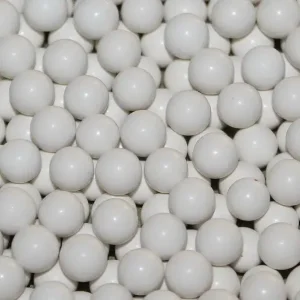
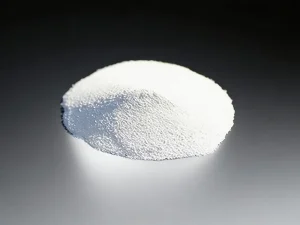
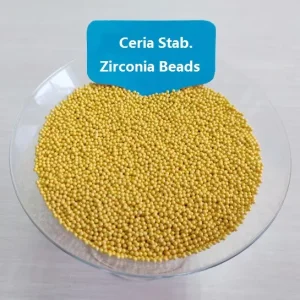
Explore our factory-direct zirconia beads, structural ceramic powders, and high-performance silicon nitride products.