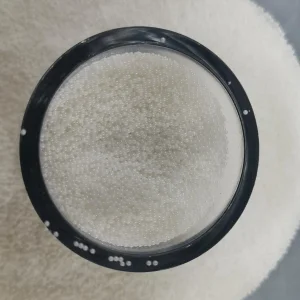
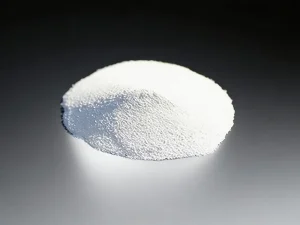
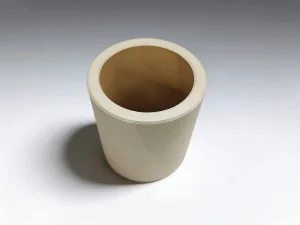
In modern high-precision engineering, traditional subtractive machining of technical ceramics often encounters economic and physical barriers due to extreme material hardness, brittleness, and diamond tool wear. Ceramic Injection Molding (CIM) has emerged as a disruptive manufacturing paradigm, blending the geometric versatility of plastic injection molding with the exceptional mechanical, thermal, dielectric, and chemical capabilities of advanced technical ceramics.
As enterprise purchasing departments, system integrators, and OEM engineers evaluate wholesale ceramic injection suppliers and factories, the strategic imperative moves beyond mere unit price. Today’s industrial landscape demands deep supply-chain integration, absolute batch-to-batch microstructural consistency, tight dimensional tolerances, and multi-material expertise spanning sub-micron ceramic powders.
The global industrial transition toward decarbonization, semiconductor miniaturization, electric vehicle (EV) high-voltage architecture, and advanced biomedical devices has catalyzed an unprecedented surge in demand for engineering ceramics. Factory suppliers equipped with fully integrated production chains—from customized powder synthesis, feedstock compounding, high-pressure injection molding, catalytic/solvent debinding, to ultra-high-temperature sintering and CNC diamond micro-polishing—hold a distinct competitive edge in the global marketplace.
Selecting the optimal technical ceramic formulation is the baseline for component reliability. Leading ceramic injection factories specialize in a multi-material portfolio, adapting formulation chemistry to specific industrial stress profiles:
High-Purity Alumina ($96\% - 99.8\% Al_2O_3$): Preferred for electrical insulation, high dielectric strength, and moderate thermal conductivity. It provides superior wear resistance and corrosion immunity in abrasive chemical handling, wear plates, and semiconductor vacuum chucks.
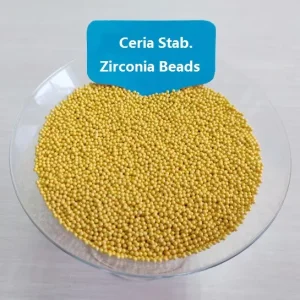
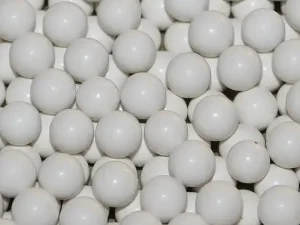
Stabilized Zirconia ($ZrO_2$ Matrix): Zirconia ceramics display metal-like fracture toughness ($K_{IC} > 8 - 10 \text{ MPa}\cdot\text{m}^{1/2}$) due to phase-transformation toughening (tetragonal to monoclinic). Specialized stabilization profiles engineered by leading manufacturers include:
The following technical specification comparison outlines the key physical, thermal, and mechanical metrics evaluated during material selection for precision ceramic injection molding:
| Material Type | Density ($\text{g/cm}^3$) | Flexural Strength ($\text{MPa}$) | Thermal Conductivity ($\text{W/m}\cdot\text{K}$) | Hardness ($\text{HV}$) | Dielectric Strength ($\text{kV/mm}$) | Max Operating Temp ($^\circ\text{C}$) |
|---|---|---|---|---|---|---|
| Alumina ($Al_2O_3$ 99.5%) | 3.92 | 380 - 450 | 30 | 1600 | 18 | 1600 |
| Yttria Zirconia (3Y-TZP) | 6.05 | 1100 - 1300 | 2.5 - 3.0 | 1250 | 12 | 1000 |
| Aluminum Nitride (AlN) | 3.30 | 320 - 350 | 180 - 220 | 1100 | 20 | 1300 (Inert) |
| Silicon Nitride ($Si_3N_4$) | 3.25 | 850 - 1000 | 30 - 80 | 1500 | 15 | 1400 |
| Silicon Carbide (SSiC) | 3.15 | 450 - 550 | 120 - 140 | 2400 | -- (Semi) | 1650 |
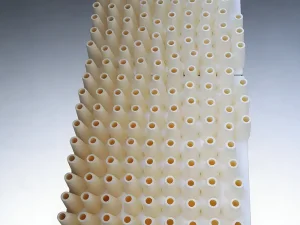
| Aluminium Titanate ($Al_2TiO_5$) | 3.40 | 40 - 80 | 1.5 - 2.0 | 600 | 10 | 1400 |
Achieving precise dimensional control ($\pm 0.1\%$ to $\pm 0.3\%$ near-net, down to $\pm 0.001\text{ mm}$ with secondary machining) requires rigorous execution across five key process stages:
High-purity raw powders are micro-milled to controlled grain size distributions ($d_{50} < 0.5 \ \mu\text{m}$). The powder is compounded with a thermoplastic polymer binder system (such as polyoxymethylene POM, paraffin wax, and polypropylene) at solids loadings typically between $55\%$ and $65\%$ by volume. Feedstock viscosity is tailored to eliminate shear heating and void formation during high-speed injection.
Using specialized multi-cavity injection molding machines with abrasion-resistant barrels and screws, the homogeneous ceramic feedstock is injected into heated precision molds at pressures up to $150 \text{ MPa}$. Complex internal geometry, thin walls, micro-features, and external threads are formed seamlessly at high speed.
The primary binder is removed from the "green" injected part to form a porous "brown" part. Depending on binder chemistry, catalytic debinding in gaseous nitric acid ($HNO_3$) environments or solvent immersion (heptane/water) is employed. Controlled removal prevents micro-cracks, blistering, or slumping of the ceramic structure.
Brown parts are sintered in computer-controlled vacuum, inert ($N_2/Ar$), or oxidizing kilns at temperatures ranging from $1450^\circ\text{C}$ to $1850^\circ\text{C}$. Linear shrinkage during sintering ($15\% - 22\%$) is controlled through precise thermal profiling, resulting in components reaching over $99.5\%$ theoretical density.
For applications requiring tight tolerances, sintered components undergo high-speed CNC diamond grinding, ultrasonic drilling, laser micro-machining, or surface lapping. Mirror-finish surface roughness values of $Ra < 0.02 \ \mu\text{m}$ are routinely achieved.
Wholesale ceramic injection components serve high-tech industrial sectors where traditional metals and plastics fail under extreme operating environments:
Founded in 2003, Yixing Qiangguang Ceramic Materials Co., Ltd. is a specialized provider dedicated to the research and development (R&D), manufacturing, and application solutions of high-performance advanced ceramic materials. It stands as one of the specialized enterprises in China possessing a complete industrial chain, encompassing key links from raw powder processing, precision forming, sintering, and fine machining to integrated application engineering.
As a comprehensive domestic manufacturer, Qiangguang engaged in the R&D, production, and wholesale supply of a wide-ranging advanced ceramics portfolio. The core material spectrum covers zirconia, yttria, alumina, magnesia, aluminum nitride, boron nitride, silicon nitride, silicon carbide, aluminum titanate, and customized composite formulations for critical industrial applications.
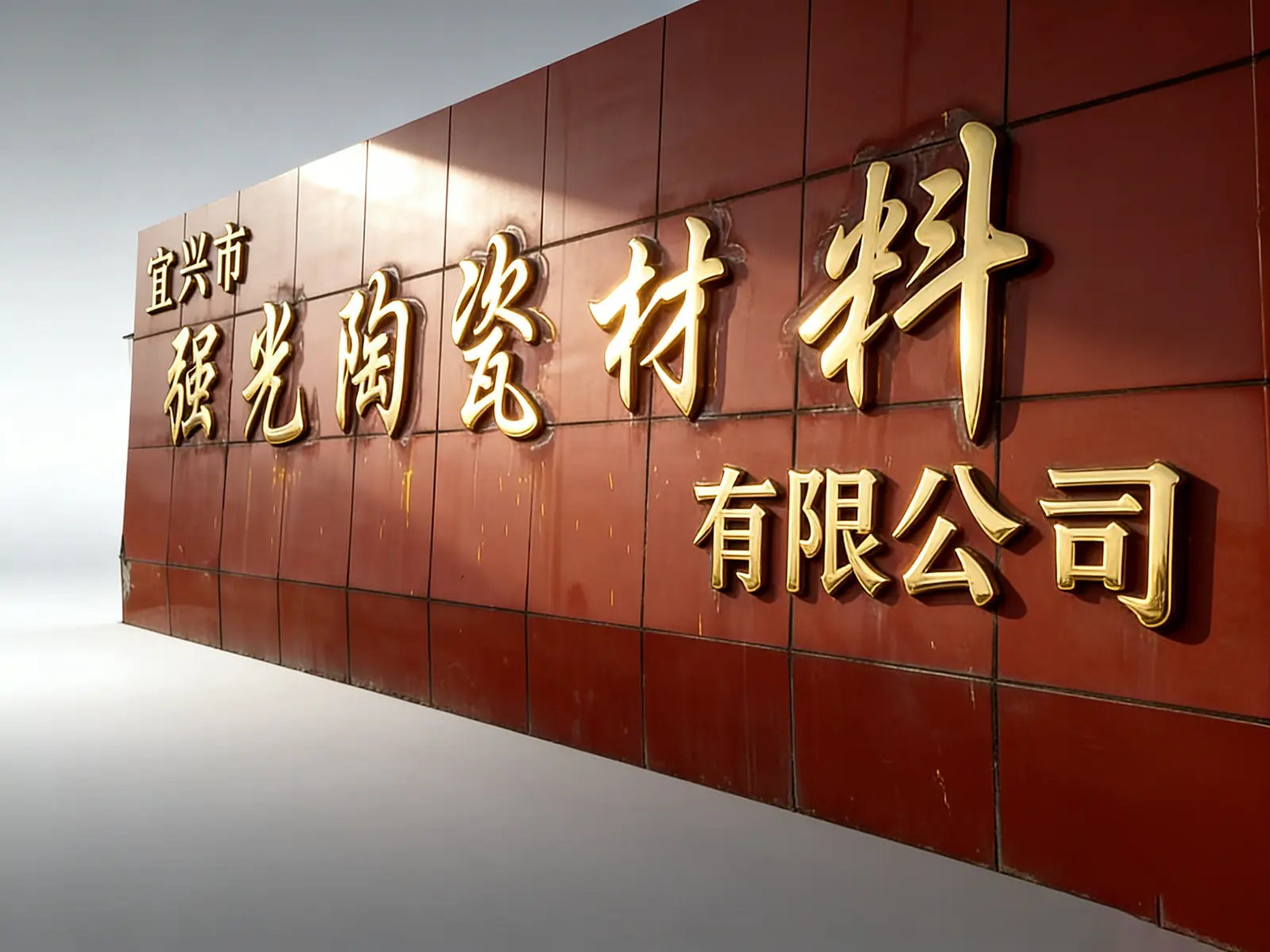
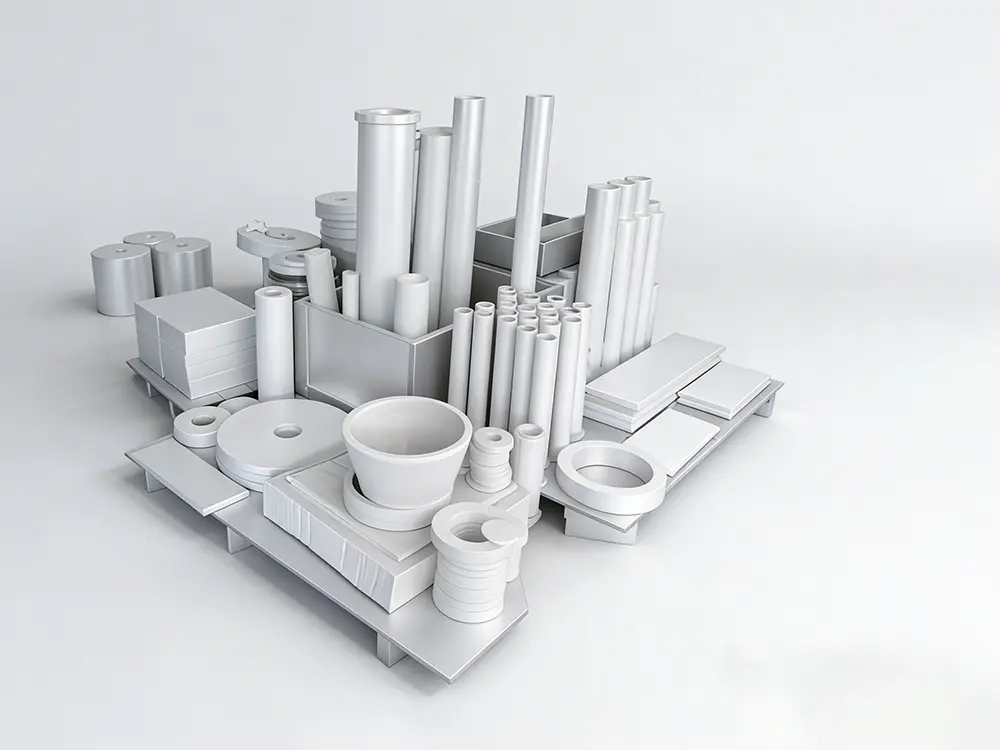
Adhering to the core principle of "creating value for customers", Qiangguang delivers customized and cost-efficient advanced ceramic solutions engineered to specific operational environments. Supported by a rigorous full-process quality tracking system and expert technical support, we ensure seamless collaboration and reliable delivery timelines.
Today, our advanced technical ceramic products are trusted across domestic markets and exported internationally to Italy, the United Kingdom, Australia, Japan, Malaysia, Thailand, Hungary, and other countries and regions. Committed to providing high-quality products at competitive wholesale pricing, Qiangguang welcomes long-term strategic partnerships with engineering firms, original equipment manufacturers, and industrial distributors worldwide.
Procuring technical ceramic components internationally requires strict assurance of material purity, mechanical reliability, and environmental compliance. Wholesale manufacturing workflows adhere to standard quality management systems:
The trajectory of ceramic injection molding is shaped by several technological developments:
1. Additive-Assisted Hybrid CIM: Combining 3D-printed sacrificial cores with ceramic injection molding to achieve ultra-complex internal micro-channel cooling structures for high-power laser and aerospace applications.
2. Micro-CIM ($\mu$-CIM): Multi-cavity micro-injection techniques producing ceramic components weighing less than 1 milligram with feature sizes below 10 micrometers, enabling next-generation micro-fluidic medical diagnostics and micro-robotics.
3. AI-Driven Process Optimization: Closed-loop neural network monitoring in injection barrels and sintering kilns dynamically adjusts pressures and thermal ramp rates in real-time, reducing batch variation to near-zero PPM defect levels.