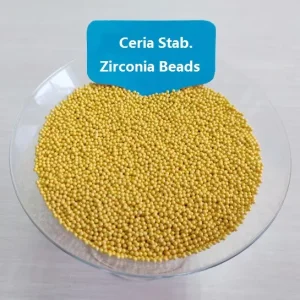
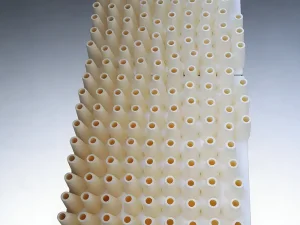
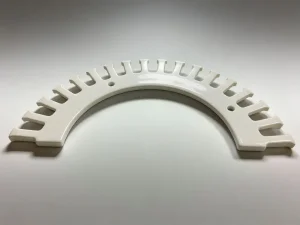
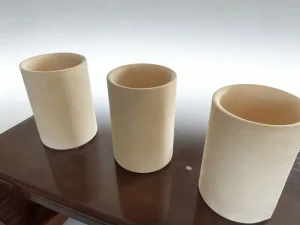
Explore our precision-engineered structural ceramics, high-purity thermal substrates, and industrial wear components direct from our ISO-certified manufacturing facility.
In modern power electronics, semiconductor manufacturing, aerospace propulsion, and high-precision fluid dynamics, ceramic discs have emerged as irreplaceable structural and functional components. Unlike conventional metallic alloy discs or organic polymer substrates, advanced technical ceramic discs demonstrate extraordinary dielectric breakdown strength, extreme mechanical hardness, zero thermal creep under elevated operational temperatures (up to 1750°C), and exceptional chemical inertia in aggressive acid-alkali environments.
As global industrial automation transitions toward high-frequency, high-power-density microelectronics and harsh-environment manufacturing, B2B procurement managers and system engineering leads require deep structural clarity regarding raw material synthesis, ceramic densification mechanics, and precise tolerance finishing. This comprehensive whitepaper analyzes the multi-faceted landscape of disc ceramic manufacturing, global sourcing trends, supply chain dynamics in China Industry 4.0 factories, and critical engineering criteria for volume procurement.
The performance matrix of an industrial ceramic disc is primarily dictated by its crystal lattice structure, grain boundary composition, phase transformation behaviors, and final grain size distribution following high-temperature sintering. Leading disc ceramic factories engineer custom formulations by tuning raw powder stoichiometric ratios:
Ranging from 95% to 99.9% purity. Renowned for outstanding cost-performance ratio, high flexural strength (up to 400 MPa), exceptional dielectric strength (>18 kV/mm), and high hardness (Vickers 1500-1600 HV). Ideal for valve seals, insulator discs, and structural wear rings.
Yttria-stabilized Tetragonal Zirconia Polycrystal (Y-TZP) exhibits "stress-induced phase transformation toughening," preventing catastrophic crack propagation. Boasts fracture toughness exceeding 7-10 MPa·m½ and flexural strength >1000 MPa, critical for medical implants and high-pressure pump valves.
Engineered specifically for extreme thermal management. Features thermal conductivity up to 170-230 W/(m·K)—matching aluminum metals while preserving electrical insulation—and a thermal expansion coefficient closely aligned with Silicon (Si) semiconductors.
Characterized by ultra-low coefficient of thermal expansion (CTE) and near-zero wetting by molten non-ferrous metals (such as aluminum alloys). Delivers supreme thermal shock resistance in metallurgy risers and non-ferrous foundry operations.
When evaluating disc ceramics for high-duty applications, engineering teams must evaluate physical, thermal, and electrical specifications. Below is an authoritative cross-material comparison:
| Material Type | Density (g/cm³) | Flexural Strength (MPa) | Thermal Conductivity (W/m·K) | Dielectric Strength (kV/mm) | Max Operating Temp (°C) |
|---|---|---|---|---|---|
| Alumina (96% Al²O³) | 3.75 | 330 | 24 - 28 | 16.0 | 1500 |
| Alumina (99.5% Al²O³) | 3.92 | 380 | 30 - 35 | 18.5 | 1650 |
| Y-TZP Zirconia (3Y-TZP) | 6.05 | >1000 | 2.5 - 3.0 | 12.0 | 1000 |
| Aluminum Nitride (AlN) | 3.30 | 320 | 170 - 230 | 20.0 | 1400 (Inert) |
| Aluminium Titanate (Al²TiO&sup5;) | 3.40 | 40 - 60 | 1.5 - 2.0 | -- | 1200 |
The global demand for high-reliability technical ceramic discs is undergoing unprecedented expansion, driven by three mega-trends: the rapid adoption of Electric Vehicles (EVs), next-generation 5G/RF communication infrastructure, and the relentless miniaturization of high-power industrial power electronics (IGBT modules, SiC/GaN semiconductors).
In power semiconductor modules and EV traction inverters, silicon carbide (SiC) chips generate intense localized heat fluxes surpassing 300 W/cm². Traditional organic insulation sheets fail under high-voltage dielectric breakdown and thermal degradation. Consequently, tier-1 automotive suppliers and power grid device manufacturers are heavily shifting sourcing toward ceramic insulator discs and ultra-thin ceramic substrate discs with thermal dissipation pathways exceeding 200 W/(m·K).
Global buyers no longer evaluate ceramic suppliers on unit price alone. Total Cost of Ownership (TCO), batch-to-batch microstructural consistency, tight geometric flatness (<0.005mm), sub-micron surface roughness (Ra < 0.05 μm), and automated optical inspection (AOI) traceabilities have become mandatory non-negotiable compliance parameters for international OEMs.
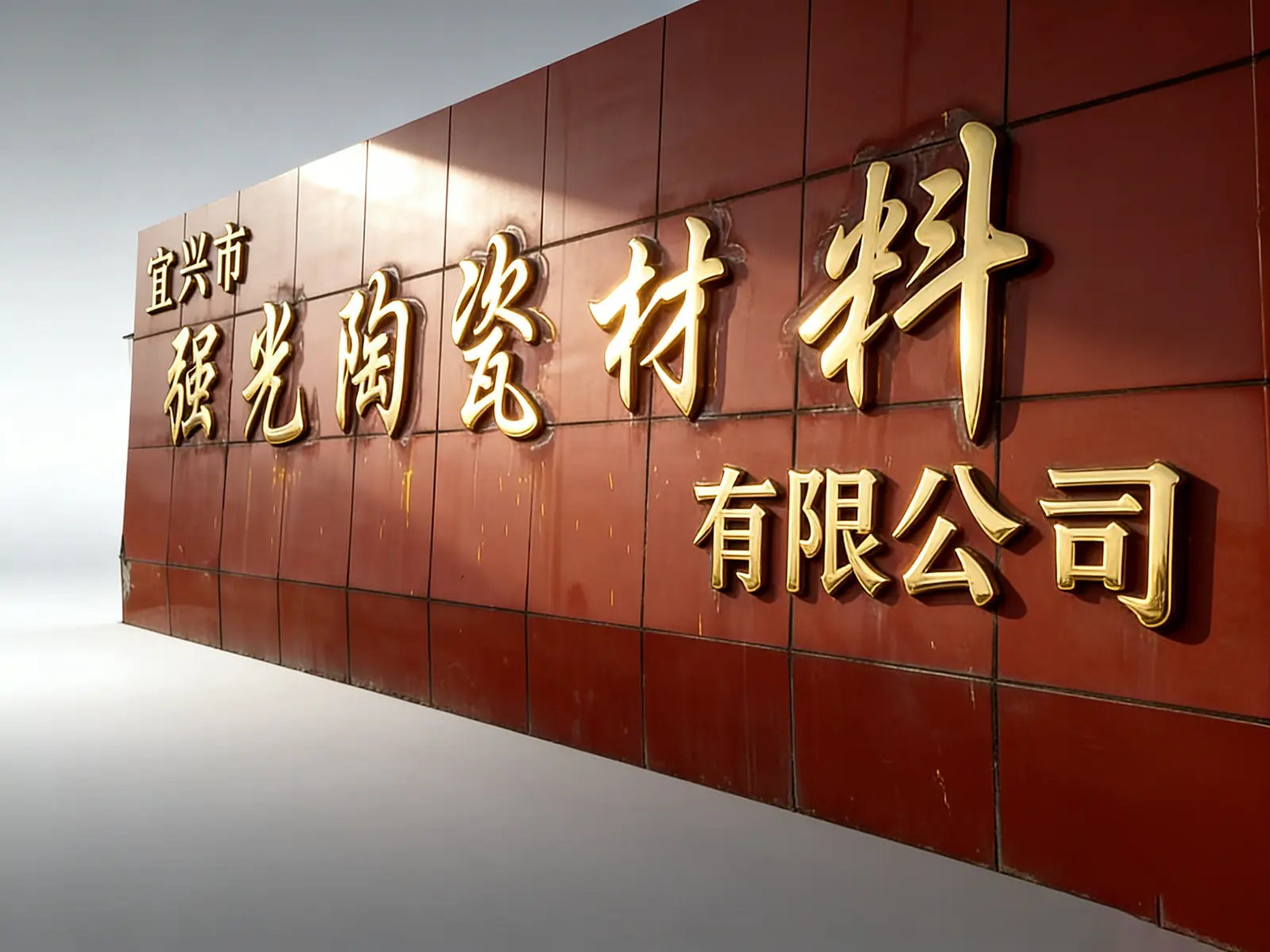
As a major manufacturing hub for technical ceramics worldwide, China has evolved from high-volume standardized production into a sophisticated Industry 4.0 engineering ecosystem. Enterprise suppliers such as Yixing Qiangguang Ceramic Materials Co., Ltd. represent the apex of this evolution by offering fully integrated, closed-loop vertical manufacturing.
From raw powder preparation, chemical spray drying granulating, to custom dopant blending, controlling the raw material synthesis chain internally ensures absolute purity control and eliminates external supply volatility.
Utilizing multi-cavity automatic dry pressing, cold isostatic pressing (CIP) up to 200 MPa for high-density uniformity, tape casting for ultra-thin dielectric ceramic discs, and precision green-state CNC machining.
Atmospheric computer-controlled shuttle kilns and vacuum sintering furnaces reaching 1800°C ensure 99.8%+ theoretical density. Subsequent diamond-wheel double-disc lapping and ultrasonic CNC polishing achieve micrometric tolerances.
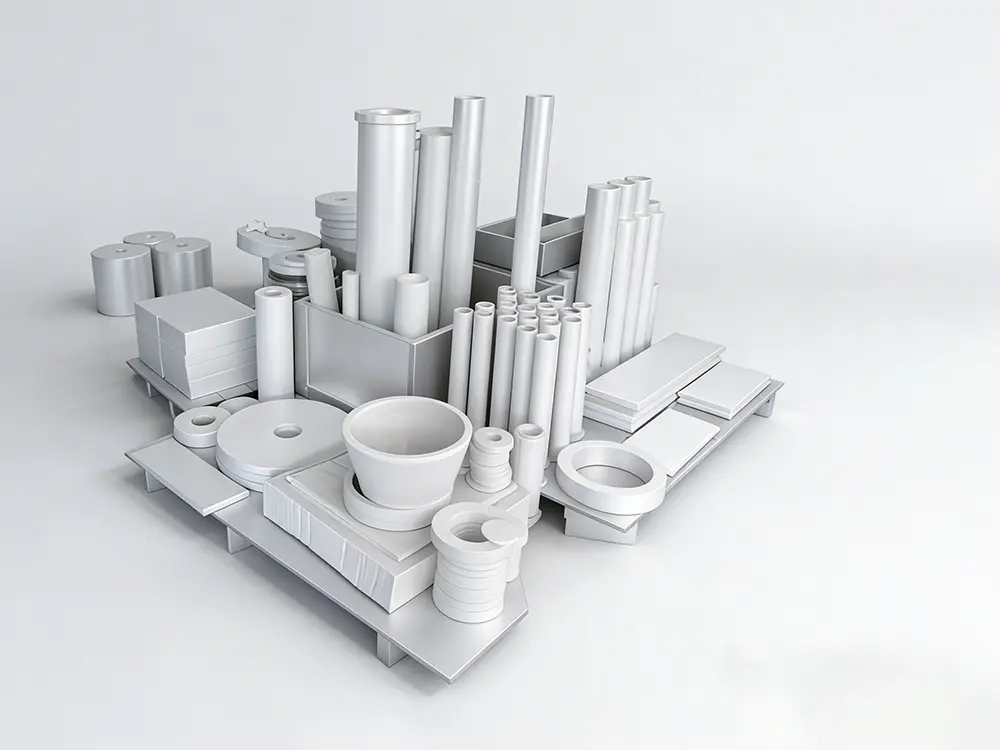
Founded in 2003, Yixing Qiangguang Ceramic Materials Co., Ltd. is a professional provider dedicated to the research and development (R&D), manufacturing, and application solutions of high-performance advanced ceramic materials. It is among the few enterprises in China that possess a complete industrial chain, covering key links from powder forming, sintering, and precision machining to the provision of integrated application solutions.
The company is also a rare domestic manufacturer engaged in the R&D, production, and supply of a comprehensive portfolio of ceramic materials. Its product range covers zirconia, yttria, alumina, magnesia, aluminum nitride, boron nitride, silicon nitride, silicon carbide, aluminum titanate, and other key ceramic materials for demanding industrial applications.
Adhering to the core principle of "creating value for customers", Qiangguang provides customized and cost-efficient advanced ceramic solutions tailored to the specific demands of different international clients. It is supported by high-quality after-sales services and a strict full-process tracking quality management system, which effectively enhances cooperation efficiency and promotes continuous quality improvement.
Benefiting from excellent product performance and stable quality, its products are extensively utilized in various high-end fields, such as food and medical industries, new energy vehicles, laser semiconductors, petrochemical engineering, powder metallurgy, national defense and military, as well as aerospace sectors. At present, the company's products are sold well across China and exported to Italy, the United Kingdom, Australia, Japan, Malaysia, Thailand, Hungary, and other countries and regions.
Ceramic discs serve as critical insulating heat-sink bases for high-power IGBT modules, laser diode mounts, and RF transistors. High thermal conductivity combined with strict surface flatness prevents micro-air gaps, optimizing heat dissipation away from fragile silicon junctions.
Piezoelectric ceramic discs convert electrical pulses into precise mechanical vibrations for EV parking sensors, ultrasonic cleaning tanks, and fuel injection systems. Zirconia and alumina structural discs provide long-life wear resistance in battery fluid pumps.
High-purity Y-TZP zirconia discs are bio-inert, non-allergenic, and resistant to hydrothermal degradation. They are widely machined into dental prosthetics, joint replacement components, and ultra-sharp surgical blade guides.
In aggressive chemical processing plants and high-pressure oil drills, alumina ceramic valve discs maintain zero corrosion and near-zero wear against abrasive slurries, outlasting stainless steel seals by 10 to 15 times.
Procuring custom disc ceramics from overseas factories requires a rigorous verification mechanism to guarantee structural integrity. Below is the recommended engineering protocol for B2B buyers when evaluating manufacturing partners:
Request X-Ray Diffraction (XRD) and Scanning Electron Microscopy (SEM) analysis from the factory to confirm chemical phase purity and sub-micron grain size, eliminating unwanted secondary phases that cause thermal fractures.
Verify density via the Archimedes principle. High-performance ceramic discs must achieve >99% theoretical density to ensure zero internal voids, maximizing electrical breakdown resistance.
Utilize CMM (Coordinate Measuring Machines), laser interferometers, and profilometers to verify diameter tolerance, parallelism, total indicator reading (TIR), and surface roughness (Ra).
Our standard press-and-sinter tolerances range from ±1% of nominal dimensions. However, using precision diamond grinding, CNC lapping, and double-side polishing, Yixing Qiangguang achieves outer diameter and thickness tolerances as tight as ±0.001 mm, with flatness down to λ/4 and surface finish Ra < 0.02 μm upon customer request.
Choose Alumina if your primary operational requirements involve high electrical insulation, high temperature tolerance (>1500°C), and cost management. Select Zirconia (Y-TZP) if your application involves high mechanical stress, heavy impact, high wear, or severe flexural loads where catastrophic ceramic cracking must be avoided.
Yes. We offer custom surface metalization services including Mo-Mn (Molybdenum-Manganese) sintering, thick-film silver/copper printing, and thin-film PVD/CVD coatings (Ni, Au, Ti, Cu) to enable direct soldering and brazing onto printed circuit boards or metallic housings.
For custom tooling and green-state prototype samples, our turnaround time is typically 2 to 3 weeks. Mass production lead times range between 3 and 5 weeks depending on material complexity, sintering cycles, and secondary precision machining requirements.
We enforce complete in-house quality tracking starting from raw powder lot inspection, automated spray drying, computerized kiln sintering logs, to 100% optical dimensional verification. Every export shipment includes full Material Test Reports (MTR) and CMM inspection certificates.
Explore additional high-grade advanced ceramic products engineered for dispersion, thermal management, and severe wear protection.