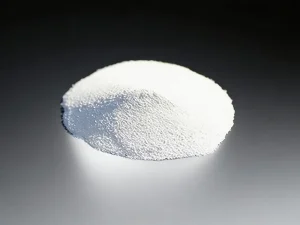
Factory-direct precision engineered ceramics, advanced wear-resistant media, and thermal management components certified for critical industrial infrastructure.
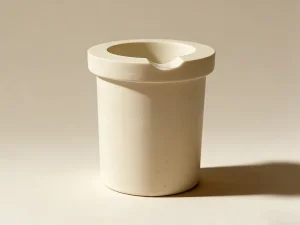
An authoritative analysis of market drivers, material degradation resistance, and the shift toward ultra-pure technical oxide ceramics in modern heavy manufacturing.
High Alumina Ceramic (alpha-alumina, α-Al₂O₃) stands as the backbone of advanced technical ceramics across global heavy industries. Valued for its extreme mechanical hardness, exceptional electrical insulation, zero chemical reactivity with corrosive media, and unmatched thermodynamic stability, the global market demand for wholesale high alumina ceramics has experienced an unprecedented surge.
As global processing industries transition toward higher thermal efficiency and continuous, zero-downtime operation, conventional metallic alloys and low-grade silicates fail under mechanical friction and thermal stress. High alumina ceramics—formulated from 92% to 99.8% aluminum oxide purity—fill this technological void by guaranteeing superior tribological properties and operating capability up to 1700°C.
Understanding the fundamental physical attributes of technical alumina ceramics allows procurement directors and systems design engineers to select optimal formulations based on specific operational stress vectors.
| Property Standard | 92% Al₂O₃ Grade | 95% Al₂O₃ Grade | 99.5%+ High Purity |
|---|---|---|---|
| Bulk Density (g/cm³) | ≥ 3.60 | ≥ 3.68 | ≥ 3.92 - 3.96 |
| Vickers Hardness (HV) | 10.5 GPa | 12.0 GPa | 15.5 - 18.0 GPa |
| Flexural Strength (MPa) | 280 | 320 | 380 - 450 |
| Dielectric Strength (kV/mm) | 14 | 16 | > 20 |
| Thermal Expansion (10⁻⁶/K) | 7.2 | 7.8 | 8.2 |
Pioneering complete industrial chain control from raw chemical powder refinement to ultra-precision CNC diamond machining.
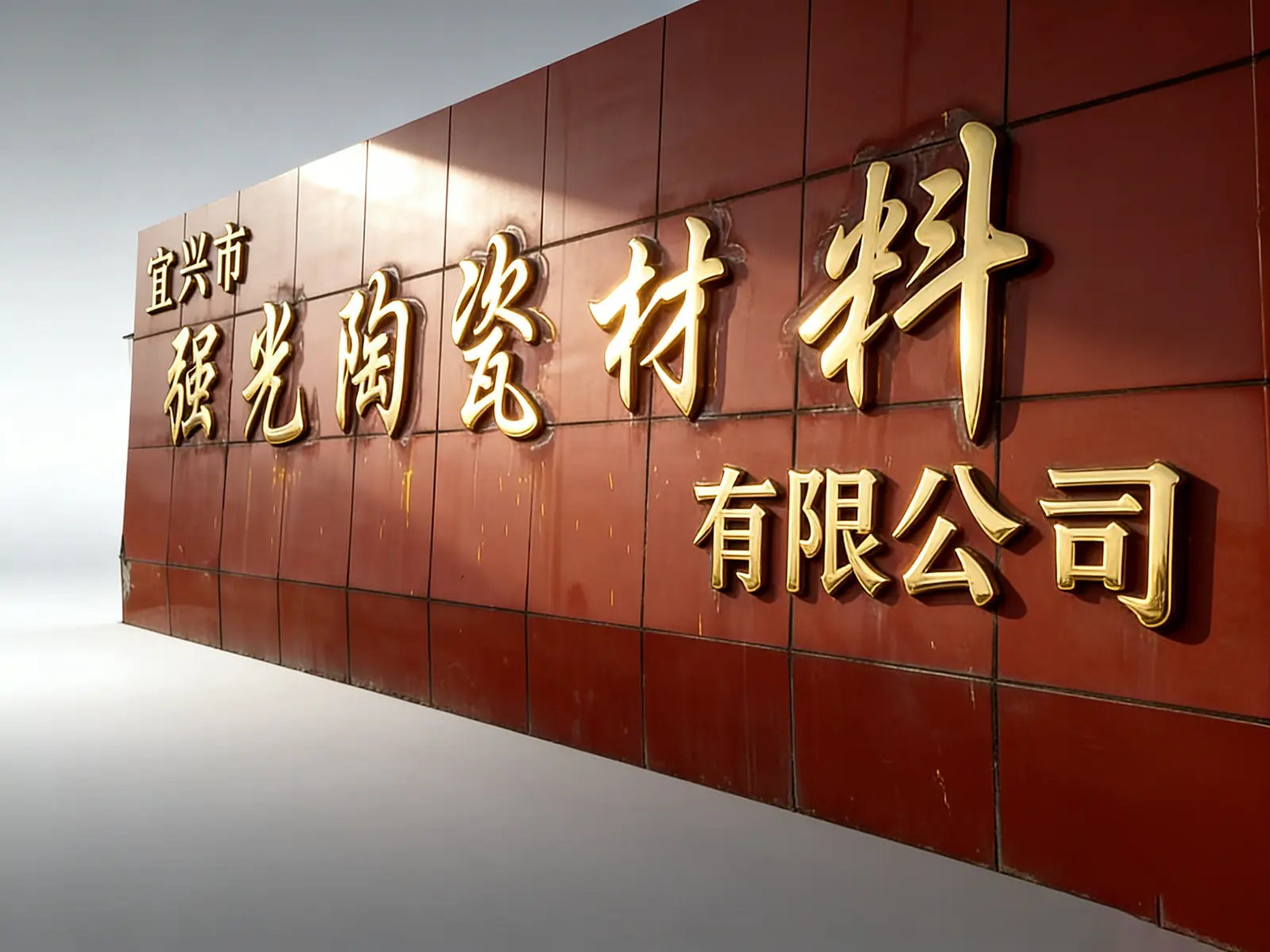
Founded in 2003, Yixing Qiangguang Ceramic Materials Co., Ltd. stands as a premier enterprise in China dedicated to the research, development, custom manufacturing, and global application engineering of high-performance advanced ceramic materials.
Unlike traditional component assemblers or third-party brokers, Qiangguang operates among the rare elite domestic manufacturers possessing a fully integrated, end-to-end industrial chain. This vertical integration encompasses powder synthesis and slurry preparation, high-pressure cold isostatic pressing (CIP), dry pressing, doctor blade casting, high-temperature atmospheric sintering, and sub-micron precision diamond grinding.
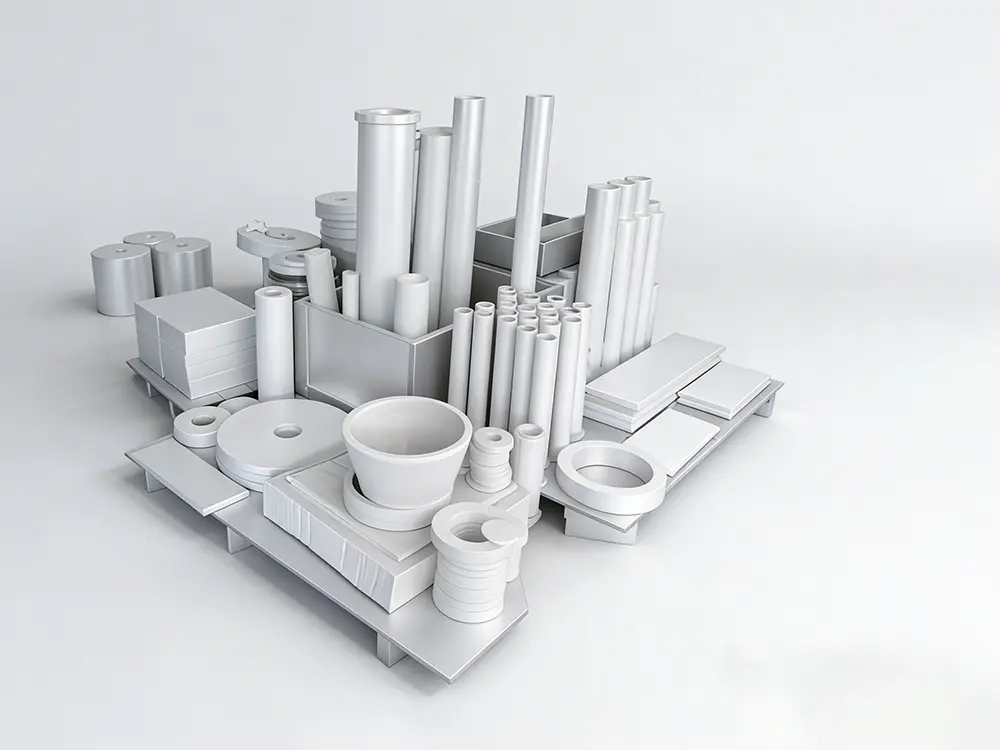
To serve demanding global procurement specifications, Qiangguang has established specialized production facilities capable of synthesizing a complete multi-oxide and non-oxide ceramic material spectrum:
How advanced grain boundary engineering and computer-controlled sintering deliver unmatched density and mechanical performance.
The mechanical reliability of final high alumina components starts at the powder level. We utilize ultra-fine sub-micron alpha-alumina powders processed via chemical precipitation and spray drying. Adding precise grain-growth inhibitors (such as MgO) prevents abnormal grain growth during liquid-phase or solid-state sintering, ensuring uniform grain size distribution (< 2 µm).
To eliminate internal structural voids, green bodies are consolidated using Cold Isostatic Pressing (CIP) at fluid pressures exceeding 200 MPa. This uniform multi-directional compaction eliminates density gradients, ensuring zero distortion, shrinkage anisotropy, or micro-cracking during subsequent high-temperature thermal cycle processing.
Post-sintering, ceramic components reach up to 9 Mohs hardness, requiring specialized diamond wheel grinding, honing, and CNC ultrasonic machining. Our precision finishing department routinely achieves dimensional tolerances within ±0.001 mm and surface roughness values of Ra < 0.05 µm for seal faces and semiconductor components.
Discover how Qiangguang high alumina ceramics solve mission-critical wear, thermal degradation, and electrical insulation problems globally.
High-purity alumina (≥ 99.5%) and Aluminum Nitride (AlN) components serve as heat sinks, wafer chucks, vacuum chamber liners, and high-voltage insulating rings. Exceptional dielectric strength (> 20 kV/mm) combined with high thermal conductivity ensures ultra-stable plasma containment and chip processing performance.
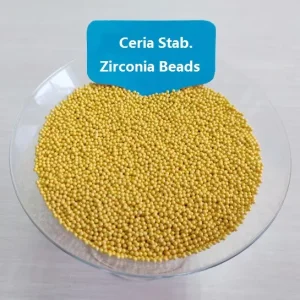
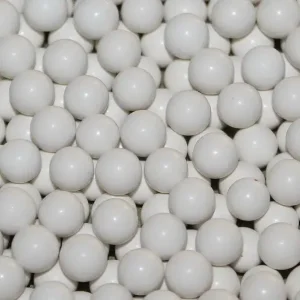
In lithium-ion battery cathode material synthesis (LFP, NCM), metal contamination degrades battery safety and lifespan. High alumina ceramic linings, roller hearth kiln plates, and ultra-durable YSZ/Alumina grinding beads eliminate metallic impurity risks during wet milling and high-temperature calcination.
Industrial pump plungers, mechanical valve seats, sand control nozzles, and pipe wear liners engineered from 95-99% alumina resist severe slurry erosion, aggressive acid/alkali media corrosion, and extreme hydrodynamic pressures in offshore drilling and chemical refineries.
Compliant with strict hygiene and bio-inertness directives, non-porous dense alumina components are widely utilized in dosing pumps, homogenizer valves, and ultra-fine micronizers. Zero leeching ensures 100% purity retention for food ingredients and pharmaceutical formulations.
Withstanding extreme thermal shock, custom-formed Aluminium Titanate (Al₂TiO₅) non-wetting nozzles and high alumina crucible liners optimize non-ferrous metal casting (aluminum, copper alloy) by stopping slag build-up and preventing liquid metal erosion.
Lightweight armor plating, high-temperature radomes, turbine insulation shields, and spark plug insulators benefit from the high strength-to-weight ratio of sintered alpha-alumina, preserving structural integrity under hypersonic thermal friction.
At present, Qiangguang's engineered technical ceramics and high-purity wear-resistant media are sold extensively across China and exported globally to tier-1 manufacturing clients in Italy, the United Kingdom, Australia, Japan, Malaysia, Thailand, Hungary, and other international industrial hubs.
Our dedicated logistics and export compliance teams ensure custom packaging, shock-proof sea/air freight palletization, full customs documentation, and seamless factory-to-door delivery timelines.
Adhering to the core philosophy of "Creating Value for Customers", Qiangguang delivers customized and cost-efficient advanced ceramic solutions tailored to the unique mechanical stresses, thermal profiles, and budget constraints of global engineering enterprises.
Supported by comprehensive technical after-sales engineering services and a strict full-process tracking system (ISO 9001 quality tracing), every product batch guarantees raw powder batch number accountability and zero-defect quality control.
Expert answers to common engineering questions regarding alumina material selection, machining limits, and wholesale factory ordering.
The percentage refers to the mass content of alpha-alumina (Al₂O₃) in the ceramic matrix. As purity increases from 92% to 99.8%, mechanical hardness, wear resistance, corrosion resistance, and dielectric insulation capability increase significantly. Lower percentage ceramics (92%-95%) contain minor glass phases (silicates) that facilitate lower sintering temperatures and cost-effective bulk production (ideal for grinding balls and tile liners). Higher purity ceramic (99%+ Al₂O₃) eliminates glass phases, making it superior for semiconductor, laser, vacuum, and extreme corrosive/high-temperature applications (> 1600°C).
Alumina ceramics offer higher hardness (Mohs 9) and higher thermal stability at a lower material cost compared to zirconia. However, zirconia ceramics (especially Y-TZP) feature superior fracture toughness (resistance to chipping/cracking under high impact) and lower thermal conductivity. In ultra-fine bead milling applications, alumina ceramic balls are preferred for cost efficiency and general slurry dispersion, whereas zirconia beads are selected for high-density, high-viscosity grinding or where zero mill-wear contamination is mandatory.
Yes. Yixing Qiangguang specializes in OEM/ODM custom ceramic manufacturing. Utilizing green-state CNC machining, slip casting, dry pressing, and post-sintering 5-axis diamond grinding, we fabricate intricate geometries including threaded stems, internal channels, tight-tolerance grooves, step-shafts, and polished optical-grade seal faces according to customer-supplied STEP or DWG files.
While high alumina ceramics withstand maximum continuous operating temperatures between 1500°C and 1750°C, their thermal shock resistance (ΔT) is typically around 200°C to 250°C due to a thermal expansion coefficient of ~8 × 10⁻⁶/K. Rapid heating or quenching can induce localized thermal stress gradients, leading to micro-cracking. For environments with extreme transient thermal cycling, Qiangguang recommends our specialized Silicon Nitride (Si₃N₄) or Aluminium Titanate (Al₂TiO₅) ceramic formulations.
Our manufacturing processes are certified under strict quality management systems (ISO 9001). Every wholesale lot undergoes rigorous testing: laser particle sizing for raw powders, Archimedes density verification post-sintering, CMM dimensional measurement, Vickers micro-hardness testing, and ultrasonic crack detection. Complete Certificates of Analysis (COA) are provided with every international shipment.
Explore our full line of specialized zirconia, aluminum nitride, aluminum titanate, and wear-resistant alumina solutions.