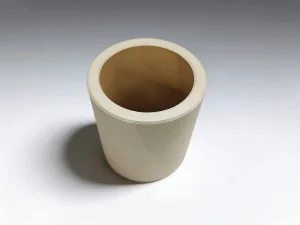
Explore our factory-direct precision advanced ceramic components, manufactured under rigorous quality control standards.
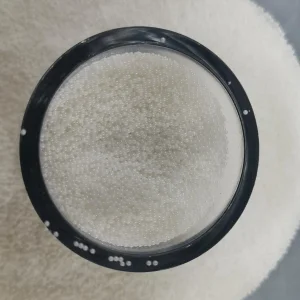
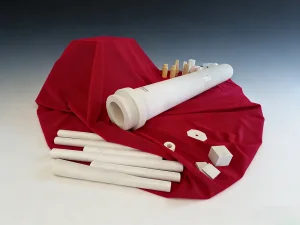
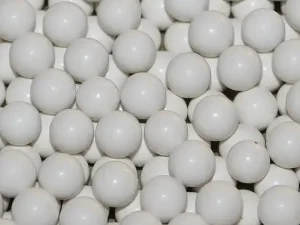
An in-depth evaluation of mechanical, thermal, and electrical performance parameters of high-purity aluminum oxide (Al₂O₃) wafer discs engineered by leading Chinese ceramic manufacturers.
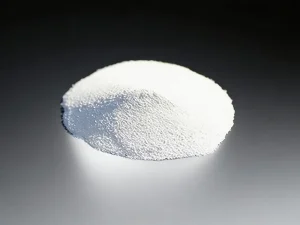
Alumina ceramic discs are synthesized primarily from alpha-phase aluminum oxide (α-Al₂O₃), the thermodynamically stable crystalline form of alumina. The material properties are tightly coupled with grain size distribution, density, and sintering parameters. By controlling raw powder morphology, grain growth inhibitors (such as trace MgO additions), and high-temperature densification schedules, Chinese advanced ceramic factories produce discs with tailored grain structures ranging from sub-micron to 10 microns.
When selecting alumina discs from China suppliers, understanding the raw composition is crucial. The purity level determines the electrical loss tangent, thermal conductivity, and plasma erosion resistance:
Formulated with silicate fluxes for enhanced metallization (Mo-Mn process). Excellent thermal conductivity (~24 W/m·K) and mechanical strength. Widely used for thick-film hybrid microelectronic substrates, power resistor discs, and general insulating washers.
Minimized glass phase content yields superior electrical insulation, lower dielectric loss, and exceptional chemical inertness. Ideal for thin-film electronic substrates, laser pump chambers, chemical pump valve discs, and vacuum feedthroughs.
Manufactured using high-purity synthetic powders via Isostatic Pressing or Tape Casting followed by specialized vacuum or hydrogen atmospheric sintering. Engineered for semiconductor plasma chamber components, wafer carriers, and optical windows.
To assist design engineers in selecting the correct disk material, the following comparative engineering matrix outlines key physical, mechanical, thermal, and electrical metrics across standard advanced ceramic materials:
| Property Parameter | 96% Al₂O₃ | 99.5% Al₂O₃ | Y-TZP Zirconia | Aluminum Nitride (AlN) | Silicon Nitride (Si₃N₄) |
|---|---|---|---|---|---|
| Density (g/cm³) | 3.75 | 3.92 | 6.05 | 3.30 | 3.25 |
| Flexural Strength (MPa) | 330 | 380 | 1100 | 320 | 850 |
| Vickers Hardness (HV0.5) | 1400 | 1600 | 1250 | 1100 | 1500 |
| Thermal Conductivity (W/m·K) | 25 | 35 | 2.5 | 170 - 200 | 30 - 60 |
| Coefficient of Thermal Expansion (10⁻⁶/K) | 7.2 | 8.0 | 10.3 | 4.5 | 3.2 |
| Dielectric Strength (kV/mm) | 16 | 18 | 10 | 15 | 18 |
| Dielectric Constant (1 MHz) | 9.0 | 9.8 | 28.0 | 8.8 | 7.8 |
How global high-tech industries deploy custom alumina discs manufactured in China to meet demanding operational environments.
In plasma etching and chemical vapor deposition (CVD) equipment, 99.9% alumina discs serve as electrostatic chuck (ESC) dielectric covers, focus rings, and vacuum chamber liner discs. Their micro-structural uniformity resists corrosive fluorine and chlorine plasma erosion, preventing particulate contamination on silicon wafers.
Electric vehicle powertrain modules, IGBT power semiconductors, and high-frequency inverters utilize thin alumina substrate discs. Featuring high thermal breakdown resistance and low thermal expansion matching silicon chips, these discs facilitate efficient heat transfer to heatsinks while guaranteeing high-voltage isolation.
Industrial flow control, chemical dosing systems, and sanitary faucets employ ground and polished alumina ceramic valve discs. Thanks to extreme surface flatness (down to lightband optical clarity) and high Mohs hardness (9), alumina valve discs ensure zero-leakage seals and decades of operation without wear.
High-reflectivity alumina ceramic discs act as diffuse reflectors in solid-state laser pumping cavities. Their optical micro-porosity yields high diffuse reflection across ultraviolet, visible, and near-infrared spectrums, maximizing pumping efficiency in laser manufacturing systems.
In ultra-high temperature laboratory and industrial kilns (up to 1750°C), alumina setter plates and disk supports provide structural stability under heavy thermal loads without reacting with sintered components or suffering creep deformation.
In vitro diagnostic equipment, blood chemistry analyzers, and precision microfluidics utilize polished alumina disc insulators and piston plungers due to biocompatibility, non-reactivity with reagents, and resistance to aggressive cleaning agents.
Empowering global OEM customers with full-chain vertical integration, precision manufacturing, and customized material formulations.
Founded in 2003, Yixing Qiangguang Ceramic Materials Co., Ltd. is a professional provider dedicated to the research and development (R&D), manufacturing, and application solutions of high-performance advanced ceramic materials. It is among the few enterprises in China that possess a complete industrial chain, covering key links from powder forming, sintering and precision machining to the provision of integrated application solutions.
The company is also a rare domestic manufacturer engaged in the R&D, production, and supply of a comprehensive portfolio of ceramic materials. Its product range covers zirconia, yttria, alumina, magnesia, aluminum nitride, boron nitride, silicon nitride, silicon carbide, aluminum titanate and other key ceramic materials for industrial use.
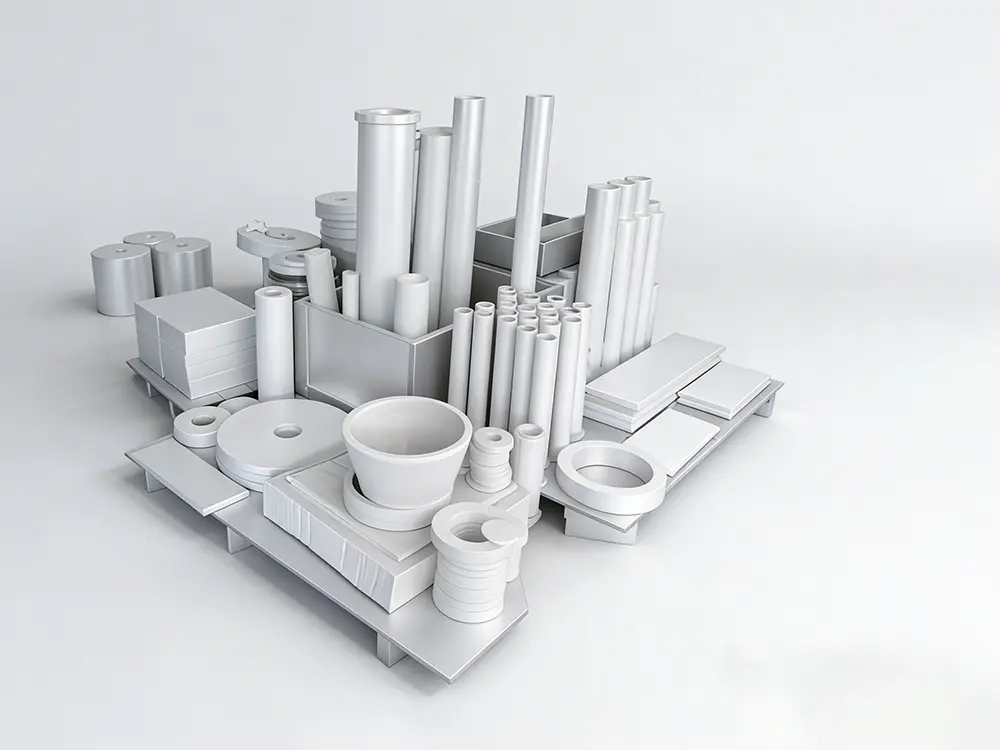
Benefiting from excellent product performance and stable quality, its products are extensively utilized in various high-end fields, such as food and medical industries, new energy vehicles, laser semiconductors, petrochemical engineering, powder metallurgy, national defense and military, as well as aerospace sectors.
Adhering to the core principle of "creating value for customers", Qiangguang provides customized and cost-efficient advanced ceramic solutions tailored to the specific demands of different customers. It is supported by high-quality after-sales services and a strict full-process tracking system, which effectively enhances cooperation efficiency and promotes continuous quality improvement.
At present, the company's products are sold well across the country and exported to Italy, the United Kingdom, Australia, Japan, Malaysia, Thailand, Hungary and other countries and regions. Committed to delivering high-quality products at reasonable prices, Qiangguang sincerely looks forward to establishing long-term and stable cooperative relations with global partners.
From Raw Alumina Powder Processing to Sub-Micron Finishing: How China's Ceramic Ecosystem Delivers World-Class Quality.
Utilizing high-purity spray-dried alumina powders. Shaping techniques include Tape Casting (for thin substrates from 0.1mm to 1.5mm), Dry Pressing (for standard geometric discs), and Cold Isostatic Pressing (CIP, achieving green densities exceeding 60% theoretical density for heavy thick-walled discs).
Computer-controlled high-temperature gas and electric kilns sinter alumina discs at temperatures ranging between 1600°C and 1750°C. Sintering curves are customized to ensure zero macro-voids, uniform grain boundaries, and isotropic thermal contraction.
Post-sintering diamond grinding, lapping, and polishing achieve ultra-tight tolerances. Disk thickness can be ground down to ±0.001mm, with flatness within 1 lightband (0.3 µm) and surface roughness Ra down to <0.01 µm for critical semiconductor sealing surfaces.
As microelectronics demand higher power densities and semiconductor nodes shrink below 2nm, China's advanced ceramic supply chain is pioneering several strategic technological advancements:
Uncompromising compliance, rigorous non-destructive testing, and reliable global trade fulfillment.
Every production batch undergoes comprehensive non-destructive and metrological evaluations:
All alumina discs produced by Yixing Qiangguang comply with international environmental and industrial safety standards:
Direct answers to essential technical and commercial questions raised by global buyers and engineering teams.
Discover our complementary line of industrial zirconia, silicon nitride, and specialized oxide ceramic components.