
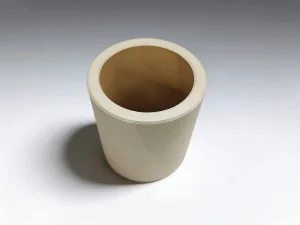
Wholesale China Suppliers Magnesium Stabilized Zirconia Powder - High-Performance Thermal Shock-Resistant Ceramic Factory Manufacturers, Suppliers
View Product Details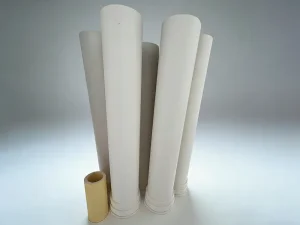
China High-Performance Magnesium Oxide Ceramics for Harsh Environments – China Suppliers & Factory Manufacturers, Suppliers
View Product Details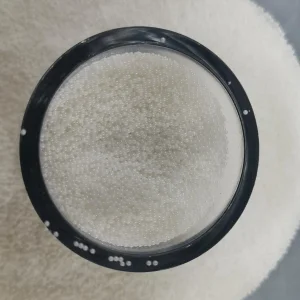
China High-Performance Zirconia Ceramic Beads from China Suppliers - Durable Grinding Solutions from Trusted Factory Manufacturers, Factory
View Product Details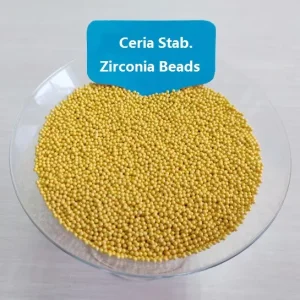
Wholesale Ceria-Stabilized Zirconia Beads from China Suppliers - High-Performance Grinding Media Factory Manufacturer, Suppliers
View Product Details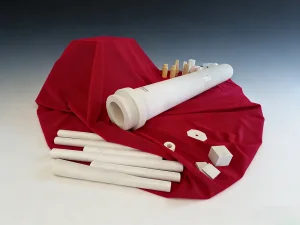
Wholesale China Aluminium Titanate Ceramics Factory – Superior Thermal & Chemical Resistance from Top Suppliers Manufacturers, Factories
View Product Details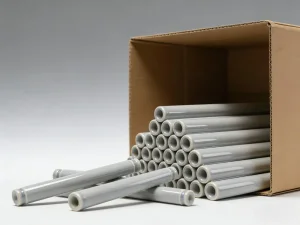
Wholesale Advanced Silicon Nitride Ceramics from China Suppliers and Factory for High-Performance Engineering Applications Supplier, Factory
View Product Details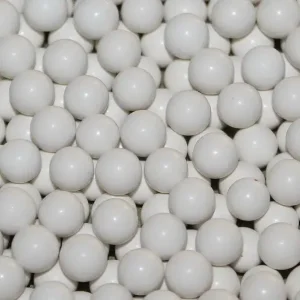
China High-Purity Alumina Ceramic Balls from China - Leading Suppliers and Factory for Grinding and Wear Resistance Manufacturers, Suppliers
View Product Details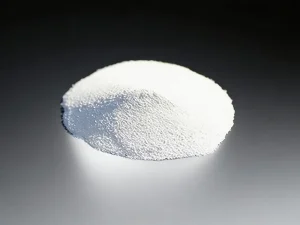
Wholesale Calcium-Stabilized Zirconia Powder: High-Quality Ceramic from China Suppliers and Factory Manufacturer, Supplier
View Product DetailsAn executive technical whitepaper on microstructural design, toughening mechanisms, and China's industrial scaling advantage for modern high-temperature ceramic matrix composites.
In contemporary ultra-high-temperature engineering, traditional monolithic ceramics frequently encounter mechanical bottlenecks. While pure monolithic Alumina (Al₂O₃) offers exceptional hardness, high electrical insulation, and chemical inertness, its low fracture toughness ($K_{IC} \sim 3.5 \text{ MPa}\cdot\text{m}^{1/2}$) and poor thermal shock resistance limit its deployment in severe thermal cyclic operations. Conversely, pure Silicon Carbide (SiC) possesses outstanding thermal conductivity, high hardness, and superior creep resistance, but suffers from high pressureless sintering temperatures and significant processing costs.
To bridge this performance-cost gap, industrial researchers developed Alumina Silicon Carbide Ceramic Composites (Al₂O₃-SiC). By introducing fine micro- or nano-dispersed SiC particles into an alumina oxide matrix, material engineers trigger synergistic mechanical and thermal improvements. The micro-dispersion of SiC restricts matrix grain growth during pressureless or hot-press sintering, pinches grain boundaries, and induces crack deflection, crack bridging, and microcrack toughening mechanisms.
This technical synthesis yields a ceramic composite matrix boasting enhanced flexural strength exceeding 650 MPa, elevated fracture toughness up to 7.5 $\text{MPa}\cdot\text{m}^{1/2}$, and drastically improved resistance to thermal spalling. Today, Alumina Silicon Carbide refractories and structural ceramics serve as critical components across ironmaking blast furnaces, steel ladle linings, semiconductor plasma etch reactors, petrochemical fluid cracking systems, and military-grade armor.
China has emerged as the global leader in synthesizing, molding, sintering, and precision machining of Al₂O₃-SiC ceramic components. Leveraging complete domestic raw material supply chains, advanced sintering kilns, and integrated engineering R&D ecosystems, Chinese manufacturers provide cost-effective, high-reliability ceramic solutions tailored to global enterprise procurement standards.
Understanding why Alumina Silicon Carbide (Al₂O₃-SiC) outperforms standard industrial refractories and oxide ceramics under mechanical thermal stress.
When submicron or nano-scale SiC particles are uniformly encapsulated inside Al₂O₃ grains during sintering, they create residual thermal expansion mismatch stresses. This localized stress field forces propagation cracks to tip-deflect into 3D paths, absorbing immense energy and preventing catastrophic brittle failure.
Silicon Carbide particles positioned at the matrix grain boundaries act as physical pinning agents. During the high-temperature densification stage (1600°C–1750°C), these boundary particles restrict abnormal alumina grain growth, yielding a refined, uniform microstructure with high yield resistance.
At elevated operational temperatures exceeding 1000°C in oxidizing atmospheres, surface SiC particles react with ambient oxygen to form a thin localized amorphous silica ($\text{SiO}_2$) layer. This passive glass layer fills surface micro-cracks, effectively healing flaws and maintaining structural integrity over prolonged shifts.
| Property Parameter | Al₂O₃-SiC (80/20 Refractory) | Al₂O₃-SiC (70/30 Structural) | Nano-Composite (90/10 High-Tech) | Test Standard Method |
|---|---|---|---|---|
| Bulk Density (g/cm³) | 3.70 - 3.82 | 3.80 - 3.92 | 3.95 - 3.98 | ASTM C373 / ISO 5017 |
| Apparent Porosity (%) | < 0.5% | < 0.1% | < 0.05% | ASTM C373 |
| Flexural Strength (MPa, 25°C) | 420 - 500 | 580 - 680 | 750 - 900 | ASTM C1161 (3-Point Flexure) |
| Flexural Strength (MPa, 1200°C) | 380 - 450 | 500 - 580 | 650 - 720 | High Temp Flexure Rig |
| Fracture Toughness $K_{IC}$ ($\text{MPa}\cdot\text{m}^{1/2}$) | 5.2 - 6.0 | 6.5 - 7.5 | 7.8 - 8.5 | ASTM C1421 (SENB) |
| Vickers Hardness (HV10) | 16.5 GPa | 18.5 GPa | 21.0 GPa | ASTM E384 |
| Thermal Conductivity (W/m·K) | 28 - 32 | 35 - 42 | 30 - 36 | Laser Flash Method (ISO 22007) |
| Thermal Expansion Coeff. ($10^{-6}/\text{K}$) | 6.8 (20-1000°C) | 6.2 (20-1000°C) | 7.2 (20-1000°C) | ASTM E228 Dilatometry |
Why top tier global engineering firms, steelmakers, and semiconductor fabricators are expanding their reliance on China’s Alumina Silicon Carbide factories.
Global steelmakers face extreme pressure to cut emissions while extending blast furnace campaign life beyond 15–20 years. Alumina Silicon Carbide bricks, torpedo car linings, and runner refractories offer unmatched resistance to molten iron erosion, slag attack, and thermal shock during cyclic tapping operations. Replacing traditional fireclay or pure alumina refractories with high-density Al₂O₃-SiC composites reduces refractory downtime by up to 40%, directly lowering carbon footprints associated with frequent relining.
In sub-micron wafer processing, component purity, dimensional stability under vacuum, and plasma resistance are non-negotiable. Modern semiconductor OEMs utilize precision-machined Alumina Silicon Carbide ceramic end-effectors, plasma etching chamber rings, and wafer susceptors. The addition of SiC alters electrostatic dissipation properties while retaining extreme rigidity and zero outgassing in harsh chemical vapor deposition (CVD) environments.
The explosive demand for lithium iron phosphate (LFP) and high-nickel NMC cathode active materials requires high-temperature calcination saggar containers that do not contaminate powders or spall under intense thermal cycles. Al₂O₃-SiC ceramic saggars exhibit negligible thermal creep, low expansion, and high resistance to lithium vapor attack, making them mandatory equipment for battery gigafactories worldwide.
Mining operations, cement plants, and coal-fired power plants handle abrasive slurries that rapidly erode metallic alloys. Hydrocyclone liners, ceramic armor tiles, and slurry pump impellers engineered from Alumina Silicon Carbide outlast chromium alloy steels by 8x to 15x in continuous sliding abrasion, radically cutting total cost of ownership (TCO) for global plant operators.
How Chinese advanced ceramic industrial hubs deliver world-class precision, cost competitiveness, and scalable manufacturing throughput.
China commands over 70% of the world's synthetic Silicon Carbide and high-purity calcined Alumina refining capacity. Direct regional sourcing of sub-micron powders minimizes raw material logistics costs and ensures consistent chemical purity free from trace metallic contaminants.
Modern Chinese ceramic factories operate multi-meter continuous shuttle kilns, high-pressure Spark Plasma Sintering (SPS), and atmosphere-controlled Hot Isostatic Pressing (HIP) units. This scale allows simultaneous high-density firing of massive industrial components alongside micro-scale engineered parts.
Machining dense Al₂O₃-SiC composites requires 5-axis ultrasonic diamond grinding equipment. Chinese factories have invested heavily in state-of-the-art CNC machining suites capable of achieving micron-level tolerances ($\pm 0.002 \text{ mm}$) and mirror surface finishes ($Ra < 0.1 \mu\text{m}$).
Real-world deployment profiles of Alumina Silicon Carbide components in demanding mechanical conditions.
How enterprise procurement teams must evaluate Chinese Alumina Silicon Carbide suppliers to ensure zero defect rates.
Ensure your supplier verifies X-Ray Diffraction (XRD) spectral reports to confirm complete conversion of phase raw powders, zero unreacted free carbon, and uniform alpha-SiC dispersion in the alpha-Al₂O₃ lattice.
For critical structural parts, internal micro-voids or micro-cracks lead to catastrophic failure. Qualified manufacturers must perform 100% Non-Destructive Ultrasonic Testing (NDT) to verify internal density uniformity.
High-precision components must be verified using 3D Coordinate Measuring Machines (CMM) in climate-controlled inspection rooms, ensuring GD&T specs for flatness, concentricity, and parallelism are strictly fulfilled.
What is next for the global advanced ceramic industry over the coming decade?
1. Additive Manufacturing (3D Printing) of Al₂O₃-SiC Ceramics: Traditional ceramic forming relies on dry pressing, cold isostatic pressing (CIP), or slip casting, which limits geometric complexity. Leading Chinese research centers and factories are pioneering stereolithography (SLA) and direct ink writing (DIW) for Al₂O₃-SiC green bodies, allowing complex internal cooling channels within ceramic gas turbine blades and chemical microreactors.
2. Graphene & Carbon Nanotube Reinforced Hybrid Composites: To push fracture toughness beyond 10 $\text{MPa}\cdot\text{m}^{1/2}$, researchers are embedding low-weight percentages of graphene nanoplatelets (GNPs) into the Alumina-Silicon Carbide matrix. These 2D nano-fillers pull out during crack propagation, creating interlocking bridging networks that withstand extreme dynamic shocks.
3. Carbon-Neutral Zero-Emission Kiln Firing: In response to global ESG standards, modern tier-1 Chinese ceramic plants are transitioning from fossil-gas shuttle kilns to high-efficiency green electric kilns powered by solar micro-grids and green hydrogen heating systems, reducing embedded carbon per ceramic kilogram by up to 60%.
4. Smart Ceramic Coatings & Thermal Barrier Layers: Advanced thermal spray technologies enable the application of ultra-dense micro-coatings of Al₂O₃-SiC onto metallic substrates, opening cost-effective hybrid metal-ceramic solutions for marine and heavy automotive engine components.
Direct answers to common technical, procurement, and customization queries from global engineers and procurement officers.
While pure Alumina is highly cost-effective and chemically inert, it has a low thermal conductivity ($\sim 20 \text{ W/m·K}$) and moderate fracture toughness, making it susceptible to thermal shock failure under sudden temperature shifts. Adding SiC boosts thermal conductivity by up to 50%, improves fracture toughness by 60–100%, and increases wear resistance significantly under sliding friction.
In reducing or inert gas environments (such as Nitrogen or Argon), Al₂O₃-SiC can operate reliably up to 1750°C. In oxidizing air atmospheres, it functions continuously up to 1450°C–1550°C, where a protective passivation layer of silica ($\text{SiO}_2$) forms naturally to shield the core composite from further oxidation.
Yes. Tier-1 Chinese manufacturers utilize 5-axis CNC diamond grinding machinery, green machining, and high-precision molding. You can supply 3D CAD files (STEP, IGES, SolidWorks) along with strict GD&T drawings, and custom components can be turned around from initial prototyping to mass production efficiently.
Standard catalog products or stock raw powders ship within 5 to 7 business days. Custom engineered tooling, green body molding, pressureless/HIP sintering, and precision diamond grinding usually require 3 to 5 weeks depending on component complexity and order volume.
Standard export documentation packages include full Material Test Reports (MTR), Chemical Purity Analysis (ICP-OES), Bulk Density & Porosity Certificates, CMM Inspection Sheets, and ISO 9001 quality compliance certificates.
A trusted domestic pioneer in advanced ceramic research, manufacturing, and global industrial supply since 2003.
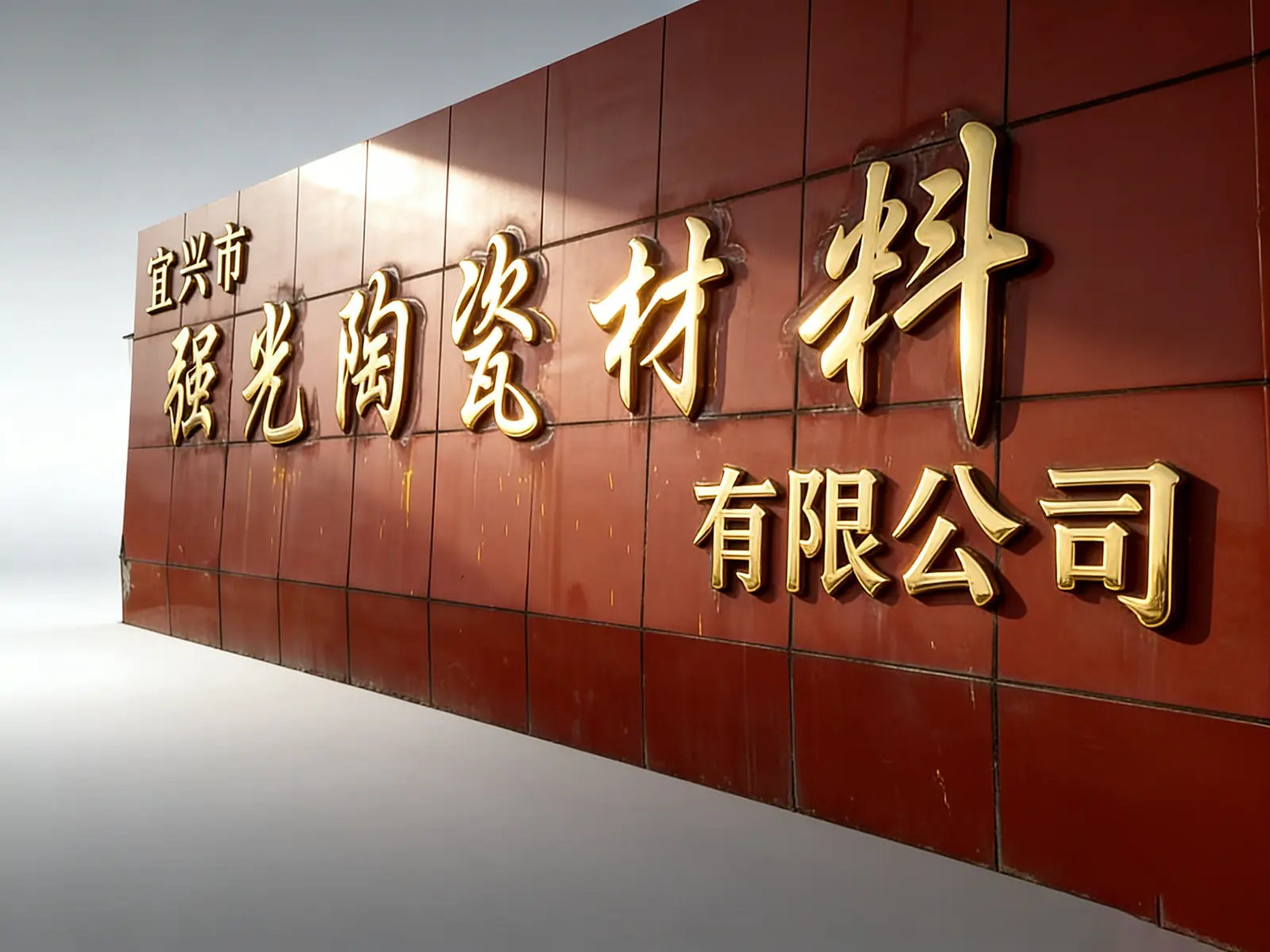
Founded in 2003, Yixing Qiangguang Ceramic Materials Co., Ltd. is a professional provider dedicated to the research and development (R&D), manufacturing, and application solutions of high-performance advanced ceramic materials. It is among the few enterprises in China that possess a complete industrial chain, covering key links from powder forming, sintering and precision machining to the provision of integrated application solutions.
The company is also a rare domestic manufacturer engaged in the R&D, production, and supply of a comprehensive portfolio of ceramic materials. Its product range covers zirconia, yttria, alumina, magnesia, aluminum nitride, boron nitride, silicon nitride, silicon carbide, aluminum titanate and other key ceramic materials for industrial use.
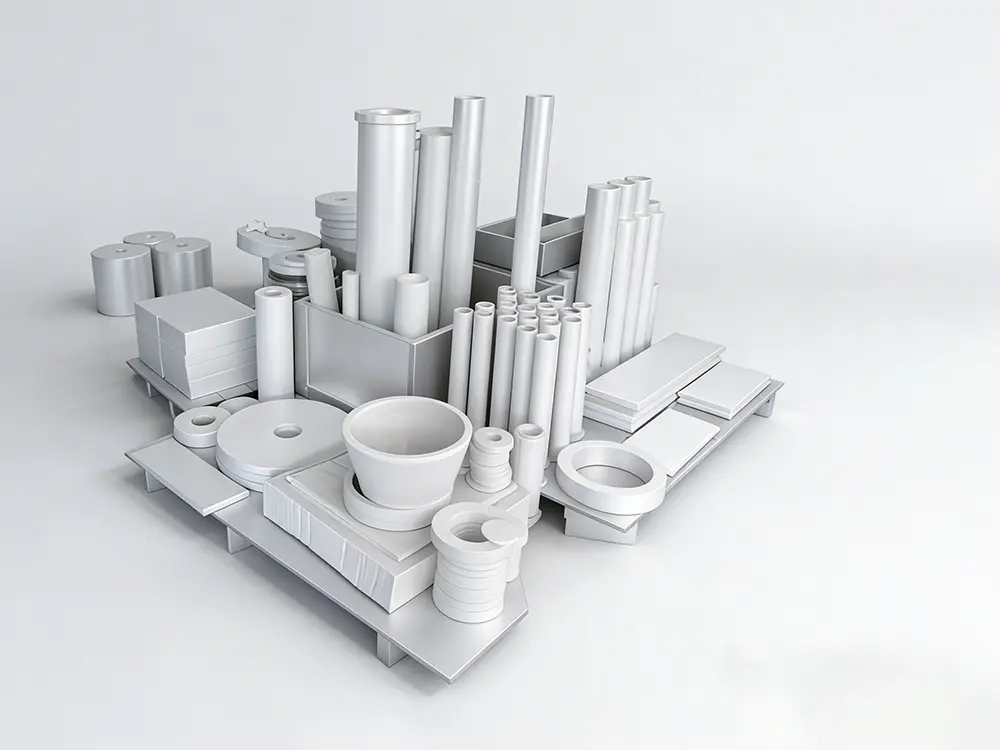
Benefiting from excellent product performance and stable quality, its products are extensively utilized in various high-end fields, such as food and medical industries, new energy vehicles, laser semiconductors, petrochemical engineering, powder metallurgy, national defense and military, as well as aerospace sectors.
Adhering to the core principle of "creating value for customers", Qiangguang provides customized and cost-efficient advanced ceramic solutions tailored to the specific demands of different customers. It is supported by high-quality after-sales services and a strict full-process tracking system, which effectively enhances cooperation efficiency and promotes continuous quality improvement.
At present, the company's products are sold well across the country and exported to Italy, the United Kingdom, Australia, Japan, Malaysia, Thailand, Hungary and other countries and regions. Committed to delivering high-quality products at reasonable prices, Qiangguang sincerely looks forward to establishing long-term and stable cooperative relations with global partners.
China Ceria-Stabilized Zirconia Beads from China Suppliers - High-Performance Grinding Media from Our Factory Manufacturer, Factory
View Product Details
Wholesale High-Performance Magnesium Stabilized Zirconia Powder from China - Reliable Suppliers & Factory for Thermal Shock-Resistant Ceramics Manufacturers, Factory
View Product Details
Wholesale China Aluminium Titanate Ceramics Suppliers - High-Performance Factory Solutions for Extreme Thermal Resistance Factories, Factory
View Product Details
Wholesale Yttria Stabilized Zirconia Powder: High-Toughness Ceramic Material from China Suppliers and Factory Manufacturer, Supplier
View Product Details
China Calcium-Stabilized Zirconia Powder - High-Quality Advanced Ceramic from China Suppliers and Factory Suppliers, Factories
View Product Details
Wholesale Calcium-Stabilized Zirconia Powder from China: Reliable Suppliers and Factory for Advanced Ceramics Manufacturer, Factory
View Product Details
Wholesale Calcium-Stabilized Zirconia Powder from China - Reliable Suppliers and Factory for Advanced Ceramics Manufacturer, Factories
View Product Details
Wholesale High-Purity Alumina Ceramic Balls from China | Reliable Suppliers & Factory for Grinding and Industry Applications Supplier, Factory
View Product Details