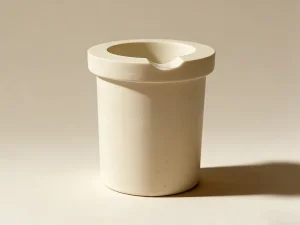

Factory-direct high-purity zirconia, alumina, magnesia, and specialized powders engineered for extreme mechanical, thermal, and electrical environments.
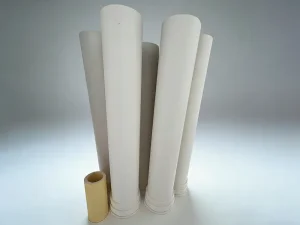
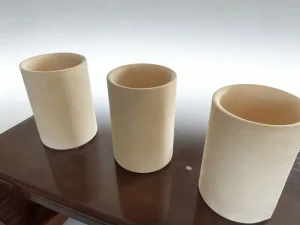
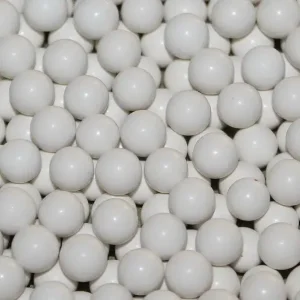
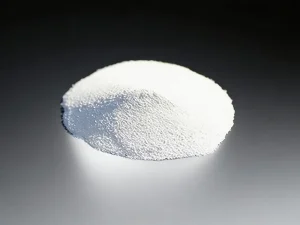
Understanding material behavior, lattice kinetics, phase stabilization, and custom formulation for mission-critical industrial applications.
In modern high-precision engineering, selecting the right industrial ceramic is no longer just about choosing between "alumina" or "zirconia." It requires a microstructural evaluation of grain boundary mechanics, stabilizer chemistry (Yttria vs. Ceria vs. Magnesia vs. Calcia), flexural strength dynamics under high stress, and thermal expansion matching. Original Equipment Manufacturers (OEMs) worldwide rely on China’s leading manufacturers to achieve unprecedented density, zero porosity, and micron-level dimensional tolerances.
Advanced technical ceramics represent the cornerstone of modern heavy industry, semiconductor fabrication, green energy storage, and aerospace engineering. Unlike legacy metals and polymers, technical ceramics exhibit extreme chemical inertness, exceptional hardness, superior dielectric insulation, and resistance to thermal shock at temperatures exceeding 1700°C. However, the precise physical performance of these components is dictated entirely by their fundamental ceramic properties, which vary dramatically depending on phase composition, sintering protocols, and chemical additives.
As global supply chains demand higher efficiency and tighter operational tolerances, China has emerged as the premier global center for advanced ceramic production. By integrating upstream powder synthesis with downstream cold isostatic pressing (CIP), high-temperature vacuum sintering, and multi-axis diamond grinding, tier-1 Chinese manufacturers provide global enterprises with unmatched technical capabilities at cost-optimized scale.
A quantitative analysis of physical properties across primary technical ceramic material families synthesized in China.
| Ceramic Material | Density (g/cm³) | Vickers Hardness (HV) | Flexural Strength (MPa) | Thermal Conductivity (W/m·K) | Max Temp (°C) | Primary Industrial Utility |
|---|---|---|---|---|---|---|
| Yttria-Stabilized Zirconia (3Y-TZP) | 6.05 | 1250 - 1350 | 1000 - 1200 | 2.5 - 3.0 | 1150 | Biomedical, Valve Components, Wear Rings |
| Magnesia-Stabilized Zirconia (Mg-PSZ) | 5.75 | 1100 - 1200 | 700 - 850 | 2.5 | 1400 | Extreme Thermal Shock, Refractory Tooling |
| Alumina Ceramic (99.8% Al₂O₃) | 3.92 - 3.96 | 1600 - 1800 | 350 - 450 | 30 - 35 | 1700 | Electrical Insulators, Chemical Wear Liners |
| Aluminium Titanate (Al₂TiO₅) | 3.30 - 3.60 | 600 - 800 | 30 - 60 | 1.5 - 2.5 | 1450 | Low-Wet Aluminum Casting, Exhaust Manifolds |
| Silicon Nitride (Si₃N₄) | 3.25 | 1400 - 1600 | 850 - 1000 | 30 - 40 | 1200 | High-Speed Bearings, EV Powertrain Components |
| Silicon Carbide (SSiC) | 3.15 | 2200 - 2600 | 400 - 500 | 110 - 130 | 1600 | Mechanical Seals, Semiconductor Substrates |
Pure zirconia ($ZrO_2$) undergoes a destructive monoclinic-to-tetragonal phase transition during thermal cycling. By doping the lattice with Yttria ($Y_2O_3$), Magnesia ($MgO$), or Calcia ($CaO$), Chinese factories freeze the high-strength tetragonal phase at room temperature, unlocking transformation toughening mechanics that arrest micro-cracks before failure.
Magnesium Oxide ($MgO$) and Aluminium Titanate ($Al_2TiO_5$) provide distinct thermodynamic capabilities. Aluminium Titanate possesses a near-zero Coefficient of Thermal Expansion (CTE), making it virtually immune to thermal shock cracking during molten metal processing, whereas Alumina ($Al_2O_3$) balances elevated thermal dissipation with cost-efficient dielectric insulation.
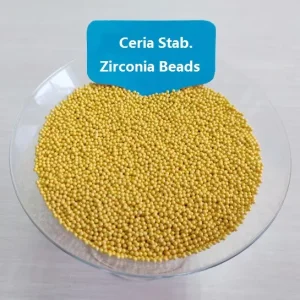
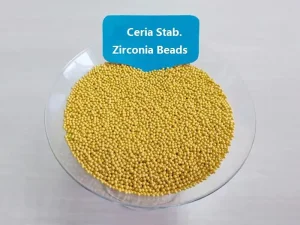
For chemical processing, lithium battery media grinding, and harsh acid/alkali exposure, high-purity ceramic formulations demonstrate zero degradation. Ceria-stabilized zirconia ($Ce-TZP$) beads, for instance, exhibit superior density ($6.20 g/cm^3$) and exceptional resistance to stress corrosion in aqueous environments.
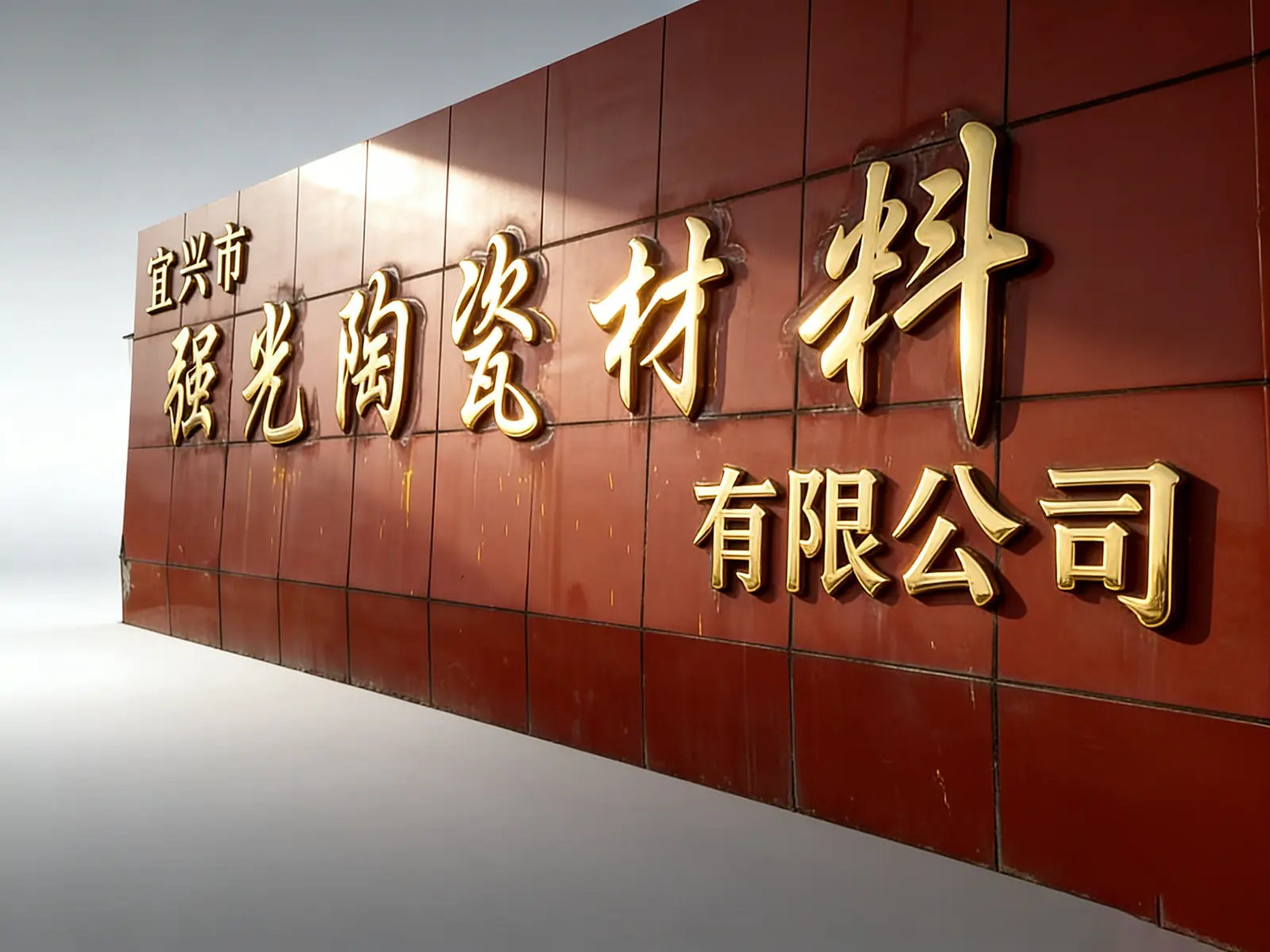
Founded in 2003, Yixing Qiangguang Ceramic Materials Co., Ltd. stands as a premier enterprise in China dedicated to the research, development, synthesis, and precision fabrication of high-performance technical ceramics. It is among the elite class of domestic manufacturers possessing a fully integrated industrial chain, controlling every critical phase from raw powder synthesis to precision sintering and CNC diamond machining.
With over two decades of material engineering leadership, the company produces a comprehensive material portfolio spanning Yttria-Stabilized Zirconia, Ceria-Stabilized Zirconia, Magnesium Oxide, High-Purity Alumina, Aluminum Nitride, Boron Nitride, Silicon Nitride, Silicon Carbide, and Aluminium Titanate.
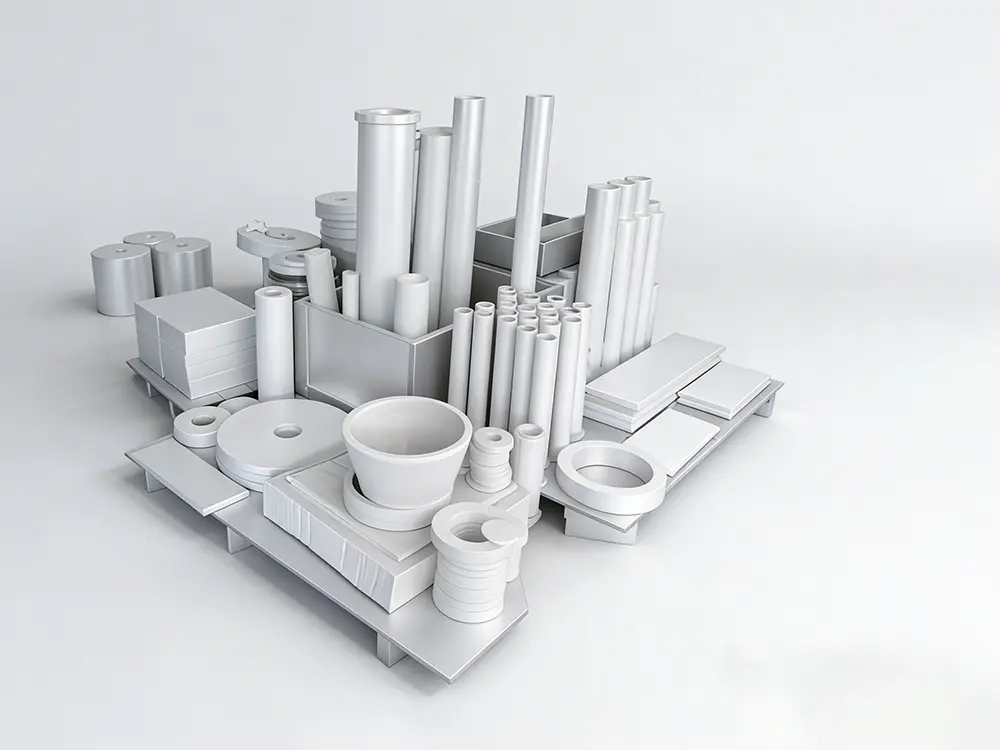
Adhering strictly to the core operational principle of "creating value for customers," Qiangguang provides bespoke and cost-efficient advanced ceramic solutions tailored to demanding industrial requirements. Our full-process quality tracking system guarantees rigorous batch-to-batch consistency and international compliance.
Today, Qiangguang’s ceramic solutions are heavily deployed in food processing, medical systems, new energy vehicles (NEVs), laser semiconductors, petrochemical equipment, powder metallurgy, national defense, and aerospace engineering. Our products enjoy widespread adoption across China and are exported to leading industrial economies, including Italy, the United Kingdom, Australia, Japan, Malaysia, Thailand, Hungary, and beyond.
Tailored material physical properties for specialized global enterprise engineering demands.
Requires ultra-high purity ($>99.99\%$) Alumina and Silicon Nitride components with extremely low particle shedding and exceptional thermal conductivity. Used in plasma etch rings, wafer chucks, laser cavities, and insulator substrate plates.
Employs Ceria-Stabilized and Yttria-Stabilized Zirconia grinding media for sub-micron ultra-fine wet grinding of cathode/anode slurry ($LiFePO_4$). Provides zero metallic contamination and ultra-low media wear rates.
Magnesium Oxide and Zirconia valve seats, plungers, and seal rings resist aggressive acids, abrasive slimes, and severe pressure differentials up to 1400°C, drastically extending pump overhaul intervals.
Yttria-Stabilized Zirconia ceramics provide human tissue biocompatibility, high fracture toughness ($K_{IC} > 9 MPa\cdot m^{1/2}$), and non-magnetic operation for surgical blades, dental prosthetics, and orthopedic implants.
Aluminium Titanate dosing tubes and riser pipes feature non-wetting properties against liquid aluminum and low thermal conductivity, preventing premature solid freezing during die-casting operations.
Silicon Carbide and dense Alumina tiles deliver exceptional hardness-to-weight ratios for personal armor plates and tactical vehicle shielding, efficiently dissipating kinetic impact energy.
Strategic focus areas driving next-generation ceramic property optimizations in Chinese state-of-the-art facilities.
Implementing sub-50nm raw powder synthesis to eliminate intergranular voiding, increasing flexural strength of YSZ ceramics beyond 1400 MPa while achieving optical translucency for advanced optical sensors.
Scaling SLA/DLP 3D printing of complex ceramic geometries (Silicon Nitride and Alumina) without requiring traditional tooling, enabling intricate internal cooling channels for turbine components.
Transitioning high-temperature kilns to green hydrogen electric hybrid firing systems, reducing manufacturing carbon intensity while maintaining ultra-precise ±0.5°C temperature uniformity.
Developing Ceramic Matrix Composites (CMCs) with localized crack-healing chemical reactions triggered by thermal exposure, extending high-stress component operational lifespans by 300%.
Expert responses to critical procurement, material engineering, and performance questions regarding China technical ceramics.
Browse our full series of factory-direct powders, grinding beads, thermal shock components, and wear-resistant technical ceramics.