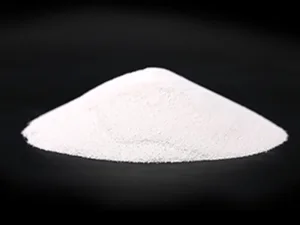
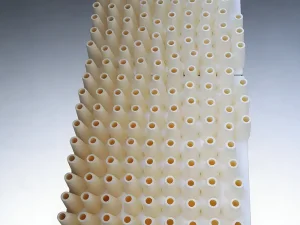
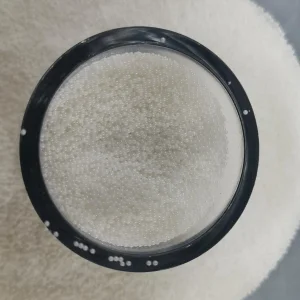
Explore our high-performance technical ceramics, structural tubes, and engineered powders manufactured under strict ISO quality frameworks.
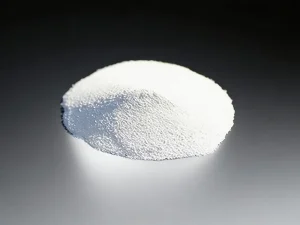
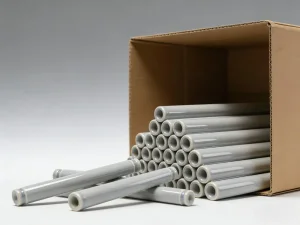
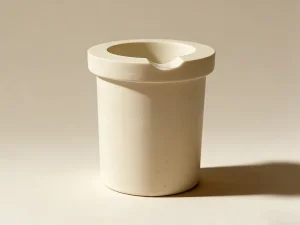
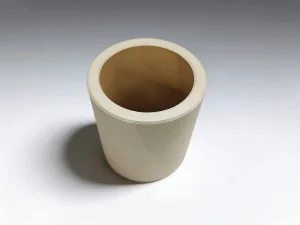
An in-depth analysis of binder formulation, shear stress dynamics, and phase transformations in advanced ceramic profile shaping.
Ceramic extrusion represents a foundational manufacturing technology for producing axisymmetric profiles, high-aspect-ratio honeycomb monoliths, multi-lumen tubes, and intricate structural profiles. Unlike metallic extrusion or polymer processing, ceramic extrusion involves plasticizing non-plastic inorganic powder systems through the addition of tailored organic binder vectors, plasticizers, deflocculants, and solvents. Achieving dimensional stability, high green density, and defect-free microstructures requires precise control over rheological parameters, paste compressibility, and die-exit stress gradients.
At the core of the extrusion process is the conversion of raw ceramic powders—such as Alumina (Al2O3), Yttria-Stabilized Zirconia (YSZ), and Silicon Nitride (Si3N4)—into a pseudoplastic shear-thinning paste. Under high yield stress within the barrel, the ceramic slurry must flow homogeneously through complex dies without phase separation (liquid-solid segregation). If the binder system fails to maintain uniform wall friction and cohesion, microscopic structural laminations, internal voids, and differential shrinkage occur during thermal debinding and pressureless or pressure-assisted sintering.
Modern Chinese extrusion ceramic factories have transformed this traditional process by implementing computer-aided die geometry optimization, ultra-high-pressure vacuum de-airing extruders, and advanced multi-stage thermal processing profile routines. By balancing powder packing geometry with sub-micron particle distributions, tier-one manufacturers produce components with density exceeding 99.5% of theoretical limits, exceptional flexural strength, and extreme dielectric breakdown resilience.
Comparative physical, thermal, and mechanical properties of primary industrial ceramics processed via precision extrusion techniques.
| Ceramic Material Grade | Density (g/cm³) | Flexural Strength (MPa) | Thermal Conductivity (W/m·K) | Max Operating Temp (°C) | Primary Industrial Application |
|---|---|---|---|---|---|
| Alumina (99.8% Al2O3) | 3.95 - 3.98 | 380 - 450 | 30 - 35 | 1700 | Electrical insulators, laser tubes, wear sleeves |
| Yttria-Stabilized Zirconia (3Y-TZP) | 6.05 | 1000 - 1200 | 2.5 - 3.0 | 1200 | High-stress structural shafts, medical plungers, fluid nozzles |
| Silicon Nitride (Si3N4) | 3.25 | 850 - 1000 | 25 - 80 | 1400 | Molten metal tubes, aerospace bearings, welding nozzles |
| Silicon Carbide (SSiC / RBSiC) | 3.10 - 3.15 | 400 - 550 | 110 - 140 | 1650 | Burner nozzles, heat exchanger pipes, chemical seals |
| Aluminum Nitride (AlN) | 3.30 | 320 - 380 | 170 - 220 | 1100 (inert) | Semiconductor heat dissipation channels, substrate carriers |
From micro-powder synthesis to ultra-precision diamond grinding: The complete industrial process chain.
High-purity raw powders undergo sub-micron ball milling and spray drying to create spherical, free-flowing granulates. Specific organic binders (methylcellulose, PVA, PEG) and dispersants are homogenized in high-intensity planetary mixers to achieve absolute paste consistency.
The plasticized ceramic body passes through dual-stage vacuum degassing chambers operating below -0.098 MPa. This removes entrapped air pockets, eliminating internal micro-laminations prior to die passage under high hydraulic pressures (up to 300 Bar).
Green extrusions are subjected to multi-day, computer-controlled thermal debinding profiles (200°C to 600°C). Slow, controlled pyrolytic extraction prevents structural cracking, blister formation, or distortion as organic components volatilize.
Sintering occurs in clean electric batch kilns, vacuum furnaces, or continuous tunnel kilns at temperatures reaching 1850°C. For critical aerospace components, Hot Isostatic Pressing (HIP) is applied under argon gas pressure to yield near-zero porosity.
Post-sintered components undergo diamond grinding, honing, wire-EDM, and ultrasonic machining. Dimensions are held to micro-inch tolerances (±0.001mm), with surface roughness (Ra) optimized down to 0.05 µm for high-speed dynamic seals.
Comprehensive non-destructive evaluation (NDE), dye penetrant testing, X-ray computed tomography, and coordinate measuring machine (CMM) inspections guarantee absolute structural integrity and full compliance with international engineering drawings.
Engineered ceramic extrusion solutions driving innovation across high-tech sectors worldwide.
Extruded high-purity Alumina and Silicon Nitride tubes provide chemical inertness and extreme dielectric isolation within plasma etching chambers and high-power gas laser resonators. Their thermal stability minimizes physical distortion under intensive plasma bombardment.
Extruded zirconia and alumina sleeve components serve as key electrical breakdown barriers, cooling manifolds, and structural support components in high-voltage battery architecture and electric drive inverter modules, withstanding high thermal shock conditions.
Severe-service environments demand extreme corrosion and erosion resistance. Extruded ceramic pipes, choke valve liners, and spray nozzles deliver service lifespans 10 to 20 times longer than tungsten carbide or high-chrome steel alloys in abrasive slurry handling.
Lightweight, high-strength ceramic rods and tubes are vital components for thermal protection shields, high-temperature sensor housings, radomes, and turbine engine test apparatus operating continuously at temperatures surpassing 1400°C.
Bio-inert Y-TZP zirconia and high-purity alumina components produced via precision extrusion fulfill stringent ISO 13485 standards. Applications include biocompatible fluid metering pumps, endo-surgical shafts, and analytical equipment components.
Refractory extrusion ceramic tubes, burner pipes, and thermocouple protection sheaths remain structurally stable under cyclic thermal exposure, ensuring low creep rates and non-contaminating atmosphere containment in industrial furnaces.
Optimizing procurement decisions for international original equipment manufacturers (OEMs).
When international procurement teams evaluate China extrusion ceramic manufacturers, assessing unit price alone provides an incomplete economic evaluation. A rigorous Total Cost of Ownership (TCO) methodology considers long-term operational uptime, maintenance intervals, component life expectancy, tooling amortizations, and quality control assurances.
A premier Chinese enterprise delivering fully integrated advanced ceramic material solutions to world markets.
Founded in 2003, Yixing Qiangguang Ceramic Materials Co., Ltd. is a professional provider dedicated to the research and development (R&D), manufacturing, and application solutions of high-performance advanced ceramic materials. It is among the few enterprises in China that possess a complete industrial chain, covering key links from powder forming, sintering, and precision machining to the provision of integrated application solutions.
The company is also a rare domestic manufacturer engaged in the R&D, production, and supply of a comprehensive portfolio of ceramic materials. Its product range covers zirconia, yttria, alumina, magnesia, aluminum nitride, boron nitride, silicon nitride, silicon carbide, aluminum titanate, and other key ceramic materials for high-demanding industrial applications.
Adhering to the core principle of "Creating value for customers", Qiangguang provides customized and cost-efficient advanced ceramic solutions tailored to the specific demands of different clients. Supported by high-quality technical service and a strict full-process quality tracking system, Qiangguang continuously promotes efficiency and precision across every partnership.
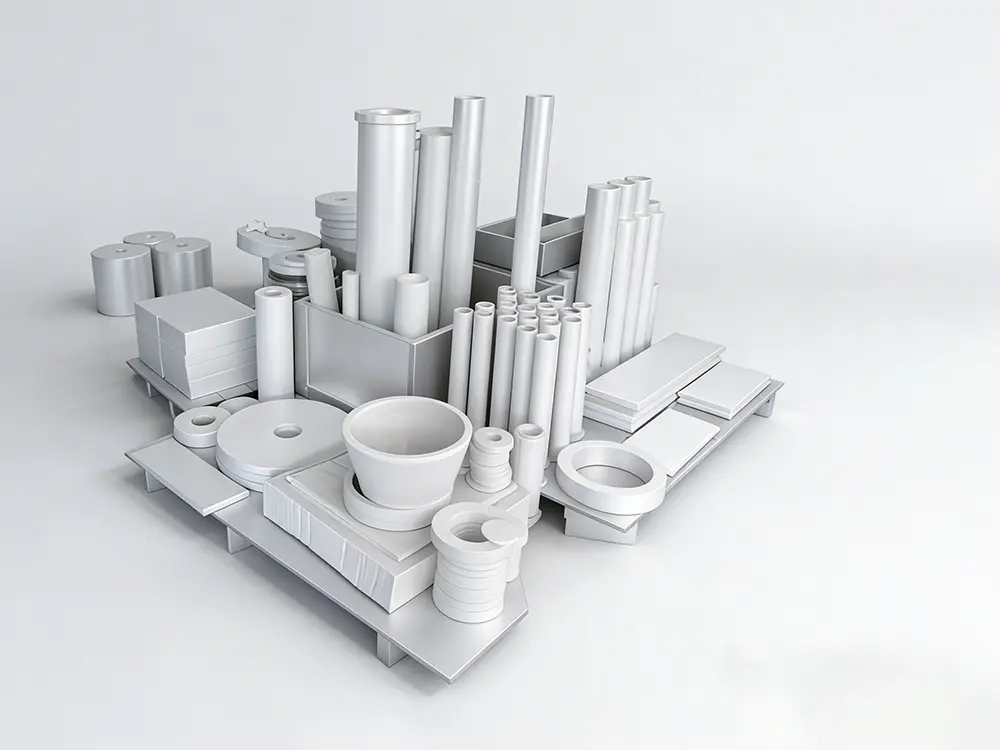
Benefiting from excellent product performance and stable quality, Qiangguang's technical ceramic products are extensively utilized in high-end fields worldwide, including food and medical industries, new energy vehicles, laser semiconductors, petrochemical engineering, powder metallurgy, national defense, and aerospace sectors.
At present, the company's products are sold across domestic industrial hubs and exported to Italy, the United Kingdom, Australia, Japan, Malaysia, Thailand, Hungary, and other key countries and regions. Committed to delivering high-quality products at competitive pricing, Qiangguang sincerely looks forward to establishing long-term, strategic cooperative relationships with global industrial partners.
Pioneering the next generation of ceramic processing technologies for extreme operating environments.
Developing dual-barrel co-extrusion technologies capable of combining electrically conductive ceramic cores with insulating outer ceramic sheaths in a single continuous extrusion step, creating monolithic smart structural sensors.
Integrating Direct Ink Writing (DIW) robocasting with high-density paste extrusion to manufacture lattice-structured ceramic heat exchangers and catalytic supports with complex internal micro-channels.
Transitioning toward hydrogen-fueled kilns and ultra-fast Microwave/Spark Plasma Sintering (SPS) systems to reduce embodied energy by 40% while achieving sub-50nm grain growth containment.
Comprehensive verification protocols guaranteeing consistent material purity and mechanical reliability.
Scanning Electron Microscopy (SEM) and Energy-Dispersive X-ray Spectroscopy (EDS) confirm uniform phase distribution and grain boundary integrity, eliminating microscopic flaws before shipment.
Vickers microhardness testing, three-point/four-point flexural testing (ASTM C1161), and fracture toughness (K1c) evaluations confirm compliance with structural engineering requirements.
All ceramic batches adhere strictly to EU REACH, RoHS 3 environmental standards, and FDA bio-inert guidelines for pharmaceutical processing applications.
Expert engineering answers to common technical queries regarding custom ceramic extrusion manufacturing.
A: Standard extrusion processes can achieve wall thickness tolerances of ±0.05 mm in the green state. Following high-temperature sintering and diamond honing/grinding, final wall thickness tolerances can be held tight to ±0.002 mm (2 µm) depending on geometry and aspect ratio.
A: Warping is controlled through uniform green density distribution, specialized setter plate design, organic binder burn-out kinetics modeling, and vertical or inclined thermal sintering fixtures that allow uniform gravitational relaxation without stress accumulation.
A: 99.8% Alumina can operate continuously in oxidizing atmospheres up to 1700°C. Yttria-Stabilized Zirconia (3Y-TZP) maintains structural integrity up to 1200°C, beyond which grain growth and phase transformation concerns make Calcium-Stabilized or Magnesium-Stabilized Zirconia preferred for higher thermal thresholds.
A: Custom tooling creation (Tungsten Carbide / Tool Steel dies) typically requires 15 to 20 working days. First-article green samples, sintering calibration, and precision machining validation require an additional 15 to 25 days, allowing full sample delivery within 6 to 8 weeks.
A: Ceramic extrusion is significantly more cost-effective for constant cross-sectional profiles (tubes, rods, multi-channel pipes, honeycombs) and high-volume production. It requires lower tooling initial investment compared to complex multi-cavity injection molds and provides higher throughput than cold isostatic pressing (CIP).
A: Yes. Extruded alumina and silicon nitride components can undergo Moly-Manganese (Mo-Mn) or active metal brazing (AMB) processes, receiving Nickel or Gold electroplating for seamless vacuum-tight metal-to-ceramic joining.
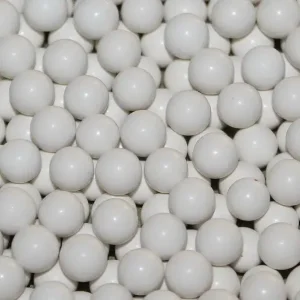
Explore our full range of technical powders, ceramic beads, and specialized high-temperature structural components.