Explore our core engineering materials and custom machinery hardware solutions directly manufactured in our specialized China factories.
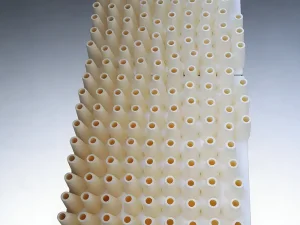
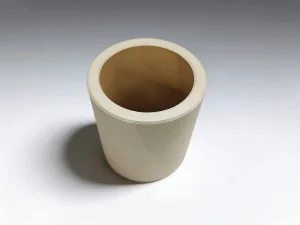
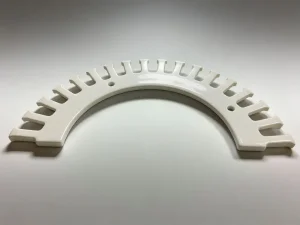
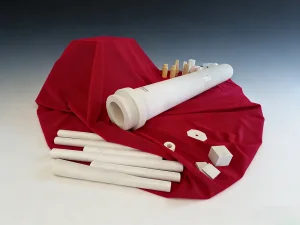
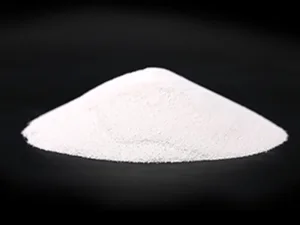
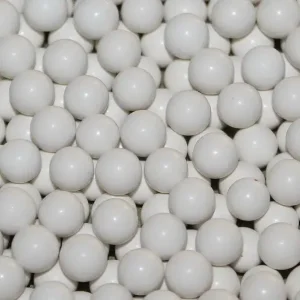
Analyzing global demand, material innovation, and full-value-chain integration across Chinese manufacturing hubs.
In the contemporary landscape of global industrial manufacturing, the hardware machinery sector is undergoing a profound paradigm shift. Conventional metallic alloys—once the undisputed backbone of heavy machinery, fluid control, power transmission, and electronics manufacturing—are increasingly reaching their physical limits. Extreme operating temperatures, severe friction, chemical corrosion, and intense electrical stresses in modern industrial applications demand materials with superior thermodynamic and mechanical endurance.
China has emerged as the premier global epicenter for advanced hardware machinery components and precision technical ceramics. Leveraging integrated raw material supply networks, mature powder metallurgy clusters, and state-of-the-art sintering infrastructure, leading Chinese manufacturers provide high-yield, cost-effective OEM/ODM solutions. As global buyers look for China Hardware Machinery Manufacturer & Factories, the core focus has transitioned from basic structural fabrication to complete material-to-component engineering mastery.
Discover one of China's rare fully integrated technical ceramic and hardware machinery component manufacturers.
Founded in 2003, Pioneer Manufacturer Yixing Qiangguang Ceramic Materials Co., Ltd. is a professional provider dedicated to the research and development (R&D), manufacturing, and application solutions of high-performance advanced ceramic materials. It is among the few enterprises in China that possess a complete industrial chain, covering key links from powder forming, sintering, and precision machining to the provision of integrated application solutions.
The company is also a rare domestic manufacturer engaged in the R&D, production, and supply of a comprehensive portfolio of ceramic materials. Its product range covers zirconia, yttria, alumina, magnesia, aluminum nitride, boron nitride, silicon nitride, silicon carbide, aluminum titanate, and other key ceramic materials for industrial use.
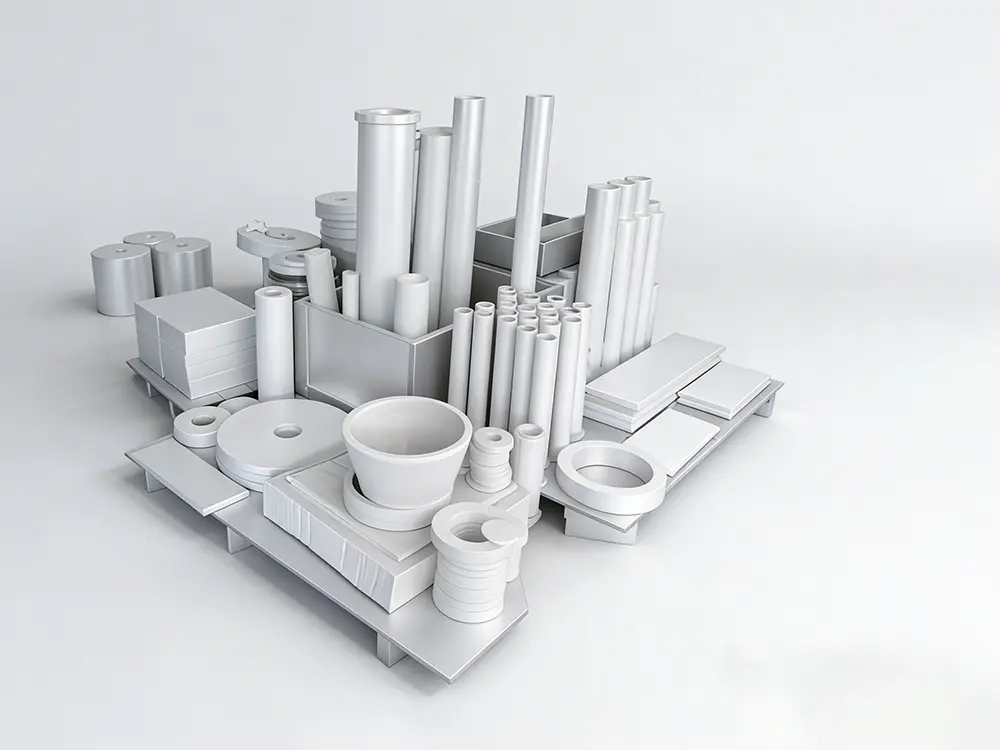
Benefiting from excellent product performance and stable quality, its products are extensively utilized in various high-end fields, such as food and medical industries, new energy vehicles, laser semiconductors, petrochemical engineering, powder metallurgy, national defense and military, as well as aerospace sectors.
Adhering to the core principle of "creating value for customers", Qiangguang provides customized and cost-efficient advanced ceramic solutions tailored to the specific demands of different customers. It is supported by high-quality after-sales services and a strict full-process tracking system, which effectively enhances cooperation efficiency and promotes continuous quality improvement.
Adhering to the core principle of "creating value for customers", Qiangguang provides customized and cost-efficient advanced ceramic solutions tailored to the specific demands of different customers. Supported by high-quality after-sales services and a strict full-process tracking system, we ensure continuous quality enhancement and high operational efficiency.
At present, the company's products are sold well across China and exported to Italy, the United Kingdom, Australia, Japan, Malaysia, Thailand, Hungary, and other countries and regions. Committed to delivering high-quality products at reasonable prices, Qiangguang looks forward to establishing long-term, stable global partnerships.
Unlike standard trading intermediaries, our factory manages everything from raw powder refinement, cold isostatic pressing (CIP), precision CNC green machining, and high-temperature vacuum sintering to final sub-micron diamond lapping and CMM quality verification.
Comprehensive engineering comparison of technical ceramic hardware components used in high-stress industrial applications.
Selection of hardware machinery components requires deep understanding of material properties. Industrial engineers evaluating hardware components must weigh mechanical strength against thermal conductivity, dielectric isolation, and wear characteristics. Below is a validated engineering comparison matrix for key ceramic materials produced at Yixing Qiangguang:
| Material Category | Primary Density (g/cm³) | Flexural Strength (MPa) | Thermal Conductivity (W/m·K) | Max Operating Temp (°C) | Key Industrial Applications |
|---|---|---|---|---|---|
| High-Purity Alumina (Al₂O₃ 99.5%-99.9%) | 3.95 - 3.98 | 350 - 450 | 30 - 35 | 1650 | Electrical insulators, wear nozzles, medical valves, machinery seals |
| Yttria-Stabilized Zirconia (YSZ / ZrO₂) | 6.05 | 900 - 1200 | 2.5 - 3.0 | 1200 | High-wear plungers, cutting blades, biomedical implants, pump shafts |
| Magnesia-Stabilized Zirconia (MSZ) | 5.75 | 650 - 800 | 2.5 | 1400 | Thermal shock components, heavy-duty valve seats, severe fluid control |
| Aluminum Nitride (AlN) | 3.26 | 320 - 400 | 170 - 230 | 1400 (Inert) | Semiconductor wafer chucks, heat sinks, power module substrates |
| Silicon Nitride (Si₃N₄) | 3.25 | 700 - 950 | 30 - 40 | 1400 | High-speed ceramic bearings, gas turbine blades, automotive machinery |
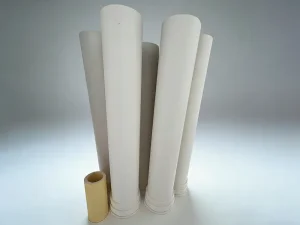
| Aluminium Titanate (Al₂TiO₅) | 3.40 - 3.60 | 40 - 80 | 1.5 - 2.0 | 1450 | Non-wetting riser tubes, molten aluminum foundry nozzles, thermal barriers |
When replacing steel, tungsten carbide, or polymer hardware with engineering ceramics, specific mechanical trade-offs must be governed by operational dynamics:
How global manufacturers leverage Chinese hardware machinery expertise across high-tech domains.
Precision machinery requires dimensionally stable, ultra-pure components. Aluminum Nitride (AlN) and High-Purity Alumina substrates serve as electrostatic wafer chucks, vacuum chamber liners, and laser RF power source insulators where thermal stress and chemical plasma resistance are mandatory.
In lithium-ion battery slurry preparation and cell assembling machinery, severe abrasive wear and iron contamination can destroy battery chemistry. Yttria-stabilized zirconia grinding media and ceramic-lined metering pump plungers completely eliminate metallic contamination while extending operational life by 500%.
Biocompatibility and CIP/SIP (Clean-In-Place / Sterilization-In-Place) chemical resistance make High-Purity Alumina and Zirconia non-porous ceramics the ideal material for pharmaceutical dosing pumps, food filling valves, and orthopedic medical machinery parts.
Aggressive slurry, concentrated acids, and high-pressure fluids quickly erode metallic hardware valves. Silicon Nitride (Si₃N₄) ball valves and Zirconia mechanical seal rings provide near-zero friction, zero corrosion, and immune thermal shock resilience up to extreme atmospheric pressure bars.
Low-mass, high-rigidity structural parts are vital for aerospace turbines and national defense hardware. Magnesium Stabilized Zirconia and Silicon Carbide components maintain structural integrity under hyperthermal shocks and high axial velocity environments.
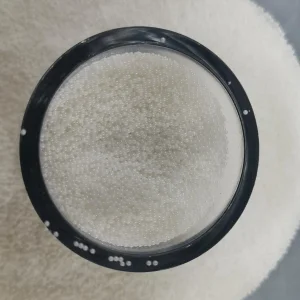
For nanometer-scale particle size reduction in paints, inks, and electronic pastes, Yttria-Stabilized and High-Purity Alumina Ceramic Beads deliver ultra-low wear loss (<0.01 g/kg), ensuring pristine chemical purity and optimized power consumption during milling operations.
How Yixing Qiangguang enforces rigorous E-E-A-T standards across the complete manufacturing chain.
Ensuring zero defect rates in complex industrial hardware components demands relentless process controls. The technical manufacturing workflow at Yixing Qiangguang adheres to systematic engineering checkpoints:
Purity controls begin at particle synthesis. Utilizing spray-drying granulation and sub-micron particle sizing, raw alumina, zirconia, and nitride powders undergo spectrographic verification to maintain purity levels up to 99.9%.
To eliminate internal density gradients and structural micro-voids, powders are compacted under ultra-high hydrostatic pressures (200-300 MPa). This guarantees uniform shrinkage during the subsequent sintering cycle.
Utilizing computerized furnace profiling, components undergo high-temperature sintering ranging from 1450°C to 1950°C in vacuum, nitrogen, or reduced gas environments to achieve near-theoretical density (>99.5%).
Post-sintering ceramics require diamond tooling for final shaping. Advanced 5-axis CNC machining, internal/external grinding, and ultrasonic lapping achieve mechanical dimensional tolerances as strict as ±0.001 mm with Ra 0.05 µm surface finish.
In-depth technical responses to common queries from industrial engineers, OEM buyers, and supply chain directors.
Explore our specialized range of grinding media, powder formulations, and high-shock ceramic materials.