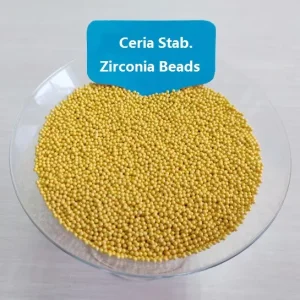
Explore engineered technical ceramic products optimized for severe wear, extreme thermal gradients, electrical isolation, and reactive chemical environments.
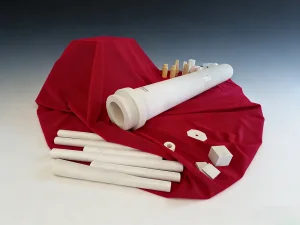
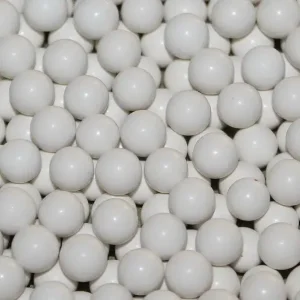
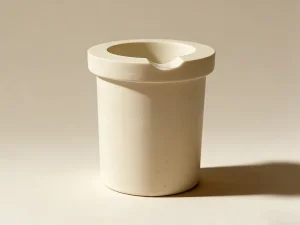
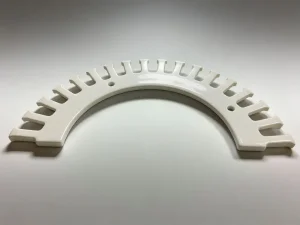
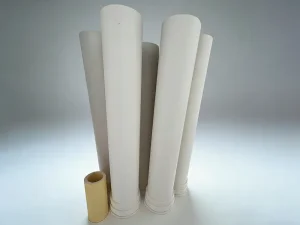
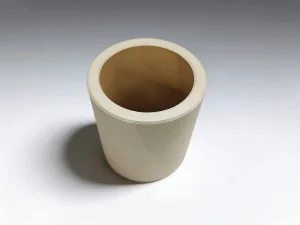
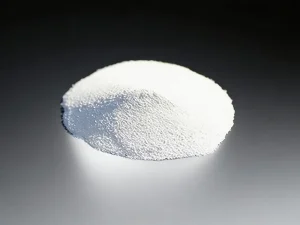
Founded in 2003, Yixing Qiangguang Ceramic Materials Co., Ltd. is a professional provider dedicated to the research and development (R&D), manufacturing, and application solutions of high-performance advanced ceramic materials. It stands as one of the specialized enterprises in China that possess a complete, end-to-end industrial chain—covering key operational phases from high-purity powder synth, precise green body forming, ultra-high temperature vacuum and controlled-atmosphere sintering, to sub-micron precision CNC diamond machining and integrated end-user engineering solutions.
The enterprise represents a rare domestic manufacturing hub capable of supplying an extraordinarily broad technical material portfolio. Our material domain covers high-purity Zirconia ($ZrO_2$), Yttria ($Y_2O_3$), Alumina ($Al_2O_3$), Magnesia ($MgO$), Aluminum Nitride ($AlN$), Boron Nitride ($BN$), Silicon Nitride ($Si_3N_4$), Silicon Carbide ($SiC$), Aluminum Titanate ($Al_2TiO_5$), and specialized composite refractory ceramics engineered for hostile industrial operations.
Selecting the appropriate industrial ceramic formulation requires analyzing coupled thermodynamic, mechanical, electrical, and tribological variables. Advanced structural ceramics replace conventional high-alloy steels, tungsten carbides, and polymers where operating conditions exceed physical limits. Below is an engineering comparison matrix detailing the foundational ceramic material systems synthesized within our China manufacturing facilities.
| Ceramic Material | Density (g/cm³) | Flexural Strength (MPa) | Thermal Conductivity (W/m·K) | Max Operating Temp (°C) | Primary Industrial Vector |
|---|---|---|---|---|---|
| Alumina ($Al_2O_3$, 99.5%-99.8%) | 3.92 - 3.96 | 350 - 450 | 30 - 35 | 1650 | Electrical Insulators, Wear Rings, Substrates |
| Yttria-Stabilized Zirconia (3Y-TZP) | 6.05 | 900 - 1200 | 2.5 - 3.0 | 1150 | Valve Components, Cutting Blades, Implants |
| Magnesia-Stabilized Zirconia (Mg-SZ) | 5.75 | 600 - 750 | 2.5 | 1400 | Extrusion Dies, Heavy Molten Metal Valves |
| Aluminum Nitride (AlN) | 3.26 | 300 - 350 | 170 - 230 | 1150 (In Inert Gas: 1900) | Semiconductor Substrates, Heat Sinks |
| Silicon Nitride ($Si_3N_4$) | 3.22 | 800 - 1100 | 30 - 40 | 1400 | High-Speed Bearings, Turbocharger Rotors |
| Silicon Carbide (SSiC/RSiC) | 3.15 | 400 - 550 | 120 - 140 | 1600 | Mechanical Seals, Kiln Furniture, Armor |
| Aluminium Titanate ($Al_2TiO_5$) | 3.30 - 3.60 | 40 - 80 | 1.5 - 2.0 | 1450 | Riser Tubes, Non-Ferrous Metal Casting |
Pure Zirconia undergoes a disruptive monoclinic-to-tetragonal phase transformation during heating and cooling, resulting in a volume expansion (~4-5%) that induces catastrophic cracking. By alloying raw pure powder with controlled mol percentage stabilizers ($Y_2O_3$, $MgO$, $CaO$, $CeO_2$), our material scientists freeze the room-temperature tetragonal phase:
Delivers transformation toughening. When micro-cracks attempt to propagate, tetragonal grains transform into monoclinic phase under crack-tip stress, expanding and compressing the crack tip closed. Ideal for surgical tooling and ultra-fine bead mill media.
Features larger grain sizes with high fracture toughness ($K_{IC} \ge 10\,\text{MPa}\cdot\text{m}^{1/2}$) and resistance to low-temperature degradation (hydrothermal aging in high-pressure steam environments).
Provides extreme resistance to chemical attack by molten non-ferrous alloys, high thermal inertia, and severe impact crushing resistance in heavy industrial grinding mills.
Procurement directors and chief technology officers across North America, Europe, and the Asia-Pacific region face complex engineering trade-offs when sourcing technical ceramic components from China. Transitioning from legacy metallic components to technical ceramics requires rigorous supplier assessment across four core dimensions:
Contaminants at the parts-per-million (PPM) level cause localized stress concentrations, grain boundary phase segregation, and unexpected dielectric failure. We utilize high-purity chemical precipitation and spray drying to guarantee powder homogeneity.
Ceramic green bodies shrink by 15% to 22% during high-temperature densification. Precision tooling design and Cold Isostatic Pressing (CIP) are vital to maintaining uniform green density and minimizing post-sintering machining stock.
Post-sintered technical ceramics reach hardness levels of Mohs 8.5 to 9.5. Finishing complex internal radii, precise seal faces, and thread profiles demands 5-axis CNC diamond grinding, lapping, and ultrasonic machining.
While initial unit acquisition cost for technical ceramics exceeds standard stainless steel, operational lifespans increase by 500% to 2000%, sharply reducing costly process downtime, maintenance cycles, and unscheduled shutdowns.
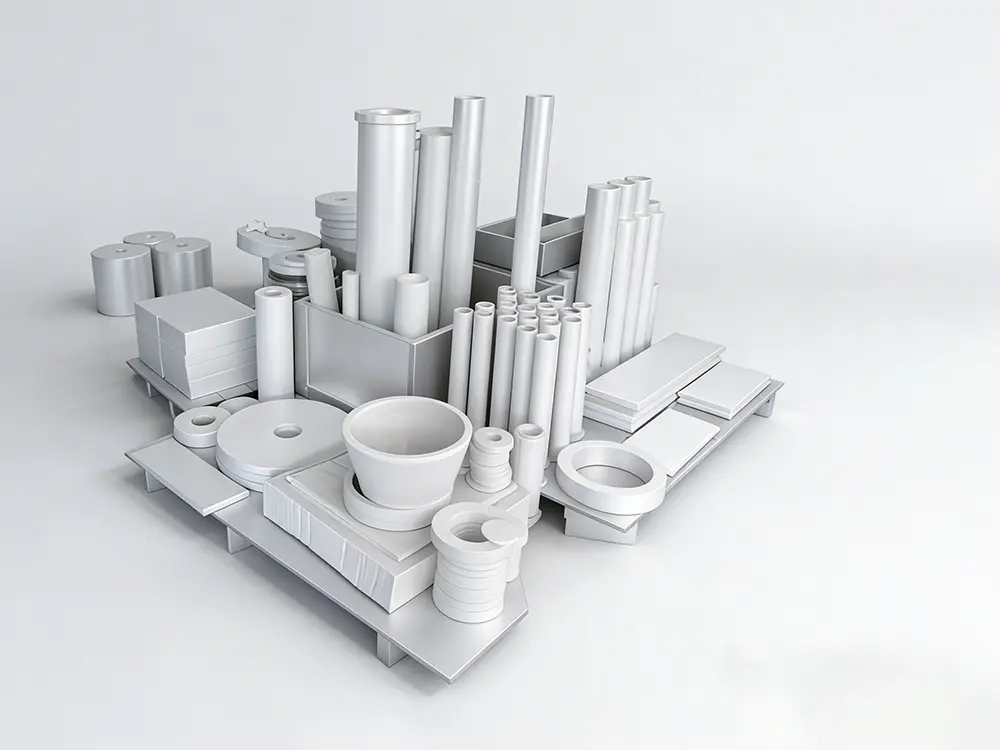
Benefiting from excellent material stability, superior mechanical hardness, and chemical inertness, products manufactured by Qiangguang are extensively deployed across critical high-tech industrial segments:
Achieving extreme density, isotropic mechanical strength, and tight dimensional tolerances requires total control of the manufacturing sequence. Qiangguang operates a vertically integrated factory footprint in China built on rigorous process controls:
Chemical co-precipitation and spray-drying granulate raw materials into uniform, highly flowable spherical agglomerates mixed with organic binders for uniform green density.
Utilizing Cold Isostatic Pressing (CIP) at hydrostatic pressures exceeding 200 MPa, eliminating internal voids and ensuring uniform density throughout complex structural geometries.
Atmospheric, vacuum, and Hot Isostatic Pressing (HIP) up to 1800°C eliminate residual porosity, bringing material density above 99.5% of theoretical limits.
High-speed 5-axis diamond CNC milling, flat lapping, and cylindrical grinding achieve mirror polishes ($Ra < 0.05\,\mu m$) and micron-level geometric tolerances.
Adhering to the core principle of "Creating value for customers", Qiangguang provides customized and cost-efficient advanced ceramic solutions tailored to the specific demands of diverse enterprise buyers. Supported by high-quality after-sales engineering services and a strict full-process tracking system, our operations ensure rapid prototyping, seamless batch production transitions, and continuous quality optimization.
At present, the company's products are widely distributed across China and exported globally to premier industrial markets including Italy, the United Kingdom, Australia, Japan, Malaysia, Thailand, Hungary, and other regions across Europe, the Americas, and Southeast Asia. Committed to delivering world-class products at competitive pricing, Qiangguang continuously builds long-term technical partnerships with international original equipment manufacturers (OEMs).
The industrial ceramic landscape is undergoing a paradigm shift driven by decarbonization targets, semiconductor scaling, and extreme space exploration demands. Key technology vectors steering our continuous R&D efforts include:
Stereolithography (SLA) and Selective Laser Sintering (SLS) of ceramic slurries allow net-shape production of internal cooling micro-channels and complex internal cavities without hard tooling.
Neural network monitoring of sintering atmosphere, ramp speeds, and vapor pressure controls grain boundary growth, yielding high fracture toughness and zero internal micro-porosity.
Integrating carbon nanotubes, graphene, and silicon carbide whiskers into alumina and zirconia matrices to achieve enhanced electrical conductivity and high crack-deflection capabilities.
Browse our complete range of specialized grinding media, high-temperature oxide powders, and structural technical ceramics.
Unlike specialized machine shops that purchase third-party blanks, Yixing Qiangguang operates a complete vertically integrated supply chain established in 2003. We control raw oxide powder synthesis, green body formation (CIP), high-temperature vacuum sintering, and multi-axis diamond CNC machining, ensuring complete lot-to-lot traceability and consistency.
High-purity Alumina offers superior hardness, elevated maximum working temperatures (up to 1650°C), and lower raw material cost. However, Zirconia provides dramatically higher flexural strength (900–1200 MPa) and fracture toughness due to phase transformation toughening, making it the superior material for high-impact, severe mechanical shock, and tight-tolerance shear valve environments.
Aluminium Titanate exhibits an extremely low coefficient of thermal expansion combined with a high degree of micro-cracking structural elasticity. This grants the material unmatched resistance to catastrophic thermal shock while maintaining non-wetting properties against molten aluminum, magnesium, and copper alloys.
All finished precision ceramic components undergo non-destructive ultrasonic defect scanning, laser interferometry for surface roughness ($Ra$), and coordinate measuring machine (CMM) dimensional verification. Production lots are compliance-certified with ISO and material purity inspection sheets prior to export packaging.
Yes. Our in-house engineering team works directly with client STEP, IGES, or DWG models to formulate green body shrinkage models, custom tooling dies, and diamond grinding routines optimized for specialized OEM machinery.