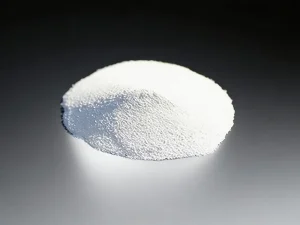
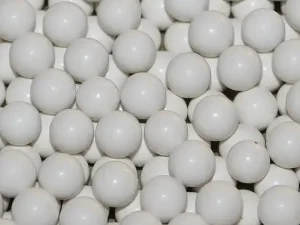
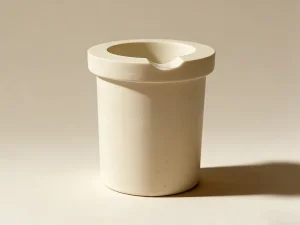
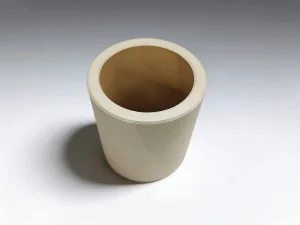
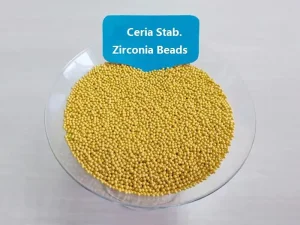
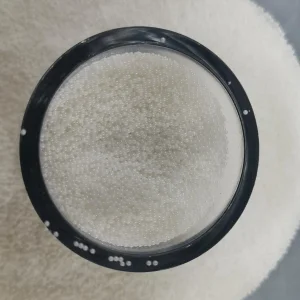
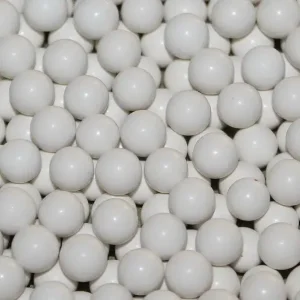
Factory-direct high-purity powders, structural components, and high-density grinding media engineered for extreme thermal and mechanical performance.
Bridging traditional ceramic craftsmanship with modern semiconductor-grade materials engineering.
Founded in 2003, Yixing Qiangguang Ceramic Materials Co., Ltd. stands as a premier specialized manufacturer and global solution provider in the field of high-performance advanced ceramic materials and pottery supplies. Located in Yixing—the historical heartland of Chinese ceramic science—our organization is among the elite few domestic enterprises possessing an entirely integrated, end-to-end industrial architecture.
Our capabilities encompass every vital link in technical ceramic production: from ultra-fine raw powder preparation, spray drying, cold isostatic pressing (CIP), high-temperature sintering, and precision diamond machining, to providing tailored engineering application solutions for Fortune 500 enterprises.
Integrated Industrial Chain: Raw Powder Forming → Cold Isostatic Pressing → Sintering (up to 2000°C) → Precision CNC Diamond Machining → Integrated Application Solutions.
Analyzing key structural shifts from traditional pottery formulations to high-end functional ceramic substrates.
Modern industrial pottery and technical ceramic procurement has pivoted toward nanometer-scale, ultra-pure powders. Impurities above 50 ppm in alumina or zirconia substrates can lead to phase instability, reduced dielectric strength, and mechanical failure in semiconductor and aerospace environments.
With electronic power densities rising exponentially in Electric Vehicle (EV) inverters and 5G/6G RF modules, ceramics with extreme thermal conductivity—such as Aluminum Nitride (AlN) and Silicon Nitride (Si3N4)—are rapidly replacing traditional alumina components in structural thermal pottery applications.
Industrial kilns, chemical reactors, and hypersonic aerospace vehicles demand materials that withstand severe thermal shock, molten metals, and corrosive acids. Stabilized zirconia variants (CSZ, MSZ, YSZ) and Aluminum Titanate are becoming standard requirements for high-stress tooling.
Historically recognized for artisanal earthenware and classical pottery supplies, China's ceramic manufacturing sector has undergone a massive technological transformation. Today, manufacturers like Yixing Qiangguang Ceramic Materials Co., Ltd. combine centuries-old mineral handling wisdom with state-of-the-art materials science, automated spray-drying towers, high-pressure cold isostatic presses, and vacuum sintering furnaces. This evolution allows global buyers to source industrial pottery supplies and advanced ceramics that meet strict international standards (ISO, ASTM, DIN) at competitive cost structures.
Solving complex sourcing challenges for procurement managers, chemical engineers, and R&D directors.
Through deep user intent mining across international B2B purchasing channels, we identified five critical pain points that global procurement teams face when sourcing pottery supplies and advanced industrial ceramics from China:
Variations in powder grain size distribution or binder composition result in unpredicted shrinkage rates during firing. Qiangguang guarantees strict microstructural uniformity via computerized laser diffraction particle analysis.
In high-speed ultra-fine grinding (lithium battery cathode processing) or metal casting, inferior ceramic media disintegrate, contaminating product streams. Our YSZ and Ceria-stabilized beads offer zero-contamination wear rates under high-shear operations.
Engineered structural components often require sub-micron precision (±0.001 mm). Qiangguang operates high-precision 5-axis CNC diamond grinding centers capable of matching ultra-tight geometric specifications for medical and semiconductor applications.
Comprehensive comparative analysis of primary ceramic formulations provided by Yixing Qiangguang.
| Material Type | Density (g/cm³) | Thermal Conductivity (W/m·K) | Vickers Hardness (HV) | Max Operating Temp (°C) | Primary Industrial & Pottery Application |
|---|---|---|---|---|---|
| Yttria-Stabilized Zirconia (YSZ) | 6.05 | 2.5 - 3.0 | 1250 - 1350 | 1500°C | Grinding media, structural pottery, oxygen sensors, dental prosthetics |
| Calcium-Stabilized Zirconia (CSZ) | 5.60 | 2.0 - 2.5 | 1100 - 1200 | 2000°C | Refractory crucibles, high-temp furnace linings, thermal barriers |
| Magnesium-Stabilized Zirconia (MSZ) | 5.75 | 2.2 - 2.8 | 1150 - 1250 | 1800°C | Extreme thermal shock applications, valve components, molten metal handling |
| Alumina (Al₂O₃ 99.5%+) | 3.92 | 30 | 1500 - 1650 | 1650°C | Wear-resistant linings, electronic substrates, mill grinding balls |
| Aluminum Nitride (AlN) | 3.30 | 170 - 230 | 1200 | 1000°C (Inert) | Semiconductor heat sinks, LED power modules, microelectronic packaging |
| Aluminum Titanate (Al₂TiO₅) | 3.50 | 1.5 - 2.0 | 800 | 1400°C | Non-wetting low-pressure die casting risers, aluminum foundry nozzles |
| Magnesium Oxide (MgO) | 3.58 | 40 - 60 | 700 | 2400°C | Ultra-high-temperature heating elements, refractory crucibles |
Selecting the optimal material system requires balancing thermal, mechanical, and electrical properties. For instance, while Alumina (Al₂O₃) delivers exceptional cost-to-hardness efficiency for bulk grinding and industrial pottery components, Yttria-Stabilized Zirconia (YSZ) utilizes stress-induced phase transformation (tetragonal to monoclinic) to arrest crack propagation, granting it unprecedented fracture toughness among ceramic materials.
Conversely, in applications where severe thermal cycling occurs—such as hot metal metering or high-speed thermal processing—Magnesium Stabilized Zirconia (MSZ) and Aluminum Titanate excel due to their ultra-low coefficient of thermal expansion and high resistance to microcracking.
Full-chain precision control from raw ceramic powder synthesis to sub-micron finishing.
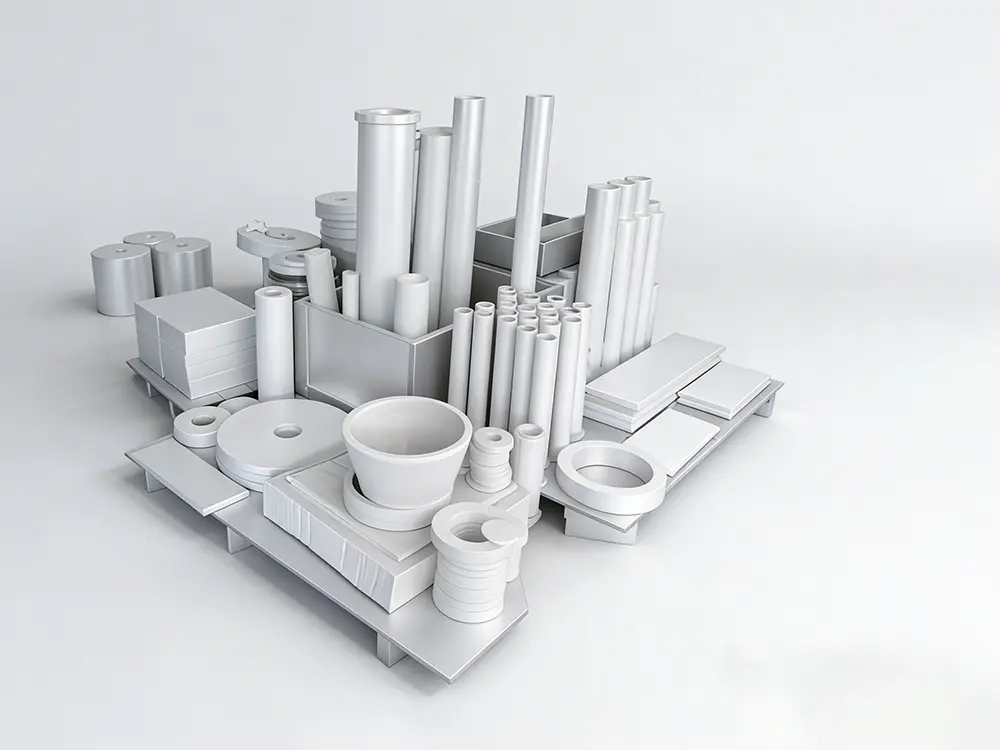
Delivering domain-specific material performance across high-tech global industries.
Aluminum Nitride (AlN) substrates and high-purity alumina insulators provide critical dielectric isolation and rapid heat dissipation in high-power laser diodes, plasma etching chambers, and wafer processing equipment.
High-density Ceria and Yttria-stabilized Zirconia grinding beads are crucial for ultra-fine wet milling of lithium iron phosphate (LFP) and nickel-manganese-cobalt (NMC) cathode/anode slurries down to nanometer particle size.
Corrosion-resistant zirconia plungers, alumina valve seats, and ceramic pump components survive exposure to strong acids, alkaline media, and high-pressure abrasive slurries without mechanical degradation.
Bio-inert YSZ and high-purity alumina ceramics comply with stringent medical standards. Used extensively in surgical tools, fluid dispensing pumps, and food-grade high-shear homogenizers.
Magnesium Oxide crucibles and Aluminum Titanate risers offer low thermal expansion and zero wetting against molten aluminum, copper, and precious metals, preventing casting defects and chemical contamination.
Silicon Nitride and Boron Nitride components engineered for high-altitude radomes, hypersonic thermal insulation tiles, and rocket propulsion nozzle liners requiring zero structural failure at extreme temperatures.
Connecting Chinese technical ceramic innovation with international industrial partners.
Adhering to our core operational principle of "Creating Value for Customers," Yixing Qiangguang Ceramic Materials Co., Ltd. provides customized, cost-efficient advanced ceramic solutions tailored to the explicit engineering demands of global clients. Supported by dedicated technical after-sales assistance and a full-process digital tracking system, we ensure maximum cooperation efficiency and continuous quality refinement.
Our products are trusted across domestic high-tech sectors and exported to key industrial nations including Italy, the United Kingdom, Australia, Japan, Malaysia, Thailand, Hungary, and regional hubs worldwide. By maintaining strategic buffer stocks, flexible OEM/ODM manufacturing protocols, and compliance with global shipping safety standards (IMO, IATA, RoHS, REACH), we ensure seamless supply chain continuity for international partners.
E-E-A-T Quality Assurance Commitment: Every production lot undergoes rigorous laboratory verification—including X-Ray Fluorescence (XRF) for chemical purity, Scanning Electron Microscopy (SEM) for grain microstructural analysis, and ultrasonic flaw detection—guaranteeing 100% compliance with client technical drawings.
Pioneering next-generation ceramic technologies for tomorrow's industrial demands.
Developing stereolithography (SLA) and binder jetting technologies for complex lattice-structure ceramics without hard tooling constraints, enabling rapid prototyping for aerospace heat exchangers.
Integrating machine learning algorithms into powder batching and sintering temperature curves to predict microstructural grain growth and optimize mechanical toughness automatically.
Implementing low-carbon microwave sintering and closed-loop water recycling systems across our production lines to minimize environmental footprint while maintaining structural integrity.
Expert solutions to common queries regarding pottery supplies, structural ceramics, and factory ordering.
Yttria-Stabilized Zirconia (YSZ) utilizes Y₂O₃ to stabilize the tetragonal crystal phase at room temperature, granting high flexural strength (up to 1000 MPa) and high fracture toughness. It is ideal for wear-resistant structural components, grinding beads, and dental ceramics. Calcium-Stabilized Zirconia (CSZ) uses CaO as a stabilizer, offering superior resistance to thermal shock and higher temperature tolerance (up to 2000°C), making CSZ the preferred choice for refractory crucibles and molten metal handling in industrial pottery applications.
Sourcing directly from an established China manufacturer like Yixing Qiangguang Ceramic Materials Co., Ltd. provides access to full supply chain integration—from raw material synthesis to high-precision CNC machining. This delivers cost savings of 30-50% compared to Western suppliers while adhering strictly to international quality control standards (ISO9001), ensuring batch-to-batch consistency and rapid custom engineering response times.
Volumetric shrinkage during ceramic sintering typically ranges from 15% to 22%, depending on powder particle density and binder ratio. Qiangguang controls dimensional accuracy through precise green-density monitoring during Cold Isostatic Pressing (CIP), computerized thermal ramp profiles, and post-sintering 5-axis CNC diamond grinding to achieve tight tolerances within ±0.001 mm.
Aluminum Nitride (AlN) is the superior choice for high-thermal conductivity applications requiring electrical insulation. It boasts a thermal conductivity of 170–230 W/m·K (nearly 7-8 times higher than standard Alumina) while maintaining excellent dielectric isolation, making it essential for semiconductor substrates, LED heat sinks, and high-power electronics.
Yes. We specialize in custom OEM and ODM manufacturing. Global clients can submit CAD files (STEP, IGES, DWG), and our engineering team will evaluate thermal/mechanical specs, optimize green body forming, and diamond-machine the finished components to exact geometric blueprints.
For high-energy wet milling of battery materials (e.g., LFP, NMC), 0.1mm–0.8mm Ceria-Stabilized Zirconia Beads or Yttria-Stabilized Zirconia Beads are recommended due to their high density (up to 6.2 g/cm³), extreme wear resistance, and zero chemical contamination risk.
Complete product offerings for high-temperature engineering, ultra-fine grinding, and structural applications.