Factory-Direct Precision Engineered Media, Powders, and Advanced Structural Components
Understanding Phase Transformation Toughening, Thermal Shock Resistance, and Material Science Fundamentals
Pure zirconium dioxide (ZrO₂) undergoes destructive phase transitions during thermal cycling. Upon cooling from sintering temperatures, pure zirconia transitions from a cubic phase (stable above 2370°C) to a tetragonal phase (1170°C to 2370°C), and finally to a monoclinic phase below 1170°C. This monoclinic phase transformation is accompanied by a severe volume expansion of approximately 3% to 5%, which induces catastrophic lattice cracking and structural failure. To overcome this fundamental limitation, modern ceramic material science introduces stabilizing oxides—most notably Magnesium Oxide (MgO), Calcium Oxide (CaO), and Yttria (Y₂O₃)—to yield Partially Stabilized Zirconia (PSZ).
When evaluated within the framework of China PSZ Zirconia Factories & Factory Capabilities, PSZ engineered by leading Chinese ceramic institutes relies on a multiphase microstructure. This microstructure typically consists of a cubic zirconia matrix embedded with metastably retained tetragonal precipitates. When an external stress field or micro-crack propagates through the material, these metastable tetragonal precipitates undergo a stress-induced martensitic transformation into the monoclinic phase. The localized expansion associated with this transformation exerts compressive stresses around the crack tip, effectively arresting crack propagation. This mechanism, known globally as Transformation Toughening (TT), endows PSZ with extraordinary fracture toughness ($K_{IC} > 7-12 \text{ MPa}\cdot\text{m}^{1/2}$), exceptional bending strength, and unprecedented thermal shock resilience.
Unlike Yttria-stabilized Tetragonal Zirconia Polycrystals (Y-TZP), which can suffer from low-temperature degradation (LTD) or hydrothermal aging in wet environments between 150°C and 300°C, Magnesia-Partially Stabilized Zirconia (Mg-PSZ) maintains structural integrity under steam, molten metal exposure, and extreme cyclic thermal loads up to 1400°C. This makes Mg-PSZ the gold standard material for metallurgy, refractory valves, and heavy-duty industrial wear components.
| Material Parameter | Mg-PSZ (Magnesia-Stabilized) | Y-TZP (Yttria-Tetragonal) | Ca-PSZ (Calcia-Stabilized) | High-Purity Alumina (99.5%) |
|---|---|---|---|---|
| Primary Stabilizer Code | 3.0 - 3.5 wt% MgO | 3 mol% Y₂O₃ | 4.0 - 5.0 wt% CaO | N/A (α-Al₂O₃) |
| Density (g/cm³) | 5.70 - 5.80 | 6.05 | 5.60 - 5.70 | 3.95 |
| Fracture Toughness (MPa·m¹/²) | 9.0 - 12.0 | 5.0 - 8.0 | 7.0 - 9.0 | 3.5 - 4.5 |
| Thermal Shock Resistance (ΔT °C) | > 500°C (Superior) | ~ 300°C | > 450°C | ~ 200°C |
| Hydrothermal Aging Resistance | Immune to LTD | Susceptible in steam | High | Immune |
| Thermal Expansion (10⁻⁶/K) | 9.5 - 10.5 | 10.5 | 10.0 | 8.1 |
Deconstructing High-Value Procurement Requirements Across Heavy Industry and Tech Frontiers
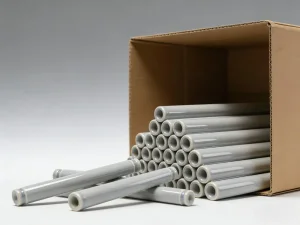
Continuous steel casting operations require slide gate plates, metering nozzles, and sub-entry nozzles capable of enduring rapid temperature transitions from ambient to 1650°C without catastrophic micro-cracking or erosion from molten steel alloys.
Oil & gas extraction, slurry pumping, and aggressive chemical processing demand valve seats, check balls, and ceramic plungers that exhibit zero chemical degradation when exposed to hydrogen sulfide, hot acid slurries, and high-pressure abrasion.
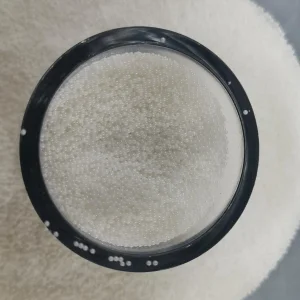
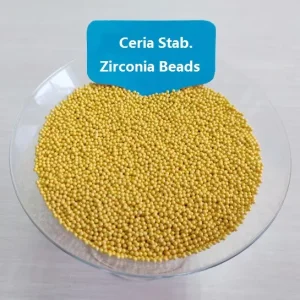
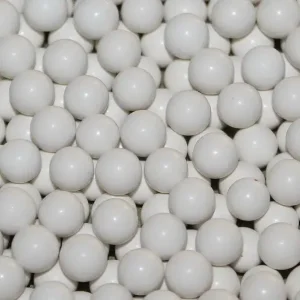
Manufacturers of lithium-ion battery cathode materials, electronic ceramics, and automotive pigments seek ultra-dense, low-wear PSZ micro-beads (<0.1mm to 2.0mm) to achieve sub-micron particle distributions without contamination.
Yixing Qiangguang Ceramic Materials Co., Ltd. - Full Industrial Chain Capabilities
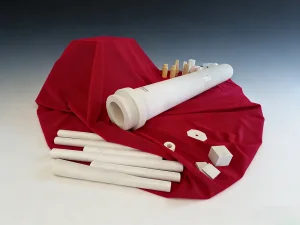
Founded in 2003, Yixing Qiangguang Ceramic Materials Co., Ltd. is a professional provider dedicated to the research and development (R&D), manufacturing, and application solutions of high-performance advanced ceramic materials. It stands among the few elite enterprises in China that possess a completely integrated industrial chain—spanning powder synthesis, precision cold isostatic pressing (CIP), high-temperature atmosphere sintering, and multi-axis CNC diamond machining.
As a rare domestic manufacturer offering a comprehensive portfolio of advanced ceramics, Qiangguang’s production capacity encompasses Partially Stabilized Zirconia (Mg-PSZ, Ca-PSZ), Yttria-stabilized Zirconia (Y-TZP), Alumina (Al₂O₃), Magnesia (MgO), Aluminum Nitride (AlN), Boron Nitride (BN), Silicon Nitride (Si₃N₄), Silicon Carbide (SiC), and Aluminum Titanate (Al₂TiO₅).
Adhering to the foundational commitment of "Creating value for customers", Qiangguang provides customized, engineered ceramic solutions tailored to rigorous industrial requirements. Backed by rigorous quality control tracking systems and robust technical support, we empower global supply chain efficiency.
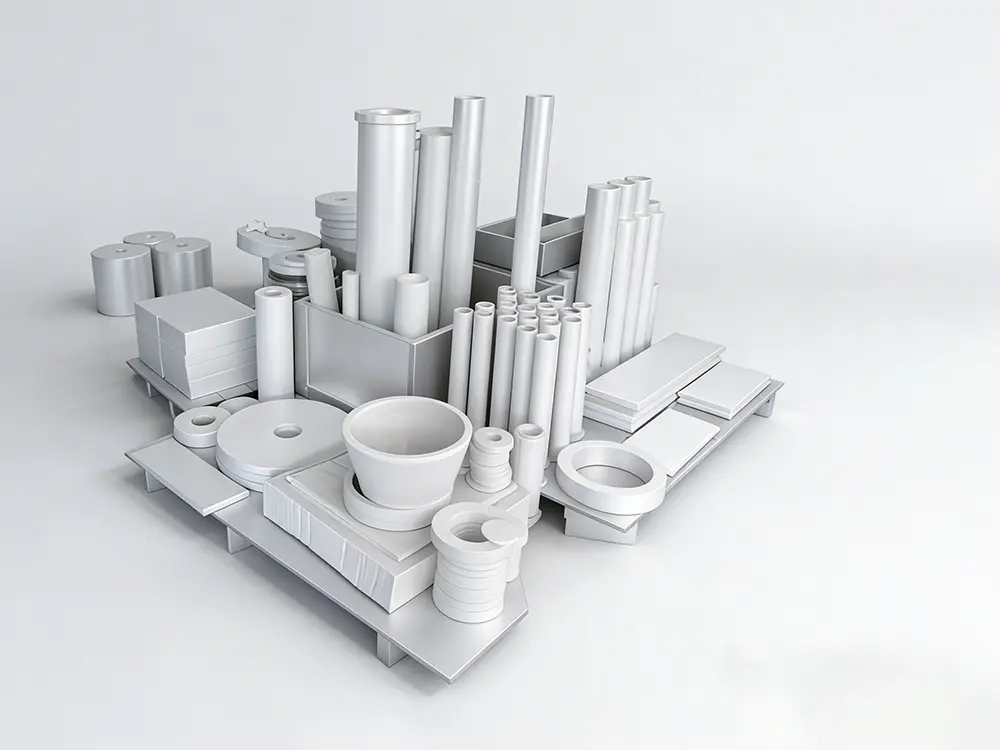
Benefiting from superior product reliability and rigorous physical-chemical testing, Qiangguang’s technical ceramic components are deployed extensively across high-end global industries, including:
Our products are widely exported across the globe, serving strategic clients in Italy, the United Kingdom, Australia, Japan, Malaysia, Thailand, Hungary, and additional key international markets.
Vertical Integration from Upstream Zirconium Sand Processing to Ultra-Precision Machining
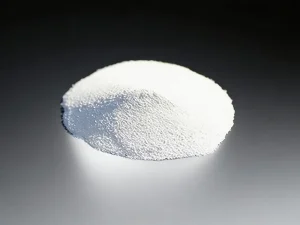
By co-precipitating and chemical-synthesizing ultra-fine zirconia powders in-house, Chinese PSZ factories ensure consistent grain-size distribution (<0.3µm), minimizing lattice defects and ensuring predictable thermal expansion coefficients.
Utilizing digitally controlled high-temperature shuttle kilns (up to 1750°C) with precision atmosphere monitoring, factory technicians accurately regulate the nucleation and growth of tetragonal precipitates inside the cubic matrix.
5-axis CNC diamond grinding mills, cylindrical grinders, and ultrasonic machining systems achieve micron-level dimensional tolerances (±0.001mm) and surface roughness values of Ra < 0.05µm.
Deploying PSZ Ceramics in Demanding Global Operating Environments
Mg-PSZ metering nozzles demonstrate extreme resistance to thermal shock and chemical attack by aggressive molten steel additives. Their thermal stability eliminates nozzle enlargement, maintaining controlled flow rates during continuous casting sequences.
In deep drilling operations characterized by high hydrostatic pressure, abrasive quartz sand, and corrosive hydrogen sulfide gas, PSZ valve balls and seats outperform tungsten carbide components, significantly extending subterranean tool service life.
Ceria and Magnesia-stabilized zirconia media are optimized for high-energy bead mills, dispersing high-viscosity formulations such as automotive coatings, titanium dioxide, inks, and lithium battery cathode materials without bead fracturing.
Expert Engineering Clarifications for Sourcing Specialists and Design Engineers
Factory Direct Supply for High-Thermal, Corrosion, and Wear Applications