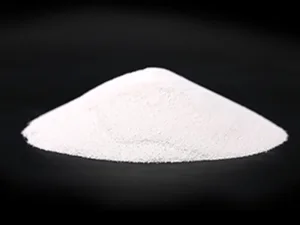
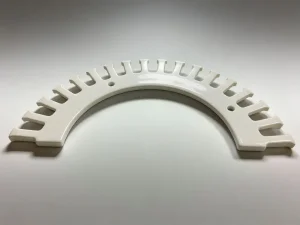
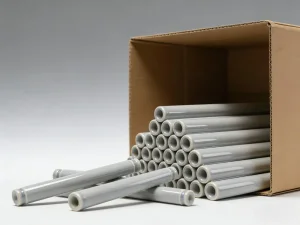
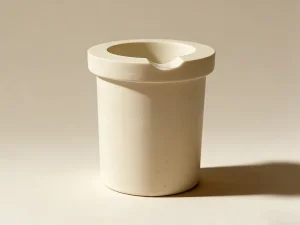
Explore our flagship industrial ceramic chemicals, high-density grinding beads, and structural ceramic powders optimized for ultra-fine dispersion, high-temperature stability, and extreme wear applications.
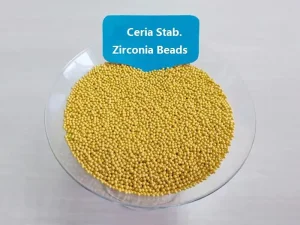
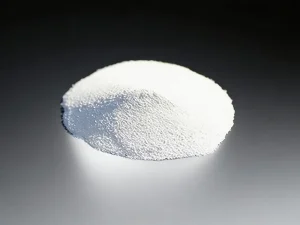
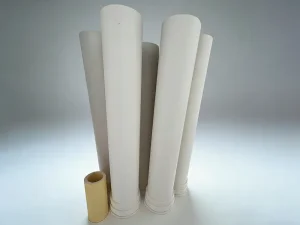
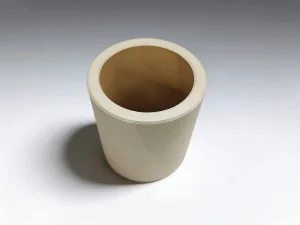
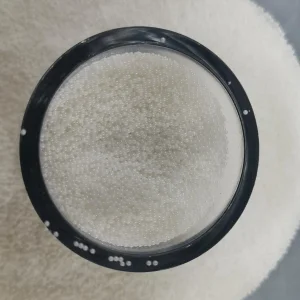
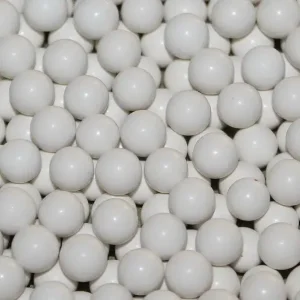
The global industrial landscape is currently undergoing a structural transformation toward extreme operating conditions, miniaturization, high thermal efficiency, and decarbonization. At the core of this transition are advanced technical ceramic chemicals—inorganic, non-metallic compounds engineered with high-purity microstructures that transcend the performance limitations of traditional polymers and superalloys. Unlike conventional silicate-based ceramics, modern ceramic chemicals such as Yttria-Stabilized Zirconia (YSZ), Ceria-Stabilized Zirconia (Ce-TZP), High-Purity Alumina ($Al_2O_3$), Silicon Nitride ($Si_3N_4$), Aluminum Nitride ($AlN$), and Magnesium Oxide ($MgO$) deliver extraordinary mechanical toughness, chemical inertness, dielectric strength, and thermal shock resistance.
Valued at over USD 105 Billion globally, the technical ceramics market is projected to expand at a CAGR exceeding 7.8% through 2030. Driven by explosive growth in energy storage (lithium-ion battery cathode/anode slurry wet grinding), semiconductor wafer processing equipment, aerospace thermal barrier coatings (TBCs), and next-generation power electronics, international procurement directors are seeking direct, vertically integrated chemical synthesis partners. Sourcing high-purity powders and pre-sintered components from established wholesale factories has moved from a simple cost reduction tactic to a strategic imperative for global supply chain resilience.
Founded in 2003, Yixing Qiangguang Ceramic Materials Co., Ltd. is a professional provider dedicated to the research and development (R&D), manufacturing, and application solutions of high-performance advanced ceramic materials. It is among the few enterprises in China that possess a complete industrial chain, covering key links from powder forming, sintering, and precision machining to the provision of integrated application solutions.
The company stands as a rare domestic manufacturer engaged in the comprehensive R&D, production, and supply of an expansive portfolio of advanced ceramic chemicals. Its product range spans high-purity zirconia, yttria, alumina, magnesia, aluminum nitride, boron nitride, silicon nitride, silicon carbide, aluminum titanate, and other key technical ceramic materials engineered for critical industrial applications.
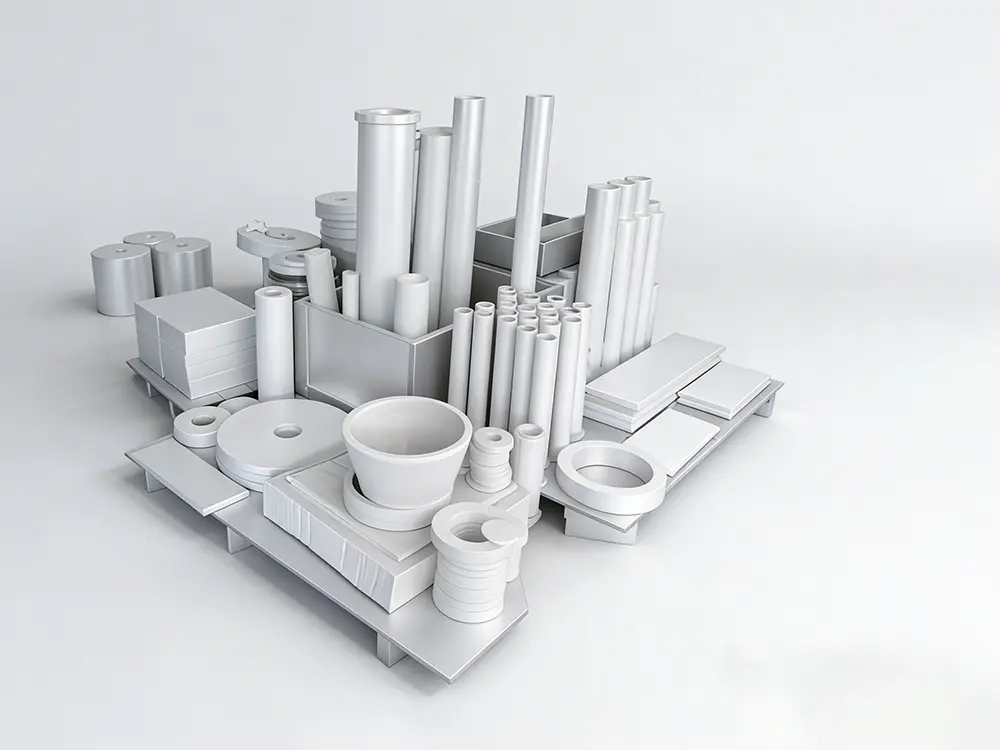
Benefiting from exceptional chemical purity, uniform grain size distribution, and stringent batch-to-batch consistency, Qiangguang’s products are extensively utilized across high-end global industries. Key application fields include the food and medical industries, new energy electric vehicles (NEVs), laser semiconductors, petrochemical engineering, powder metallurgy, national defense, and aerospace sectors.
Adhering to the core principle of "creating value for customers", Qiangguang delivers customized and cost-efficient advanced ceramic solutions tailored to the precise demands of global enterprises. Supported by rigorous full-process quality tracking systems (ISO9001) and rapid after-sales engineering support, we streamline buyer procurement cycles while driving continuous material performance enhancement.
At present, Qiangguang's engineered ceramic chemicals, powders, structural parts, and grinding media are widely deployed across domestic markets and exported to leading industrial economies, including Italy, the United Kingdom, Australia, Japan, Malaysia, Thailand, Hungary, and other countries and regions worldwide. Committed to delivering world-class quality at competitive direct-factory pricing, Qiangguang continues to foster strategic OEM and ODM partnerships with tier-1 international enterprises.
The international market for ceramic chemical supplies has increasingly centered around Chinese manufacturing hubs due to an unparalleled combination of chemical synthesis expertise, raw material access, and advanced industrial infrastructure. Sourcing directly from top-tier Chinese ceramic chemical factories delivers distinctive strategic advantages for Western and pan-Asian industrial enterprises:
By controlling the entire process from raw zircon sand and bauxite chemical extraction, chemical precipitation, spray drying co-crystallization, to high-temperature tunnel kiln sintering and CNC diamond grinding, factories eliminate intermediary markups and ensure complete chemical trace consistency.
Scale efficiencies in thermal energy utilization, localized supply of stabilizing oxides ($Y_2O_3$, $CeO_2$, $MgO$, $CaO$), and automated high-pressure Isostatic Pressing (HIP) significantly reduce unit production costs, yielding savings up to 35-50% compared to European or US suppliers.
Advanced tooling design and rapid prototyping capabilities allow Chinese technical teams to synthesize custom-tailored ceramic compositions, modify particle size distributions (D50, D90, D99), and machine precise geometry components within shortened development cycles.
Understanding the crystal chemistry, phase stabilization mechanics, and physical properties of advanced inorganic compounds is essential for engineers selecting materials for high-stress applications. Below is an expert breakdown of the core technical ceramic families supplied by Qiangguang Ceramic Materials Co., Ltd.
Pure Zirconia undergoes a destructive phase transition upon cooling: Monoclinic $\rightarrow$ Tetragonal at 1170°C, accompanied by a 3-5% volumetric expansion that shatters un-stabilized bodies. By doping pure zirconia chemical powders with stabilizing oxides, specific crystal structures are locked in at room temperature:
| Ceramic Chemical Material | Density ($g/cm^3$) | Flexural Strength (MPa) | Thermal Conductivity ($W/m\cdot K$) | Max Operating Temp (°C) | Primary Industrial Use Case |
|---|---|---|---|---|---|
| 3Y-TZP Zirconia | 6.02 - 6.05 | 1000 - 1200 | 2.5 - 3.0 | 1000 | Grinding Media, Structural Components, Medical Implants |
| Ce-TZP Zirconia | 6.20 - 6.25 | 700 - 900 | 2.0 - 2.5 | 900 | High-Density Wet Grinding for Lithium Battery Cathodes |
| 99.5% Alumina ($Al_2O_3$) | 3.90 - 3.95 | 350 - 450 | 30 - 35 | 1600 | Wear Plates, Chemical Insulators, Grinding Balls |
| Aluminum Nitride ($AlN$) | 3.25 - 3.30 | 300 - 380 | 170 - 230 | 1000 (air) / 1900 (inert) | Semiconductor Substrates, Power Electronics Heat Sinks |
| Silicon Nitride ($Si_3N_4$) | 3.20 - 3.25 | 850 - 1000 | 30 - 40 | 1200 | Precision Ceramic Bearing Balls, Engine Components |
| Magnesium Oxide ($MgO$) | 3.58 - 3.65 | 200 - 250 | 40 - 60 | 2300 | High-Temperature Crucible Liners, Heating Element Insulation |
Advanced ceramic chemicals serve as critical enablers across a multitude of high-tech manufacturing ecosystems. Qiangguang's engineered solutions address severe physical and chemical challenges in specific key industries:
In the production of Lithium Iron Phosphate ($LiFePO_4$) and High-Nickel NCM/NCA cathode powders, nano-dispersion without metallic contamination is critical. Ceria and Yttria-stabilized zirconia beads enable ultra-fine grinding down to sub-micron and nanometer levels (<100nm) while maintaining zero iron pickup, preserving battery energy density and cell longevity.
Sub-nanometer silicon processing equipment requires material components with extremely low thermal expansion coefficient, high dielectric isolation, and thermal dissipation. Aluminum Nitride and high-purity Alumina ceramics are deployed as electrostatic chucks (ESC), vacuum ring end effectors, and plasma etching gas nozzles.
Yttria-Stabilized Zirconia (3Y-TZP) is widely utilized for dental crowns, abutments, and orthopedic joint replacements due to its bio-inertness, natural aesthetic translucent tooth coloring, ultra-high compressive strength, and total resistance to physiological corrosion.
In oil field drilling, slurry pumping, and aggressive acid refining, metal valves erode rapidly. Magnesia-partially stabilized zirconia and dense alumina valve seats, check balls, and sleeve bushings deliver 10x operational lifespan under high abrasion and slurry velocity.
Yttria-stabilized zirconia chemical powders are plasma-sprayed onto superalloy jet turbine blades and rocket nozzles as insulating coatings. YSZ withstands flame temperatures exceeding 1350°C, lowering underlying metal temperatures by over 100°C and dramatically improving fuel burn efficiency.
As the advanced materials domain advances, three primary technical trends are redefining industrial demand for ceramic chemical suppliers between 2025 and 2030:
The shift from subtractive diamond machining to additive manufacturing methods—such as Stereolithography (SLA), Selective Laser Sintering (SLS), and Direct Ink Writing (DIW)—demands spherical, narrow PSD ceramic powders with specialized organic binder compatibility. Qiangguang is pioneering atomized micro-spherical zirconia and alumina chemical feedstocks tailored specifically for precision 3D ceramic printers.
Hypersonic aviation and next-generation nuclear reactors require materials capable of surviving oxidation and plasma environments above 2000°C. Development of boride and carbide chemical systems ($ZrB_2$, $HfB_2$, $TaC$) integrated with structural oxide matrices represents the next horizon of high-temperature material engineering.
To streamline international procurement and guarantee batch reproducibility, corporate purchasing managers should evaluate wholesale suppliers against four mandatory criteria:
Common technical inquiries answered by our senior ceramic chemical engineering team:
Browse our additional catalog of high-toughness YSZ powders, thermal management nitrides, and extreme-environment structural oxides available for worldwide wholesale order.