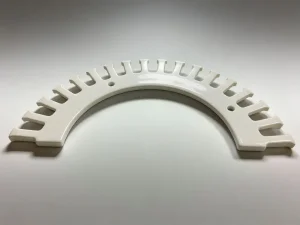
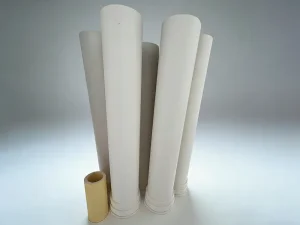
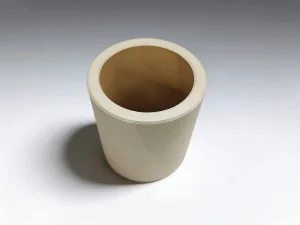
Explore our core high-precision technical ceramic formulations engineered for extreme industrial environments.
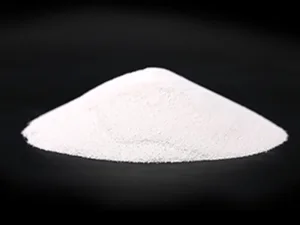
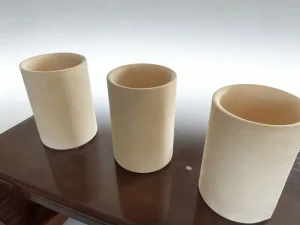
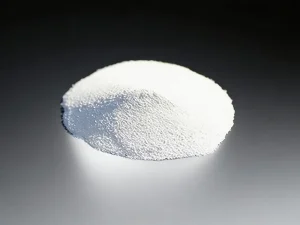
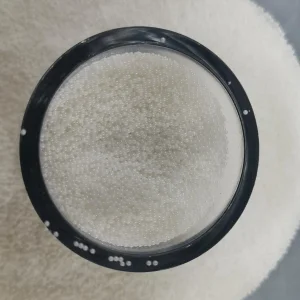
Vertical integration from raw chemical synthesis to ultra-precision sub-micron CNC finishing.
Founded in 2003, Yixing Qiangguang Ceramic Materials Co., Ltd. stands as a premier enterprise dedicated to the research, development, precision manufacturing, and system integration of ultra-high-performance advanced ceramic materials.
Operating from the historical hub of ceramic innovation in Jiangsu, China, Qiangguang is recognized as one of the exceptionally rare manufacturers possessing a fully integrated industrial ecosystem. Our production infrastructure seamlessly encompasses every single phase of technical ceramic engineering:
Unlike conventional OEM assembling suppliers, our direct control over microstructural grain growth, phase transformation kinetics, and sinter density enables us to deliver wholesale ceramic goods engineered to withstand the world's most aggressive operating environments.
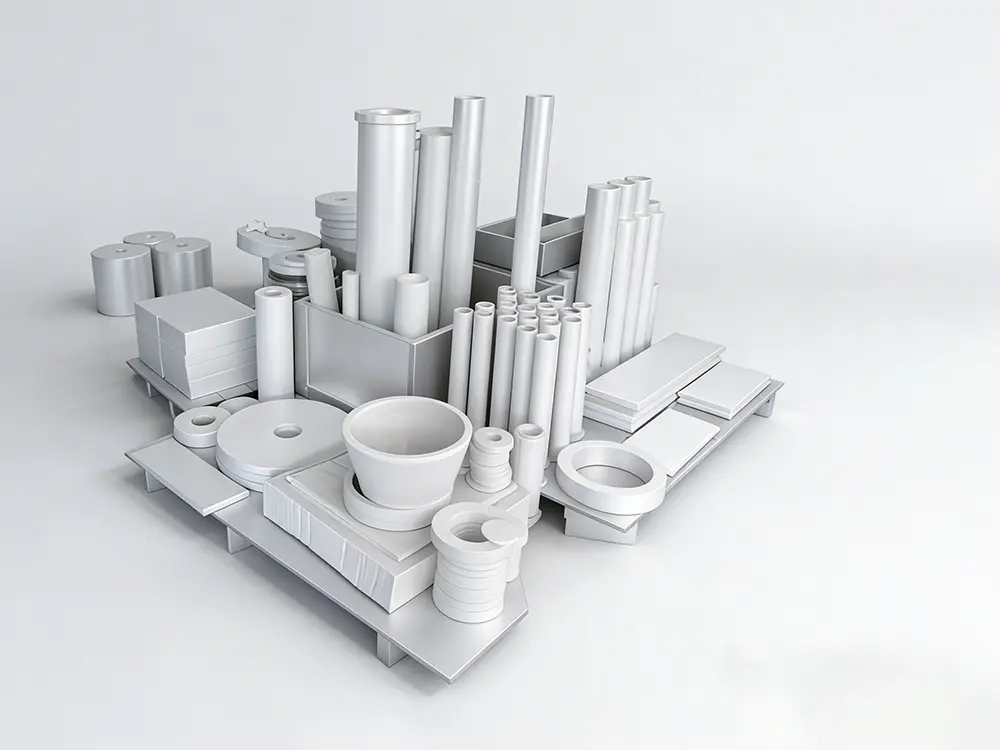
Qiangguang’s metallurgical and chemical engineering divisions maintain production capacity for a comprehensive portfolio of technical inorganic materials. By maintaining independent production lines for oxide, nitride, and carbide systems, we provide unbiased, application-specific material selection for global B2B procurement partners:
Y-TZP, Ca-PSZ, Mg-PSZ, and Ce-TZP formulations for extreme wear and fracture toughness.
Aluminum Nitride (AlN) and Silicon Nitride (Si3N4) for high thermal conductivity and thermal shock resistance.
Alumina (Al2O3), Magnesia (MgO), Silicon Carbide (SiC), and Aluminum Titanate (Al2TiO5).
Addressing structural material bottlenecks in high-growth, high-tech global manufacturing sectors.
In modern enterprise procurement, advanced ceramics have transitioned from passive structural components to active enablers of next-generation industrial efficiency. As global industrial operating parameters—such as peak sintering temperatures, chemical acidity, electromagnetic interference, and mechanical friction—exceed the physical limitations of high-alloy steels and polymers, technical ceramics provide the definitive operational hedge.
Demand for bio-inert, non-toxic, and non-corrosive materials has propelled High-Performance Zirconia Ceramics into surgical tooling, prosthetic joints, and high-purity food homogenization pumps. Y-TZP provides extreme wear resistance without leaching metallic ions into biological mediums.
Electric powertrain architectures operate under intense electrical stress and thermal cycling. Ceramic components such as silicon nitride bearings, ceramic seals for cooling fluid pumps, and power module substrates guarantee thermal isolation and zero electrical breakdown at voltages exceeding 800V.
Sub-nanometer chip fabrication relies on Aluminum Nitride (AlN) Ceramics for wafer chucks, heat sinks, and plasma chamber rings. AlN’s exceptional thermal conductivity (up to 170–230 W/m·K) paired with precise electrical resistivity prevents thermal deformation during intense photolithography.
Chemical processing units handling slurry, concentrated acids, and high-velocity catalysts require valve seats, pump plungers, and nozzle components fabricated from Magnesium-Stabilized or Calcium-Stabilized Zirconia to prevent catastrophic cavitation erosion.
Extreme structural integrity under severe thermal shock makes materials like Titanium Aluminide, Boron Nitride, and Yttria-Stabilized Zirconia ideal for missile guidance radomes, jet engine heat shields, and high-altitude armor plating systems.
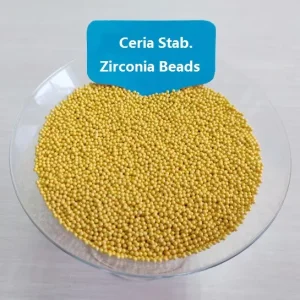
For nano-scale wet milling of lithium battery cathode materials, paints, and pharmaceutical slurries, Ceria-Stabilized Zirconia Beads provide high density (6.0 g/cm³) and zero media-to-slurry contamination.
Phase transformation dynamics, thermal management metrics, and mechanical performance matrix.
Selecting the correct wholesale advanced ceramic material requires a deep understanding of phase stabilization chemistry and microstructural crystal structures. Below is an engineering overview of key stabilization routes for Zirconium Dioxide ($ZrO_2$) and non-oxide ceramics engineered at our Yixing production facility:
| Material Formulation | Primary Stabilizer / Composition | Density (g/cm³) | Flexural Strength (MPa) | Thermal Conductivity (W/m·K) | Max Operating Temp (°C) |
|---|---|---|---|---|---|
| Y-TZP (Yttria Stabilized) | 3 mol% $Y_2O_3$ | > 6.05 | 1000 - 1200 | 2.5 - 3.0 | 1000 |
| Ca-PSZ (Calcium Stabilized) | 8 - 10 mol% $CaO$ | 5.60 - 5.80 | 500 - 650 | 2.0 | 1400 |
| Mg-PSZ (Magnesium Stabilized) | 9 - 10 mol% $MgO$ | 5.75 - 5.85 | 700 - 850 | 2.5 | 1300 (High Shock) |
| Ce-TZP (Ceria Stabilized) | 10 - 12 mol% $CeO_2$ | 6.20 | 600 - 750 | 2.0 | 1100 |
| AlN (Aluminum Nitride) | Sub-micron $AlN$ (>99%) | 3.26 | 350 - 450 | 170 - 230 | 1600 (Inert) |
| MgO Ceramic | High-Purity $MgO$ (>98%) | 3.58 | 200 - 280 | 30 - 40 | 2200 |
Pure Zirconia undergoes a volumetric phase change during cooling: Cubic → Tetragonal → Monoclinic, which introduces severe microcracking. By doping pure zirconia with yttria ($Y_2O_3$), magnesia ($MgO$), or calcium oxide ($CaO$), Qiangguang locks the high-strength tetragonal phase at room temperature.
When an external crack propagates through a Y-TZP component, the stress concentration causes localized tetragonal-to-monoclinic transformation. This phase transition expands the local crystal lattice by ~3-5%, creating compressive stress that actively clamps the crack tip shut, yielding unmatched fracture toughness ($K_{IC} > 7 - 10 \text{ MPa}\cdot\text{m}^{1/2}$).
Achieving sub-micron dimensional tolerances (±0.002mm) requires rigorous controls across the manufacturing workflow:
Direct export channels, stringent QA/QC standards, and international logistics integration.
At present, Yixing Qiangguang Ceramic Materials Co., Ltd.'s wholesale technical ceramic products enjoy established market dominance across domestic industrial sectors and are exported extensively across the globe.
Our core international footprint includes key industrial economies such as Italy, the United Kingdom, Australia, Japan, Malaysia, Thailand, Hungary, and North America. By offering factory-direct price structures alongside rigid Western QA/QC auditing standards, Qiangguang bridges the gap between cost efficiency and high-end engineering integrity.
Adhering strictly to our core principle of "Creating value for customers", Qiangguang provides fully customized, cost-efficient ceramic component designs tailored to regional regulatory requirements. Supported by robust after-sales engineering consultancies and a comprehensive end-to-end batch tracking system, we ensure seamless supply chain stability for high-volume OEMs.
In-depth responses to common B2B engineering and factory procurement inquiries.
Yttria-Stabilized Zirconia (Y-TZP) exhibits higher room-temperature flexural strength (up to 1200 MPa) and fracture toughness due to its homogeneous sub-micron tetragonal crystal structure, making it ideal for precision wear components, medical implants, and structural blades. Calcium-Stabilized Zirconia (Ca-PSZ), on the other hand, maintains superior structural stability under continuous extreme temperatures up to 1400°C and possesses higher resistance to thermal shocks and thermal degradation, rendering it the preferred choice for metallurgical crucibles and high-heat refractory valves.
Direct sourcing from Qiangguang eliminates intermediary markups and provides direct communication with our powder synthesis and ceramic sintering engineers. As a full-chain factory manufacturer operating since 2003, we can customize raw powder particle size distributions, adjust sintering additives, and machine complex geometries according to CAD/CAM specifications while providing full lot-level material certification.
While standard 95%-99.5% Alumina offers thermal conductivity around 25–30 W/m·K, Aluminum Nitride (AlN) delivers extraordinary thermal conductivity of 170–230 W/m·K (nearly 7 to 8 times higher than Alumina), while maintaining identical high dielectric insulation. This makes AlN essential for high-power laser diodes, semiconductor heat sinks, and high-frequency RF power modules where rapid heat dissipation is mandatory to prevent thermal runaway.
Through our state-of-the-art precision diamond grinding, micro-lapping, and wire EDM machining capabilities, we achieve linear tolerances down to ±0.002 mm, surface roughness down to Ra 0.01 μm, and roundness/cylindricity within 0.001 mm for precision shafts, ceramic sleeves, and optical alignment components.
Explore our complete factory direct line-up of specialized industrial ceramics and grinding media.