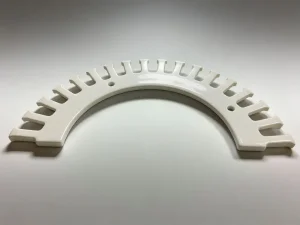
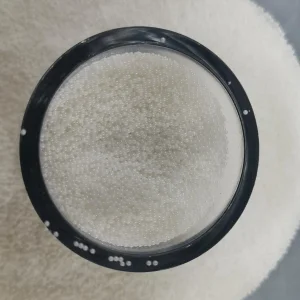
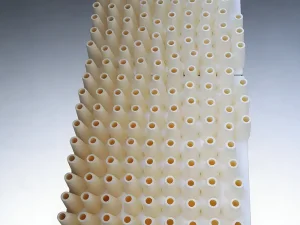
Explore our foundational wholesale ceramic components engineered for extreme thermal shock, mechanical wear, and corrosive environments.
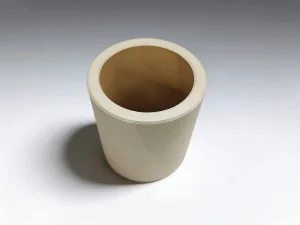
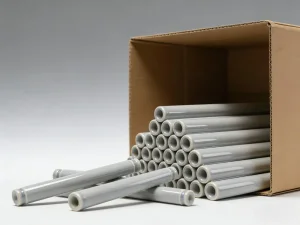
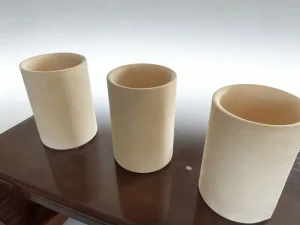
Establishing absolute technical credibility through end-to-end ceramic manufacturing excellence and rigorous engineering standards.
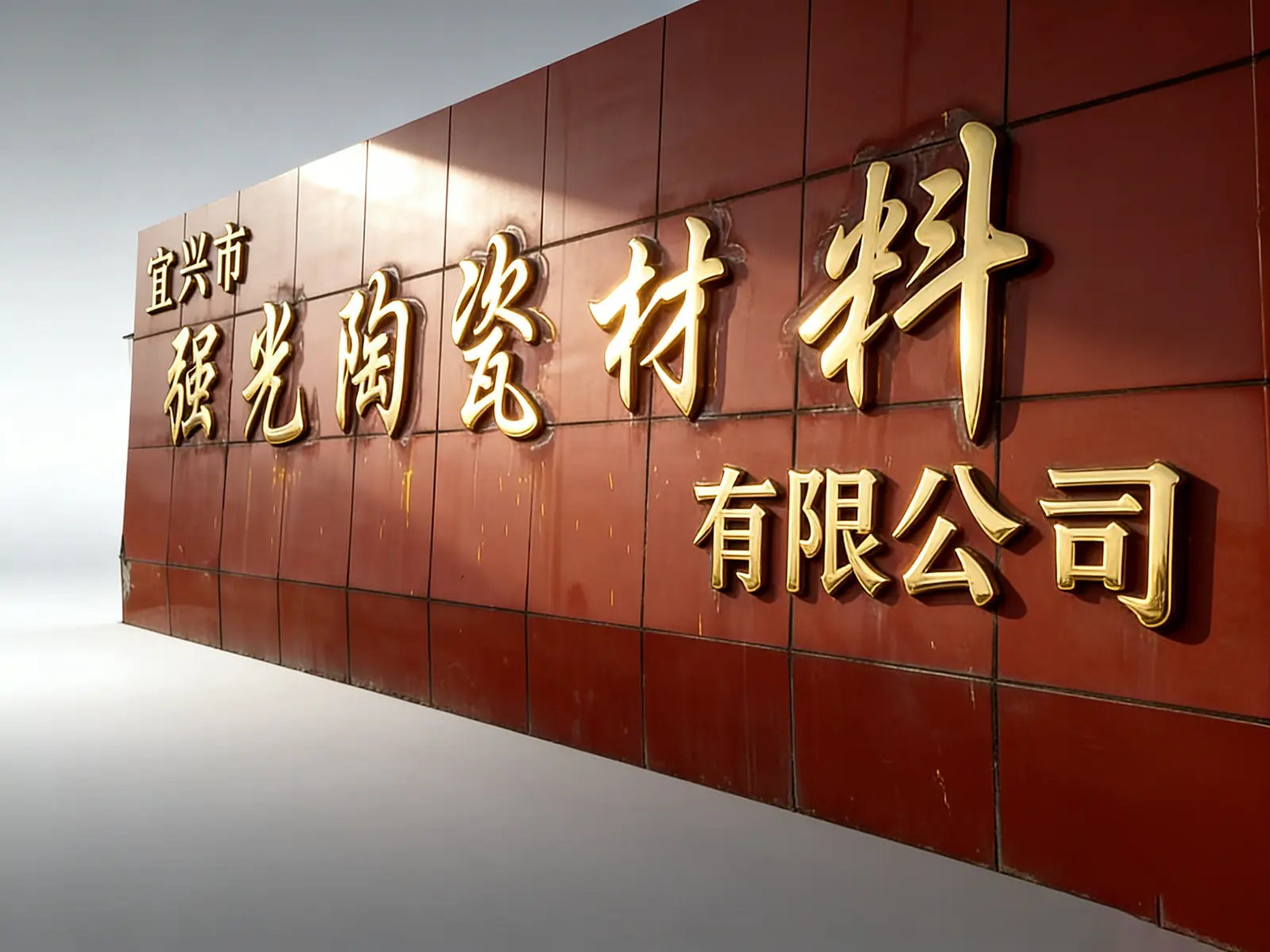
Founded in 2003, Yixing Qiangguang Ceramic Materials Co., Ltd. stands as a premier enterprise in the research, development, custom engineering, and scalable production of high-performance advanced ceramic materials. Operating as one of China's elite full-chain manufacturers, the company controls every key phase of production—spanning precision raw powder synthesis, cold/warm isostatic pressing, green body CNC shaping, high-temperature atmospheric vacuum sintering, diamond micro-machining, and complex sub-system assembly integration.
In contrast to traditional ceramic component suppliers who rely on outsourced raw materials or third-party finish-machining, Qiangguang maintains comprehensive quality oversight. Our comprehensive technical material portfolio encompasses Zirconia (ZrO₂), Yttria (Y₂O₃), Alumina (Al₂O₃), Magnesia (MgO), Aluminum Nitride (AlN), Boron Nitride (BN), Silicon Nitride (Si₃N₄), Silicon Carbide (SiC), and Aluminum Titanate (Al₂TiO₅).
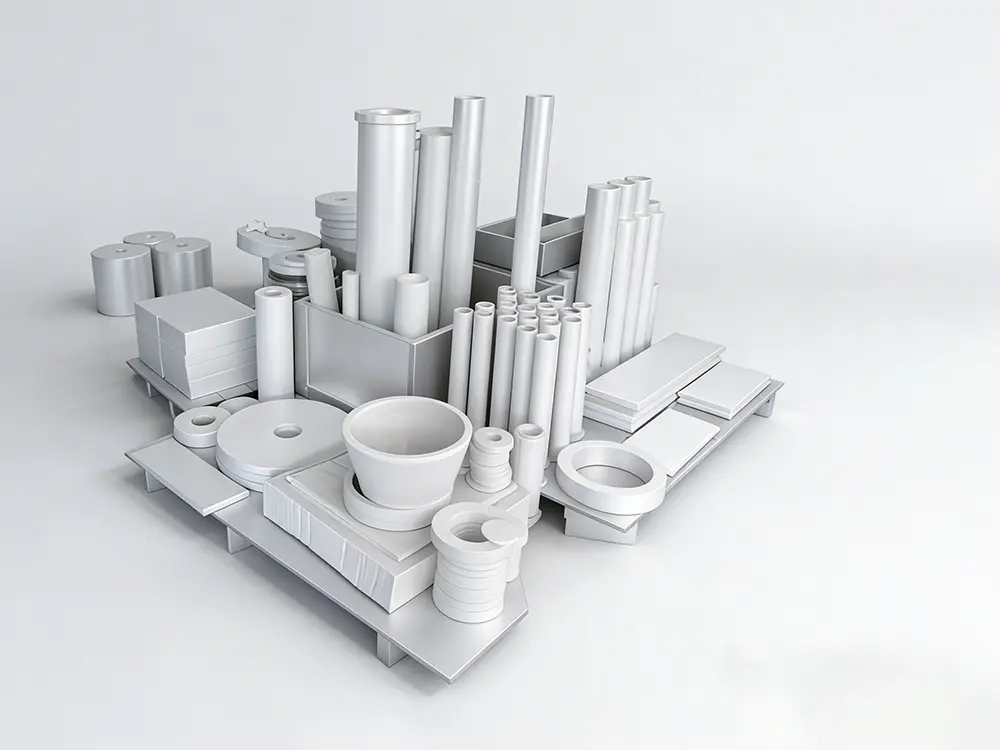
Leveraging exceptional material density, phase purity, and dimensional accuracy, our engineered ceramic components are deployed globally across mission-critical sectors. Key deployment hubs include Italy, the United Kingdom, Australia, Japan, Malaysia, Thailand, Hungary, and the Americas.
Whether serving as bio-inert components in high-purity pharmaceutical manufacturing or as extreme thermal barriers in semiconductor laser deposition systems, Qiangguang products strictly conform to international ISO standards, RoHS compliance, and rigorous mechanical tolerances tailored for heavy industrial duty cycles.
Market evaluation, growth vectors, structural demands, and macro-economic factors shaping technical ceramics procurement.
The demand for extreme thermal conductivity and high dielectric strength in sub-3nm node chip manufacturing has propelled materials like Aluminum Nitride (AlN) and Silicon Nitride (Si₃N₄) into strategic structural positions. Wafer chucks, plasma etch rings, and laser optics carriers depend entirely on ceramic dimensional stability under plasma bombardment.
As electric vehicles shift toward 800V and higher architectural baselines, traditional organic polymers fail under thermal stress. Advanced ceramic substrates, ceramic bearings for high-rpm traction motors, and structural heat sinks deliver essential arc-suppression, weight reduction, and thermal endurance.
Petrochemical refineries and green hydrogen electrolysis plants experience extreme wear from acid-base slumping, thermal erosion, and high pressure. High-purity Magnesia (MgO) and Magnesium-Stabilized Zirconia (MSZ) provide unmatched anti-corrosion structural integrity where metals degrade rapidy.
Comprehensive technical benchmark outlining physical, mechanical, and thermal properties across core ceramic categories.
| Material Classification | Density (g/cm³) | Flexural Strength (MPa) | Thermal Conductivity (W/m·K) | Dielectric Strength (kV/mm) | Max Working Temp (°C) |
|---|---|---|---|---|---|
| Alumina Ceramics (Al₂O₃ 99.5%) | 3.95 | 380 | 30 | 18 | 1650 |
| Yttria-Stabilized Zirconia (YSZ) | 6.05 | 1000 | 2.5 | 12 | 1300 |
| Magnesium-Stabilized Zirconia (MSZ) | 5.75 | 650 | 3.0 | 10 | 1400 |
| Silicon Nitride (Si₃N₄ - Gas Pressured) | 3.25 | 850 | 85 | 15 | 1400 |
| Aluminum Nitride (AlN Substrates) | 3.30 | 320 | 180 - 230 | 20 | 1100 (Inert) |
| High Purity Magnesia (MgO) | 3.58 | 220 | 45 | 14 | 2300 |
*Note: Data points represent average batch metrics under standardized ASTM test protocols. Custom alloy doping can adjust parameters based on engineering requirements.
How specialized technical ceramics solve precise mechanical, chemical, and thermal challenges in modern industry.
In bio-medical pump systems, fluid handling components cannot suffer from metallic ion leaching or chemical oxidation. Our high-purity Yttria-Stabilized Zirconia and Alumina ceramics deliver zero-reactivity surfaces with mirror-grade surface roughness (Ra < 0.01 µm). Applications include ceramic plungers for sterile dosage filling, surgical tool insulation, and wear-resistant implants.
Precision laser optics and chip equipment require materials with ultra-low thermal expansion coupled with high heat dispersion. Aluminum Nitride (AlN) and Boron Nitride (BN) act as high-power heat sinks and structural isolators inside vacuum chamber assemblies, preventing thermal blooming during intense laser radiation.
Manufacturing nano-grade battery slumping materials (like lithium iron phosphate) demands zero-contamination grinding media. High-density Zirconia Ceramic Beads, engineered with micro-crystalline microstructures, offer superior sphericity and exceptional wear resistance, minimizing bead fracture during continuous high-energy agitation.
Molten metal handling, glass synthesis, and synthesis gas reactions place immense stress on vessel linings. Magnesium Oxide (MgO) and Magnesium-Stabilized Zirconia ceramics provide chemical inertness against basic slags, resisting thermal shock spalling at temperatures up to 2000°C.
A multi-stage quality assurance architecture ensuring zero-defect deliverables from raw synthesis to final metrology.
Raw oxides and nitrides undergo precise chemical coprecipitation, spray drying, and organic binder jetting to achieve uniform particle size distribution (< 0.5 µm), ensuring dense ceramic green bodies free of structural voids.
Utilizing Cold Isostatic Pressing (CIP) up to 250 MPa, green components achieve high density before entering high-temperature vacuum furnaces or Gas-Pressure Sintering (GPS) units to reach near-theoretical densities (>99.8%).
Because sintered technical ceramics achieve high hardness (Vickers > 1500 HV), final geometry is refined using 5-axis CNC diamond grinding, ultrasonic milling, and optical polishing to hit tolerances down to sub-micron levels.
Delivering tailored end-to-end component engineering from initial CAD design to prototype validation and mass production.
For specialized engineering projects, early prototyping can be cost-prohibitive. Qiangguang offers flexible rapid tooling programs combining green-state ceramic machining with rapid sintering cycles. This enables global partners to test mechanical fit and thermal behavior in weeks rather than months, accelerating product time-to-market.
Adhering to our core principle of "Creating Value for Customers", we incorporate complete batch tracking across all production stages. Every delivery comes complete with material safety documentation, spectral purity reports, dimensional inspection certificates, and structural density tests.
Expert engineering insights regarding material selection, thermal endurance, custom machining, and wholesale ordering.
A: Alumina is an exceptional all-round material offering high electrical insulation, high thermal conductivity relative to Zirconia, and cost-efficient hardness up to 1600°C. However, Zirconia features significantly higher flexural strength (up to 1000 MPa) and fracture toughness (K1c), making it ideal for applications subject to heavy impact, cyclic mechanical shock, or where thin-wall structural integrity is mandatory.
A: Silicon Nitride has an extremely low coefficient of thermal expansion combined with high strength and elastic modulus. This gives Si₃N₄ unmatched thermal shock resistance, allowing it to withstand rapid temperature swings without cracking. Additionally, its low density (40% of steel) reduces centrifugal forces in high-speed rolling bearings, dramatically extending operational lifespan.
A: Leveraging high-precision diamond grinding, micro-lapping, and optical inspection metrology, we consistently achieve dimensional tolerances within ±0.001mm (1 micron), surface flatness up to 1/4 light band, and surface roughness down to Ra 0.01 µm for specialized fluid sealing or laser optics applications.
A: While YSZ excels at ambient and low temperatures, it can suffer from hydrothermal degradation (aging) in high-moisture environments between 200°C and 300°C. MSZ maintains superior phase stability in steam and high-temperature environments, making it the preferred choice for thermal shock resistance and heavy industrial refractories.
A: Standard prototype runs typically take 2 to 3 weeks depending on geometric complexity and green machining requirements. Full-scale wholesale production runs are generally fulfilled within 4 to 6 weeks, backed by our streamlined sintering schedules and dedicated export logistics management.
Explore additional high-purity, extreme-environment ceramic formulations available for global wholesale supply.
Contact our ceramic engineering team today to review your technical drawings, request material samples, or receive a customized wholesale quote.