Direct factory wholesale solutions engineered for severe wear, extreme thermal shock, and critical dielectric strength across demanding industrial applications.
In modern high-reliability manufacturing, the quest for superior component performance has driven engineering paradigms beyond monolithic material selections. As global industrial ecosystems demand higher power densities, extreme thermal resistance, and chemical inertness under mechanical shock, co-molding technology integrated with advanced technical ceramics has emerged as a cornerstone manufacturing strategy.
Co-molding—often encompassing insert molding, multi-material overmolding, and co-powder sintering processes—combines the structural toughness, electrical conductivity, or ductility of metals/polymers with the extraordinary hardness, dielectric isolation, and wear resistance of inorganic non-metallic ceramics. For procurement executives and system architects evaluating Wholesale Co Molding Factories, understanding the underlying tribological, thermodynamic, and interfacial bonding mechanisms is critical to selecting strategic supply partners.
Traditional metal-only assembly often fails in severe service conditions due to galvanic corrosion, high-temperature creep, and electrical breakdown. Conversely, pure ceramic components can suffer from brittleness under concentrated tensile loading. Co-molding solves this fundamental trade-off by placing structural ceramics (such as Yttria-Stabilized Zirconia or Silicon Nitride) precisely where stress, friction, or voltage gradients spike, while enclosing them within resilient metallic or engineering polymer substrates.
A critical engineering challenge in co-molding is managing the Coefficient of Thermal Expansion (CTE) mismatch between materials. Leading Tier-1 ceramic factories utilize advanced functional gradient coatings, micro-textured mechanical locking geometries, and precise co-sintering kinetics to achieve hermetic sealing, shear strength exceeding 45 MPa, and micro-crack-free thermal cycling resilience.
Founded in 2003, Yixing Qiangguang Ceramic Materials Co., Ltd. is a professional provider dedicated to the research and development (R&D), manufacturing, and application solutions of high-performance advanced ceramic materials. It stands among the few enterprises globally that possess a complete industrial chain, spanning key links from ceramic powder synthesis and green body forming to vacuum sintering, ultra-precision grinding, and integrated co-molding application solutions.
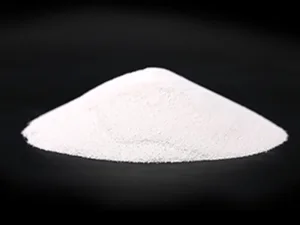
The company represents a rare domestic manufacturing powerhouse engaged in the specialized R&D, production, and supply of a comprehensive portfolio of advanced engineering ceramic materials. Its standardized product matrix includes zirconia (ZrO2), yttria (Y2O3), alumina (Al2O3), magnesia (MgO), aluminum nitride (AlN), boron nitride (BN), silicon nitride (Si3N4), silicon carbide (SiC), aluminum titanate (Al2TiO5) and other custom composite formulations for critical industrial duty.
Adhering to the core principle of "creating value for customers", Qiangguang provides customized and cost-efficient advanced ceramic solutions tailored to the specific demands of diverse enterprise buyers. The facility operates under a strict full-process tracking system certified to international standards. Benefiting from superior material density, thermal shock resistance, and microstructural stability, Qiangguang's engineered solutions effectively enhance operational lifespan and minimize downtime for enterprise partners worldwide.
Supported by comprehensive technical after-sales engineering and rapid OEM rapid-prototyping, the facility seamlessly translates complex multi-material CAD specifications into scalable wholesale production runs.
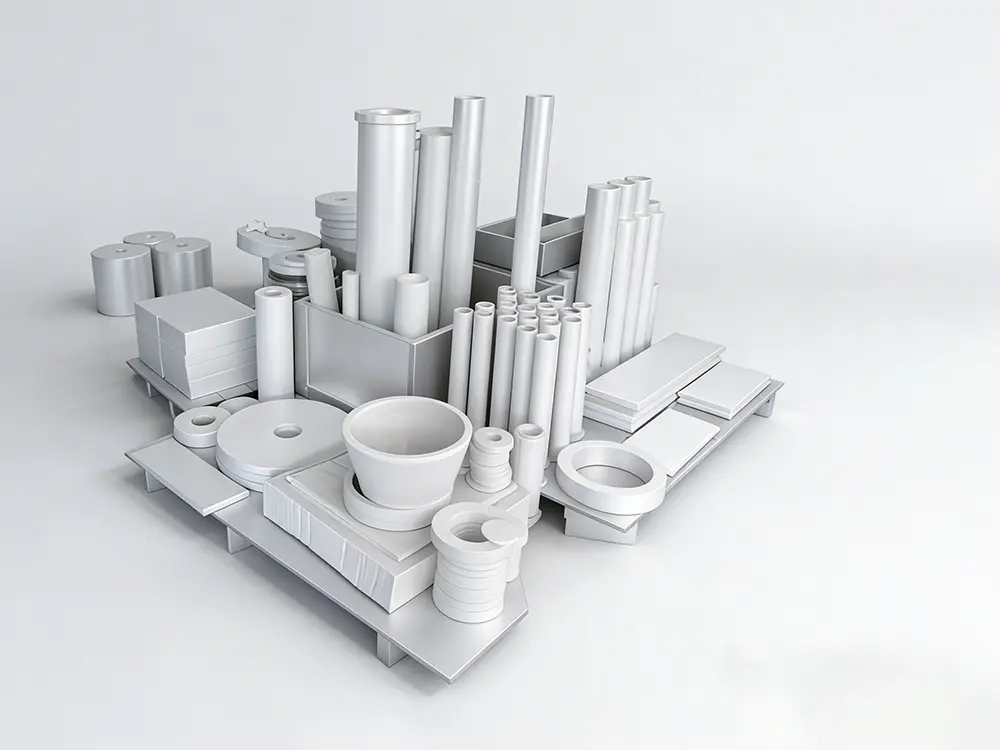
Selecting the correct substrate matrix is the foundation of co-molding success. Below is a comparative technical analysis of the primary engineering ceramic materials manufactured directly in our production facilities:
| Ceramic Material Family | Density (g/cm³) | Flexural Strength (MPa) | Thermal Conductivity (W/m·K) | Primary Industrial Advantage | Co-Molding Compatibility |
|---|---|---|---|---|---|
| Yttria-Stabilized Zirconia (YSZ) | 6.05 | 1,000 - 1,200 | 2.5 - 3.0 | Transformation toughening, high impact resistance | Metal insert co-molding, wear sleeves |
| Silicon Nitride (Si3N4) | 3.25 | 850 - 1,000 | 30 - 60 | Extreme fracture toughness, thermal shock resistance | High-speed bearing races, power modules |
| High-Purity Alumina (99.8% Al2O3) | 3.92 | 380 - 450 | 30 | Excellent dielectric strength, cost-effective hardness | Polymer overmolding, electronic insulators |
| Magnesia-Stabilized Zirconia (Mg-PSZ) | 5.75 | 700 - 850 | 2.8 | Resistance to steam degradation & thermal shock | Heavy-duty valve seats, chemical pumps |
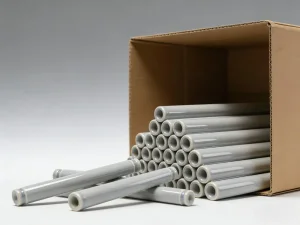
| Aluminium Titanate (Al2TiO5) | 3.30 - 3.60 | 40 - 80 | 1.5 - 2.0 | Near-zero thermal expansion, non-wetting by molten metal | Foundry riser tubes, engine exhaust liners |
As OEM engineering demands shift toward electrification, miniaturization, and extreme duty cycles, global procurement directors in North America, Europe, and Asia-Pacific are restructuring their tier-1 supply chains around specialized co-molding factories. Key macroeconomic vectors include:
Next-generation 800V SiC electric vehicle power inverters require co-molded Direct Copper Bonded (DCB) and Active Metal Brazed (AMB) substrates utilizing Silicon Nitride and Aluminum Nitride ceramics to ensure thermal dissipation up to 170°C junction temperatures without mechanical debonding.
Extreme Ultraviolet (EUV) wafer handling tools require ultra-stable, zero-outgassing structural ceramics co-molded with conductive grounding inserts to eliminate static discharge while maintaining sub-micron dimensional stability under vacuum conditions.
Minimally invasive electrosurgical devices demand micro-co-molded components combining biocompatible Yttria-Stabilized Zirconia tips with PEEK or titanium housings, ensuring high dielectric breakdown resistance and autoclavable lifespan.
China’s advanced ceramics ecosystem—centered in manufacturing hubs like Yixing—delivers unparalleled structural advantages to global original equipment manufacturers (OEMs). By unifying raw powder synthesis, isopress molding, CNC green machining, high-temperature vacuum sintering, and diamond tool finishing under one roof, factories minimize lead times and control batch-to-batch variability.
Unlike specialized boutique workshops that outsource powder preparation or sintering, fully integrated facilities like Qiangguang mitigate supply chain bottlenecks. Direct access to high-purity chemical precursor lines guarantees consistent particle size distribution (PSD) and sinterability, reducing total manufacturing costs by 25% to 40% compared to Western European counterparts.
Implementing Industry 4.0 IoT monitoring across continuous tunnel kilns and 5-axis CNC machining centers ensures real-time logging of sintering temperatures, shrinkage ratios, and surface roughness (Ra < 0.05µm). Every batch is validated via X-ray diffraction (XRD), scanning electron microscopy (SEM), and CMM coordinate measuring machines.
At present, our company's products and co-molded assemblies are distributed across domestic key accounts and globally exported to Italy, the United Kingdom, Australia, Japan, Malaysia, Thailand, Hungary, and numerous other industrial regions.
Supplying precision zirconia-metal co-molded valve components and aluminum titanate low-pressure casting riser tubes for high-efficiency internal combustion engines and hybrid EV powertrain systems.
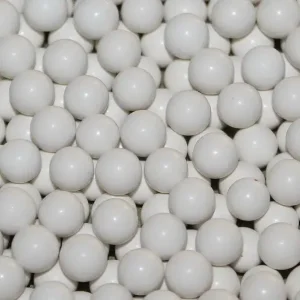
Delivering high-purity Silicon Nitride ceramic bearings, insulation rings, and wear-resistant grinding media engineered for precision semiconductor chemical-mechanical planarization (CMP) slurries.
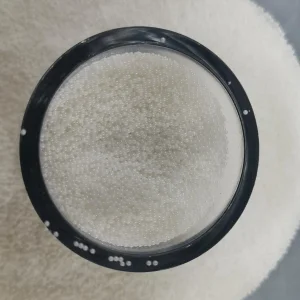
Deploying high-alumina wear tiles, magnesia-stabilized zirconia slurry liners, and dense ceramic beads for extreme mineral comminution and aggressive chemical slurry dispersion.
Direct factory supply for high-purity ceramic powders, grinding media, thermal barriers, and custom engineering structures.