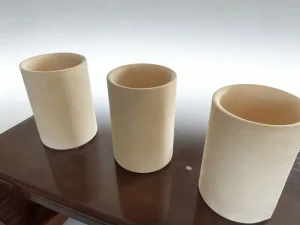
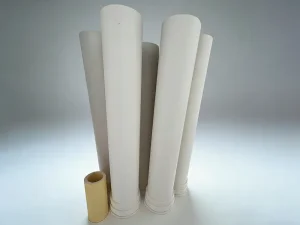
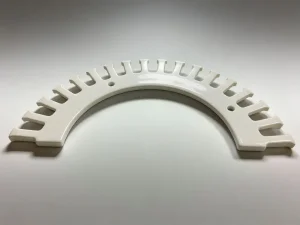
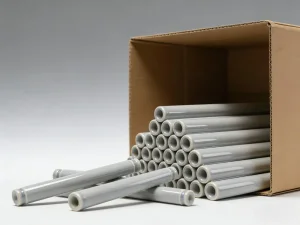
Explore our factory-direct precision-engineered ceramic media and structural materials, manufactured under rigorous quality control standards to serve global industrial applications.
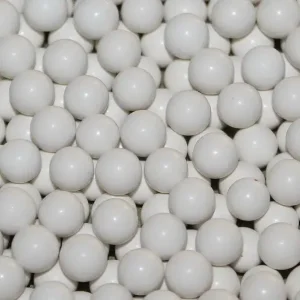
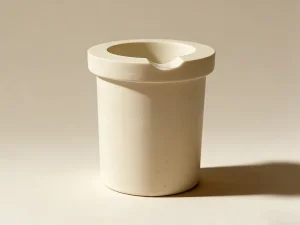
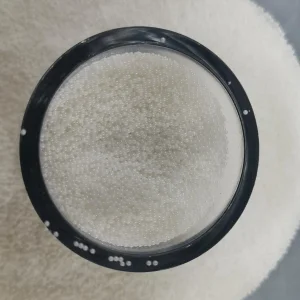
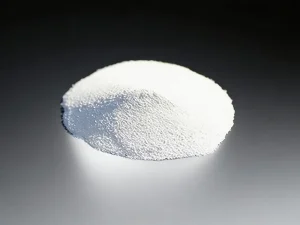
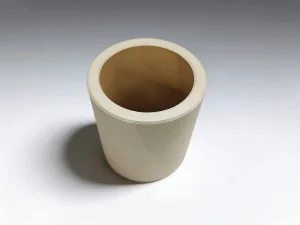
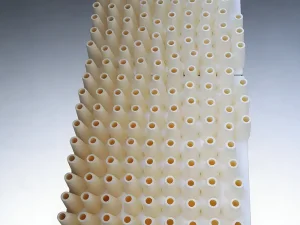
Zirconium Dioxide ($\text{ZrO}_2$), commonly termed zirconia ceramic, represents the apex of modern oxide ceramics due to its unparalleled mechanical strength, fracture toughness, thermal insulation, and tribological durability. Unlike traditional technical ceramics such as alumina ($\text{Al}_2\text{O}_3$), pure zirconia undergoes a polymorphic phase transformation during thermal cycles, transitioning from a monoclinic (m) phase at room temperature to a tetragonal (t) phase at ~1170°C, and finally to a cubic (c) fluorite-type phase at ~2370°C.
In wholesale procurement and industrial component engineering, pure zirconia is rarely utilized without stabilization due to the severe ~3% to 5% volume expansion occurring during the tetragonal-to-monoclinic phase transformation upon cooling, which causes catastrophic macro-cracking. To overcome this limitation, specialized stabilizing oxides—most notably Yttria ($\text{Y}_2\text{O}_3$), Magnesia ($\text{MgO}$), and Calcia ($\text{CaO}$)—are engineered into the crystal lattice to retain the metastable tetragonal or cubic phases at room ambient temperature.
The true engineering advantage of wholesale zirconia components lies in Stress-Induced Transformation Toughening. When a micro-crack begins to propagate through a 3 mol% Yttria-Stabilized Zirconia (3YSZ) matrix, the high tensile stress concentrated at the crack tip triggers a localized phase transformation of adjacent metastable tetragonal grains into the monoclinic structure. This $t \rightarrow m$ transition involves a local volumetric expansion of approximately 3% to 5% and a shear strain of ~7%. This localized expansion generates intense compressive stresses around the crack tip, effectively clamping the crack tip shut and dissipating the mechanical strain energy. Consequently, wholesale zirconia ceramics display crack-arrest capabilities unachievable by standard alumina or glass-ceramic substrates.
When global procurement directors evaluate material selection for high-wear, high-temperature, or chemically aggressive environments, understanding the precise material property thresholds is paramount. The table below presents quantitative comparative engineering metrics for premier technical ceramics.
| Property Parameter | 3YSZ (Y-TZP) | Mg-PSZ | ZTA (Zirconia Toughened Alumina) | High-Purity Alumina (99.8%) | Silicon Nitride (Si₃N₄) |
|---|---|---|---|---|---|
| Density (g/cm³) | 6.05 | 5.75 | 4.10 - 4.50 | 3.95 | 3.25 |
| Flexural Strength (MPa) | 1100 - 1400 | 600 - 850 | 700 - 1000 | 350 - 450 | 850 - 1100 |
| Fracture Toughness K₁c (MPa·m¹/²) | 7.0 - 10.0 | 9.0 - 13.0 | 5.5 - 7.5 | 3.5 - 4.5 | 6.0 - 7.5 |
| Hardness (Vickers HV0.5) | 1250 - 1350 | 1100 - 1200 | 1500 - 1700 | 1600 - 1800 | 1400 - 1600 |
| Elastic Modulus GPa | 200 - 210 | 200 | 300 - 340 | 380 - 390 | 310 - 320 |
| Thermal Conductivity (W/m·K) | 2.0 - 3.0 | 2.5 - 3.5 | 18.0 - 24.0 | 28.0 - 32.0 | 20.0 - 30.0 |
| Thermal Expansion (10⁻⁶/K) | 10.5 | 10.0 | 8.2 | 8.0 | 3.2 |
| Max Operating Temp (°C) | 1000 (air) | 1200 (air) | 1400 | 1600 | 1400 |
Choosing the optimal stabilized zirconia variant is dependent upon specific mechanical and thermal operating stress profiles:
As global manufacturing shifts toward zero-defect, high-efficiency, and ultra-clean production protocols, wholesale zirconia ceramic components serve as vital technological enablers across strategic industries:
Zirconia end-effectors, vacuum chucks, and chemical mechanical planarization (CMP) components deliver zero metallic particle contamination, extreme dimensional stability, and high chemical resistance against fluorinated etching gases.
High-density YSZ ceramic beads (density ≥ 6.0 g/cm³) enable sub-micron and nano-level dispersion of cathode ($LFP, NCM$) and anode materials with near-zero bead wear, preventing heavy metal contamination of energy storage materials.
Y-TZP ceramics are globally standardized for orthopedic joint prostheses, dental CAD/CAM blocks, and surgical instruments due to superior biocompatibility, low wear rates against UHMWPE, and natural aesthetic translucency.
Solid zirconia valve balls, seats, sleeve bushings, and mud pump liners exhibit immune performance against sand slurry erosion, sour gas ($H_2S$) corrosion, and high hydraulic pressure spikes.
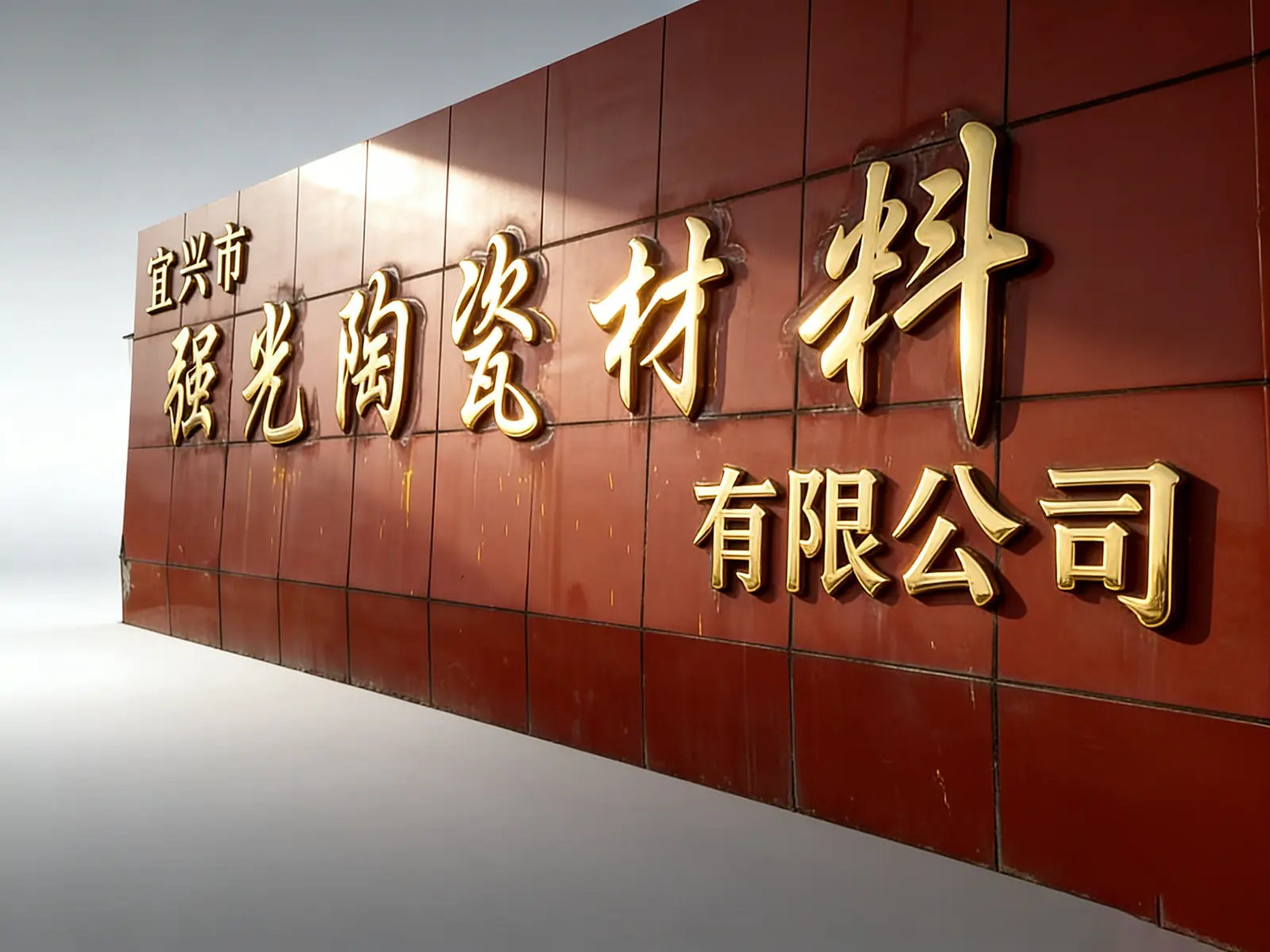
Founded in 2003, Yixing Qiangguang Ceramic Materials Co., Ltd. is a professional provider dedicated to the research and development (R&D), manufacturing, and application solutions of high-performance advanced ceramic materials. It is among the few enterprises in China that possess a complete industrial chain, covering key links from powder forming, sintering and precision machining to the provision of integrated application solutions.
The company is also a rare domestic manufacturer engaged in the R&D, production, and supply of a comprehensive portfolio of ceramic materials. Its product range covers zirconia, yttria, alumina, magnesia, aluminum nitride, boron nitride, silicon nitride, silicon carbide, aluminum titanate and other key ceramic materials for industrial use.
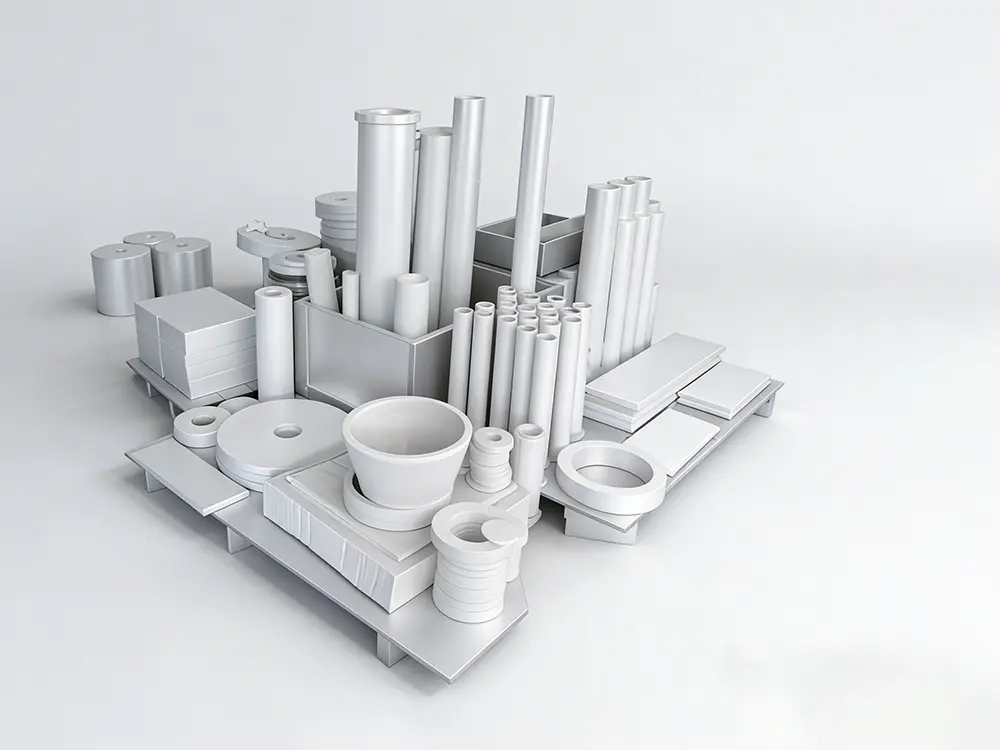
Benefiting from excellent product performance and stable quality, its products are extensively utilized in various high-end fields, such as food and medical industries, new energy vehicles, laser semiconductors, petrochemical engineering, powder metallurgy, national defense and military, as well as aerospace sectors.
Adhering to the core principle of "creating value for customers", Qiangguang provides customized and cost-efficient advanced ceramic solutions tailored to the specific demands of different customers. It is supported by high-quality after-sales services and a strict full-process tracking system, which effectively enhances cooperation efficiency and promotes continuous quality improvement.
From raw powder synthesis and spray-freeze drying to cold isostatic pressing (CIP), high-temperature sintering (1550°C–1700°C), and post-sintering Hot Isostatic Pressing (HIP), Qiangguang ensures batch-to-batch density uniformity exceeding 99.5% of theoretical density. Our precision machining workshop utilizes multi-axis CNC diamond grinding, lapping, laser micromachining, and ultrasonic drilling, achieving precise dimensional tolerances within ±0.001 mm and surface roughness down to Ra < 0.01 µm.
For global industrial buyers, direct unit price is only one component of the procurement equation. Evaluating technical ceramics requires calculating total life cycle value and operational reduction of downtime risks.
Sub-standard zirconia exhibits micro-porosity and grain growth anomalies that lead to premature fatigue failure. Qiangguang utilizes CIP compaction and controlled grain growth sintering to eliminate structural micro-voids.
In continuous nano-milling mills, high-purity YSZ beads reduce wear losses by up to 80% compared to lower-grade toughened alumina or glass beads, protecting product purity while extending media service lifetime by 4-5x.
Our engineering staff collaborates directly via CAD/STEP files to manufacture complex, tight-tolerance OEM components, reducing downstream machining overhead for equipment manufacturers.
As next-generation industrial applications demand higher thermal stability and extreme material performance, research into advanced zirconia formulations focuses on three core frontiers:
Stereolithography (SLA) and Digital Light Processing (DLP) 3D printing of zirconia slurries allow the creation of highly complex internal cooling channels, lightweight cellular lattice structures, and customized medical implants without expensive diamond tooling.
Alumina-Toughened Zirconia (ATZ) and Zirconia-Toughened Alumina (ZTA) composite systems merge the high hardness and high thermal conductivity of $\text{Al}_2\text{O}_3$ with the fracture toughness of $\text{ZrO}_2$, creating optimized structural solutions for high-wear mechanical seals and cutting tools.
Ultra-fast field-assisted sintering technologies (SPS/FAST) allow fully dense zirconia to be consolidated in minutes rather than hours. This restrains grain growth below 100 nm, unlocking transparent zirconia optics and extreme superplastic deformation capabilities at elevated temperatures.
Qiangguang Ceramic Materials Co., Ltd. operates under strict Quality Management Systems compliant with ISO 9001, ISO 14001, and international regulatory frameworks including RoHS, REACH, and FDA raw material purity standards for food and medical contact applications.
At present, the company's products are sold well across the country and exported to Italy, the United Kingdom, Australia, Japan, Malaysia, Thailand, Hungary and other countries and regions. Committed to delivering high-quality products at reasonable prices, Qiangguang sincerely looks forward to establishing long-term and stable cooperative relations with global partners.
Direct access to factory manufacturing lines for zirconia, alumina, silicon nitride, magnesium oxide, and thermal management ceramic components.