
An exhaustive analysis of material failure modes, thermal stress mitigation, and high-wear ceramic applications across the Federal Republic of Nigeria.
Nigeria stands at the precipice of an unmatched industrial transformation. As Africa’s largest economy, driven by the Federal Government’s Renewed Hope Agenda and the strategic execution of the Nigeria Industrial Revolution Plan (NIRP), local manufacturing, solid mineral processing, petrochemical refining, and heavy infrastructure are expanding at an unprecedented rate. However, operating heavy industrial machinery in Nigeria presents extreme engineering challenges: persistent thermal stress, abrasive mechanical wear from solid mineral processing, highly corrosive chemical environments in oil refineries, and severe grid power fluctuations causing sudden thermal shocks.
To overcome these structural operational bottlenecks, industrial plant operators, EPC contractors, and machinery OEMs across Lagos, Port Harcourt, Kano, Ogun, and Calabar are shifting away from traditional metal alloys. Heavy machinery components constructed from standard stainless steel or cast iron suffer rapid erosion, galling, chemical oxidation, and high downtime costs. Advanced engineering ceramics—including Yttria-Stabilized Zirconia (YSZ), Silicon Nitride (Si₃N₄), High-Purity Alumina (Al₂O₃), and Aluminum Nitride (AlN)—have emerged as the definitive material solution for next-generation industrial reliability.
As a premiere OEM manufacturer and global factory supplier, Yixing Qiangguang Ceramic Materials Co., Ltd. delivers precision-engineered technical ceramics direct to the Nigerian enterprise sector. By combining end-to-end manufacturing—from chemical powder synthesis to pressureless sintering and diamond grinding—we ensure full technical compliance with international ISO 9001:2015 and ASTM standards while maintaining factory-direct pricing for West African procurement teams.
Founded in 2003, Yixing Qiangguang Ceramic Materials Co., Ltd. is a professional provider dedicated to the research and development (R&D), manufacturing, and application solutions of high-performance advanced ceramic materials. It is among the few enterprises in China that possess a complete industrial chain, covering key links from powder forming, sintering, and precision machining to the provision of integrated application solutions.
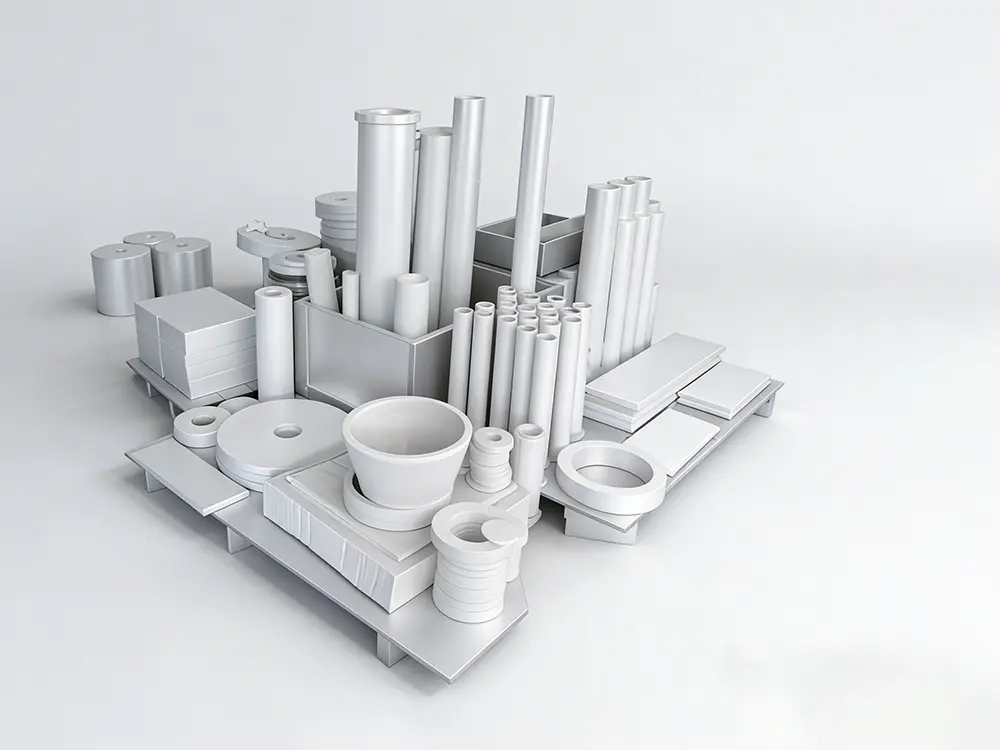
The company is also a rare domestic manufacturer engaged in the R&D, production, and supply of a comprehensive portfolio of ceramic materials. Its product range covers zirconia, yttria, alumina, magnesia, aluminum nitride, boron nitride, silicon nitride, silicon carbide, aluminum titanate, and other key ceramic materials for industrial use.
Benefiting from excellent product performance and stable quality, its products are extensively utilized in various high-end fields, such as food and medical industries, new energy vehicles, laser semiconductors, petrochemical engineering, powder metallurgy, national defense and military, as well as aerospace sectors.
Request Custom Technical Specs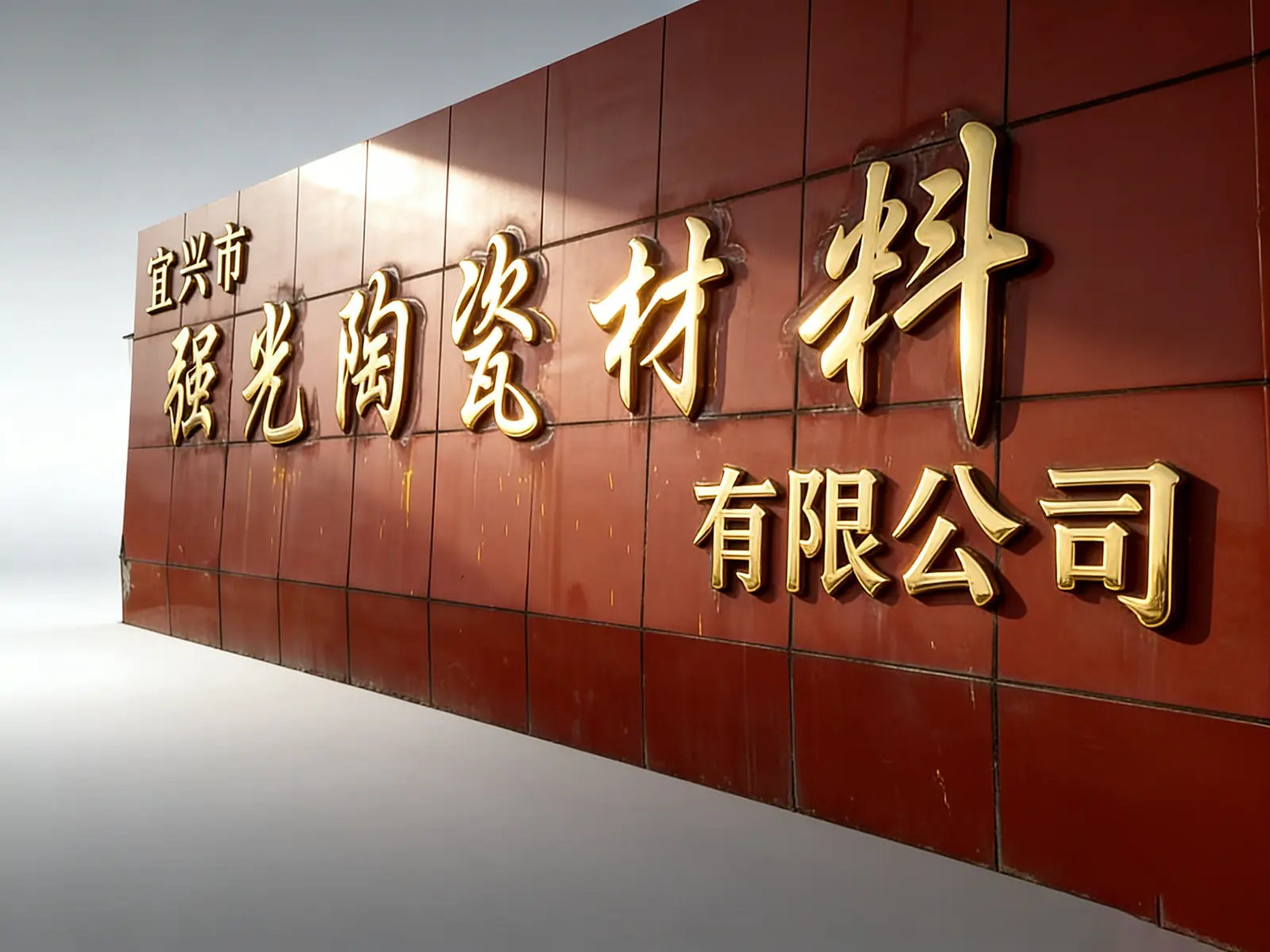
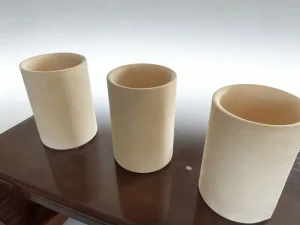
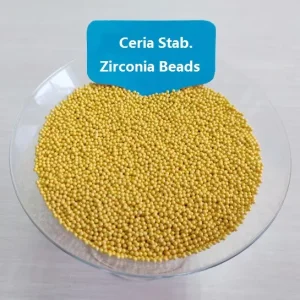
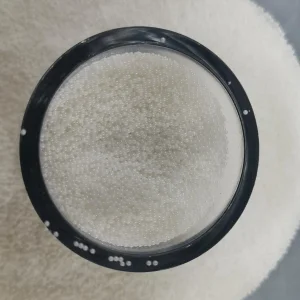
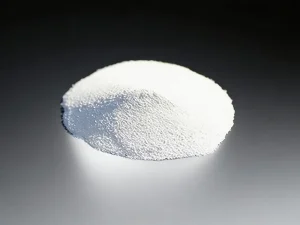
Specifically engineered for Nigeria's expanding paints, coatings, calcium carbonate, and solid mineral processing industries.
Understanding mechanical, thermal, and dielectric performance parameters for Nigerian industrial procurement engineers.
Selecting the optimal technical ceramic formulation requires an in-depth understanding of the environmental stresses present in West African industrial processing. Below is an engineering benchmark comparing key industrial ceramic matrix materials against conventional tungsten carbide and stainless steel 316L under demanding operational conditions:
| Material Type | Density (g/cm³) | Vickers Hardness (HV) | Flexural Strength (MPa) | Max Work Temp (°C) | Thermal Conductivity (W/m·K) | Primary Industrial Use Case in Nigeria |
|---|---|---|---|---|---|---|
| Yttria Zirconia (3Y-TZP) | 6.05 | 1250 - 1350 | 1000 - 1200 | 1050 | 2.5 - 3.0 | Slurry pump plungers, valve trim, pharmaceutical shafts |
| Silicon Nitride (Si₃N₄) | 3.25 | 1500 - 1700 | 850 - 1000 | 1400 | 25 - 30 | High-speed bearings, molten aluminum tubes, turbocompressors |
| Alumina (99.8% Al₂O₃) | 3.92 | 1600 - 1800 | 380 - 450 | 1650 | 30 | Electrical insulators, wear-resistant pipe liners, sandblasting nozzles |
| Aluminum Nitride (AlN) | 3.30 | 1100 - 1200 | 320 - 400 | 1100 (vacuum) | 170 - 230 | High-power semiconductor heat sinks, solar PV substrates |
| Aluminum Titanate (Al₂TiO₅) | 3.60 | 600 - 800 | 40 - 80 | 1400 | 1.5 - 2.0 | Low-pressure die casting riser tubes, molten metal spouts |
| Tungsten Carbide (Reference) | 14.50 | 1400 - 1600 | 1500 - 2000 | 500 (Oxidizes) | 80 | Rapid oxidation at high temp; heavy mass penalty |
| Stainless Steel 316L (Ref) | 8.00 | 220 | 520 | 800 | 16.3 | Severe abrasive wear and acid pitting in aggressive slurries |
1. Transformation Toughening in Zirconia (YSZ): Yttria-Stabilized Zirconia exhibits a unique microstructural phenomenon known as phase transformation toughening. When a micro-crack begins to propagate under mechanical load, the tetragonal crystal phase surrounding the crack tip transforms into a monoclinic phase. This transformation involves a ~4% volume expansion, which compresses the crack tip, preventing further propagation. This makes YSZ exceptionally resistant to chipping and mechanical impact in heavy-duty slurry pumps throughout Nigeria's oil & gas sectors.
2. Thermal Shock Resilience with Silicon Nitride (Si₃N₄) & Aluminum Titanate: Power fluctuations and rapid thermal cycles in Nigerian foundries frequently cause ceramic failure. Silicon Nitride’s exceptionally low coefficient of thermal expansion (3.2 × 10⁻⁶/K) paired with high flexural strength allows it to endure instantaneous thermal shocks exceeding 800°C without micro-fracturing.
Real-world application engineering tailored to local environmental, chemical, and mechanical dynamics.
Hydro-cracking units, refinery pump sleeves, and corrosive slurry valves operating under extreme sulfur and acidic catalyst flow require non-reactive materials.
Processing mineral ores, barite for drilling mud, and high-purity limestone generates massive wear on steel mill liners, contaminating final product purity.
Food-grade cassava starch processing, cocoa butter extraction, and fertilizer chemical production demand zero metallic contamination and chemical inertness.
How advanced ceramic engineering is evolving to support renewable energy integration and smart manufacturing in West Africa.
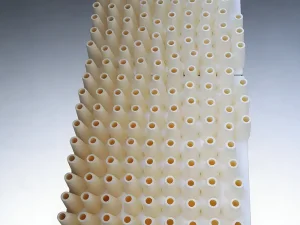
Traditional machining of ceramic components after sintering is labor-intensive due to extreme hardness. Qiangguang is pioneering SLA-based ceramic 3D printing (Stereolithography) for complex internal cooling channels in thermal nozzles and custom prototype components for Nigerian oilfields, enabling delivery of custom parts in days rather than months.
By controlling powder grain sizes at the nanoscale (< 50nm), our next-generation YSZ and Magnesium-Stabilized Powders provide unprecedented density (> 99.8% theoretical density) and flexural strength exceeding 1400 MPa, ideal for heavy military, mining, and high-pressure hydraulic pumps.
With Nigeria rapidly adopting solar micro-grids and expanding telecommunication infrastructure across all 36 states, demand for high-thermal-conductivity Aluminum Nitride (AlN) substrates (up to 230 W/m·K) is surging to replace silicon components in power inverters.
By implementing Microwave Sintering and Spark Plasma Sintering (SPS), we reduce carbon emissions during manufacturing while producing ultra-fine microstructures with minimal thermal degradation, lowering product costs for our West African distribution partners.
Overcoming import friction, customs clearing, and quality verification for Nigerian industrial buyers.
Procuring heavy industrial technical ceramics into Nigeria requires robust supply chain planning, SONCAP compliance, and meticulous packing to guarantee zero breakage during ocean freight transit. Yixing Qiangguang Ceramic Materials Co., Ltd. provides comprehensive export support specifically structured for Nigerian enterprise customers:
Explore our full line of industrial ceramics manufactured for extreme thermal, chemical, and mechanical environments.
Clear engineering guidance regarding delivery, custom prototyping, material specs, and SONCAP documentation.