
Engineered for extreme thermal shock, precision chemical inertness, and ultra-wear resistance in critical South Korean laboratory & manufacturing workflows.
As the primary scientific capital of South Korea, Daejeon demands structural ceramic components that operate under extreme mechanical stress, elevated temperatures, and aggressive plasma environments.
Daejeon’s Daedeok Innopolis serves as the brain center for South Korea’s national R&D, housing premier institutions such as KAIST, ETRI, and the Korea Atomic Energy Research Institute (KAERI). The regional demand for ultra-high purity alumina ($\text{Al}_2\text{O}_3$), aluminum nitride ($\text{AlN}$), and silicon nitride ($\text{Si}_3\text{N}_4$) components has scaled rapidly alongside next-generation semiconductor lithography, plasma etch chambers, and vacuum wafer handling systems. Sourcing components with strict dimensional stability and low thermal expansion is vital for maintaining yield integrity in local fabrication testbeds.
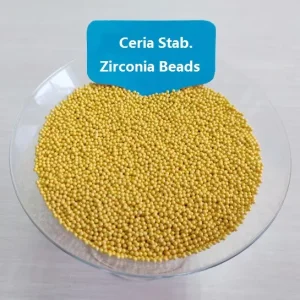
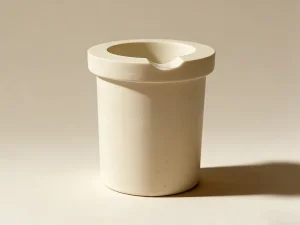
The concentration of battery chemical laboratories and advanced energy storage incubators in Yuseong-gu, Daejeon, requires extreme-purity zirconia grinding media and refractory crucibles. To achieve sub-micron particle size distribution in solid-state electrolyte precursors and cathode active materials without metallic contamination, local engineers rely heavily on yttria-stabilized zirconia (YSZ) and ceria-stabilized zirconia (CSZ) ceramic beads manufactured via precision cold isostatic pressing (CIP).
Comparative technical analysis of key advanced ceramic formulations supplied to Daejeon high-tech manufacturers.
| Material Classification | Density (g/cm³) | Flexural Strength (MPa) | Thermal Conductivity (W/m·K) | Max Working Temp (°C) | Primary Daejeon Application |
|---|---|---|---|---|---|
| Yttria-Stabilized Zirconia (YSZ) | ≥ 6.02 | 1000 - 1200 | 2.5 - 3.0 | 1500 | Nano-grinding media, Bio-implants, Structural valves |
| Aluminum Nitride (AlN) | ≥ 3.30 | 320 - 400 | 170 - 230 | 1600 (Vacuum) | Semiconductor substrates, Heaters, Heat sinks |
| Silicon Nitride (Si3N4) | ≥ 3.25 | 850 - 1100 | 30 - 90 | 1400 | High-speed bearings, Plasma etch components, Aerospace |
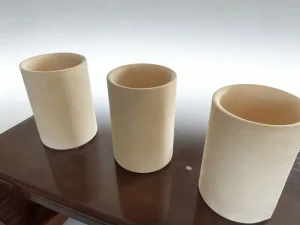
| Aluminium Titanate (Al2TiO5) | 3.30 - 3.60 | 40 - 80 | 1.5 - 2.5 | 1450 | Non-ferrous foundry tubes, Extreme thermal shock barriers |
| High-Purity Alumina (99.8% Al2O3) | ≥ 3.92 | 380 - 450 | 30 - 35 | 1700 | Insulating substrates, Chemical process wear plates |
| Magnesium Stabilized Zirconia (Mg-PSZ) | ≥ 5.75 | 650 - 800 | 2.5 - 3.2 | 1400 | Thermal barrier coatings, Metal forming dies |
Bridging the gap between ultra-precision quality demands and cost-effective bulk production through end-to-end supply chain integration.
From chemical synthesis of sub-micron powders to Cold Isostatic Pressing (CIP), high-temperature vacuum sintering, and 5-axis CNC diamond grinding, Chinese manufacturing clusters eliminate intermediate vendor markups and guarantee batch-to-batch microstructural consistency.
Daejeon scientific institutes require rapid customized prototypes. Chinese manufacturing partners can execute low-volume prototype orders with customized tooling in under 15 days, drastically reducing the development cycles for experimental semiconductor and defense projects.
Equipped with X-ray diffraction (XRD), scanning electron microscopy (SEM), laser particle size analyzers, and CMM inspection units, Chinese facilities ensure that products bound for Daejeon meet international ASTM and ISO 9001 standards.
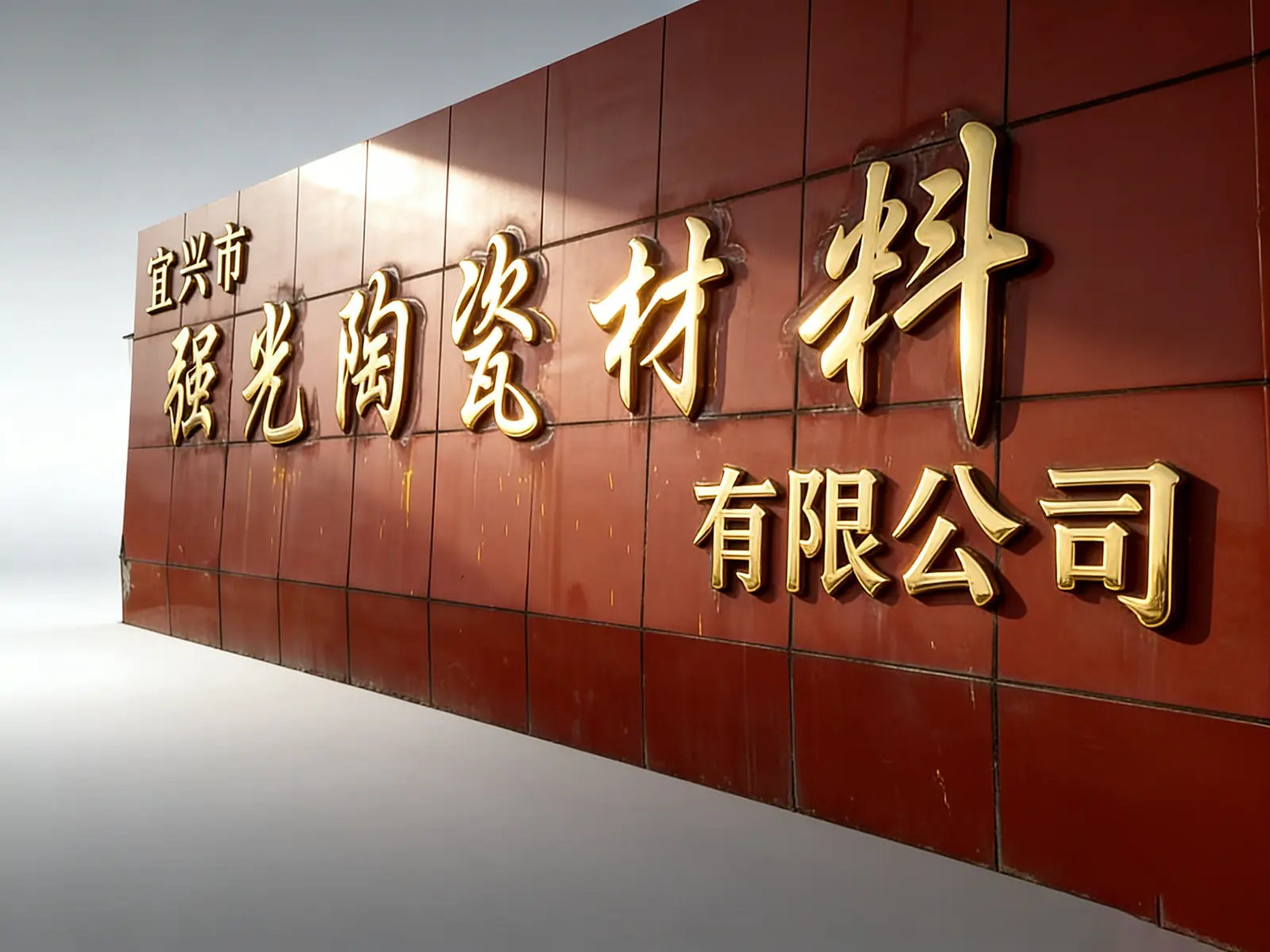
Founded in 2003, Yixing Qiangguang Ceramic Materials Co., Ltd. is a professional provider dedicated to the research and development (R&D), manufacturing, and application solutions of high-performance advanced ceramic materials. It is among the few enterprises in China that possess a complete industrial chain, covering key links from powder forming, sintering and precision machining to the provision of integrated application solutions.
The company is also a rare domestic manufacturer engaged in the R&D, production, and supply of a comprehensive portfolio of ceramic materials. Its product range covers zirconia, yttria, alumina, magnesia, aluminum nitride, boron nitride, silicon nitride, silicon carbide, aluminum titanate and other key ceramic materials for industrial use.
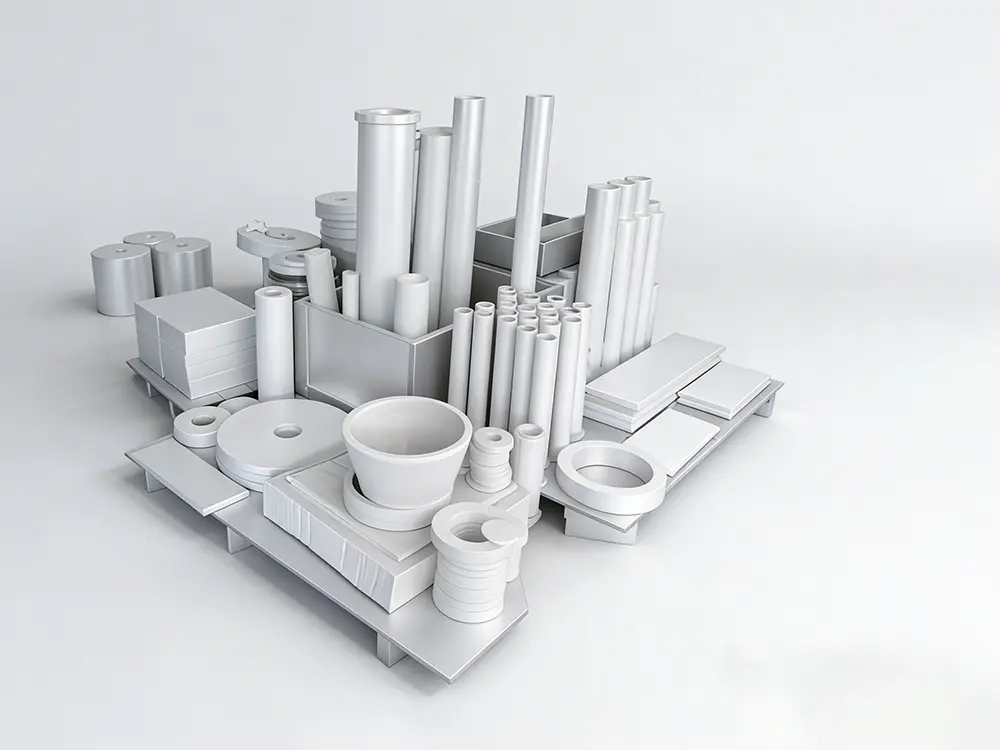
Benefiting from excellent product performance and stable quality, its products are extensively utilized in various high-end fields, such as food and medical industries, new energy vehicles, laser semiconductors, petrochemical engineering, powder metallurgy, national defense and military, as well as aerospace sectors.
Adhering to the core principle of "creating value for customers", Qiangguang provides customized and cost-efficient advanced ceramic solutions tailored to the specific demands of different customers. It is supported by high-quality after-sales services and a strict full-process tracking system, which effectively enhances cooperation efficiency and promotes continuous quality improvement.
At present, the company's products are sold well across the country and exported to Italy, the United Kingdom, Australia, Japan, Malaysia, Thailand, Hungary, South Korea (serving key hubs like Daejeon) and other countries and regions. Committed to delivering high-quality products at reasonable prices, Qiangguang sincerely looks forward to establishing long-term and stable cooperative relations with global partners.
Deploying precision engineered material formulations across South Korea’s leading scientific domains.
In high-density plasma environments (CF4, NF3 chemistry), standard quartz components deteriorate rapidly. Daejeon equipment manufacturers utilize Yttria-Stabilized Zirconia (YSZ) and high-purity Alumina components due to their zero-ion contamination and extreme resistance to plasma sputtering erosion.
Electric vehicle drive inverter developments within South Korea demand substrates with extreme thermal performance. Aluminum Nitride (AlN) ceramics deliver thermal conductivity > 180 W/m·K while maintaining electrical isolation, solving heat dissipation bottlenecks in high-voltage power electronics.
Nanometer-level grinding of lithium-iron-phosphate (LFP) and high-nickel NMC cathode materials requires zero-wear grinding media. Ceria and Yttria stabilized zirconia beads preserve purity while minimizing milling time in high-energy agitator bead mills.
Explore our complete portfolio of high-purity ceramic powders, grinding media, structural components, and thermal substrates.
Addressing key technical, logistical, and material customization questions for engineering teams in Daejeon and broader South Korea.
YSZ possesses a significantly higher fracture toughness ($K_{IC} \ge 7-10 \, \text{MPa}\cdot\text{m}^{1/2}$) and higher density ($\approx 6.0 \, \text{g/cm}^3$) compared to Alumina ($3.9 \, \text{g/cm}^3$). This allows YSZ beads to impart higher kinetic energy during high-speed agitation milling while experiencing near-zero wear, preventing metallic cross-contamination in lithium-ion battery slurry formulations.
Through diamond micro-grinding and CNC precision honing post-sintering, we maintain dimensional tolerances down to $\pm 0.002 \, \text{mm}$, with surface roughness ($Ra$) values reaching sub-micron levels ($Ra < 0.1 \, \mu\text{m}$) for critical semiconductor valve components and electrostatic chuck pins.
Aluminum Nitride provides an ideal combination of exceptionally high thermal conductivity ($170 - 230 \, \text{W/m}\cdot\text{K}$) and a coefficient of thermal expansion (CTE: $4.5 \times 10^{-6}/\text{K}$) that closely matches Silicon ($3.5 \times 10^{-6}/\text{K}$), reducing thermal stress during high-temperature switching cycles.
Standard inventory products (such as YSZ powders and Alumina ceramic grinding media) ship within 3-5 business days. Express air freight to Incheon or Cheongju Airport delivering to Daejeon typically takes 2-3 days, while ocean freight via Incheon Port takes approximately 5-7 days total transit time.
Direct factory pricing, custom CAD drawing execution, and full quality inspection for Daejeon R&D and production lines.