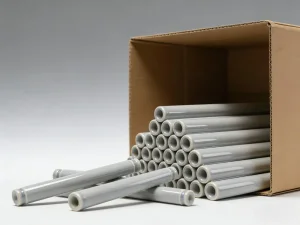
High-Purity Alumina, Stabilized Zirconia Powder, & Engineering Ceramics Engineered for Extreme Thermal & Tribological Environments
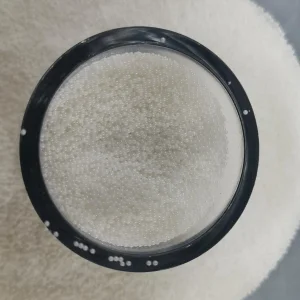
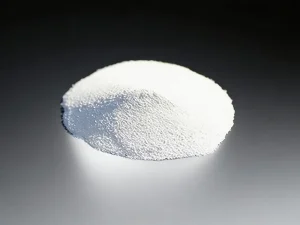
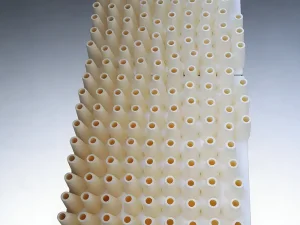
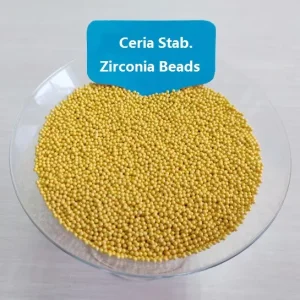
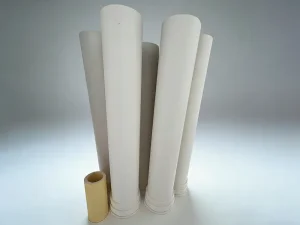
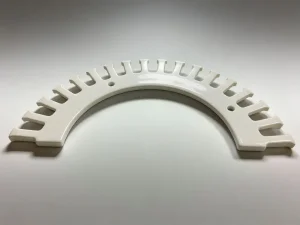
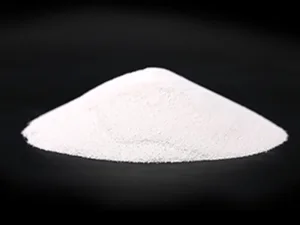
Yixing Qiangguang Ceramic Materials Co., Ltd. — Pioneers in Advanced Technical Ceramic R&D and Manufacturing
Founded in 2003, Yixing Qiangguang Ceramic Materials Co., Ltd. is a professional provider dedicated to the research and development (R&D), manufacturing, and application solutions of high-performance advanced ceramic materials. It is among the few enterprises in China that possess a complete industrial chain, covering key links from powder forming, sintering and precision machining to the provision of integrated application solutions.
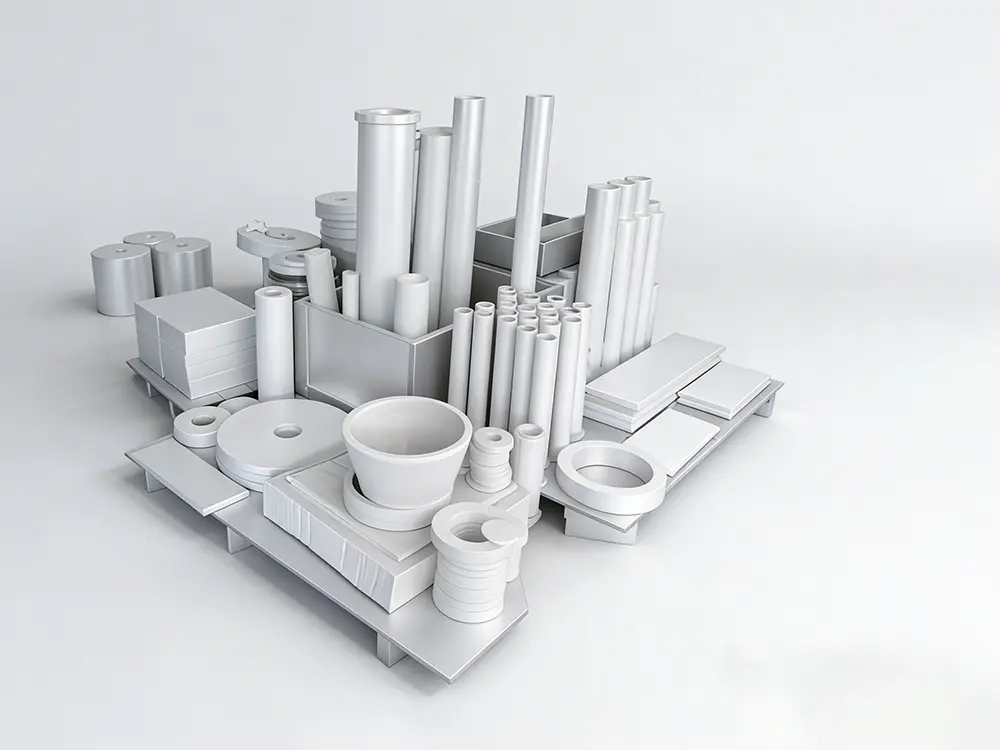
The company is also a rare domestic manufacturer engaged in the R&D, production, and supply of a comprehensive portfolio of ceramic materials. Its product range covers zirconia, yttria, alumina (Al2O3), magnesia, aluminum nitride, boron nitride, silicon nitride, silicon carbide, aluminum titanate and other key ceramic materials for industrial use.
Benefiting from excellent product performance and stable quality, its products are extensively utilized in various high-end fields, such as food and medical industries, new energy vehicles, laser semiconductors, petrochemical engineering, powder metallurgy, national defense and military, as well as aerospace sectors.
Adhering to the core principle of "creating value for customers", Qiangguang provides customized and cost-efficient advanced ceramic solutions tailored to the specific demands of different customers. It is supported by high-quality after-sales services and a strict full-process tracking system, which effectively enhances cooperation efficiency and promotes continuous quality improvement.
At present, the company's products are sold well across the country and exported to Italy, the United Kingdom, Australia, Japan, Malaysia, Thailand, Hungary and other countries and regions. Committed to delivering high-quality products at reasonable prices, Qiangguang sincerely looks forward to establishing long-term and stable cooperative relations with global partners.
Technical Overview of Purity Variations, Microstructural Density, and Physical-Chemical Properties
Aluminum Oxide (Al2O3), commonly referred to as Alumina Technical Ceramics, stands as the most versatile and cost-effective industrial ceramic material globally. The performance of Al2O3 ceramics is predominantly governed by crystal grain size, phase stability (alpha-phase α-Al2O3 being the most stable hexagonal closed-packed crystal structure), micro-porosity, and the purity percentage of the raw powder formulation.
| Alumina Grade / Purity | Density (g/cm³) | Flexural Strength (MPa) | Thermal Conductivity (W/m·K) | Dielectric Strength (kV/mm) | Primary Industrial Target |
|---|---|---|---|---|---|
| 95% Al2O3 (Standard Industrial) | 3.65 - 3.70 | 300 - 330 | 18 - 21 | 14 - 16 | Electrical Insulators, Wear Rings, Textile Guides |
| 99% Al2O3 (High Strength) | 3.85 - 3.90 | 350 - 400 | 28 - 31 | 17 - 18 | Chemical Valves, Seal Rings, Pump Shafts |
| 99.5% Al2O3 (High Purity) | 3.92 - 3.95 | 380 - 430 | 32 - 35 | 19 - 20 | Semiconductor Substrates, Plasma Chamber Rings |
| 99.8% Al2O3 (Ultra-High Purity) | 3.96 - 3.98 | 420 - 480 | 36 - 38 | 22+ | Laser Tubes, Medical Implants, Wafers Processing |
Al2O3 ceramics maintain exceptional dielectric strength and high volume resistivity across extreme temperature gradients up to 1600°C. This renders high-purity alumina indispensable for high-voltage feedthroughs, vacuum interrupters, and power electronic substrate modules.
With a Mohs hardness rating of 9 (second only to diamond) and a melting point exceeding 2072°C, alumina components withstand extreme abrasive environments, chemical corrosion from strong acids/alkalis, and severe thermal shocks in high-temperature kilns.
Alumina exhibits total chemical inertness against active chemical agents, aggressive organic solvents, and corrosive hot gas flows. Furthermore, bio-grade Al2O3 ceramics comply fully with medical standards for bio-inert implants and surgical devices.
Why Global Fortune 500 Enterprises Turn to China for Al2O3 Technical Ceramic Manufacturing
Over the past decade, the global market for engineering ceramics has experienced a structural shift. Industrial buyers across North America, Europe, and the Asia-Pacific region are increasingly seeking integrated manufacturing partners in China capable of providing end-to-end processing rather than fragmented component sourcing.
Leading Chinese manufacturers like Yixing Qiangguang possess internal control over raw powder formulation, spray drying granulating, cold isostatic pressing (CIP), high-temperature gas-fired/electric tunnel kilns, and diamond-tool CNC grinding. This vertical control reduces production lead times by up to 40%.
Modern advanced ceramic applications demand extreme precision. Utilizing 5-axis CNC diamond grinding machines, ultrasonic machining, and lapping-polishing systems, Chinese factories can deliver Al2O3 ceramic components with tolerances as tight as ±0.001mm and surface roughness ratings of Ra < 0.05μm.
Global enterprise buyers require seamless scaling. China's mature technical ceramic ecosystem enables rapid transition from low-volume custom R&D samples (1-10 pieces) to high-volume automated production batches exceeding hundreds of thousands of units per month.
Custom Engineering Architectures Tailored for Extreme Operational Demands
In semiconductor plasma etch and CVD processing, 99.5% and 99.8% Al2O3 ceramics are deployed for ceramic end effectors, wafer chucks, ring gas injectors, and chamber liners. Their high plasma erosion resistance ensures zero particulate contamination during sub-nanometer chip fabrication.
Alumina structural components provide thermal runoff barriers, electrical isolation bushings, and wear-resistant pump shafts for electric vehicle (EV) battery cooling management, high-voltage relays, and DC fast-charging infrastructure assemblies.
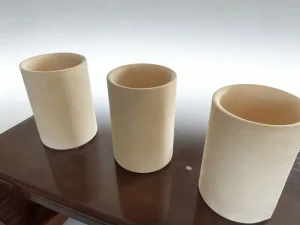
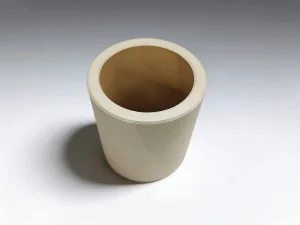
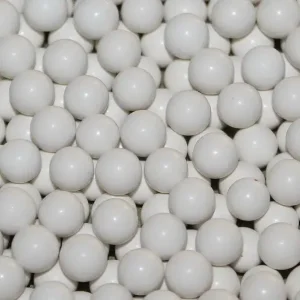
For high-pressure fluid control, chemical slurry metering, and oilfield drilling tools, customized Al2O3 valve balls, ceramic seat rings, and plunger sleeves exhibit exceptional resistance to cavity erosion, severe cavitation, and chemical acid degradation.
Rigorous Quality Management Control System Ensuring Seamless Global Integration
Every manufacturing batch undergoes comprehensive testing using Zeiss Coordinate Measuring Machines (CMM), laser interferometers, X-ray diffraction (XRD) phase analysis, and helium leak detection to guarantee 100% compliance with technical drawing specifications.
Our manufacturing processes comply fully with ISO 9001:2015 quality standards, RoHS environmental guidelines, REACH chemical safety regulations, and ASTM / DIN engineering standards, enabling direct import clearance for overseas enterprise buyers.
We provide end-to-end export packaging engineered to protect fragile precision ceramics from shock and humidity during sea and air transit, backed by flexible DDP, CIF, and FOB incoterms with full local engineering support.
Future Trends Driving Advanced Alumina Ceramic Manufacturing
As high-tech industries push performance boundaries, the next generation of Al2O3 ceramics is evolving through advanced material science and novel additive manufacturing techniques:
Stereolithography (SLA) and Digital Light Processing (DLP) for 99.8% Alumina enable complex internal cooling channels, lightweight cellular structures, and customized geometry components previously impossible with traditional tooling.
Spark Plasma Sintering (SPS) and Two-Step Sintering (TSS) suppress grain growth, producing sub-micron nano-grained alumina structures with up to 30% higher fracture toughness and flexural strength than conventional ceramics.
Active Metal Brazing (AMB) and Direct Copper Bonding (DCB) technologies allow high-integrity hermetic joining of Al2O3 components to titanium, stainless steel, and copper alloys for extreme ultra-high vacuum (UHV) systems.
Expert Answers to Critical Engineering and Procurement Intent Queries
Selection depends on operational temperature, mechanical stress, chemical exposure, and electrical insulation demands. 95% Al2O3 is ideal for general electrical insulation and wear-resistant applications where cost efficiency is paramount. 99% Al2O3 provides higher strength and chemical resistance for chemical processing and mechanical pump seals. 99.8% Al2O3 is required for semiconductor plasma resistance, medical implants, and ultra-high-temperature environments exceeding 1600°C.
As-sintered ceramics typically maintain tolerances of ±1% (or ±0.1mm). However, through precision CNC diamond grinding, cylindrical grinding, surface grinding, and lapping, we routinely achieve dimensional tolerances of ±0.001mm, concentricity within 0.002mm, and surface finish roughness down to Ra 0.02μm.
Alumina offers the highest electrical insulation and cost-to-performance ratio among technical ceramics. Zirconia (ZrO2) provides significantly higher fracture toughness and flexural strength, making it ideal for heavy impact environments. Silicon Nitride (Si3N4) features superior thermal shock resistance and low density, suitable for high-speed turbine bearings and severe thermal cycling.
Depending on component geometry and volume, we utilize Dry Pressing (for simple flat shapes), Cold Isostatic Pressing (CIP) (for uniform density in large or complex components), Injection Molding (CIM) (for high-volume intricate small parts), and Slip Casting (for hollow tubes and vessels).
Yes. We offer Moly-Manganese (Mo-Mn) metallization and Active Metal Brazing (AMB) services. Metallized alumina components can be nickel or gold plated to enable high-strength brazing with metals such as Kovar, copper, and stainless steel for vacuum-tight feedthroughs.
Standard prototype lead time for custom green machining and sintering is typically 2 to 3 weeks. For urgent R&D projects with stock blank blocks, precision CNC diamond grinding can deliver finished samples in as fast as 7 to 10 days.
Explore Our Complete Range of Zirconia, Alumina Balls, YSZ Powders & Engineering Ceramics