Explore our factory-direct technical ceramics engineered for severe wear, extreme thermal shock, and chemical exposure.
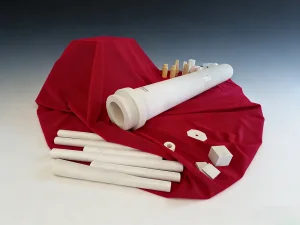
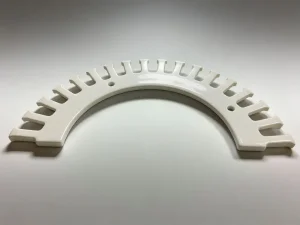
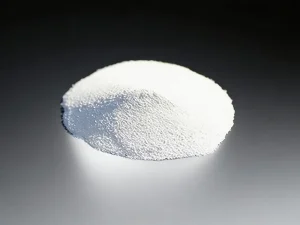
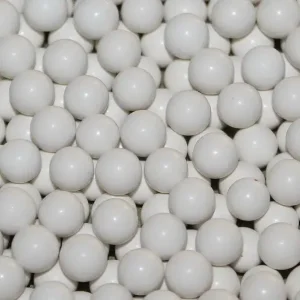
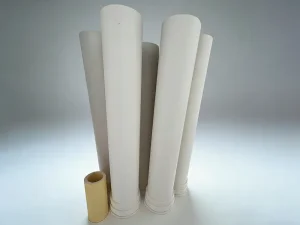
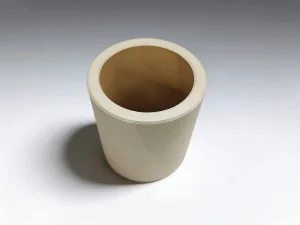
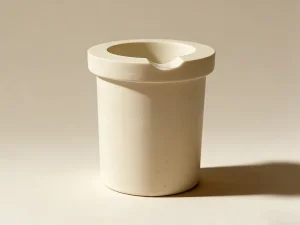
Aluminium Oxide ceramics (Alumina, $Al_2O_3$) represent the foundational pillar of modern technical ceramics. Celebrated for exceptional hardness, wear resistance, electrical insulation, high-temperature tolerance, and chemical inertness, high-purity alumina ceramics are critical components across extreme engineering environments. As global manufacturing transitions toward higher precision, energy efficiency, and extended component lifespans, OEM procurement directors look to established China manufacturers for integrated ceramic solutions.
With a Vickers hardness exceeding 1500 HV and a Mohs hardness of 9, alumina ceramics provide extreme resistance to sliding abrasion, particle erosion, and mechanical deformation. Used extensively in grinding media, pump seals, valve seats, and wear plates, they outlast hardened tool steels by 10 to 30 times.
Exhibiting high volume resistivity (>1014 $\Omega\cdot\text{cm}$) and excellent dielectric breakdown strength, alumina serves as an ideal electrical insulator in high-voltage vacuum interrupters, laser power sources, power electronics substrates, and semiconductor processing chambers.
Dense alumina ceramics are virtually immune to chemical attack from strong acids, alkalis, and molten metals at elevated temperatures. This chemical stability guarantees zero contamination in pharmaceutical synthesis, food processing, and semiconductor wafer etch processes.
The global technical ceramic market is expanding rapidly, driven by the rapid growth of electric vehicles (EVs), renewable energy infrastructure, semiconductor miniaturization, and advanced medical implants. High-purity alumina ($Al_2O_3$), aluminum nitride (AlN), silicon nitride ($Si_3N_4$), and zirconia ($ZrO_2$) are increasingly replacing legacy alloys. Engineers favor ceramics because they withstand extreme operational stress, reduce maintenance downtime, and maintain dimensional stability under extreme thermal cycling.
China has emerged as the premier global manufacturing hub for technical ceramics. By combining raw material mineral processing, state-of-the-art cold isostatic pressing (CIP) techniques, high-temperature vacuum sintering furnaces, and sub-micron CNC grinding facilities, Chinese ceramic producers deliver uncompromised material quality paired with unparalleled cost-efficiencies and scaling speed for global OEMs.
Founded in 2003, Yixing Qiangguang Ceramic Materials Co., Ltd. is a professional provider dedicated to the research and development (R&D), manufacturing, and application solutions of high-performance advanced ceramic materials.
It is among the few enterprises in China that possess a complete industrial chain, covering key links from powder forming, sintering, and precision machining to the provision of integrated application solutions.
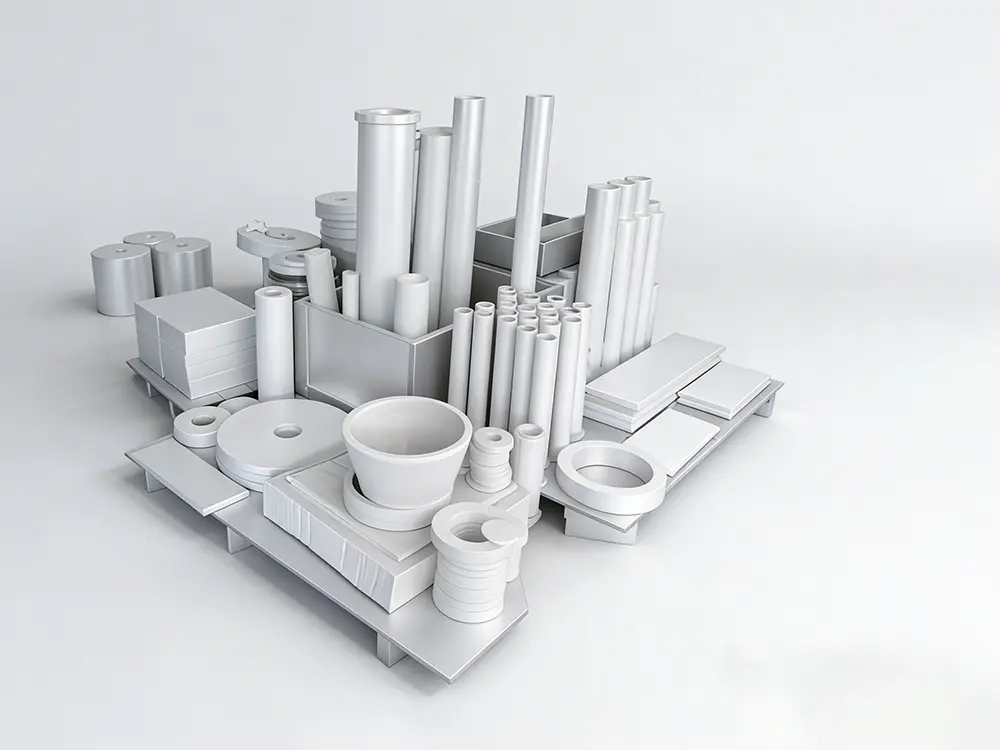
The company is also a rare domestic manufacturer engaged in the R&D, production, and supply of a comprehensive portfolio of ceramic materials. Its product range covers zirconia, yttria, alumina, magnesia, aluminum nitride, boron nitride, silicon nitride, silicon carbide, aluminum titanate, and other key ceramic materials for industrial use.
Benefiting from excellent product performance and stable quality, its products are extensively utilized in various high-end fields, such as food and medical industries, new energy vehicles, laser semiconductors, petrochemical engineering, powder metallurgy, national defense and military, as well as aerospace sectors.
Comparative evaluation of technical parameters across different alumina purity grades manufactured at our Yixing facilities.
| Property / Characteristic | 95% $Al_2O_3$ Grade | 99.5% $Al_2O_3$ High Purity | 99.8% Ultra-High Purity | Test Standard / Method |
|---|---|---|---|---|
| Density ($g/cm^3$) | 3.65 - 3.70 | 3.88 - 3.92 | 3.95 - 3.98 | ASTM C373 / ISO 18754 |
| Flexural Strength ($MPa$) | 300 - 330 | 380 - 420 | 450 - 500 | ASTM C1161 (3-Point) |
| Elastic Modulus ($GPa$) | 300 | 370 | 390 | ASTM C1259 |
| Vickers Hardness ($HV_{0.5}$) | 1350 | 1600 | 1750 | ASTM E384 |
| Thermal Conductivity ($W/m\cdot K$) | 18 - 20 | 30 - 32 | 35 - 38 | ASTM C408 (25°C) |
| Dielectric Strength ($kV/mm$) | 15 - 18 | 25 - 28 | 30 - 35 | IEC 60243-1 |
| Max Operating Temperature | 1500°C | 1650°C | 1750°C | Inert / Air Environment |
Application: Wafer end-effectors, plasma-resistant chamber rings, vacuum chucks, ceramic laser cavities.
Engineering Impact: In Italian and German semiconductor tool assembly plants, our 99.8% $Al_2O_3$ and Aluminum Nitride ceramic components deliver zero particle outgassing, high dielectric breakdown resistance, and high plasma etch longevity.
Application: High-voltage DC relay ceramic sealing rings, battery thermal barriers, cooling substrates.
Engineering Impact: Deployed by top UK and European EV tier-1 automotive suppliers, our ceramic seals prevent electrical arc jumps in high-voltage relay systems during continuous fast-charging cycles.
Application: Hydrocyclone wear liners, alumina grinding media balls, ceramic valve plungers, mud pump sleeves.
Engineering Impact: Operating in Australian mining facilities, our micro-crystalline high-purity alumina grinding balls reduce wet-milling contamination while maintaining ultra-low wear rates ($<0.01\ g/kg$).
From raw powder particle size distribution (PSD) analysis to post-sintering CMM 3D dimensional verification, Yixing Qiangguang executes strict full-process quality tracking. Every production batch undergoes ultrasonic flaw detection, density testing, surface roughness ($Ra < 0.1 \mu m$) profiling, and flexural strength verification.
Our ceramic materials comply fully with international environmental and food-contact safety frameworks, including EU RoHS, REACH, and FDA food grade standards. We maintain full export compliance paperwork and logistics integration for hassle-free customs clearance in Italy, UK, Australia, Japan, Malaysia, Thailand, Hungary, and North America.
How Yixing Qiangguang is advancing ceramic engineering through next-generation processing technologies.
Development of Zirconia-Toughened Alumina (ZTA) and nano-dispersed phases to achieve flexural strength exceeding 800 MPa.
Integrating DLP/SLA 3D printing of complex internal flow channels for heat exchangers and micro-fluidic semiconductor manifolds.
Utilizing predictive neural network monitoring during HIP and vacuum sintering to guarantee zero micro-porosity.
Transitioning high-temperature electric kilns to 100% renewable power sources, delivering low-carbon technical ceramics to global OEMs.
Review our specialized ceramic powders, grinding media, and structural engineering materials.