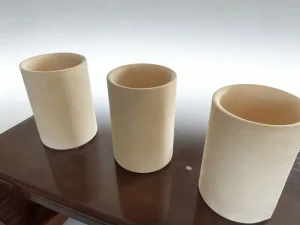
Explore our factory-direct advanced technical ceramics engineered for wear resistance, thermal management, and severe corrosion isolation.
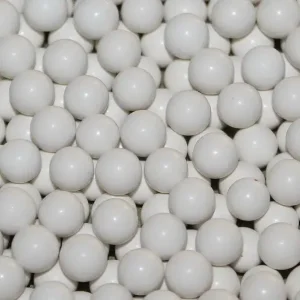
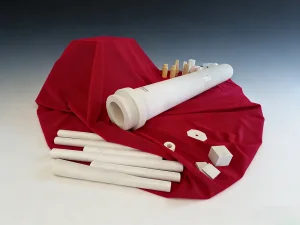
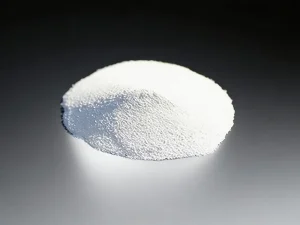
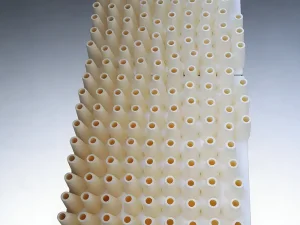
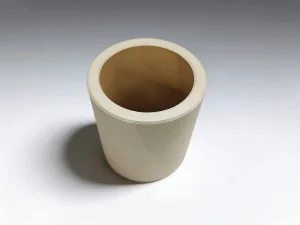
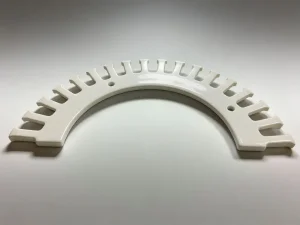
An authoritative analysis of Silicon Carbide (SiC), Boron Carbide (B4C), and companion engineering ceramics driving industrial transformation.
In modern high-precision engineering, traditional metallic alloys and oxide ceramics frequently encounter physical limitations when exposed to ultra-high temperatures, aggressive chemical media, and extreme mechanical friction. As global manufacturing transitions toward sub-micron semiconductor fabrication, green energy systems, aerospace propulsion, and high-efficiency chemical processing, Carbide Ceramics—specifically Reaction-Bonded Silicon Carbide (RBSiC), Pressureless Sintered Silicon Carbide (SSiC), and Boron Carbide (B4C)—have emerged as non-negotiable structural materials.
China has firmly established itself as the global epicenter for advanced carbide ceramic synthesis, precision green-body forming, and net-shape sintering technologies. Among leading enterprises, Yixing Qiangguang Ceramic Materials Co., Ltd. stands at the forefront of technical ceramic innovation, bridging fundamental solid-state physics with scalable, high-yield manufacturing.
Carbide ceramics owe their extraordinary mechanical and thermal characteristics to their strong covalent carbon-to-metal bonding. Unlike ionic oxide ceramics such as Alumina or Zirconia, covalent carbide lattices resist atom dislocation under extreme thermal stress and mechanical shear. This structural property provides:
A complete end-to-end industrial chain covering powder synthesis, precision molding, vacuum sintering, and sub-micron finishing.
Founded in 2003, Yixing Qiangguang Ceramic Materials Co., Ltd. is a specialized high-tech enterprise dedicated to the research and development (R&D), advanced manufacturing, and engineering application solutions of high-performance technical ceramics. Positioned within China's famous ceramic hub, Yixing, the company is among the select few global manufacturers possessing a fully integrated industrial supply chain.
Our complete manufacturing pipeline covers every critical phase: ultra-fine powder formulation, isopressing and slip casting forming, high-temperature atmosphere-controlled vacuum sintering, and multi-axis CNC diamond precision machining.
We supply a comprehensive material portfolio designed for severe environments, including Zirconia (YSZ, MSZ, CSZ), Alumina ($95\%-99.9\%$), Aluminum Nitride (AlN), Boron Nitride (BN), Silicon Nitride ($\text{Si}_3\text{N}_4$), Silicon Carbide (SiC), Aluminum Titanate, and Magnesium Oxide (MgO).
Our state-of-the-art facility integrates automated cold isostatic presses (CIP), vacuum reaction sintering furnaces operating up to 2,200°C, and 5-axis CNC diamond grinding centers capable of achieving dimensional tolerances within $\pm 0.001\text{ mm}$ and surface roughness down to $\text{Ra } 0.05\ \mu\text{m}$.
By controlling raw material purity and grain size distributions, we guarantee batch-to-batch consistency for critical applications across power electronics, aerospace, military defense, and chemical processing.
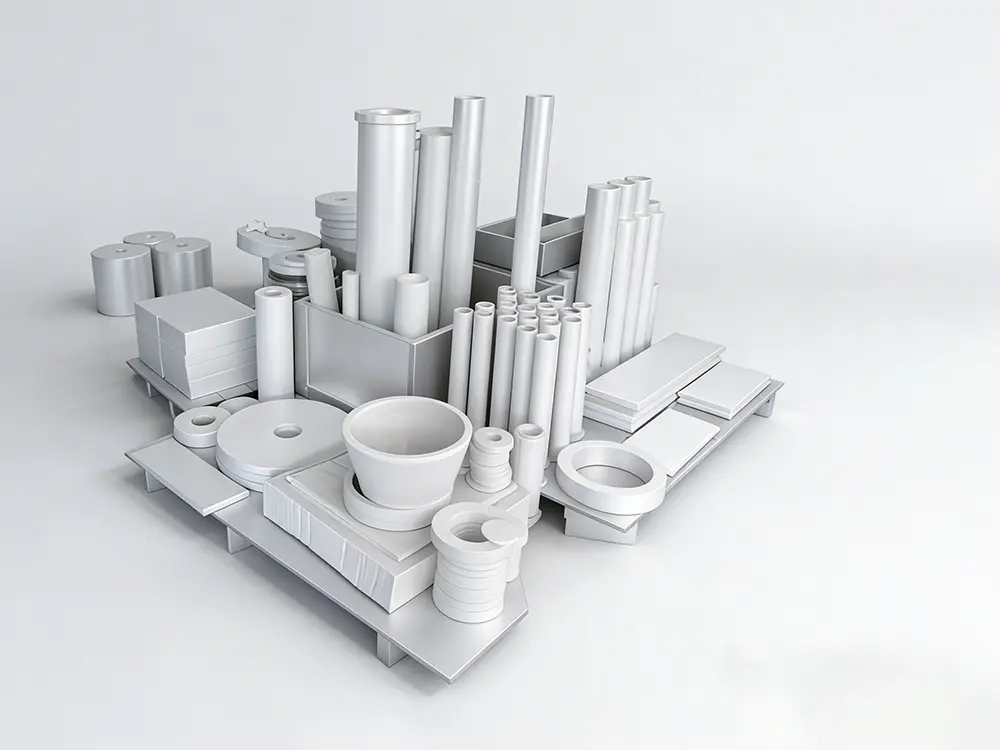
Comparative engineering parameters for industrial selection across Silicon Carbide, Nitride, and Zirconia matrices.
Selecting the optimal technical ceramic material requires balancing thermal, mechanical, and chemical parameters. The following empirical technical table provides design engineers with actionable data for custom component specification.
| Material Type | Density ($\text{g/cm}^3$) | Flexural Strength ($\text{MPa}$) | Thermal Conductivity ($\text{W/m}\cdot\text{K}$) | Vickers Hardness ($\text{HV}$) | Max Temp (°C) |
|---|---|---|---|---|---|
| SSiC (Sintered Silicon Carbide) | 3.15 | 450 | 120 – 140 | 2,500 | 1,600 |
| RBSiC (Reaction-Bonded SiC) | 3.02 | 280 | 110 – 130 | 2,200 | 1,380 |
| B4C (Boron Carbide) | 2.51 | 400 | 35 – 40 | 3,000 | 1,200 |
| Si3N4 (Silicon Nitride) | 3.25 | 850 | 30 – 80 | 1,600 | 1,200 |
| AlN (Aluminum Nitride) | 3.30 | 320 | 170 – 230 | 1,200 | 1,000 |
| 99.5% Al2O3 (Alumina) | 3.92 | 380 | 30 | 1,600 | 1,650 |
| YSZ (Zirconia Oxide) | 6.05 | 1,100 | 2.5 | 1,250 | 1,200 |
Produced by pressureless sintering of ultra-pure sub-micron alpha-SiC powder with boron and carbon additives at 2,000°C–2,200°C. SSiC features nearly zero free silicon, yielding maximum hardness, supreme acid resistance, and high strength at extreme temperatures.
Formed by liquid silicon infiltration into a porous compact of SiC and carbon powder. RBSiC exhibits near-zero shrinkage during sintering, allowing complex, massive structural geometries to be produced with high dimensional precision at lower cost.
Combines ultra-high temperature with simultaneous omnidirectional gas pressure (up to 200 MPa). HIP SiC achieves 100% theoretical density, eliminating micro-porosity to deliver maximum fracture toughness for critical semiconductor & aerospace defense parts.
How our technical ceramics empower mission-critical global supply chains.
High-purity SiC susceptors, dummy wafers, etch rings, and thermal diffusion tubes. SiC's thermal conductivity and resistance to plasma erosion prevent particulate contamination during chemical vapor deposition (CVD) and epitaxy processes.
Mechanical seal rings, magnetic pump sleeves, valve trims, and spray nozzles. SSiC component faces resist severe slurry abrasion and concentrated chemical corrosion, extending seal life up to 10x over metallic alloys.
Monolithic and segmented Boron Carbide ($B_4C$) ballistic plates, lightweight body armor, helicopter armor tiles, neutron absorbing control rods for nuclear power, and high-temp turbine seals.
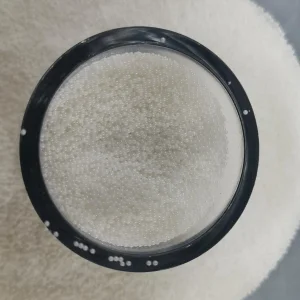
Ultra-pure Yttria Stabilized Zirconia (YSZ) beads, Alumina grinding media, and SiC mill liners. Ensures zero metallic contamination when wet-milling lithium iron phosphate (LFP) EV battery materials.
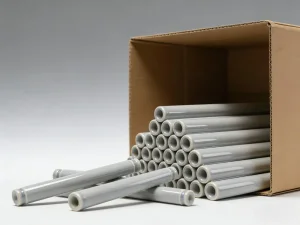
Aluminum Titanate non-wetting riser tubes, stalks, and degassing nozzles. Non-wetting behavior against molten aluminum alloys guarantees clean castings and minimal maintenance downtime.
Inert zirconia pump plungers, ceramic cutting blades, and high-density grinding balls compliance certified for bio-inertness and non-reactive foodstuff Contact.
Adhering to strict international quality benchmarks for frictionless global integration.
At present, Qiangguang's engineered ceramic components are widely trusted across domestic high-tech corridors and exported directly to Italy, the United Kingdom, Australia, Japan, Malaysia, Thailand, Hungary, North America, and other global industrial hubs.
Our localized customer support teams provide seamless technical consulting, customs compliance assistance, and rapid replacement guarantees across multiple time zones.
Committed to our principle of "creating value for customers", Qiangguang executes strict full-process quality tracking. Every batch undergoes:
Pioneering next-generation ceramic technologies for the next industrial revolution.
Developing binder jetting and stereolithography (SLA) techniques for net-shape complex SiC ceramic heat exchangers and cooling channels without high tooling costs.
Refining powder synthesis protocols to eliminate trace metallic impurity ions, fulfilling sub-2nm semiconductor fabrication cleanliness requirements.
Engineered $\text{SiC-BN}$ and $\text{SiC-B}_4\text{C}$ nano-composite matrix materials providing tailored electrical resistivity combined with super-high thermal shock immunity.
Expert answers to common engineering, purchasing, and custom manufacturing inquiries.
SSiC (Sintered Silicon Carbide) is formed by pressureless sintering of ultra-pure alpha-SiC powder at ~2200°C without free silicon. It exhibits higher hardness (HV 2500), superior corrosion resistance, and operates up to 1600°C. RBSiC (Reaction-Bonded SiC) contains ~8–12% free silicon metal filler, resulting in zero firing shrinkage, allowing large/complex geometries at lower cost, but limits maximum temperature to ~1380°C.
Boron Carbide is the third hardest material known to man (Vickers hardness >3000 HV), yet possesses an extremely low density of only $2.51\text{ g/cm}^3$. This delivers high kinetic energy dissipation per unit weight for body armor. Additionally, the Boron-10 isotope has an exceptionally high cross-section for thermal neutron absorption, making $B_4C$ ideal for nuclear reactor control rods.
Yes, Qiangguang provides comprehensive OEM/ODM custom services. We work directly from customer 3D CAD files (STEP, IGES, DXF) to execute green-body machining, sintering, and post-sintering 5-axis diamond grinding to meet ultra-tight dimensional tolerances (down to $\pm 0.001\text{ mm}$).
Silicon Carbide provides roughly 1.5x higher Vickers hardness than 99.5% Alumina and nearly 4x higher thermal conductivity. In high-speed, abrasive slurry pump environments, SiC component life typically exceeds Alumina by 5x to 10x, drastically reducing replacement frequency and operational downtime.
Standard stock components and grinding media ship within 3–5 business days. Custom engineered tooling and prototype ceramic components typically require 2–4 weeks for tooling design, green body forming, sintering, and precision polishing. Expedited engineering tracks are available upon request.
Factory-direct solutions for wear, high temperature, and chemical isolation.