Explore our top-tier advanced ceramic forming products engineered for high wear, extreme thermal resistance, and chemical inertness.

Understanding how modern material science, automated green body processing, and precision sintering have propelled Chinese advanced ceramic manufacturing into the global spotlight.
The global advanced ceramic industry has undergone a monumental shift over the past two decades. Historically dominated by conventional clay-based ceramics, the market demands today are strictly anchored in high-performance engineering ceramics. These technical oxides and non-oxides—ranging from High-Purity Alumina ($Al_2O_3$) and Yttria-Stabilized Zirconia ($YSZ$) to Silicon Nitride ($Si_3N_4$), Aluminum Nitride ($AlN$), and Silicon Carbide ($SiC$)—form the critical backbone of modern technology, including semiconductor equipment, electric vehicle (EV) battery production, medical implants, laser technology, and aerospace propulsion.
At the center of this industrial transformation are specialized China ceramic forming factories. Leveraging an unmatched domestic supply chain of high-grade raw powders, rare earth dopants, and cutting-edge forming equipment, top-tier Chinese manufacturers have evolved from simple OEM suppliers to sophisticated global R&D partners. Modern ceramic forming is no longer just about shaping clay; it is a micro-structural engineering process requiring sub-micron powder synthesis, exact binder formulation, controlled rheology, ultra-high pressure compaction, and computer-simulated sintering profiles.
Selecting the appropriate forming methodology dictates green density, structural homogeneity, dimensional tolerance, and final mechanical performance.
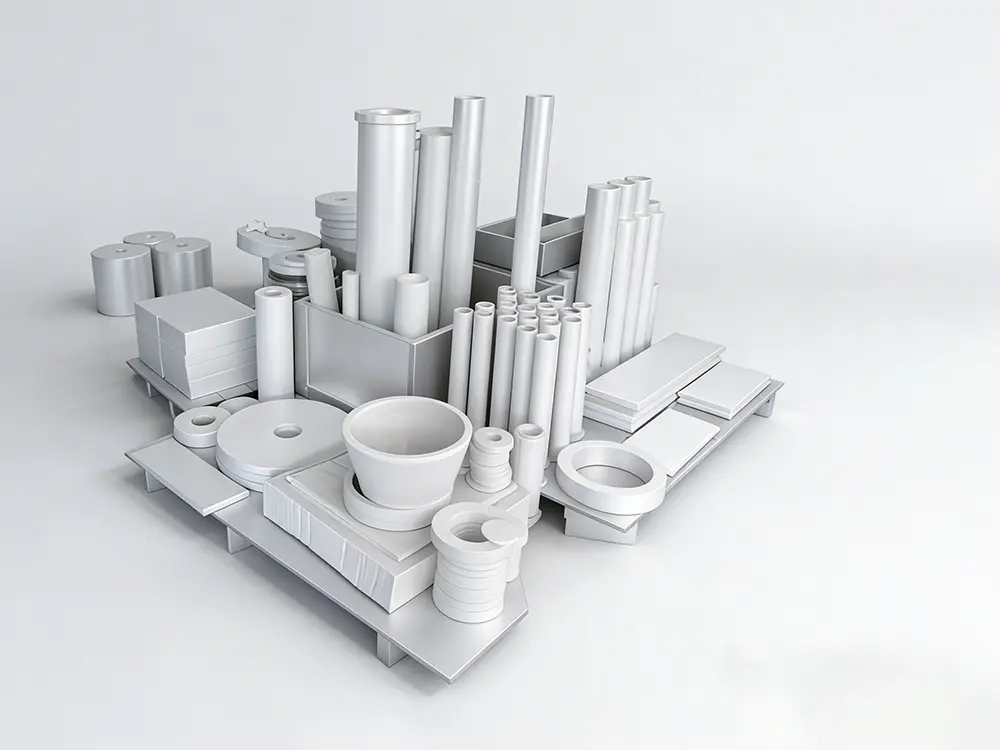
CIP subjects ceramic powder enclosed in a flexible elastomer mold to equal fluid pressure from all directions (up to 300 MPa). This technique eliminates internal density gradients, minimizing warping during liquid or solid-state sintering. Ideal for complex 3D shapes, heavy rods, and uniform grinding media.
Combining sub-micron ceramic powders with organic polymer binders, CIM allows the mass production of intricate, high-precision three-dimensional components. Widely used for medical scalpels, textile thread guides, fiber optic ferrules, and complex automotive engine components.
Designed for thin, planar flexible ceramic sheets ranging from 10 microns to several millimeters in thickness. Slurry is cast onto a carrier film with high precision. Essential for producing Aluminum Nitride ($AlN$) and Alumina ($Al_2O_3$) substrates for semiconductor power modules.
High-speed hydraulic or mechanical pressing of spray-dried free-flowing granules into rigid steel or carbide dies. Highly cost-effective for high-volume manufacture of simple geometric components such as disks, rings, spacers, and ceramic seal faces.
Liquid suspension casting into porous plaster molds (slip casting) or in-situ polymerization of organic monomers (gel casting). Ideal for large-scale hollow structural bodies, non-standard shapes, and prototype engineering with minimal tooling expenditure.
Combining extreme temperature with inert gas pressure (Argon, up to 200 MPa) to eliminate internal residual micro-porosity. HIP achieves near 100% theoretical density, dramatically enhancing Weibull modulus, fracture toughness, and flexural strength.
Comprehensive material science reference for key advanced ceramic materials manufactured and shaped in China factories.
| Material Type | Density (g/cm³) | Flexural Strength (MPa) | Hardness (HV) | Thermal Conductivity (W/m·K) | Max Operating Temp (°C) |
|---|---|---|---|---|---|
| High-Purity Alumina ($Al_2O_3$ 99.8%) | 3.92 - 3.96 | 380 - 450 | 1600 - 1800 | 30 - 35 | 1650 |
| Yttria-Stabilized Zirconia (3Y-TZP) | 6.05 - 6.08 | 900 - 1200 | 1250 - 1350 | 2.5 - 3.0 | 1150 |
| Ceria-Stabilized Zirconia ($Ce-TZP$) | 6.20 - 6.25 | 700 - 850 | 1150 - 1200 | 2.0 - 2.5 | 1000 |
| Silicon Nitride ($Si_3N_4$) | 3.20 - 3.25 | 800 - 1000 | 1450 - 1600 | 30 - 90 | 1400 |
| Aluminum Titanate ($Al_2TiO_5$) | 3.30 - 3.60 | 40 - 80 | 600 - 800 | 1.5 - 2.0 | 1450 (Thermal Shock King) |
| Aluminum Nitride ($AlN$) | 3.26 - 3.30 | 320 - 400 | 1100 - 1200 | 170 - 230 | 1350 |
While High-Purity Alumina remains the most cost-effective structural ceramic for electrical insulation and wear parts, Yttria-Stabilized Zirconia (YSZ) provides exceptional fracture toughness ($>9 \text{ MPa}\cdot\text{m}^{1/2}$) due to phase transformation toughening (tetragonal to monoclinic). For non-ferrous molten metal handling (such as aluminum casting), Aluminum Titanate is unmatched owing to its near-zero coefficient of thermal expansion and non-wetting properties.
Leading the technological advancement in end-to-end technical ceramic powder synthesis, forming, sintering, and high-precision diamond grinding.
Founded in 2003, Yixing Qiangguang Ceramic Materials Co., Ltd. is a premier high-tech enterprise dedicated to the research, development, custom manufacturing, and engineering application solutions of high-performance advanced ceramic materials. Situated in Yixing—China's historical ceramic capital—Qiangguang stands out as one of the few domestic manufacturers possessing a fully integrated industrial chain.
From raw powder refining, dopant formulation, and green body forming (CIP, CIM, Dry Pressing) to high-temperature vacuum sintering and sub-micron 5-axis CNC grinding, Qiangguang executes strict process controls at every phase.
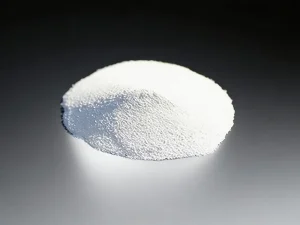
The company's material portfolio spans Zirconia ($ZrO_2$), Yttria-Stabilized Zirconia ($YSZ$), High-Purity Alumina ($Al_2O_3$), Magnesia ($MgO$), Aluminum Nitride ($AlN$), Boron Nitride ($BN$), Silicon Nitride ($Si_3N_4$), Silicon Carbide ($SiC$), and Aluminum Titanate ($Al_2TiO_5$).
Guided by the core philosophy of "Creating Value for Customers," Qiangguang exports premium technical ceramics to Italy, the United Kingdom, Australia, Japan, Malaysia, Thailand, Hungary, and North America.
How custom ceramic forming solutions address extreme operational challenges across modern high-tech sectors.
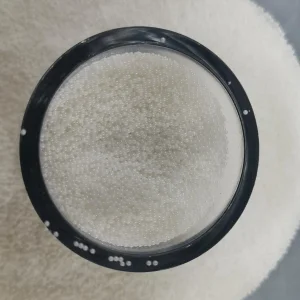
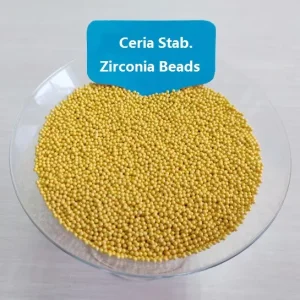
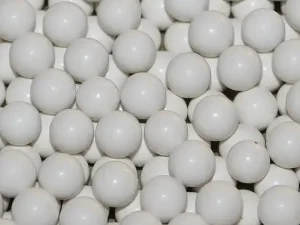
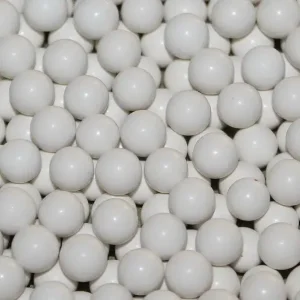
Ultra-fine Ceria and Yttria-Stabilized Zirconia beads ($0.05\text{mm} - 2.0\text{mm}$) provide zero metal contamination during nano-grinding of Lithium Iron Phosphate ($LiFePO_4$) and cathode materials, boosting battery energy density and life cycle.
Aluminum Nitride ($AlN$) substrates deliver extraordinary thermal conductivity ($>180\text{ W/m}\cdot\text{K}$) paired with high electrical resistivity, making them vital for high-power laser diodes, LED packaging, and electrostatic chucks (ESC).
High-purity biocompatible Zirconia ($ZrO_2$) and Alumina are molded into orthopedic joint implants, dental crowns, and micro-fluidic valve pins due to non-reactivity with body fluids and extreme wear resistance.
Ceramic valve balls, seats, and pump plungers withstand severe abrasive slurries, strong acids ($HCl, H_2SO_4$), and extreme cavitation, outlasting high-alloy steels by up to 10–20 times in aggressive environments.
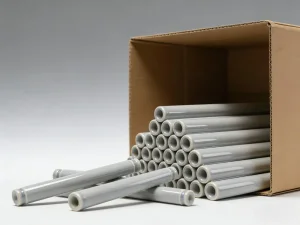
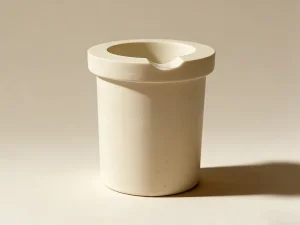
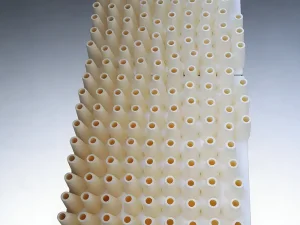
Aluminum Titanate riser tubes and sprue bushings resist molten metal wetting, providing superior thermal shock resistance during low-pressure aluminum alloy die casting for automotive wheel manufacturing.
Silicon Nitride ($Si_3N_4$) bearings and radomes offer high mechanical strength at elevated temperatures ($>1000^\circ\text{C}$), exceptional thermal shock resistance, and low dielectric constant for aerospace radars.
Expert answers addressing critical procurement inquiries, technical constraints, material selection, and custom tooling.
Browse our full range of stabilized powders, high-density grinding beads, and custom-formed structural components.