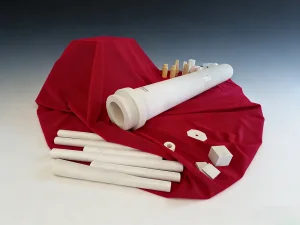
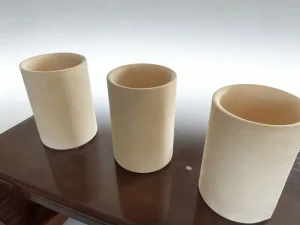
High-precision engineered powders, grinding media, and structural ceramic components tailored for extreme industrial environments.
An in-depth whitepaper analysis of how Chinese technical ceramics manufacturers are redefining ultra-high-temperature, wear-resistant, and dielectric material solutions across global industries.
Modern industrial processes require structural integrity at thermal thresholds surpassing 1600°C. Advanced formulations like Yttria-Stabilized Zirconia (YSZ) and Magnesium-Stabilized Zirconia (MSZ) offer phase stability, preventing catastrophic mechanical degradation under violent thermal cycles.
With near-zero porosity achievable via Cold Isostatic Pressing (CIP) and Hot Isostatic Pressing (HIP), technical ceramics exhibit exceptional resistance to aggressive acids, strong alkalis, and abrasive particulate slurries in chemical and slurry-grinding applications.
Precise grain boundary control enables customized dielectric breakdown strength, thermal conductivity tuning, and fracture toughness. This makes materials such as Silicon Nitride and High-Purity Alumina indispensible in modern semiconductor lithography and power electronics.
Search query data indicates a major shift in enterprise buyer behavior. Buyers no longer search merely for generic "ceramic parts"; they require specific material designations (e.g., 3Y-TZP, Ca-SZ, MgO-PSZ, AlN substrates) paired with verified manufacturing capabilities like ISO-certified batch tracking, sub-micron powder synthesis, and complete internal production chains. China's industrial infrastructure delivers these exacting standards with remarkable efficiency.
Quantitative analysis of key engineering ceramics. Select the exact material matrix optimized for your mechanical strain, thermal atmosphere, and chemical exposure parameters.
| Ceramic Material | Primary Density (g/cm³) | Flexural Strength (MPa) | Thermal Conductivity (W/m·K) | Max Working Temp (°C) | Key Industrial Benchmark Applications |
|---|---|---|---|---|---|
| Yttria-Stabilized Zirconia (YSZ) | 6.02 - 6.05 | 1000 - 1200 | 2.2 - 3.0 | 1350 | Grinding media, biomedical implants, valve trim, cutting blades |
| Magnesium-Stabilized Zirconia (MSZ) | 5.75 - 5.85 | 600 - 800 | 2.5 - 3.2 | 1500 | Thermal shock resistance, extrusion dies, metal forming rollers |
| Calcium-Stabilized Zirconia (Ca-SZ) | 5.60 - 5.70 | 500 - 700 | 2.0 - 2.8 | 1400 | Refractory coatings, metallurgical nozzles, high-temp insulation |
| High-Purity Alumina (Al2O3 - 99.8%) | 3.92 - 3.96 | 380 - 450 | 30 - 35 | 1700 | Semiconductor chamber liners, electrical insulators, wear tiles |
| Silicon Nitride (Si3N4) | 3.20 - 3.25 | 850 - 1000 | 30 - 40 | 1400 | High-speed bearings, turbocharger rotors, welding nozzles |
| Aluminium Titanate (Al2TiO5) | 3.30 - 3.60 | 40 - 80 | 1.5 - 2.5 | 1600 | Low-pressure die casting spouts, molten aluminum dosing tubes |
| Magnesium Oxide Ceramics (MgO) | 3.55 - 3.65 | 200 - 300 | 40 - 60 | 2200 | High-temperature crucibles, heating element insulators |
Zirconia ceramics utilize phase transformation toughening. Under mechanical stress, the metastable tetragonal phase transforms into a monoclinic phase. This localized volumetric expansion creates compressive stresses at crack tips, preventing crack propagation and dramatically boosting fracture toughness ($K_{IC} > 8 \text{ MPa}\cdot\text{m}^{1/2}$).
By controlling micro-grain growth during pressureless sintering, gas-pressure sintering (GPS), or spark plasma sintering (SPS), Chinese manufacturers achieve densities approaching 99.9% of theoretical limits. This eliminates internal micro-voids, elevating dielectric strength and mechanical reliability.
Using ultra-hard diamond grinding wheels, ultrasonic machining, and 5-axis CNC systems, post-sintered technical ceramic parts achieve surface roughness down to $Ra\ 0.05 \ \mu\text{m}$ and dimensional tolerances within micrometers, meeting stringent aerospace and semiconductor criteria.
Why sourcing technical ceramic materials directly from specialized Chinese manufacturing clusters delivers unprecedented cost-efficiency, rapid prototyping, and scalable capacity.
From raw mineral refinement and chemical precipitation (e.g., Zirconium Oxychloride refining) to spray drying, forming, sintering, and diamond finishing—everything occurs within a tightly integrated regional ecosystem. This minimizes lead times and supply disruption risks.
High-capacity continuous tunnel kilns and automated dry-pressing systems yield immense economies of scale. High throughput reduces unit costs significantly without compromising strict material specifications or dimensional precision.
Dedicated tooling shops and flexible CNC machining setups enable rapid transformation of client CAD models into dense sintered prototypes in days rather than months. Custom formulations and trial batches are seamlessly integrated into production lines.
Established baseline of technical expertise, continuous industrial innovation, and full-chain ceramic material manufacturing since 2003.
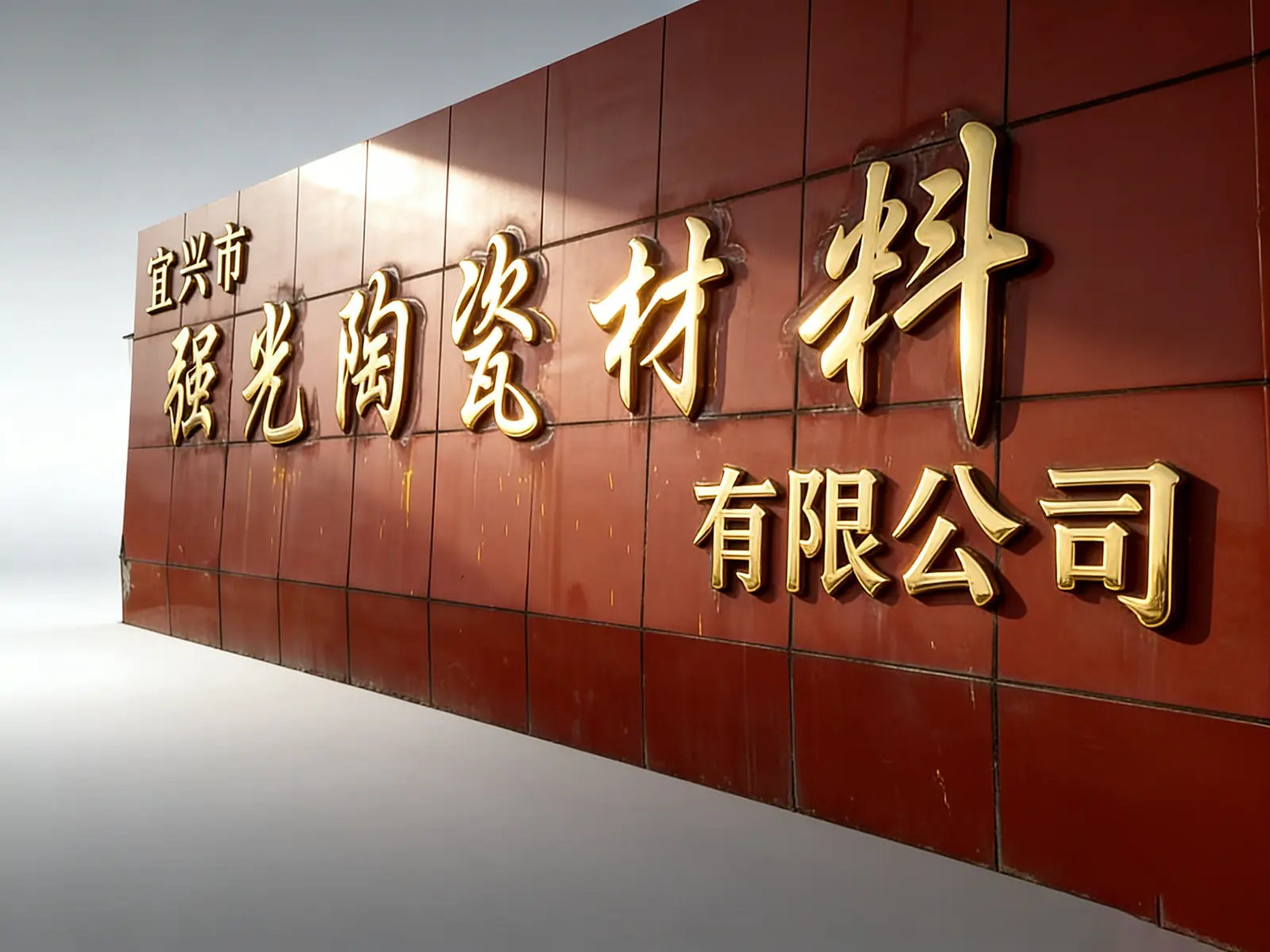
Founded in 2003, Yixing Qiangguang Ceramic Materials Co., Ltd. is a professional provider dedicated to the research and development (R&D), manufacturing, and application solutions of high-performance advanced ceramic materials. It is among the few enterprises in China that possess a complete industrial chain, covering key links from powder forming, sintering and precision machining to the provision of integrated application solutions.
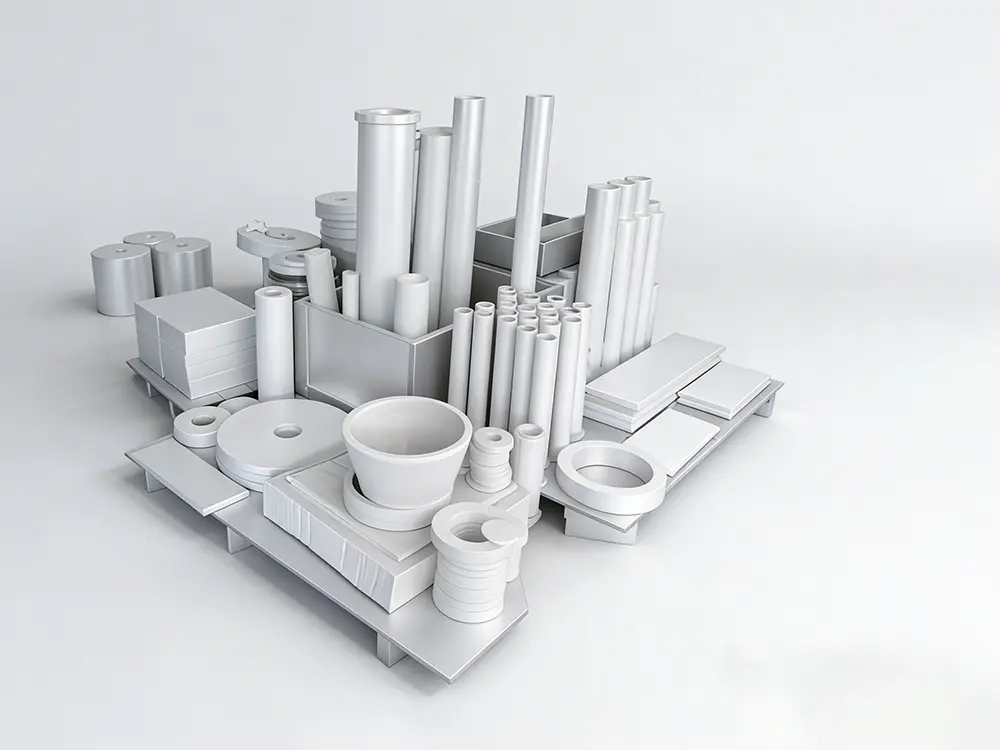
The company is also a rare domestic manufacturer engaged in the R&D, production, and supply of a comprehensive portfolio of ceramic materials. Its product range covers zirconia, yttria, alumina, magnesia, aluminum nitride, boron nitride, silicon nitride, silicon carbide, aluminum titanate and other key ceramic materials for industrial use.
Benefiting from excellent product performance and stable quality, its products are extensively utilized in various high-end fields, such as food and medical industries, new energy vehicles, laser semiconductors, petrochemical engineering, powder metallurgy, national defense and military, as well as aerospace sectors.
Adhering to the core principle of "creating value for customers", Qiangguang provides customized and cost-efficient advanced ceramic solutions tailored to the specific demands of different customers. It is supported by high-quality after-sales services and a strict full-process tracking system, which effectively enhances cooperation efficiency and promotes continuous quality improvement.
At present, the company's products are sold well across the country and exported to Italy, the United Kingdom, Australia, Japan, Malaysia, Thailand, Hungary and other countries and regions. Committed to delivering high-quality products at reasonable prices, Qiangguang sincerely looks forward to establishing long-term and stable cooperative relations with global partners.
From micro-electronics manufacturing to heavy chemical processing, see how engineered ceramic formulations solve complex mechanical and environmental challenges.
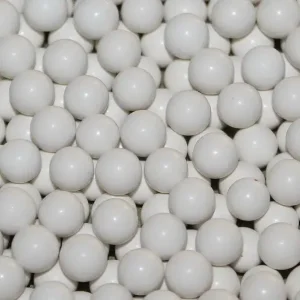
Ultra-durable Zirconia grinding media ensure sub-micron dispersion of cathode/anode slurry materials (LFP, NCM) without metallic contamination, directly enhancing energy density and cycle life of lithium batteries.
High-purity Alumina and Aluminum Nitride components provide exceptional thermal conductivity alongside high electrical insulation, making them vital for wafer chucks, plasma etching chamber rings, and heat sinks.
Biocompatible Zirconia and ultra-pure Alumina pumps, dosing pistons, and ceramic knives offer chemical inertness, Zero ion leaching, and extreme wear resistance during harsh CIP/SIP sterilization routines.
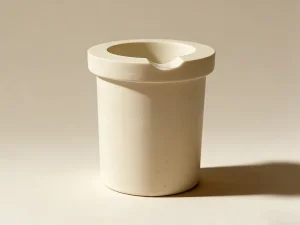
Aluminium Titanate and Magnesium Oxide ceramics resist thermal shock and non-ferrous molten metal erosion, serving as critical riser tubes, crucibles, and high-wear pump impellers in extreme refinery operations.
Lightweight Silicon Nitride (Si3N4) components maintain fracture toughness under high temperatures and centrifugal stresses, making them ideal for turbine bearings, radomes, and heat shields.
Calcium-Stabilized and Yttria-Stabilized powders serve as vital thermal barrier coatings (TBC) and additive manufacturing feedstocks, promoting dense microstructures during high-temperature consolidation.
Framework for international buyers to audit technical ceramics manufacturers, verify material certificates, and ensure batch consistency.
Demand X-Ray Fluorescence (XRF) and Inductively Coupled Plasma (ICP) test reports. Traceability back to the original powder lot guarantees uniform sintering behavior and eliminates trace impurities that cause premature material fatigue.
Verify whether the factory uses vacuum sintering, gas-pressure sintering (GPS), or Hot Isostatic Pressing (HIP). HIP processing increases density to >99.9%, significantly elevating fatigue limit and structural reliability for high-stress parts.
Leading manufacturers employ CMM (Coordinate Measuring Machines), optical interferometers for surface roughness inspection, and ultrasonic flaw detection to ensure zero internal micro-cracks before global shipment.
Emerging innovations driving the next decade of advanced ceramic manufacturing in China and across global supply chains.
Refining grain sizes down to the sub-50nm scale increases hardness, ductility, and superplastic deformation capabilities. This enables complex ceramic components to absorb higher energy impacts without catastrophic fracturing.
Stereolithography (SLA) and Selective Laser Sintering (SLS) of ceramic slurries allow creation of complex internal cooling channels and lattice structures that were previously impossible to produce via traditional machining.
Modern Chinese factories are adopting clean energy electric kilns, heat recovery networks, and closed-loop water recycling systems to meet international ESG metrics and reduce the carbon footprint of high-temperature processing.
Detailed answers to common questions regarding material selection, factory capabilities, custom manufacturing, and logistics.
Select from our comprehensive line of factory-direct powders, engineered ceramics, and wear-resistant industrial materials.