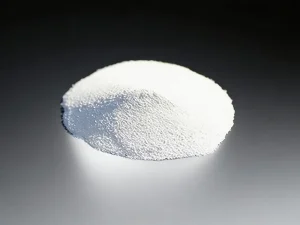
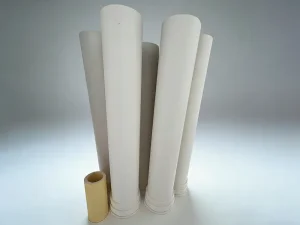
Precision-engineered powders, technical ceramics, and custom-sintered components direct from China's leading manufacturing facilities.
Navigating Material Classification, Phase Transformation Mechanics, and Supplier Selection in China's Advanced Material Hubs
Global procurement teams and systems engineers frequently confront a critical decision when specifying high-performance inorganic materials: Should they opt for traditional technical ceramics such as Alumina ($Al_2O_3$) and Silicon Nitride ($Si_3N_4$), or leverage the superior fracture toughness of Zirconia ($ZrO_2$)? While all belong to the broader advanced ceramics family, their mechanical, thermal, and tribological behaviors diverge significantly under operational stress.
This comprehensive technical guide evaluates the microstructural distinctions, manufacturing methodologies, and economic efficiency benchmarks between standard ceramic suppliers and specialized Zirconia factories in China. By combining empirical material science with supply chain data, we empower global buyers to maximize component lifespan while optimizing total cost of ownership (TCO).
China has evolved from a bulk raw powder supplier into the world's primary ecosystem for fully integrated precision ceramic manufacturing. Leveraging abundant rare-earth stabilizing minerals (such as Yttrium and Cerium), state-of-the-art Cold Isostatic Pressing (CIP), and high-temperature sintering, Chinese factories deliver tolerances within $\pm 0.001\text{ mm}$ for demanding global industries.
Core Takeaway for Design Engineers: While general technical ceramics excel in hardness, high-voltage electrical insulation, and continuous high-temperature stability, Zirconia ($ZrO_2$) stands apart due to its unique Phase Transformation Toughening (PTT) mechanism. This endows Zirconia with exceptional crack resistance, earning it the reputation as "Ceramic Steel" in heavy-duty industrial, medical, and aerospace applications.
Understanding the crystallographic behavior and empirical performance parameters under extreme physical stress.
| Material Classification | Primary Composition | Flexural Strength (MPa) | Fracture Toughness ($MPa\cdot m^{1/2}$) | Thermal Conductivity ($W/m\cdot K$) | Hardness (HV) | Key Advantage |
|---|---|---|---|---|---|---|
| Yttria-Stabilized Zirconia (YSZ) | $ZrO_2 + 3\text{mol}\% Y_2O_3$ | 900 - 1400 | 7.0 - 10.0 | 2.5 - 3.0 | 1250 - 1350 | Extreme Toughness & Impact Strength |
| Alumina Ceramics (99.5%) | $Al_2O_3$ | 300 - 450 | 3.5 - 4.5 | 25 - 30 | 1500 - 1650 | Cost-Effective Wear & Electrical Insulation |
| Silicon Nitride ($Si_3N_4$) | $Si_3N_4$ | 700 - 950 | 6.0 - 7.5 | 20 - 35 | 1400 - 1550 | Thermal Shock & High Velocity Wear |
| Aluminum Nitride (AlN) | $AlN$ | 300 - 400 | 2.5 - 3.5 | 170 - 230 | 1100 - 1200 | Ultra-High Thermal Conductivity |
| Magnesium Oxide (MgO) | $MgO$ | 150 - 250 | 1.5 - 2.5 | 40 - 60 | 600 - 800 | High Corrosion & Molten Metal Resistance |
Pure Zirconia undergoes a destructive crystal phase transition upon cooling: Monoclinic $\rightarrow$ Tetragonal $\rightarrow$ Cubic. By adding stabilizers such as Yttria ($Y_2O_3$), Calcia ($CaO$), or Magnesia ($MgO$), Chinese manufacturers freeze the high-strength tetragonal phase at room temperature.
When an advancing crack exerts stress on the material, the tetragonal grains transform into the monoclinic phase, expanding in volume by ~3-5%. This volume expansion induces localized compressive stress that actively clamps the crack tip shut, preventing catastrophic failure.
Traditional technical ceramics like Alumina exhibit high thermal conductivity ($~30\text{ W/m}\cdot\text{K}$) and a lower coefficient of thermal expansion (CTE). In contrast, Zirconia possesses an exceptionally low thermal conductivity ($~2.5-3\text{ W/m}\cdot\text{K}$) and a CTE close to steel ($10.5 \times 10^{-6}/\text{K}$).
This makes Zirconia ideal for high-temperature thermal barrier coatings, structural wear components joined to metals, and applications requiring minimal heat dissipation, whereas Alumina or AlN dominate substrate thermal management.
Leading China's Transition to High-Precision Integrated Advanced Ceramic Manufacturing
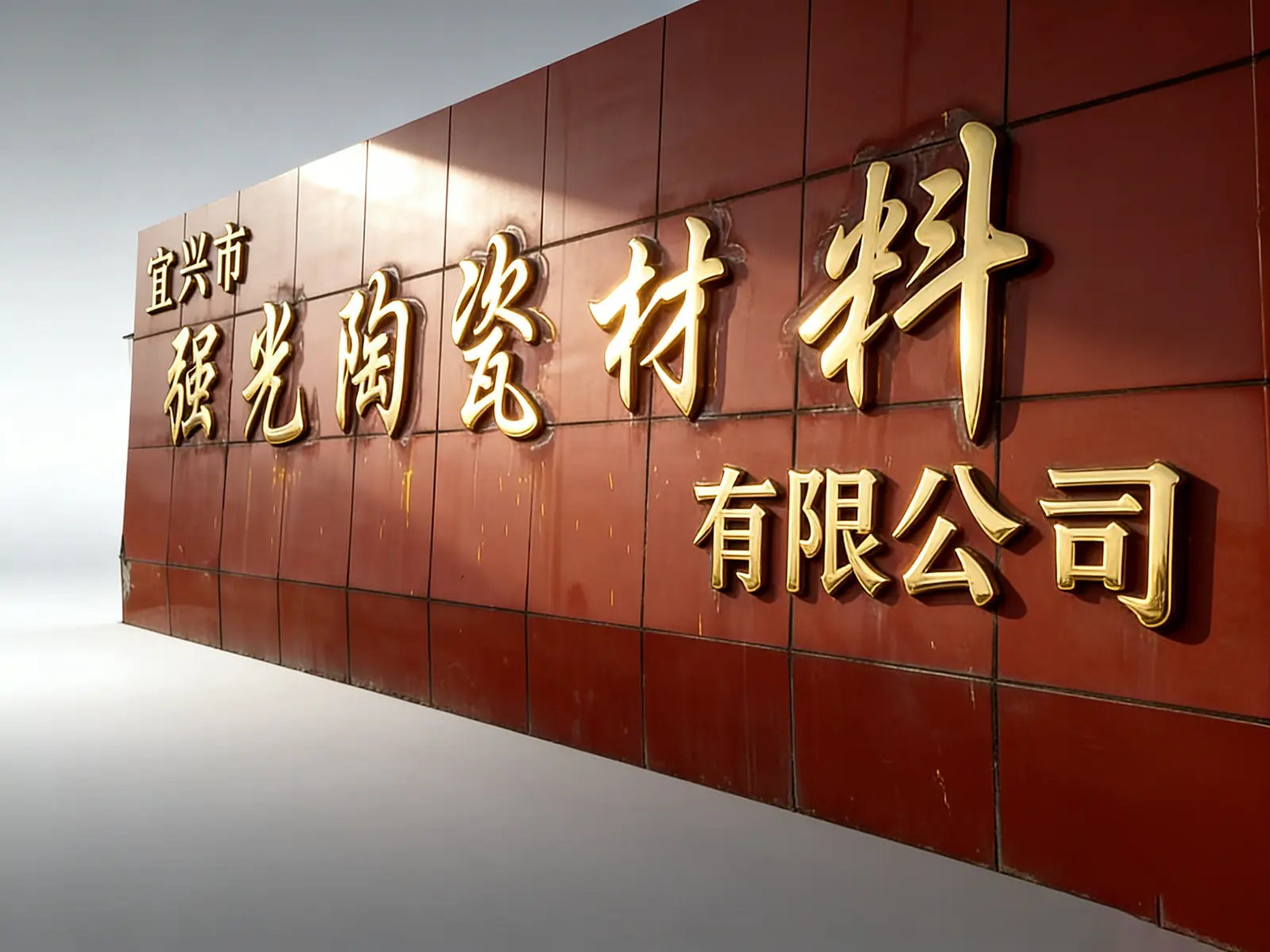
Founded in 2003, Yixing Qiangguang Ceramic Materials Co., Ltd. is a professional provider dedicated to the research and development (R&D), manufacturing, and application solutions of high-performance advanced ceramic materials. It is among the few enterprises in China that possess a complete industrial chain, covering key links from powder forming, sintering and precision machining to the provision of integrated application solutions.
The company is also a rare domestic manufacturer engaged in the R&D, production, and supply of a comprehensive portfolio of ceramic materials. Its product range covers zirconia, yttria, alumina, magnesia, aluminum nitride, boron nitride, silicon nitride, silicon carbide, aluminum titanate and other key ceramic materials for industrial use.
Adhering to the core principle of "creating value for customers", Qiangguang provides customized and cost-efficient advanced ceramic solutions tailored to the specific demands of different customers. It is supported by high-quality after-sales services and a strict full-process tracking system, which effectively enhances cooperation efficiency and promotes continuous quality improvement.
Benefiting from excellent product performance and stable quality, its products are extensively utilized in various high-end fields, such as food and medical industries, new energy vehicles, laser semiconductors, petrochemical engineering, powder metallurgy, national defense and military, as well as aerospace sectors.
At present, the company's products are sold well across the country and exported to Italy, the United Kingdom, Australia, Japan, Malaysia, Thailand, Hungary and other countries and regions. Committed to delivering high-quality products at reasonable prices, Qiangguang sincerely looks forward to establishing long-term and stable cooperative relations with global partners.
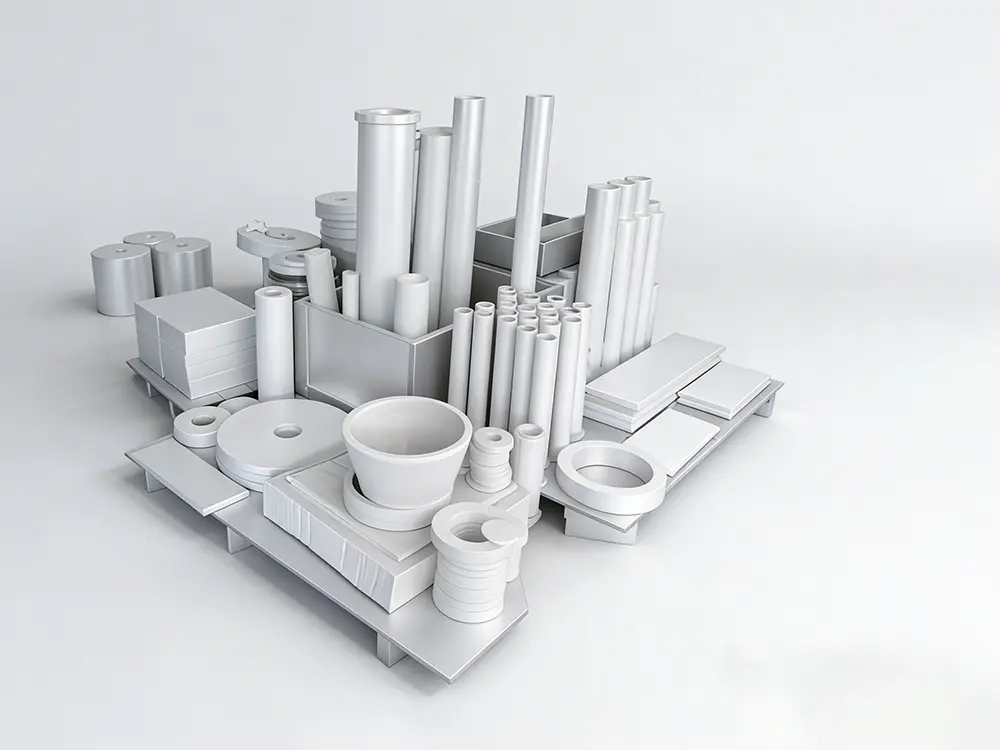
Targeted engineering applications across heavy industry, electronics, and biomedical manufacturing.
Primary Material: Aluminum Nitride (AlN) & High-Purity Alumina ($Al_2O_3$)
In high-power semiconductor modules, heat dissipation is paramount. AlN ceramics provide thermal conductivity up to $230\text{ W/m}\cdot\text{K}$, closely matching the CTE of Silicon. This eliminates thermal mismatch stresses during rapid power cycling in laser diodes and power electronics.
Primary Material: Yttria-Stabilized Zirconia (YSZ) & Silicon Nitride ($Si_3N_4$)
EV battery isolation valves, fuel cell electrolyte membranes (SOFC), and high-rpm electric motor bearings demand maximum mechanical toughness. YSZ provides high bend strength ($>1000\text{ MPa}$) and wear resistance, while $Si_3N_4$ provides low density and extreme centrifugal durability for ceramic ball bearings.
Primary Material: Biocompatible Zirconia ($ZrO_2$) & Alumina
Zirconia is completely bio-inert, resistant to aggressive CIP/SIP cleaning chemicals, and chemically stable in acidic or basic environments. Applications include precision metering pumps, ceramic homogenizer valves, dental prosthetics, and surgical cutting blades.
Primary Material: Magnesium Oxide (MgO) & Boron Nitride (BN)
In petrochemical refineries and alloy casting foundries, standard ceramics fail due to chemical corrosion. MgO ceramics offer superior resistance to molten metals and slag, while BN acts as an un-wettable high-temperature lubricant crucible material.
Key quality assurance criteria, technical standards, and total cost factors for international OEMs.
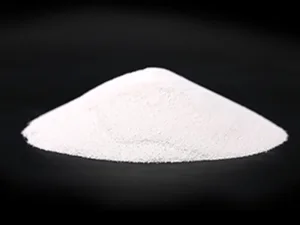
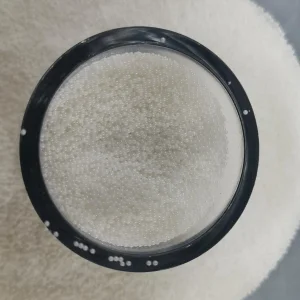
The strength of the final sintered component depends on raw powder characterization. Tier-1 Chinese suppliers utilize nano-sized sub-micron powder ($D_{50} < 0.5\,\mu\text{m}$) prepared via spray drying, ensuring uniform grain distribution and zero internal void agglomeration during pressing.
Post-sintering diamond grinding is required to achieve high precision. Quality factories operate multi-axis CNC grinding, internal/external cylindrical grinding, and lapping machinery capable of delivering geometric tolerances down to $\pm 0.001\text{ mm}$ and surface roughness of $Ra < 0.05\,\mu\text{m}$.
Verify that your Chinese supplier conducts 100% non-destructive testing (NDT), density measurement by Archimedes principle ($>99.5\%$ theoretical density), CMM 3D dimension verification, and optical microscopic structural checks under ISO9001 and RoHS standards.
Expert answers to technical procurement questions regarding Chinese ceramic vs. zirconia suppliers.
General ceramic suppliers often focus on high-volume, lower-cost oxide ceramics such as standard Alumina ($Al_2O_3$), which are ideal for wear tiles, electrical insulation, and heat-resistant tubes. A specialized Zirconia ($ZrO_2$) factory focuses on high-toughness, nano-structured ceramics requiring precise stabilizer blending (Yttria, Magnesia, Calcia), advanced Isostatic Pressing (CIP), and ultra-precise diamond machining due to Zirconia's high fracture toughness.
Zirconia earned the title "Ceramic Steel" due to its exceptional fracture toughness ($7-10\text{ MPa}\cdot\text{m}^{1/2}$) and high flexural strength ($900-1400\text{ MPa}$), which approach the structural performance of metallic alloys while maintaining the corrosion resistance, chemical inertness, and high hardness of advanced technical ceramics.
YSZ relies on Phase Transformation Toughening (PTT). When a micro-crack initiates, the local stress field triggers a crystal structure shift from the metastable tetragonal phase to the monoclinic phase. This phase transformation causes a 3-5% volume expansion that compresses the crack tip, arresting further propagation.
Alumina (95%-99.5%) is more cost-effective for routine wear and electrical insulation where impact forces are low. However, in high-impact, high-stress, or slurry environments, Zirconia components last significantly longer, offsetting their higher upfront cost and delivering a lower Total Cost of Ownership (TCO).
Ensure the factory possesses in-house raw powder formulation, Cold Isostatic Pressing (CIP) equipment, high-temperature computer-controlled sintering kilns ($>1650^\circ\text{C}$), multi-axis CNC grinding machines, and precision measurement tools such as CMM, laser interferometers, and density testing instruments.
Yes. Leading factories like Yixing Qiangguang offer custom engineering services based on customer 2D/3D CAD files (STEP, IGES, DWG). They assist with material selection, prototype pressing, sintering shrinkage calculations, and final precision grinding to sub-micron tolerances.
Explore our broader industrial material portfolio available for worldwide export.