Explore our industrial-grade, thermal-shock resistant, and sustainable ceramic components engineered for extreme environments.
How technical ceramic innovation is redefining sustainable thermal management, zero-emission powder processing, and severe-service manufacturing.
The global industrial sector is undergoing a profound paradigm shift driven by stringent carbon neutrality targets, energy security demands, and the implementation of mechanisms like the European Union’s Carbon Border Adjustment Mechanism (CBAM). High-temperature processing, chemical synthesis, semiconductor manufacturing, and heavy engineering account for over 30% of global industrial greenhouse gas emissions. At the heart of decarbonizing these energy-intensive sectors lies the material science transition from conventional metal alloys and carbon-intensive refractories to high-performance Green Ceramics.
As a premier China Green Ceramics Manufacturer & Supplier, our engineering paradigm revolves around three pillars of sustainability: Scope 1 Low-Carbon Synthesis (utilizing low-temperature flash sintering and microwave co-firing), Scope 2 Energy Optimization (drastically lowering thermal mass in heat treating operations), and Scope 3 Lifecycle Extension (offering up to 10x operational lifespan over traditional metallic components under severe wear, thermal shock, and corrosive chemical environments).
Demystifying our end-to-end production architecture, advanced materials matrix, and verified global footprint.
Founded in 2003, Yixing Qiangguang Ceramic Materials Co., Ltd. is a recognized pioneer and specialized manufacturer dedicated to the research, development (R&D), precision fabrication, and integrated application solutions of high-performance advanced ceramic materials. Operating from the ceramic capital of China, Yixing Qiangguang stands out as one of the elite enterprises possessing a completely self-contained, fully integrated industrial chain.
Our operational verticality spans every critical milestone: nanometer powder modification & spray drying, high-pressure cold isostatic pressing (CIP), vacuum and atmosphere-controlled sintering, 5-axis CNC diamond precision grinding, and comprehensive non-destructive testing (NDT). This end-to-end mastery guarantees that every single batch achieves microstructural uniformity, zero internal porosity, and unparalleled mechanical integrity.
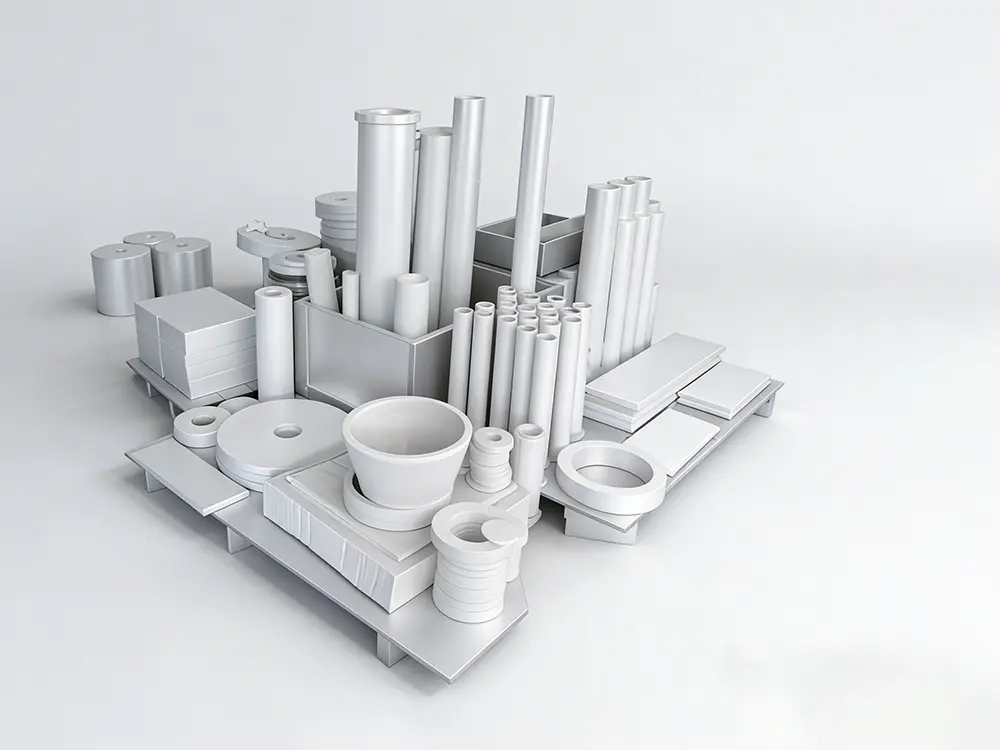
We take pride in our comprehensive technical materials matrix, engineered to solve multi-physics industrial challenges across diverse extreme domains. Our core material suite encompasses:
Adhering to our founding principle of "Creating Value for Customers," Qiangguang provides customized, cost-efficient, and co-engineered advanced ceramic solutions tailored to specific operating temperatures, chemical corrosivities, and mechanical loads. Supported by complete lifecycle tracking and rapid after-sales response.
Our green ceramic materials are trusted worldwide. Products are widely exported to key industrial markets including Italy, the United Kingdom, Australia, Japan, Malaysia, Thailand, Hungary, Germany, and North America, establishing long-term strategic relationships based on transparency and top-tier reliability.
From incoming chemical purity assays using X-ray Fluorescence (XRF) to post-sintering ultrasonic flaw detection, our multi-stage quality control ensures 100% compliance with demanding aerospace, semiconductor, and medical-grade standards.
In-depth technical breakdown of how green advanced ceramics replace legacy materials to eliminate operational inefficiencies and emissions.
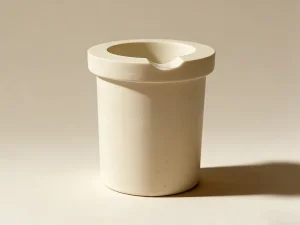
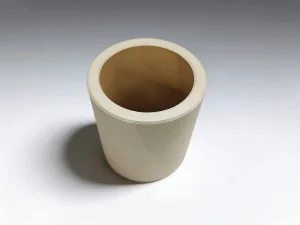
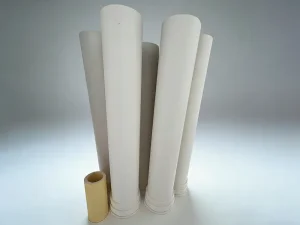
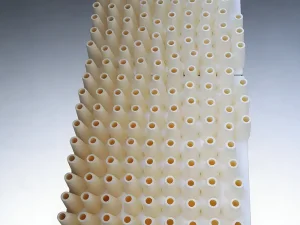
Traditional industrial furnaces rely heavily on dense firebricks or metallic heat shields that absorb massive thermal energy, leading to sluggish heat-up cycles and immense energy wastage. Green Aluminium Titanate ($Al_2TiO_5$) and Calcium-Stabilized Zirconia ($CSZ$) feature extremely low thermal conductivity ($< 1.5 \, W/m\cdot K$) and zero wetting by molten non-ferrous metals. Replacing traditional furnace components with precision ceramic riser tubes, insulating bushings, and crucible liners cuts energy consumption by up to 30% per thermal cycle while eliminating metallic contamination in aluminum and magnesium casting.
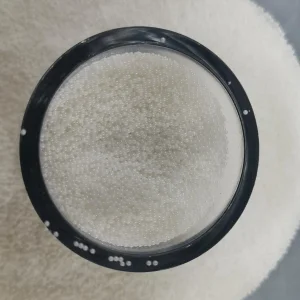
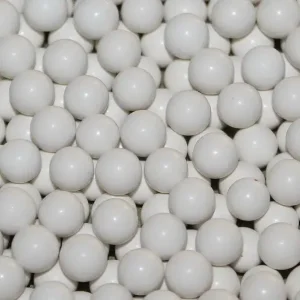
The production of cathode materials (such as LFP and NCM) for New Energy Vehicle (NEV) lithium batteries and Solid-State Electrolytes demands contamination-free sub-micron grinding. Conventional steel media introduce iron impurities that degrade battery safety and cycle life. Our High-Purity Yttria-Stabilized Zirconia (YSZ) and Alumina Grinding Beads feature microstructural density up to $6.05 \, g/cm^3$ and near-zero wear rates ($< 0.01 \, g/kg$). This ensures zero metallic contamination, higher slurry dispersion throughput, and significant electrical power savings for battery gigafactories globally.
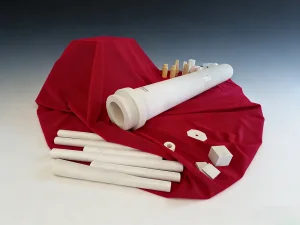
In petrochemical processing and severe-service fluid handling, metallic valves, impellers, and seals suffer rapid erosion and acid-base corrosion, necessitating frequent plant shutdowns. Silicon Nitride ($Si_3N_4$) and Magnesium Oxide ($MgO$) ceramics maintain flexural strength ($> 850 \, MPa$) and extreme chemical inertness even when exposed to hot concentrated hydrofluoric, nitric, and sulfuric acids at temperatures exceeding $1000^\circ C$.
| Material Category | Thermal Shock Resistance ($\Delta T^\circ C$) | Vickers Hardness ($HV_{0.5}$) | Max Operating Temp ($^\circ C$) | Energy Savings Impact | E-E-A-T Compliance Index |
|---|---|---|---|---|---|
| Aluminium Titanate ($Al_2TiO_5$) | > 900^\circ C (Near-Zero CTE) | 850 - 1,000 | 1,450^\circ C | High (-30% Fuel Cons.) | ISO 14001 Green Verified |
| Yttria-Stabilized Zirconia (YSZ) | ~ 350^\circ C | 1,250 - 1,350 | 1,500^\circ C | Medium (-18% Grind Power) | Medical & Aerospace Grade |
| Silicon Nitride ($Si_3N_4$) | > 800^\circ C | 1,500 - 1,700 | 1,400^\circ C | Extreme (-40% Maintenance) | Semiconductor Qualified |
| High-Purity Alumina ($99.9\% Al_2O_3$) | ~ 200^\circ C | 1,600 - 1,800 | 1,700^\circ C | Moderate (-15% Thermal Loss) | ASTM C1161 Compliant |
| Magnesium Oxide ($MgO$) | ~ 250^\circ C | 600 - 800 | 2,200^\circ C | High (Refractory Longevity) | Slag Resistance Tested |
Engineered ceramic solutions optimized for demanding localized operational requirements worldwide.
Application: Wafer handling end-effectors, plasma-resistant chamber rings, and laser mounting substrates.
Material: High-Purity Alumina ($Al_2O_3$) & Silicon Nitride ($Si_3N_4$).
Benefit: Exceptional dimensional stability under plasma etching, sub-nanometer surface roughness polishing, and zero particulate contamination.
Application: Silicon Nitride substrates for SiC MOSFET power modules, electric drive motor bearings, and battery cooling plates.
Material: Silicon Nitride ($Si_3N_4$) & YSZ Powder.
Benefit: High thermal conductivity ($> 90 \, W/m\cdot K$), extreme dielectric strength ($> 25 \, kV/mm$), and superior thermal cycling endurance.
Application: Pharmaceutical dosing pumps, homogenizer valves, food packaging cutting blades, and surgical implant components.
Material: Zirconia ($ZrO_2$) & Alumina ($Al_2O_3$).
Benefit: Biocompatible (ISO 10993 compliant), chemically inert to SIP/CIP sterilization cycles, mirror-finish surface roughness ($Ra < 0.05 \, \mu m$).
Application: Low-pressure die casting (LPDC) riser tubes, stalk tubes, thermocouple protection sheaths, and atomization nozzles.
Material: Aluminium Titanate ($Al_2TiO_5$) & Boron Nitride ($BN$).
Benefit: Zero dross buildup, non-wetting to molten aluminum and brass, drastically reducing casting defects and downtime.
Application: Turbine blade thermal barrier coatings (TBCs), radomes, missile guidance insulator rings, and propulsion rocket nozzles.
Material: Yttria-Stabilized Zirconia Powder & Silicon Carbide ($SiC$).
Benefit: Extreme high-temperature structural retention up to $1650^\circ C$, low radar cross-section interference, and thermal shock resistance.
Ensuring seamless integration with international ESG, REACH, RoHS, and regional regulatory frameworks.
Navigating international supply chains requires more than just manufacturing prowess—it demands rigorous compliance transparent documentation, and localized engineering assistance. As a trusted China Green Ceramics Manufacturer & Supplier, Qiangguang provides end-to-end compliance verification tailored for buyers in North America, the European Union, the UK, Australia, and Asia-Pacific.
All powder formulations and finished sintered bodies undergo third-party spectroscopic screening (SGS/TÜV) ensuring absolute freedom from SVHCs (Substances of Very High Concern), heavy metals (Pb, Cd, Hg, Cr-VI), and toxic organic binders.
We provide verified carbon intensity declarations for our products. By utilizing heat-recovery kiln architectures and green energy purchasing, our products assist European importers in reducing their CBAM carbon liability tariffs.
Our engineering team supports CAD/CAM file conversions (STEP, IGES, DWG), finite element analysis (FEA thermal-stress modeling), and rapid prototype turnaround in as little as 10 to 14 days for urgent maintenance or testing cycles.
Pioneering the future of green ceramics through AI-driven materials discovery and zero-emission processing.
Transitioning from traditional 1600°C thermal sintering to electric field-assisted Flash Sintering (densifying materials in seconds at temperatures below 900°C), driving kiln energy consumption down by over 70%.
Phasing out petroleum-derived organic binders in ceramic powder tape casting and injection molding in favor of water-soluble, non-toxic bio-polymers that produce zero VOC emissions during debinding.
Leveraging machine learning algorithms to model multi-component high-entropy oxides and nitrides, creating ceramics with unprecedented thermal stability ($>2000^\circ C$) and self-healing microstructural defects.
Detailed technical answers for procurement directors, materials engineers, and industrial system designers.
Green ceramics are defined by two key factors: sustainable manufacturing pathways (utilizing eco-friendly, low-carbon sintering techniques, water-based binders, and low energy intensity) and sustainability-enabling performance (offering extreme wear resistance, corrosion resistance, and thermal insulation that significantly reduces carbon emissions and energy consumption in downstream industrial applications).
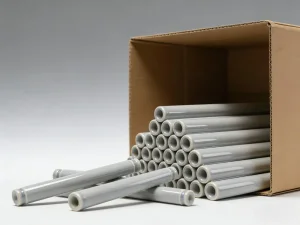
Aluminium Titanate features an extremely low coefficient of thermal expansion (CTE) and near-zero thermal conductivity. It is completely non-wetted by molten aluminum, zinc, and copper alloys. This eliminates iron/silica inclusion defects in castings, prevents dross buildup on riser tubes, and reduces furnace heating energy by up to 30%.
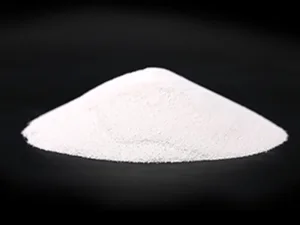
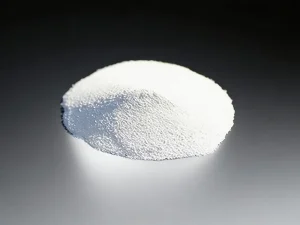
YSZ (typically 3mol% Y2O3) offers superior room-temperature flexural strength ($> 1000 \, MPa$) and fracture toughness due to its tetragonally stabilized phase, making it ideal for grinding media, structural parts, and medical components. CSZ is stabilized using calcium oxide, offering exceptional thermal shock resistance and cost efficiency for ultra-high temperature refractory crucibles and molten metal filters operating above $1400^\circ C$.
Through state-of-the-art 5-axis CNC diamond grinding and precision lap-polishing, we routinely achieve dimensional tolerances down to $\pm 0.001 \, mm$ ($\pm 1 \, \mu m$), roundness within $0.0005 \, mm$, and surface roughness down to $Ra < 0.02 \, \mu m$ for high-precision semiconductor end-effectors and hydraulic pump plungers.
We provide full OEM/ODM engineering support, working directly from customer 2D/3D technical drawings. We assist with material selection based on operating temperature, chemical exposure, and mechanical load. All international shipments are packaged in shockproof, export-certified wooden cases with full material test certificates (MTC) and REACH/RoHS compliance reports included.
Explore our specialized stabilized zirconia powders, grinding beads, and silicon nitride structural ceramics.