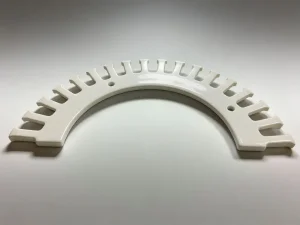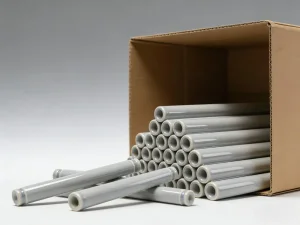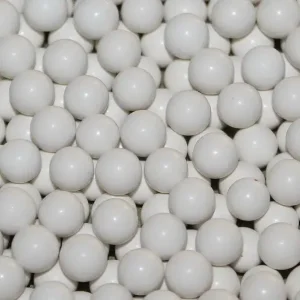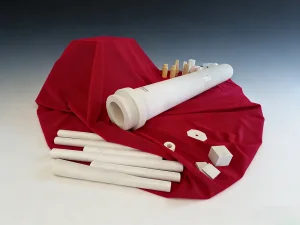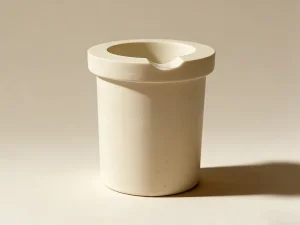
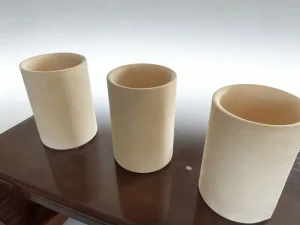
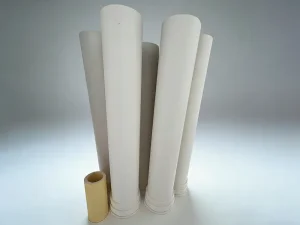
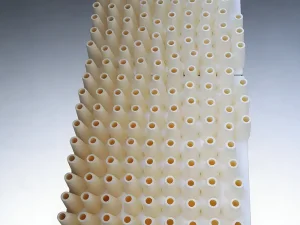
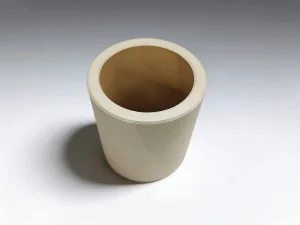
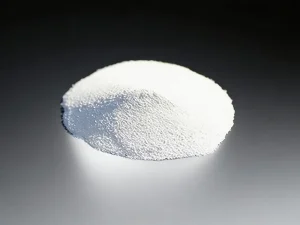
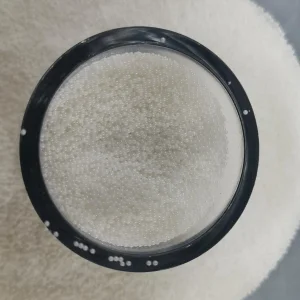
In modern advanced manufacturing, Ceramic Injection Molding (CIM) and Powder Injection Molding (PIM) represent the pinnacle of near-net-shape forming technologies. As industries demand miniaturized, structurally intricate, and thermal-mechanically robust components, traditional machining techniques reach physical and economic limitations. Ceramic injection technology bridges this critical gap by combining the design freedom of plastic injection molding with the unmatched material performance of technical ceramics—including Yttria-Stabilized Zirconia (YSZ), High-Purity Alumina (Al₂O₃), Silicon Nitride (Si₃N₄), and Aluminum Nitride (AlN).
The global market for injection-molded technical ceramics has transitioned from a specialized niche into a foundational pillar for next-generation industrial infrastructures. Driven by rapid expansions in semiconductor fabrication, medical implants, electric vehicle (EV) power electronics, and aerospace propulsion systems, the demand for precision injection technology manufacturers in China has experienced exponential growth. Chinese factories are no longer merely low-cost component suppliers; they are key co-engineering partners capable of delivering end-to-end material development, micro-tooling design, solvent/catalytic debinding, and specialized vacuum sintering.
Founded in 2003, Yixing Qiangguang Ceramic Materials Co., Ltd. is a professional provider dedicated to the research and development (R&D), manufacturing, and application solutions of high-performance advanced ceramic materials. It is among the few enterprises in China that possess a complete industrial chain, covering key links from powder forming, sintering, and precision machining to the provision of integrated application solutions.
The company is also a rare domestic manufacturer engaged in the R&D, production, and supply of a comprehensive portfolio of ceramic materials. Its product range covers zirconia, yttria, alumina, magnesia, aluminum nitride, boron nitride, silicon nitride, silicon carbide, aluminum titanate, and other key ceramic materials for demanding industrial use.
Selecting the appropriate injection technology material requires a rigorous analysis of mechanical, thermal, dielectric, and chemical parameters. The matrix below provides engineering benchmarks across primary technical ceramic formulations manufactured at our Yixing production base.
| Material Classification | Density (g/cm³) | Flexural Strength (MPa) | Thermal Conductivity (W/m·K) | Dielectric Strength (kV/mm) | Primary Industrial Utility |
|---|---|---|---|---|---|
| Yttria-Stabilized Zirconia (3Y-TZP) | 6.05 | 1100 - 1400 | 2.5 - 3.0 | 9.0 | Surgical Implants, Cutting Blades, Micro-Injectors |
| Alumina (Al₂O₃ 99.8%) | 3.92 | 380 - 450 | 30.0 | 18.0 | High-Voltage Insulators, Semiconductor Substrates |
| Aluminum Nitride (AlN) | 3.30 | 320 - 350 | 170 - 230 | 15.0 | Power Electronics Heat Sinks, LED Substrates |
| Silicon Nitride (Si₃N₄) | 3.25 | 850 - 1000 | 30 - 60 | 12.0 | EV Bearings, Turbocharger Rotors, Aerospace Nozzles |
| Magnesium Stabilized Zirconia | 5.75 | 650 - 800 | 2.8 | 8.5 | Thermal Shock Environments, Molten Metal Valves |
| Aluminium Titanate (Al₂TiO₅) | 3.40 | 40 - 80 | 1.5 - 2.0 | - | Non-Ferrous Foundry Tubes, Exhaust Manifolds |
Benefiting from excellent product performance and stable quality, products manufactured by Qiangguang are extensively utilized across critical global sectors. Our customized injection technology addresses complex stress, thermal, and chemical challenges.
Precision Ceramic Injection Molding allows for complex micro-channel cooling structures in Aluminum Nitride (AlN) and High-Purity Alumina. These components provide exceptional thermal dissipation while maintaining electrical isolation in wafer processing chambers and high-power industrial laser diode headers.
Yttria-Stabilized Zirconia (YSZ) and high-density alumina ceramic components created via precision injection technology exhibit non-cytotoxicity, zero ion leaching, and high fracture toughness. Typical applications include endoscopic surgical end-effectors, orthopedic joinery, and dental prostheses with complex organic geometries.
In the EV ecosystem, weight reduction and high voltage handling are imperative. Injection-molded Silicon Nitride (Si₃N₄) ceramic bearings enable motor speeds exceeding 20,000 RPM without risk of electrical arcing, while custom ceramic insulation sleeves protect battery management modules during thermal runaway events.
Magnesium-stabilized and Calcium-stabilized zirconia powders are injection-molded into slurry pump impellers, severe-service valve trims, and molten aluminum dosing tubes. Their low wet-ability by liquid metals ensures long service lifespans under abrasive slurry flow.
Injection-molded ultra-high temperature ceramic components (UHTCs) maintain dimensional stability at operating thresholds above 1600°C. Applied in missile guidance sensor radomes, thruster nozzles, and turbopump bushings, these ceramics endure severe thermal shock profiles.
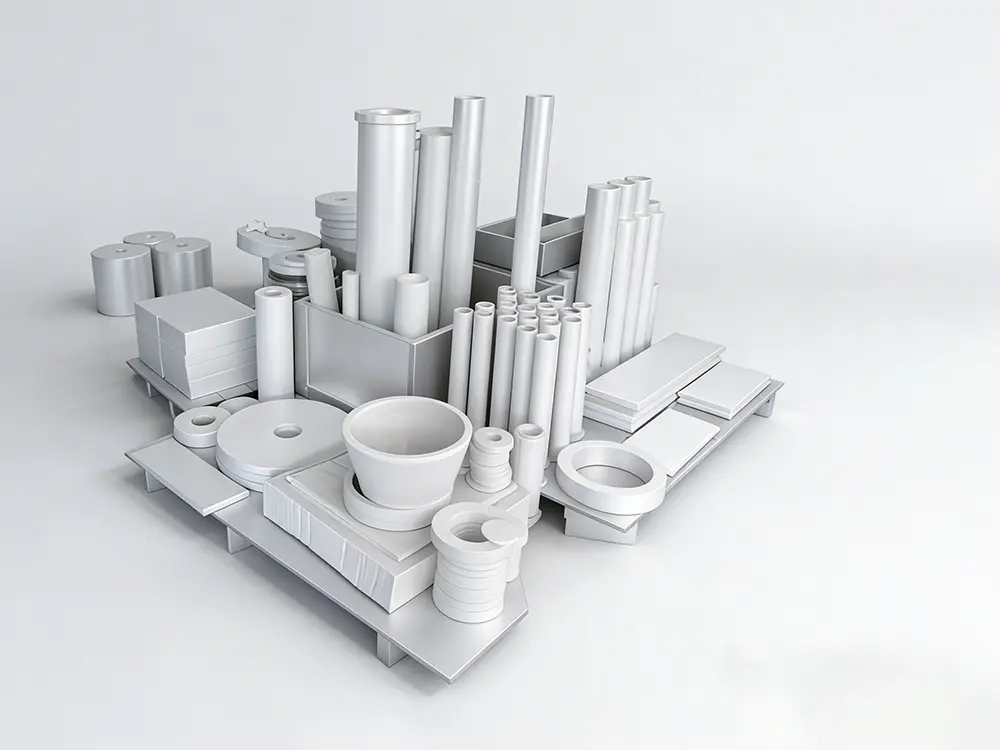
Adhering to the core principle of "creating value for customers", Qiangguang provides customized and cost-efficient advanced ceramic solutions tailored to the specific demands of different international clients. Supported by a rigorous full-process quality tracking system, we streamline production from initial CAD/CAM mold development to final HIP (Hot Isostatic Pressing).
At present, our products are exported to Italy, the United Kingdom, Australia, Japan, Malaysia, Thailand, Hungary, and other countries and regions. Committed to delivering top-grade products at competitive factory direct prices, Qiangguang continuously expands its international partnerships.
The Ceramic Injection Molding (CIM) landscape is undergoing rapid innovation. Over the next decade, market leadership will depend on advances in nano-powder synthesis, multi-component co-injection molding, and AI-assisted process controls.
As electronics and medical tools shrink, Micro-CIM enables the production of structural parts weighing less than 0.01 grams with wall thicknesses under 100 micrometers. Utilizing ultra-fine nano-sized powders with optimized binder rheology eliminates internal micro-voids during sintering.
Combining distinct ceramic formulations—such as insulating Alumina with conductive Zirconia composite layers—within a single injection cycle enables multi-functional component architectures. This technology removes the need for secondary assembly joints, significantly elevating reliability in high-pressure sealing environments.
Transitioning from conventional thermal or solvent debinding toward eco-friendly nitric acid catalytic debinding speeds up processing times by up to 80% while dramatically lowering carbon emissions during manufacturing.
Using finite element analysis (FEA) to simulate mold filling, thermal binder burnout, and sintering shrinkage allows mold engineers to predict and correct warpage before cutting tool steel, accelerating prototype-to-mass-production cycles.