Explore our flagship industrial ceramic formulations engineered for extreme mechanical, thermal, and electrical environments.
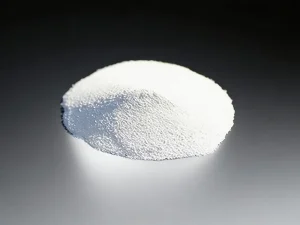
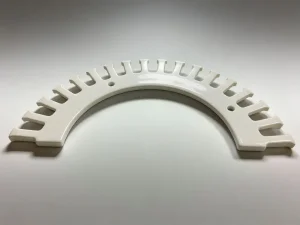
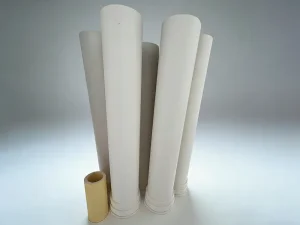
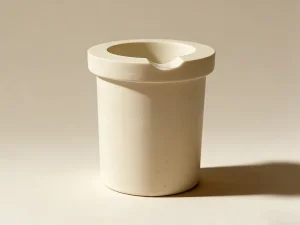
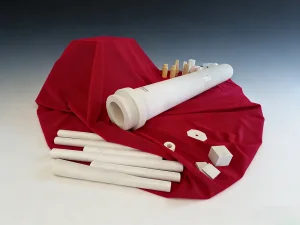
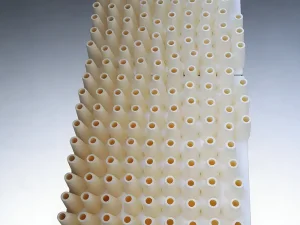
In modern industrial engineering, the term "pottery properties" has evolved far beyond traditional earthenware crafts. Today, it encompasses the rigorous physical, mechanical, thermal, and electrical performance parameters of engineering and technical ceramics. Foundries and manufacturers in China have positioned themselves at the forefront of global material synthesis, pioneering advanced methods for oxide, nitride, and carbide ceramic production.
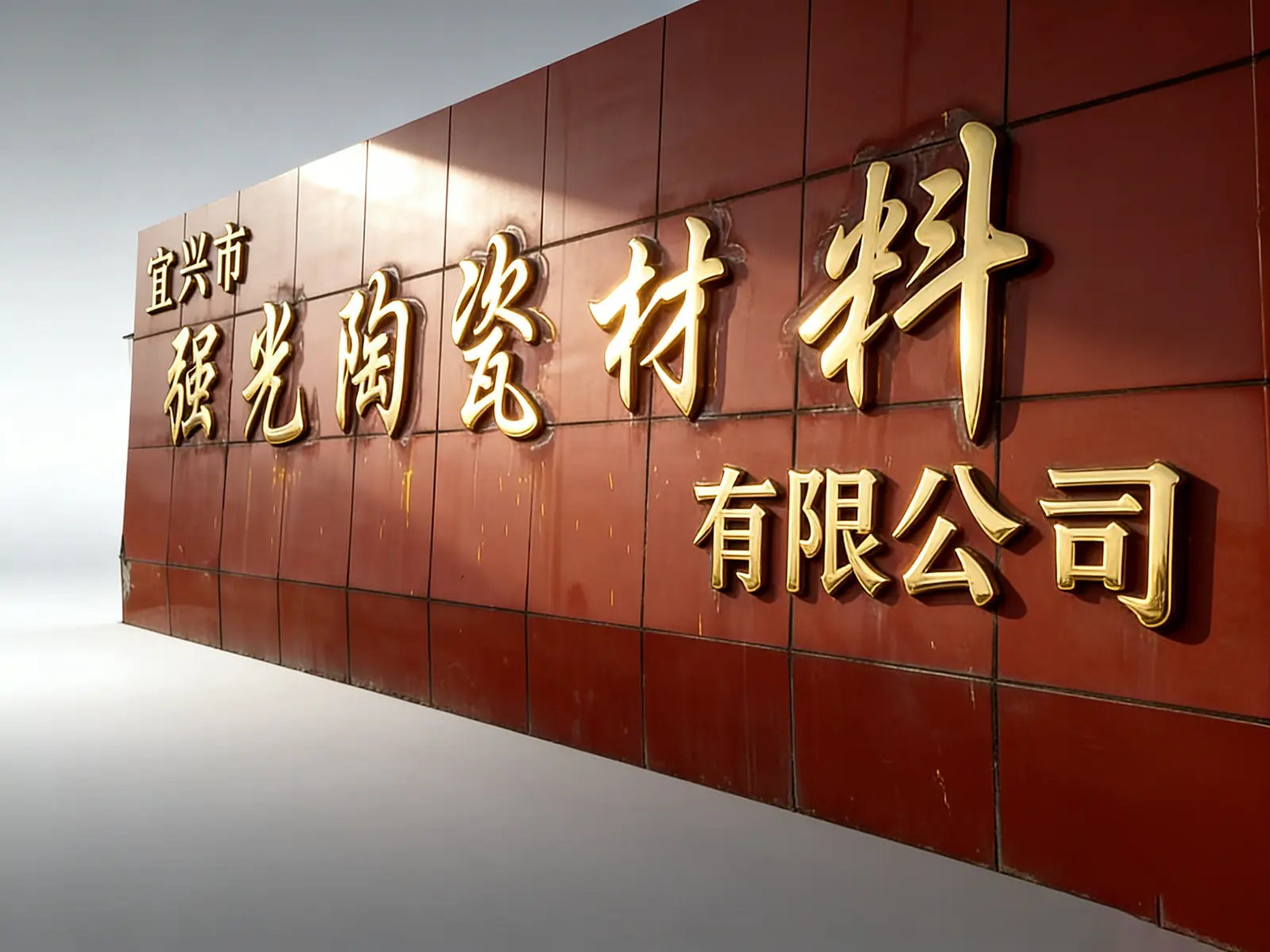
Founded in 2003, Yixing Qiangguang Ceramic Materials Co., Ltd. stands as a premier enterprise dedicated to the research and development (R&D), manufacturing, and application engineering of high-performance technical ceramics. As one of the few fully integrated ceramic manufacturing facilities in China, Qiangguang oversees the entire production ecosystem—from raw mineral processing, nanometer powder synthesis, and ceramic forming, to high-temperature sintering, ultra-precision diamond machining, and final component QA verification.
Our complete material synthesis spectrum includes high-purity alumina ($Al_2O_3$), stabilized zirconia ($ZrO_2$ variants including YSZ, CSZ, MSZ), aluminum nitride ($AlN$), silicon nitride ($Si_3N_4$), silicon carbide ($SiC$), aluminum titanate ($Al_2TiO_5$), boron nitride ($BN$), and magnesium oxide ($MgO$).
Understanding the exact physical, mechanical, and thermal behavior of advanced ceramic materials under extreme operational stress.
Selection of the proper advanced ceramic material requires a deep evaluation of key "pottery properties" such as flexural strength, fracture toughness, dielectric strength, coefficient of thermal expansion (CTE), and thermal conductivity. Below is an engineering property matrix comparing major advanced ceramic systems manufactured by Yixing Qiangguang Ceramic Materials Co., Ltd.
| Material Classification | Density ($g/cm^3$) | Flexural Strength ($MPa$) | Thermal Conductivity ($W/m\cdot K$) | Max Service Temp (°C) | Dielectric Strength ($kV/mm$) | Primary Industrial Property |
|---|---|---|---|---|---|---|
| Yttria-Stabilized Zirconia (YSZ) | 6.05 | 900 - 1200 | 2.5 - 3.0 | 1500 | 10 | Phase-Transformation Toughening & High Wear Resistance |
| Calcium-Stabilized Zirconia (CSZ) | 5.60 | 450 - 650 | 2.0 - 2.5 | 1700 | 8 | Thermal Shock Stability & Molten Metal Corrosion Resistance |
| Magnesium-Stabilized Zirconia (MSZ) | 5.75 | 600 - 800 | 2.2 - 2.8 | 1600 | 9 | High Thermal Shock Resistance in Extrusion Dies |
| High-Purity Alumina ($Al_2O_3$ 99.8%) | 3.92 | 380 - 450 | 30 - 35 | 1650 | 18 | High Hardness, Dielectric Insulation & Chemical Inertness |
| Aluminum Nitride ($AlN$) | 3.30 | 320 - 400 | 170 - 230 | 1100 (air) | 20 | Ultra-High Thermal Conductivity with Electrical Insulation |
| Silicon Nitride ($Si_3N_4$) | 3.25 | 850 - 1000 | 30 - 40 | 1400 | 15 | Exceptional Fracture Toughness & Thermal Shock Parameter |
| Aluminium Titanate ($Al_2TiO_5$) | 3.35 | 40 - 80 | 1.5 - 2.0 | 1450 | 5 | Near-Zero Thermal Expansion & Non-Wetting to Molten Aluminum |
| Magnesium Oxide ($MgO$) | 3.58 | 200 - 300 | 40 - 60 | 2200 | 12 | Refractory Temperature Tolerance & Plasma Resistance |
Advanced pottery properties are defined by thermal shock resistance ($R$-value). Materials like Silicon Nitride and Aluminum Titanate withstand rapid cycle swings exceeding 800°C/second without micro-cracking or structural degradation.
With Vickers hardness values ranging from 12 to 22 GPa, our technical ceramic formulations offer unparalleled resistance to sliding friction, slurry abrasion, and cavitation in pump components and valve seats.
Alumina and Aluminum Nitride maintain low dielectric loss tangents ($tan\:\delta < 10^{-4}$) across GHz frequency bands, making them indispensable for semiconductor substrates and laser equipment components.
Macroeconomic shifts and technological breakthroughs reshaping the procurement demands of international industrial enterprises.
As microchip density increases and power loads grow in AI datacenters and power electronics, traditional metallic heat sinks face physical limitations. Aluminum Nitride ($AlN$) substrates with thermal conductivities reaching 200 W/m·K combined with electrical insulation have become mandatory. Chinese factories are scaling up high-purity powder synthesis to meet global demand from semiconductor manufacturers.
The EV transition demands lightweight structural ceramics capable of handling high electrical voltages and thermal runaway isolation. Zirconia-toughened alumina (ZTA) and silicon nitride ceramic bearings are rapidly replacing steel bearings in high-RPM traction motors to prevent electrical fluting and arc erosion.
High-temperature solid oxide fuel cells (SOFC) and electrolyzers require Yttria-Stabilized Zirconia (YSZ) membranes for oxygen ion conduction. The chemical stability of Chinese-manufactured zirconia powders under extreme reducing atmospheres ensures decades of reliable cell operational lifespans.
Modern foundries demand non-wetting materials to eliminate metal contamination. Aluminium Titanate ($Al_2TiO_5$) riser tubes and dosing tubes have become the standard for low-pressure die casting of aluminum components due to their zero thermal expansion coefficient and corrosion immunity.
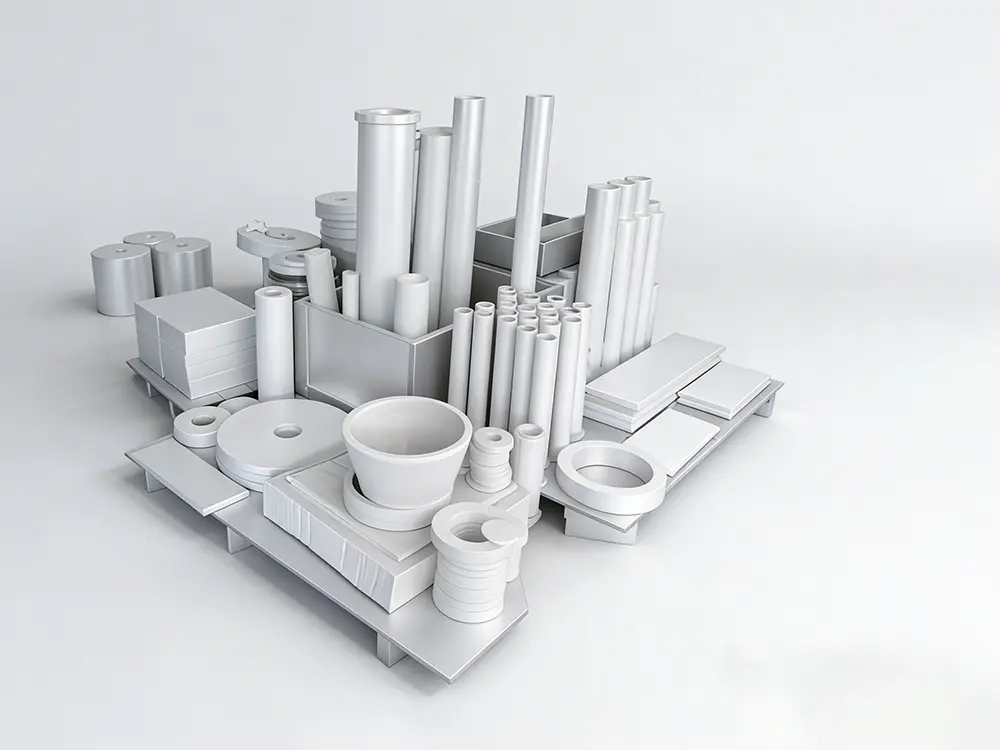
Benefiting from superior material properties and rigorous quality management, products from Yixing Qiangguang Ceramic Materials Co., Ltd. are integrated into demanding applications across critical global industries:
Why leading multinational OEMs select Yixing Qiangguang as their long-term technical ceramic manufacturing partner.
Unlike raw powder blending vendors or standalone machine shops, Qiangguang manages powder synthesis, spray drying, cold isostatic pressing (CIP), CNC green machining, high-temperature sintering, and final diamond grinding internally. This guarantees end-to-end material integrity.
Adhering to our core principle of "creating value for customers", our technical teams formulate specific oxide ratios—stabilizing zirconia with varying percentages of Yttria ($Y_2O_3$), Calcia ($CaO$), or Magnesia ($MgO$) to yield optimized phase structures (tetragonal vs cubic) tailored to client wear or thermal profiles.
Post-sintering ceramic machining requires specialized diamond tooling. Our facility is equipped with 5-axis CNC grinding machines, lapping stations, and wire-EDM setups capable of achieving surface roughness values of $Ra < 0.05 \mu m$ and dimensional tolerances within $\pm 0.001 mm$.
Pioneering the future of advanced ceramics through innovative additive processes and sub-micron material synthesis.
Traditional ceramic tooling imposes geometric limitations. Qiangguang is expanding research into Stereolithography (SLA) and Digital Light Processing (DLP) 3D printing for complex ceramic geometries, allowing intricate internal cooling channels within aluminum nitride substrates and silicon nitride turbopump components without high mold tooling costs.
By controlling grain growth at the nanometer level during Spark Plasma Sintering (SPS) and Hot Isostatic Pressing (HIP), our R&D department is developing next-generation nano-composite ceramics. These materials exhibit self-healing capabilities against micro-fractures under cyclical fatigue stress.
To reduce carbon footprints in high-temperature processing (1700°C+), Qiangguang has integrated energy-efficient microwave-assisted kilns and closed-loop water recovery systems across our spray drying and diamond machining departments, satisfying international ESG procurement standards.
Expanding beyond monolithic components, our technical roadmap emphasizes advanced active metal brazing (AMB) and direct bonded copper (DBC) metallization techniques, enabling seamless integration of ceramic components into high-power electronics modules.
Delivering high-reliability technical ceramics across international borders with guaranteed compliance and logistic efficiency.
At present, Yixing Qiangguang Ceramic Materials Co., Ltd.'s advanced ceramic products are widely deployed across domestic high-tech sectors and exported to key industrial nations including Italy, the United Kingdom, Australia, Japan, Malaysia, Thailand, Hungary, and the Americas.
Our international fulfillment model prioritizes full compliance with chemical and environmental regulatory standards:
Committed to delivering high-quality technical ceramics at cost-effective manufacturer pricing. We welcome technical inquiries and global OEM collaborations.
Expert answers regarding ceramic material properties, processing capabilities, and customization options.
YSZ uses Yttrium Oxide ($Y_2O_3$) as a phase stabilizer to achieve maximum room-temperature mechanical strength, flexural toughness (up to 1200 MPa), and wear resistance, making it ideal for grinding media, pump plungers, and structural components. CSZ utilizes Calcium Oxide ($CaO$), which yields exceptional thermal shock stability at temperatures up to 1700°C, making CSZ preferred for high-temperature refractory metallurgy, molten metal nozzles, and sensor tubes.
While high-purity Alumina offers high electrical insulation, its thermal conductivity is relatively low (~30 W/m·K). Aluminum Nitride provides a thermal conductivity of 170–230 W/m·K (nearly 7 to 8 times higher than Alumina), approaching that of metallic aluminum, while maintaining superior electrical resistivity and a coefficient of thermal expansion closely matching silicon semiconductor dies.
Through state-of-the-art CNC diamond grinding, surface lapping, and internal/external cylindrical grinding, Qiangguang achieves dimensional tolerances down to $\pm 0.001 mm$, concentricity within $0.002 mm$, and surface finishes polished down to $Ra < 0.05 \mu m$.
Aluminium Titanate possesses a micro-cracked anisotropic crystal lattice that results in an exceptionally low thermal expansion coefficient ($\approx 1 \times 10^{-6}/K$), giving it supreme thermal shock immunity. Crucially, it exhibits non-wetting properties when in contact with molten aluminum and magnesium alloys, preventing metal adhesion, oxidation build-up, and casting contamination.
Yes. Our complete in-house manufacturing structure enables rapid prototyping via green-state CNC machining prior to sintering. This allows clients to test customized ceramic components and validate CAD geometry before committing to hard tooling for high-volume production runs.
Browse our complete catalog of industrial ceramic powders, structural ceramics, and dispersion grinding media.