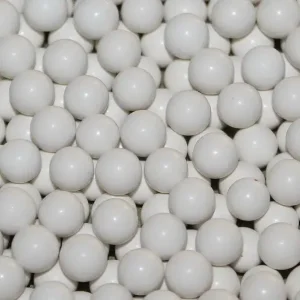
High-Purity Alumina, Yttria-Stabilized Zirconia, and Silicon Nitride Components Engineered for Extreme Applications
Navigating the Paradigm Shift in High-Performance Material Synthesis, Thermal Dissipation, and Ultra-Precision Micro-Machining
In modern industrial engineering, the demand for structural integrity, ultra-low thermal expansion, high mechanical strength, and exceptional wear resistance has redefined global manufacturing standards. As industries transition toward sub-micron precision manufacturing—spanning semiconductor lithography equipment, next-generation electric vehicle (EV) powertrains, aerospace turbomachinery, and bio-medical implants—conventional metallurgy reaches its thermodynamic and mechanical limits.
This technical whitepaper examines the strategic convergence of Precision Aluminum Alloys and Advanced Technical Ceramic Materials (including High-Purity Alumina $\text{Al}_2\text{O}_3$, Yttria-Stabilized Zirconia $\text{YSZ}$, Aluminum Nitride $\text{AlN}$, and Silicon Nitride $\text{Si}_3\text{N}_4$). By leveraging state-of-the-art powder metallurgy, Spark Plasma Sintering (SPS), Hot Isostatic Pressing (HIP), and 5-axis CNC diamond grinding, modern Chinese manufacturing hubs provide global supply chains with unprecedented resilience, rapid scalability, and strict compliance with ISO 9001 and AS9100 quality frameworks.
Founded in 2003, Yixing Qiangguang Ceramic Materials Co., Ltd. is a professional provider dedicated to the research and development (R&D), manufacturing, and application solutions of high-performance advanced ceramic materials. It is among the few enterprises in China that possess a complete industrial chain, covering key links from powder forming, sintering and precision machining to the provision of integrated application solutions.
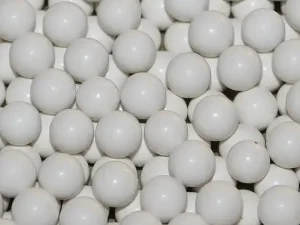
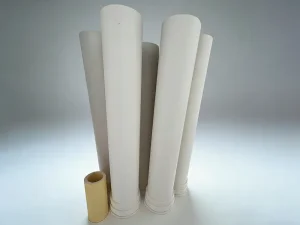
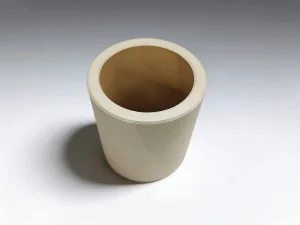
The company is also a rare domestic manufacturer engaged in the R&D, production, and supply of a comprehensive portfolio of ceramic materials. Its product range covers zirconia, yttria, alumina, magnesia, aluminum nitride, boron nitride, silicon nitride, silicon carbide, aluminum titanate and other key ceramic materials for industrial use.
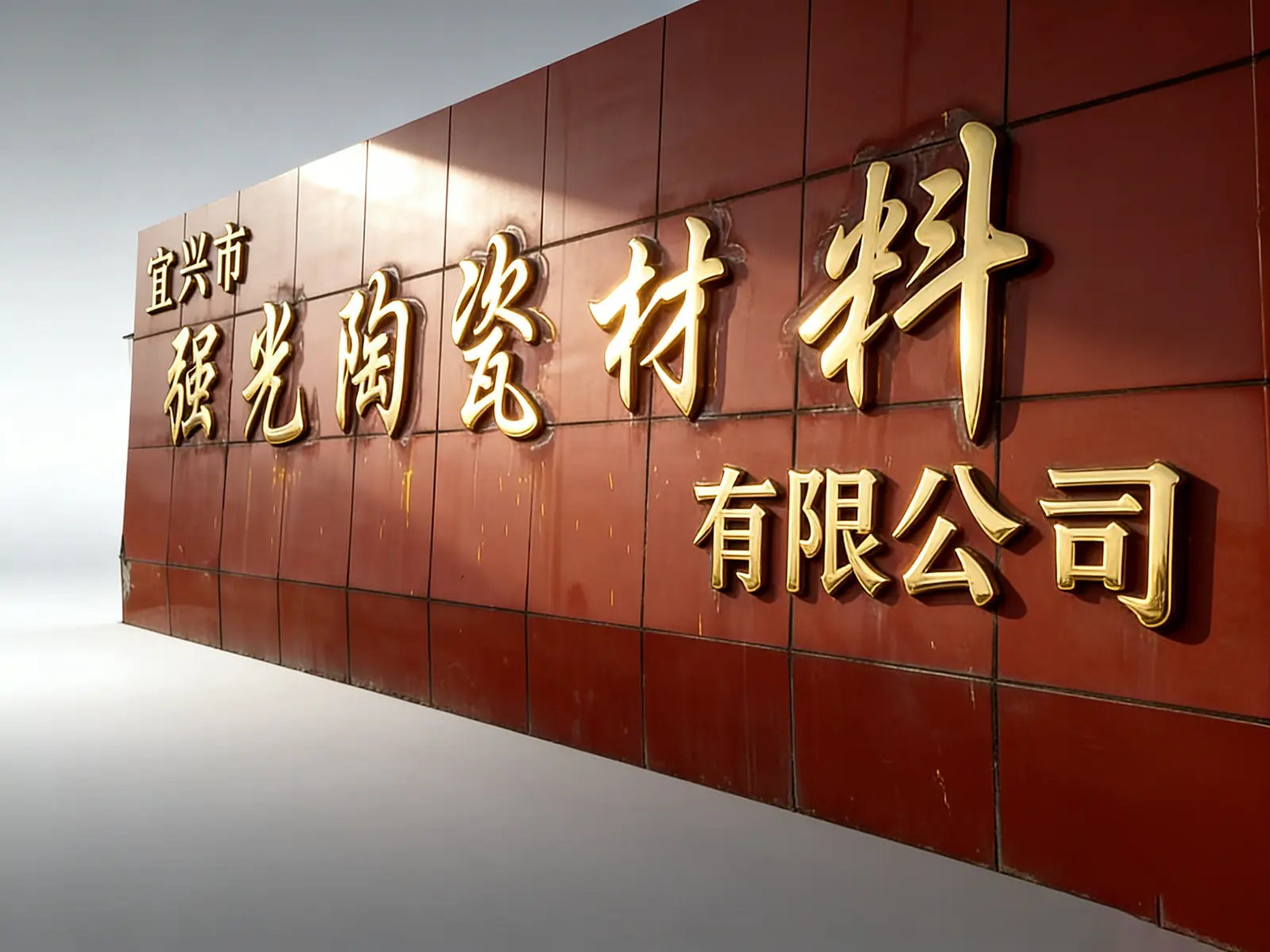
Benefiting from excellent product performance and stable quality, its products are extensively utilized in various high-end fields, such as food and medical industries, new energy vehicles, laser semiconductors, petrochemical engineering, powder metallurgy, national defense and military, as well as aerospace sectors.
Adhering to the core principle of "creating value for customers", Qiangguang provides customized and cost-efficient advanced ceramic solutions tailored to the specific demands of different customers. It is supported by high-quality after-sales services and a strict full-process tracking system, which effectively enhances cooperation efficiency and promotes continuous quality improvement.
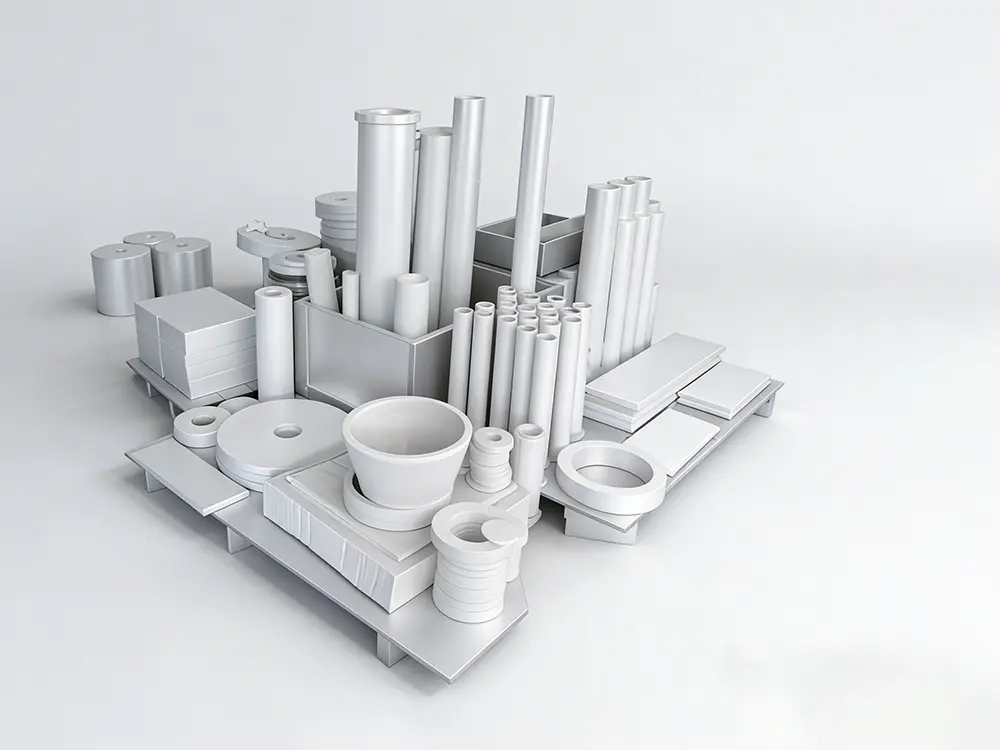
Key Drivers Shaping Global Demand for Precision Aluminum Alloys and Advanced Technical Ceramics
High-purity alumina ($\text{Al}_2\text{O}_3 > 99.99\%$) and aluminum nitride ($\text{AlN}$) substrates are essential for plasma-resistant etching chambers, electrostatic chucks (ESC), and high-frequency dielectric insulators where dielectric breakdown strength must exceed $15\text{ kV/mm}$.
With electric vehicle (EV) architectures migrating to 800V silicon carbide (SiC) platforms, thermal management demands substrates with thermal conductivity above $170\text{ W/m}\cdot\text{K}$ coupled with low thermal expansion ($4.5 \times 10^{-6}/\text{K}$) matching SiC chips.
Silicon Nitride ($\text{Si}_3\text{N}_4$) and Yttria-Stabilized Zirconia ($\text{YSZ}$) offer fracture toughness up to $8.0\text{ MPa}\cdot\text{m}^{1/2}$ and flexural strength $>1000\text{ MPa}$, serving in high-speed bearings, fuel injection valves, and missile radomes.
Comparative Material Matrix for OEM Design Engineers & Procurement Officers
| Material Designation | Density (g/cm³) | Flexural Strength (MPa) | Thermal Conductivity (W/m·K) | Max Working Temp (°C) | Primary Application Sector |
|---|---|---|---|---|---|
| High-Purity Alumina (99.8% Al₂O₃) | 3.92 | 380 - 450 | 30 | 1600 | Wear Rings, Insulators, Grinding Media |
| Yttria-Stabilized Zirconia (3YSZ) | 6.05 | 1000 - 1200 | 2.5 | 1200 | Valves, Structural Blades, Medical Implants |
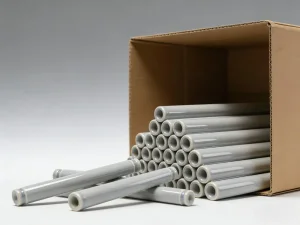
| Silicon Nitride (Si₃N₄) | 3.25 | 850 - 950 | 30 - 80 | 1400 | High-Speed Bearings, Turbochargers |
| Aluminum Nitride (AlN) | 3.30 | 320 - 400 | 170 - 230 | 1000 (Inert) | Semiconductor Substrates, Heat Sinks |
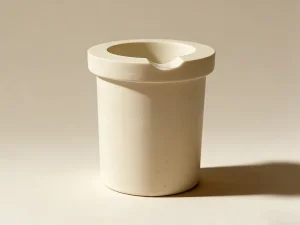
| Magnesium Oxide (MgO) Ceramic | 3.58 | 220 - 280 | 45 | 2200 | Crucibles, Extreme Temp Metallurgy |
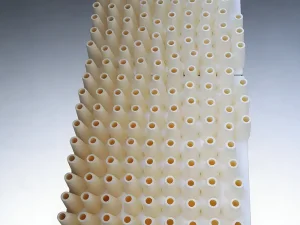
| Aluminum Titanate (Al₂TiO₅) | 3.35 | 40 - 60 | 1.5 | 1400 | Low Pressure Die Casting Spouts |
How End-to-End Vertical Integration Delivers Superior Quality Control and Cost Advantage
The global manufacturing ecosystem demands both engineering agility and bulletproof supply chain reliability. Located in Yixing, Jiangsu—China’s epicenter of advanced material synthesis—Yixing Qiangguang Ceramic Materials Co., Ltd. operates a vertically integrated production model. By controlling every variable from sub-micron powder synthesis to computerized sintering and ultra-precision diamond tooling, we eliminate intermediary margin stacking and eliminate lead-time bottlenecks.
Cold Isostatic Pressing (CIP) up to 250 MPa ensures uniform green-body density, eliminating directional shrinkage variations during high-temperature sintering.
Equipped with high-speed multi-axis CNC grinding centers using diamond-coated tooling, achieving dimensional tolerances down to $\pm 0.001\text{ mm}$ and surface roughness Ra $0.05\text{ }\mu\text{m}$.
Every production batch undergoes 100% CMM dimensional verification, ultrasonic non-destructive testing (NDT), density measurement via Archimedes method, and X-ray fluorescence (XRF) elemental analysis.
Serving World-Class Tier-1 Suppliers and OEM Manufacturers Across Europe, Asia-Pacific, and the Americas
At present, the company's products are sold well across the country and exported to Italy, the United Kingdom, Australia, Japan, Malaysia, Thailand, Hungary and other countries and regions. Committed to delivering high-quality products at reasonable prices, Qiangguang sincerely looks forward to establishing long-term and stable cooperative relations with global partners.
Our international logistics framework ensures DDP/DAP door-to-door delivery with customized anti-vibration packaging, preventing mechanical micro-fractures during transit for ultra-sensitive ceramic components and precision machined aluminum assemblies.
Technical Insights for Procurement Managers, Materials Engineers, and R&D Directors
High-purity alumina ($\text{Al}_2\text{O}_3 \ge 99.5\%$) offers superior Mohs hardness (9.0 vs aluminum's ~2.7), vastly superior corrosion resistance against aggressive acids and alkalis, higher dielectric strength ($>15\text{ kV/mm}$), and an elevated continuous working temperature limit of up to $1600^\circ\text{C}$. While aluminum alloys provide superior ductility and thermal conductivity, alumina ceramics excel in friction-intensive, highly corrosive, or high-voltage environment applications.
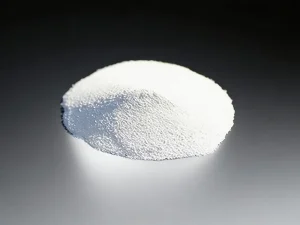
We utilize advanced powder preparation techniques, including spray drying granulating for optimal powder fluidity, followed by Cold Isostatic Pressing (CIP) at uniform pressures up to $250\text{ MPa}$. Controlled atmosphere sintering kilns with multi-zone digital PID heat profiling ensure isotropic linear shrinkage. Post-sintering, 5-axis CNC diamond grinding and CMM laser scanning guarantee strict tolerance adherence within $\pm 0.001\text{ mm}$.
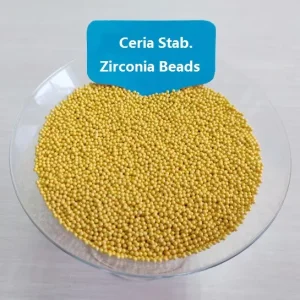
We produce Yttria-Stabilized Zirconia (3YSZ), Calcium-Stabilized Zirconia (CaSZ), Ceria-Stabilized Zirconia (Ce-TZP), and Magnesium-Stabilized Zirconia (Mg-PSZ). 3YSZ is ideal for high flexural strength ($>1000\text{ MPa}$) and bio-compatible applications at temperatures below $400^\circ\text{C}$. For extreme thermal shock and high-temperature corrosive environments (up to $1400^\circ\text{C}$), Mg-PSZ or CaSZ is recommended due to phase transformation toughening mechanisms that prevent catastrophic thermal fatigue.
Rapid prototyping utilizing our green-state CNC machining or soft-tooling processes generally requires 7 to 14 business days. Mass production lead times range between 3 to 5 weeks, depending on tooling complexity, sintering cycle times, and secondary precision grinding or polishing requirements.
Explore Our Full Spectrum of Engineering Powders, Structural Ceramics, and Grinding Media Solutions