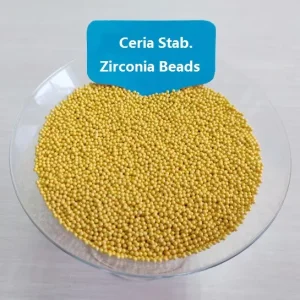
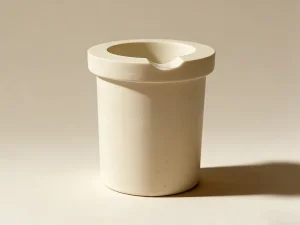
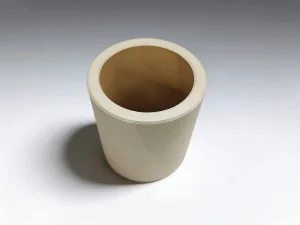
Explore our engineering-grade zirconia, silicon nitride, and advanced ceramic components manufactured for extreme industrial environments.
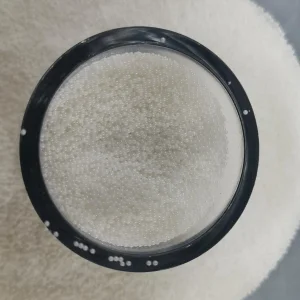
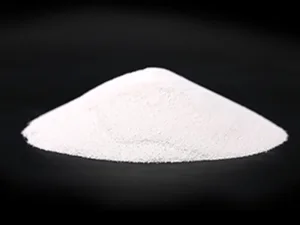
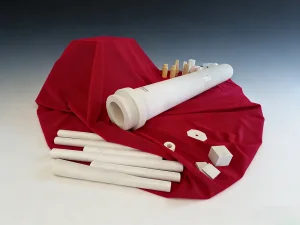
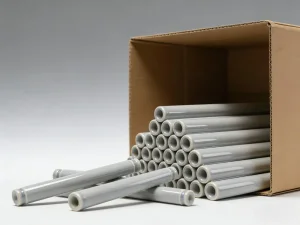
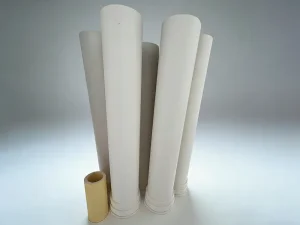
Understanding the covalent bond mechanics, crystallographic polytypes, and structural superiority of modern industrial ceramics.
Silicon Carbide (SiC), a synthetic non-metallic mineral compound composed of silicon and carbon atoms bound in a tetrahedral lattice structure, represents the pinnacle of 3rd generation advanced structural engineering materials. Characterized by extremely strong covalent Si-C bonds (with a high bond energy of approximately 451 kJ/mol), Silicon Carbide exhibits an extraordinary combination of physical, thermal, chemical, and mechanical properties. In the modern industrial landscape, where processes operate under increasingly severe mechanical stresses, extreme thermal shocks, and aggressive chemical reagents, traditional metallic alloys and conventional oxide ceramics reach their fundamental thermodynamic limits. Silicon Carbide ceramics bridge this operational gap.
Crystallographically, SiC exists in more than 250 distinct polymorphic modifications (polytypes). The dominant commercial forms used in structural ceramic engineering are Alpha-SiC ($\alpha$-SiC), which features a hexagonal crystallographic structure (primarily the 6H and 4H polytypes formed at temperatures above 1700°C), and Beta-SiC ($\beta$-SiC), which exhibits a cubic zinc-blende crystal lattice structure (formed at lower synthesis temperatures below 1700°C).
The exceptional hardness of SiC (ranking second only to diamond and boron carbide, with a Mohs hardness of 9.2 to 9.5 and Vickers hardness ranging between 22 and 28 GPa) makes it the ideal material for high-wear environments. Furthermore, its exceptionally high thermal conductivity ($\sim 120 - 200 \text{ W/m}\cdot\text{K}$ for pressureless sintered variants) surpasses that of many metals including stainless steel and nickel superalloys, enabling efficient heat dispersion in high-flux semiconductor and power electronics applications.
A rigorous quantitative comparative study of mechanical, thermal, electrical, and chemical metrics across key engineering ceramic grades.
| Material Property | Sintered SiC (SSiC) | Reaction-Bonded (RBSiC/SiSiC) | Alumina ($\text{Al}_2\text{O}_3$ 99.5%) | Silicon Nitride ($\text{Si}_3\text{N}_4$) | Zirconia ($\text{Y-TZP}$) |
|---|---|---|---|---|---|
| Density ($\text{g/cm}^3$) | 3.10 - 3.18 | 3.00 - 3.08 | 3.90 - 3.95 | 3.20 - 3.25 | 6.05 |
| Vickers Hardness ($\text{HV}_{0.5}$, GPa) | 24 - 26 | 20 - 22 | 15 - 17 | 14 - 16 | 12 - 13 |
| Flexural Strength ($\text{RT, MPa}$) | 400 - 450 | 250 - 350 | 350 - 400 | 700 - 900 | 900 - 1200 |
| Young's Modulus ($\text{GPa}$) | 390 - 430 | 330 - 380 | 370 - 390 | 300 - 320 | 200 - 210 |
| Thermal Conductivity ($\text{W/m}\cdot\text{K}$) | 120 - 180 | 100 - 140 | 25 - 35 | 30 - 50 | 2.5 - 3.0 |
| Coeff. of Thermal Expansion ($10^{-6}/\text{K}$) | 4.0 | 4.3 | 8.0 | 3.2 | 10.5 |
| Thermal Shock Resistance ($\Delta T_{\text{crit}}$, °C) | 450 - 550 | 350 - 400 | 200 | 600 - 700 | 300 |
| Max Operating Temperature in Air (°C) | 1650 | 1380 | 1600 | 1200 | 1000 |
| Acid & Alkali Corrosion Resistance | Exceptional | Good | Moderate | High | Moderate |
Silicon carbide spontaneously forms a protective passivation layer of amorphous Silicon Dioxide ($\text{SiO}_2$) when exposed to oxidizing atmospheres above 800°C. This passive oxidation mechanism prevents deep atmospheric degradation up to 1650°C, maintaining dimensional stability and load-bearing integrity under high thermal flux.
Owing to its dense covalently bonded crystal lattice, SSiC exhibits extremely low coefficients of friction when sliding against metallic or ceramic counter-faces. It demonstrates near-zero volumetric abrasive wear, rendering it the benchmark material for mechanical seal rings, chemical pump bearings, and slurry nozzles.
SSiC is virtually immune to attack by strong acids (including concentrated $\text{HF}$, $\text{HNO}_3$, and $\text{H}_2\text{SO}_4$), hot alkaline solutions, and corrosive process gases. This chemical stability guarantees zero ionic contamination in high-purity semiconductor wafer fabrication processes.
Evaluating the microstructural differences, grain boundary engineering, and dimensional shrinkage across modern processing technologies.
SSiC is manufactured by compacting ultra-fine sub-micron $\alpha$-SiC powder mixed with small quantities of non-oxide sintering aids (typically Boron and Carbon, $\sim 0.5 - 1.0\text{ wt\%}$) followed by solid-state sintering under an inert argon vacuum atmosphere at temperatures between 2000°C and 2200°C.
Key Advantage: Complete absence of free silicon metal, achieving theoretical density exceeding 98%. SSiC delivers the highest chemical purity, maximum corrosion resistance, and structural strength retained up to 1650°C.
RBSiC is produced by infiltrating a porous green body composed of SiC grains and carbon powder with molten metallic liquid Silicon ($\text{Si}$) under vacuum at approximately 1450°C - 1500°C. The liquid silicon reacts with the carbon binder to form secondary $\beta$-SiC, which bonds the primary grains while filling remaining pore networks.
Key Advantage: Near-zero dimensional firing shrinkage ($< 0.1\%$). Enables the fabrication of massive, complex-geometry components such as burner tubes, heat exchangers, and large kiln furniture.
RSiC is synthesized via evaporation-condensation mechanism without densification shrinkage at extreme temperatures (2200°C – 2400°C). Finer SiC grains evaporate and condense at the contact necks of coarser SiC particles, creating a porous network (15% to 25% open porosity).
Key Advantage: Outstanding thermal shock resistance and high stiffness-to-weight ratio. Ideal for ultra-lightweight kiln beams, semiconductor support structures, and furnace muffles.
LPSiC uses oxide additive systems (such as $\text{Al}_2\text{O}_3 - \text{Y}_2\text{O}_3$ liquid phase precursors) to lower densification temperatures to around 1850°C – 1950°C. The resulting microstructure features fine tabular SiC grains surrounded by thin grain boundary oxide films.
Key Advantage: Significantly enhanced fracture toughness ($\sim 6 - 8 \text{ MPa}\cdot\text{m}^{1/2}$) compared to standard SSiC, making it suitable for high-impact mechanical and armor applications.
How technical ceramics solve severe mechanical, thermal, and chemical challenges in advanced engineering domains.
In sub-micron semiconductor lithography and PV solar wafer fabrication, SiC is used for wafer boats, cantilever beams, susceptors, and diffusion furnace tubes. SSiC components withstand rapid thermal cycling during chemical vapor deposition (CVD), epitaxy, and oxidation processes while exhibiting zero thermal sag and absolute freedom from metallic contamination.
Process pumps in nuclear power stations, chemical processing plants, and offshore oil platforms utilize precision-lapped SSiC mechanical seal rings, shaft sleeves, and thrust bearings. The material resists cavitation erosion, dry-running thermal shock, and aggressive slurries containing abrasive particulate matter.
Due to its low specific density ($3.15 \text{ g/cm}^3$) and exceptional sonic speed of sound transmission ($\sim 12,000 \text{ m/s}$), Silicon Carbide monolithic plates and modular tiles are integrated into lightweight body armor systems, military vehicle armors, and helicopter floor shields to defeat high-velocity armor-piercing projectiles.
The extremely high specific stiffness ($E/\rho$) and low thermal expansion coefficient of SSiC make it the preferred substrate for space telescope mirrors, satellite laser communication optics, and airborne reconnaissance scanning systems operating in extreme space thermal environments.
In high-energy bead mills for battery electrode slurry (lithium iron phosphate $\text{LiFePO}_4$), nano-pigments, and pharmaceutical compounds, SiC and Zirconia grinding media ensure zero metallic impurities, maximum kinetic force transfer, and minimal bead wear rate during continuous operation.
Coal-fired power plants, waste incinerators, and metal smelters utilize RBSiC/SiSiC vortex swirl nozzles for flue gas desulfurization (FGD). These nozzles resist severe slurry abrasion and thermal shocks while maintaining steady droplet atomization over long service campaigns.
Analyzing global supply dynamics, cost efficiency drivers, and China's industrial clustering advantages in precision ceramics.
The global market for advanced ceramics has undergone a structural transformation over the past decade. Driven by the rapid acceleration of the semiconductor sector, electric vehicle (EV) powertrains, photovoltaic solar installations, and green hydrogen infrastructure, global demand for high-purity Silicon Carbide components has reached unprecedented levels. While Western suppliers historically dominated the upper tier of low-volume optical mirrors and specialized aerospace components, Chinese ceramic manufacturers have evolved into global powerhouses capable of delivering ultra-high purity, tightly toleranced ceramic components at commercial scale.
China's ceramic manufacturing hubs—exemplified by Yixing in Jiangsu Province—integrate raw material synthesis, sub-micron powder milling, isopressing equipment, high-vacuum sintering kilns, and multi-axis CNC diamond grinding within a concentrated geographic radius. This minimizes lead times and logistics overheads.
China commands over 70% of the world's high-purity green and black Silicon Carbide raw powder processing capacity. Upstream integration guarantees secure supply chains for fine sub-micron powders ($\text{d}_{50} < 0.5\,\mu\text{m}$) free from geopolitical supply disruptions.
Modern Chinese factories operate state-of-the-art continuous atmosphere sintering furnaces, hot-isostatic pressing (HIP) units, and ultra-high-temperature vacuum kilns ($> 2200^\circ\text{C}$), achieving unmatched energy efficiency, thermal uniformity, and batch consistency.
Delivering end-to-end industrial ceramic solutions from raw powder processing to precision CNC micro-machining.
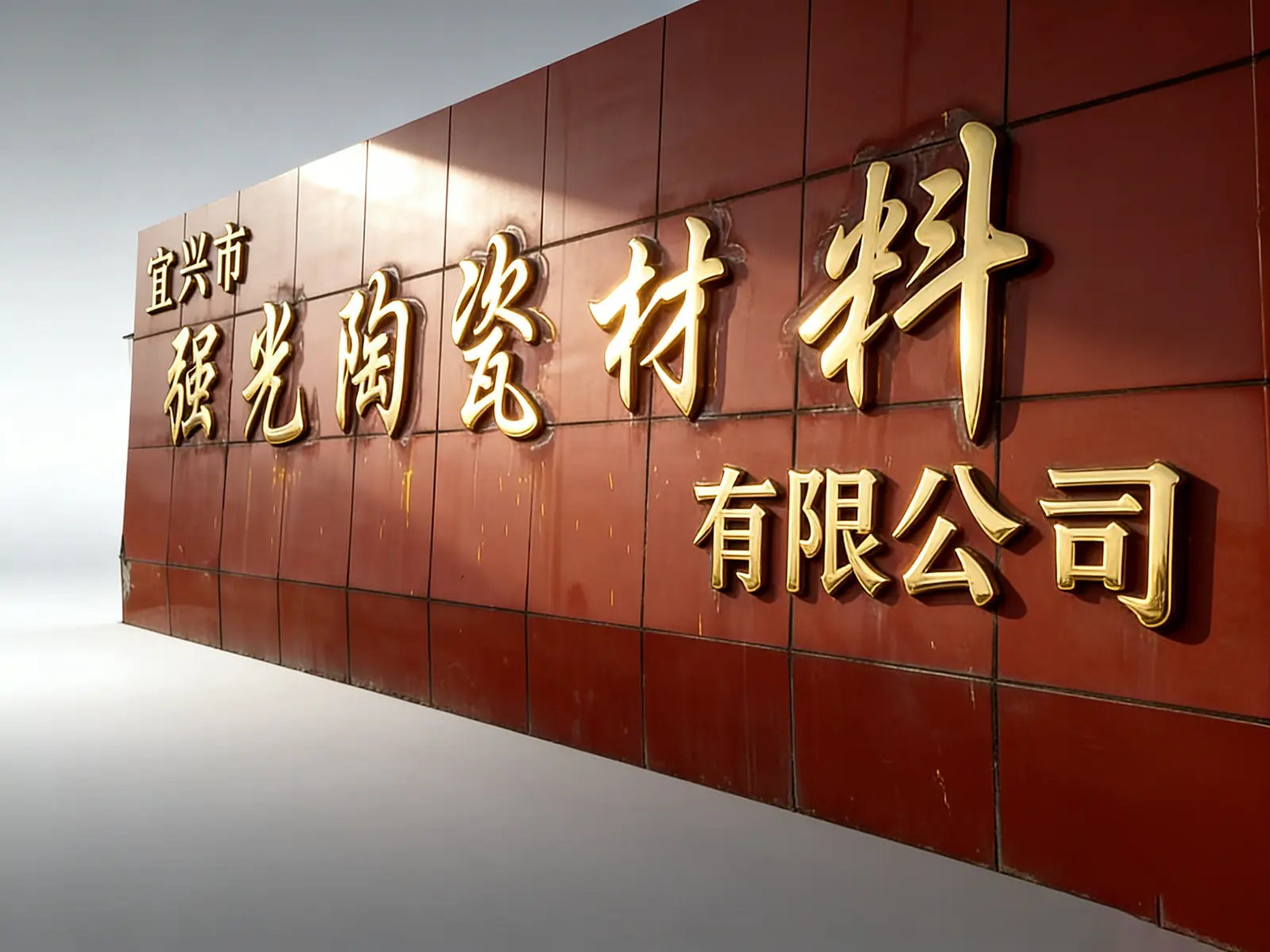
Founded in 2003, Yixing Qiangguang Ceramic Materials Co., Ltd. is a professional provider dedicated to the research and development (R&D), manufacturing, and application solutions of high-performance advanced ceramic materials. It is among the few enterprises in China that possess a complete industrial chain, covering key links from powder forming, sintering and precision machining to the provision of integrated application solutions.
The company is also a rare domestic manufacturer engaged in the R&D, production, and supply of a comprehensive portfolio of ceramic materials. Its product range covers zirconia, yttria, alumina, magnesia, aluminum nitride, boron nitride, silicon nitride, silicon carbide, aluminum titanate and other key ceramic materials for industrial use.
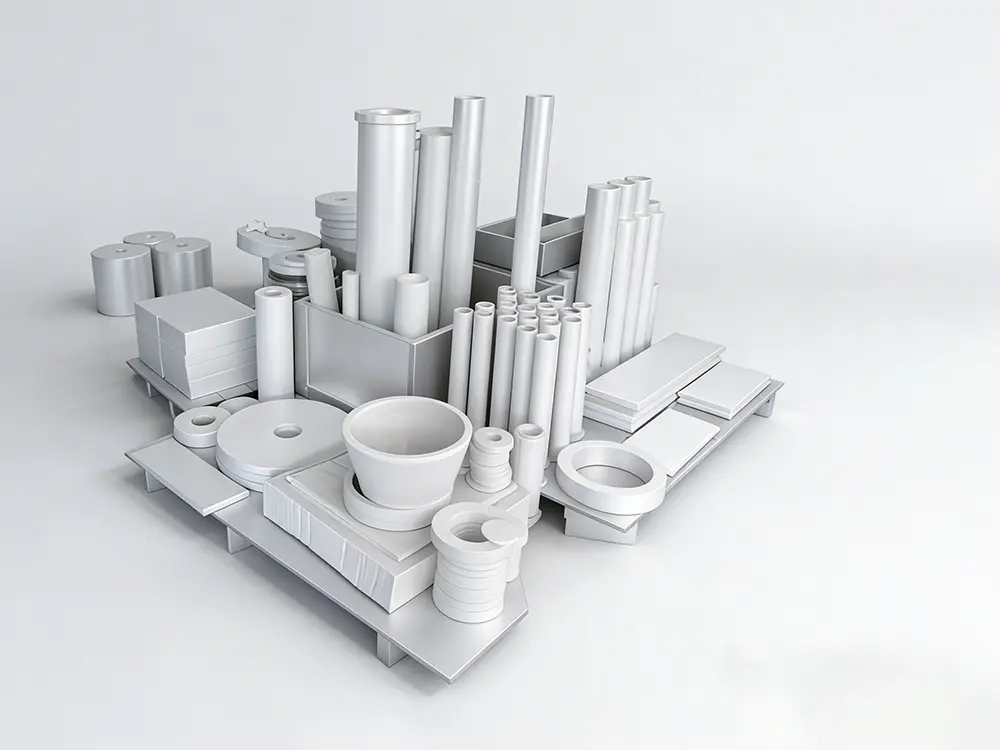
Benefiting from excellent product performance and stable quality, its products are extensively utilized in various high-end fields, such as food and medical industries, new energy vehicles, laser semiconductors, petrochemical engineering, powder metallurgy, national defense and military, as well as aerospace sectors.
Adhering to the core principle of "creating value for customers", Qiangguang provides customized and cost-efficient advanced ceramic solutions tailored to the specific demands of different customers. It is supported by high-quality after-sales services and a strict full-process tracking system, which effectively enhances cooperation efficiency and promotes continuous quality improvement.
At present, the company's products are sold well across the country and exported to Italy, the United Kingdom, Australia, Japan, Malaysia, Thailand, Hungary and other countries and regions. Committed to delivering high-quality products at reasonable prices, Qiangguang sincerely looks forward to establishing long-term and stable cooperative relations with global partners.
Rigorous non-destructive testing, coordinate metrology, and international ASTM standard compliance.
Precision ceramic components require post-sintering surface grinding due to high material hardness. Utilizing 5-axis CNC diamond tooling, cylindrical grinders, and surface lappers, we achieve dimensional tolerances down to $\pm 0.001\text{ mm}$ and surface roughness of $Ra < 0.02\,\mu\text{m}$ for optical-grade seals.
To guarantee absolute structural integrity for aerospace and defense applications, 100% of critical structural components undergo dye penetrant inspection, ultrasonic flaw detection, and X-ray micro-tomography to detect internal micro-cracks or voids prior to dispatch.
Our manufacturing operations strictly adhere to international quality benchmarks including ISO 9001:2015 certified quality systems, ASTM C1161 (Flexural Strength Testing of Advanced Ceramics), DIN EN 843, and RoHS/REACH environmental compliance.
Pioneering advancements in SiC-SiC ceramic matrix composites, 3D additive printing, and sub-nanometer lithography support.
Integration of continuous SiC fibers within a densified SiC matrix to eliminate catastrophic brittle failure. SiC-SiC CMCs offer fracture toughness exceeding $20 \text{ MPa}\cdot\text{m}^{1/2}$, enabling next-generation jet engine turbine blades and nuclear fusion reactor plasma-facing walls.
Development of Stereolithography (SLA) and Binder Jetting technology for SiC ceramics. Enables the tool-free production of ultra-complex internal cooling channels inside turbomachinery components and customized biomedical implants without costly diamond grinding tooling.
Engineered ultra-high-purity SSiC with impurity levels below 1 ppm for sub-2nm EUV semiconductor lithography tools, ensuring zero trace outgassing or particle contamination during extreme ultraviolet plasma exposure.
Expert guidance on design considerations, material selection rules, and custom fabrication protocols.
High-purity YSZ, Magnesium Oxide, Silicon Nitride, and Ceria-Stabilized Zirconia products for global OEM applications.