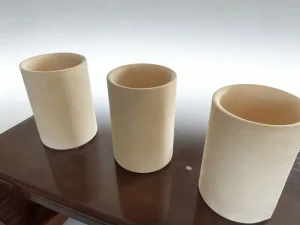
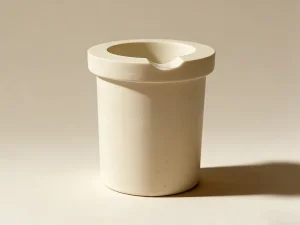
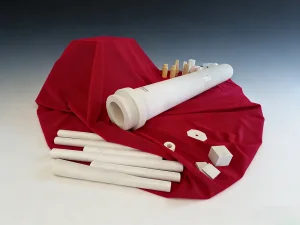
Precision-engineered technical ceramic components certified for extreme thermal, mechanical, and chemical environments.
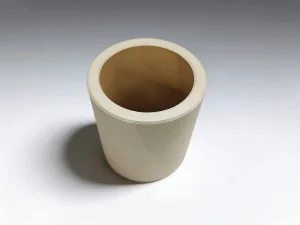
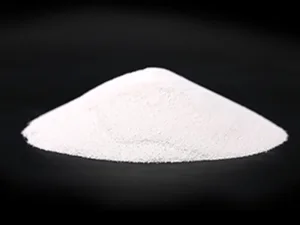
In modern industrial engineering, traditional metallic alloys and polymer systems are increasingly reaching their mechanical, thermal, and chemical limits. Structural Ceramics—also designated as advanced technical ceramics or engineering ceramics—represent a class of inorganic, non-metallic materials engineered to perform under extreme operational conditions. Characterized by exceptional ionic and covalent atomic bonds, structural ceramics provide unmatched hardness, severe wear resistance, chemical inertness, high-temperature stability, and tailored thermal or electrical conductivity.
As global industries transition toward electrification, next-generation semiconductor fabrication, aerospace propulsion, and decarbonized chemical processing, the demand for precision-fabricated structural ceramics has experienced exponential growth. Within this paradigm shift, China has emerged as the global epicenter for technical ceramic manufacturing, driven by vertical integration, abundant raw material reserves, advanced powder synthesis technologies, and world-class diamond grinding capabilities.
Global procurement teams, materials scientists, and original equipment manufacturers (OEMs) searching for a China Structural Ceramics Manufacturer seek more than basic vendor catalogs. They demand authoritative clarity on material phase transformation, fracture toughness, thermal shock behavior, supplier auditing criteria, and total cost of ownership (TCO) optimization. This comprehensive intelligence report satisfies these strategic information requirements.
Engineering evaluation of key oxide and non-oxide ceramics produced by top-tier Chinese manufacturers.
| Ceramic Material | Chemical Formula | Density (g/cm³) | Flexural Strength (MPa) | Fracture Toughness (MPa·m¹/²) | Thermal Conductivity (W/m·K) | Max Working Temp (°C) |
|---|---|---|---|---|---|---|
| Yttria Stabilized Zirconia (YSZ) | ZrO₂ + Y₂O₃ | 6.05 | 1000 - 1200 | 7.0 - 10.0 | 2.5 - 3.0 | 1200 |
| Magnesium Stabilized Zirconia (Mg-SZ) | ZrO₂ + MgO | 5.75 - 5.85 | 600 - 800 | 9.0 - 15.0 | 2.5 | 1400 |
| High-Purity Alumina (99.8%) | Al₂O₃ | 3.92 - 3.96 | 380 - 450 | 3.5 - 4.5 | 30 - 35 | 1650 |
| Advanced Silicon Nitride | Si₃N₄ | 3.20 - 3.25 | 850 - 1000 | 6.0 - 8.0 | 30 - 90 | 1400 |
| Aluminum Nitride (AlN) | AlN | 3.26 | 320 - 400 | 2.5 - 3.5 | 170 - 230 | 1150 (Air) / 1900 (Inert) |
| Aluminium Titanate | Al₂TiO₅ | 3.30 - 3.70 | 30 - 80 | 1.5 - 2.5 | 1.5 - 2.0 | 1450 |
Zirconia ceramics undergo stress-induced phase transformation from tetragonal to monoclinic (t→m). This volumetric expansion creates compressive stresses that actively arrest crack propagation, giving YSZ and Mg-SZ unprecedented fracture toughness among engineering ceramics.
Aluminum Nitride (AlN) provides a unique combination of high thermal conductivity (exceeding 180-230 W/m·K) and excellent electrical resistivity, rendering it indispensable for next-generation semiconductor heat sinks and IGBT power modules.
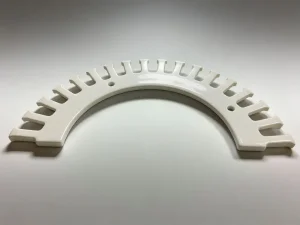
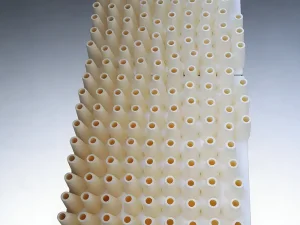
Aluminium Titanate (Al₂TiO₅) exhibits an extremely low coefficient of thermal expansion (CTE) combined with micro-crack network dynamics. This allows components to survive severe, rapid thermal cycling in molten metal handling and exhaust manifolds.
Pioneering fully integrated technical ceramic manufacturing and application engineering since 2003.
Founded in 2003, Yixing Qiangguang Ceramic Materials Co., Ltd. stands as a premier enterprise dedicated to the research, development (R&D), advanced manufacturing, and engineering application solutions of high-performance technical ceramics. Located in Yixing—China's historical ceramic technological hub—the company is among the very few domestic entities possessing a complete, end-to-end industrial chain.
Our integrated capabilities bridge every critical stage of production: raw nanometer powder formulation, spray drying, cold isostatic pressing (CIP), high-temperature vacuum and atmosphere sintering, ultra-precision diamond grinding, CNC machining, and comprehensive quality assurance testing.
Unlike specialized niche processors, Qiangguang manufactures an expansive portfolio covering: Zirconia (YSZ, Mg-SZ), Yttria, High-Purity Alumina, Magnesia, Aluminum Nitride (AlN), Boron Nitride (BN), Silicon Nitride (Si₃N₄), Silicon Carbide (SiC), and Aluminium Titanate (Al₂TiO₅).
Adhering to our founding principle of "Creating Sustainable Value for Customers", Qiangguang delivers tailored, highly cost-efficient ceramic components engineered for exact application demands. Supported by rigorous full-process quality tracking, ISO quality management protocols, and responsive technical support, we streamline buyer procurement lifecycles.
Today, Qiangguang's engineered components are exported extensively to major industrial economies including Italy, the United Kingdom, Australia, Japan, Malaysia, Thailand, Hungary, and across North America. We serve as a trusted Tier-1 and Tier-2 supplier for critical sectors such as semiconductor lasers, new energy vehicles (NEV), aerospace defense, medical technologies, and chemical engineering.
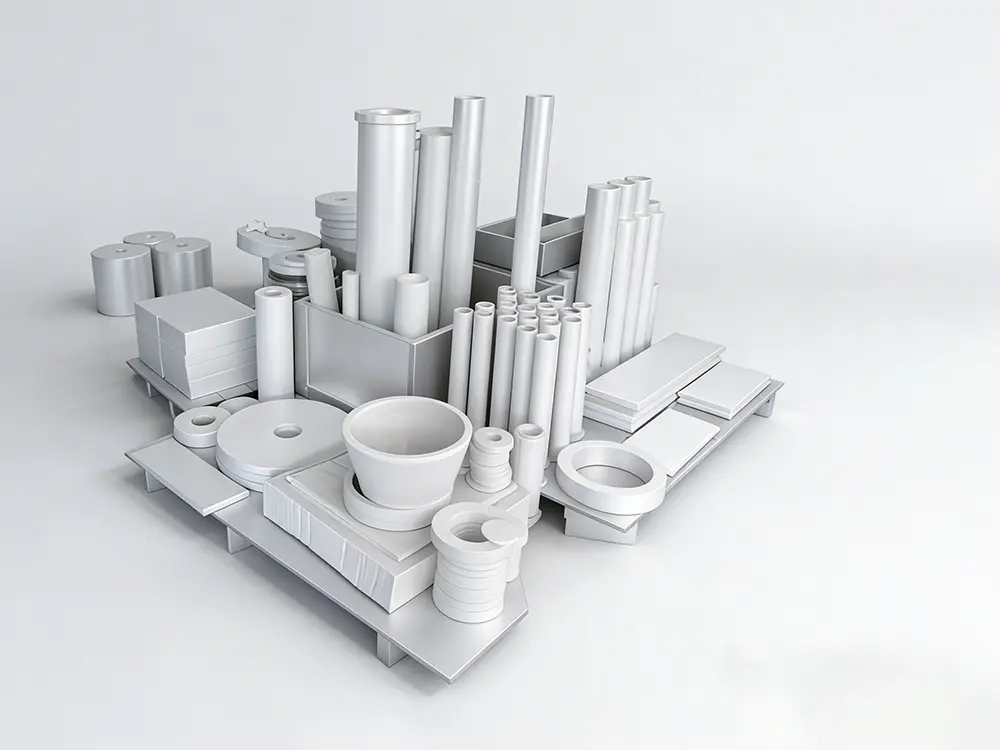
How Chinese structural ceramic engineering empowers global high-tech industries.
High-purity AlN and Al₂O₃ substrates, electrostatic chucks (ESC), gas distribution plates, and laser diode heat sinks require extreme dielectric strength and precision thermal expansion matching with silicon and gallium nitride wafers.
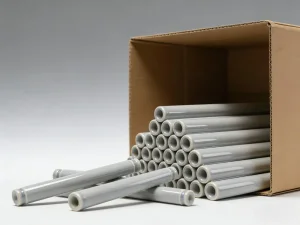
Silicon Nitride ceramic bearing balls in EV drive motors eliminate electrical erosion (fluting) caused by high voltage inverter frequencies, extending motor bearing lifespan up to 10x compared to chrome steel bearings.
Silicon Nitride and Boron Nitride radomes, missile guidance components, and high-temperature turbine components leverage ceramics' low thermal expansion, high microwave permeability, and resistance to severe aerodynamic heating.
Yttria-stabilized zirconia and ultra-pure alumina provide absolute biocompatibility, chemical stability against bodily fluids, and zero bio-degradation for surgical scalpels, dental implants, and orthopedic femoral heads.
Severe service valve trim components, mud pump sleeves, and slurry nozzles in petrochemical refineries utilize Mg-SZ and SiC to resist abrasive slurries, high hydrofluoric acid concentrations, and cavitation erosion.
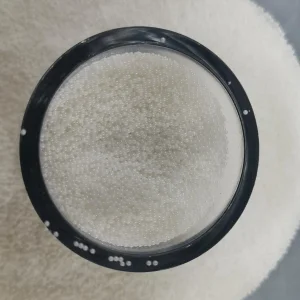
High-density YSZ micro-milling media (beads) deliver contamination-free, sub-micron grinding of electronic inks, lithium battery cathode materials (LFP/NCM), pharmaceuticals, and cosmetics.
The global manufacturing ecosystem has experienced significant re-alignment over the past decade. Western buyers historically relied on regional technical ceramic suppliers in Western Europe, Japan, and North America. However, high energy tariffs, supply chain fragmentation, and long prototyping lead times have led procurement directors to pivot toward verified Chinese Structural Ceramics Manufacturers.
Chinese leaders like Qiangguang maintain full control over the chemical chain. Starting from raw zircon sand processing and chemical purification to hydrothermal powder synthesis, spray drying, green body compaction, sintering, and diamond CNC finish machining. Vertical integration ensures rigorous batch-to-batch consistency, complete traceability, and immediate agility when adjusting material formulas for specific client needs.
Developing custom technical ceramic components requires rapid prototyping iterations. Chinese manufacturers utilize advanced 5-axis CNC diamond grinding, spark erosion machining (EDM) of conductive ceramics, and ceramic 3D printing (Lithography-based Ceramic Manufacturing - LCM). This reduces prototype delivery cycles from 16-24 weeks down to 3-5 weeks.
China’s centralized industrial clusters (such as Yixing in Jiangsu Province) provide significant economies of scale, lower capital expenditure costs for specialized high-temperature sintering kilns (HIP - Hot Isostatic Pressing), and access to highly skilled materials engineers. This allows buyers to achieve a 25% to 45% reduction in total component acquisition costs without sacrificing microstructural integrity or geometric tolerances.
When evaluating structural ceramic manufacturers in China, international procurement engineering teams must conduct thorough audits across five essential pillars:
As technological thresholds advance, Chinese manufacturers are pioneering breakthroughs in several strategic domain areas:
A. Nanocomposite Ceramics: Matrix reinforcement utilizing carbon nanotubes (CNTs) and silicon carbide whiskers embedded in zirconia and alumina matrices, dramatically increasing fracture toughness beyond 12 MPa·m¹/².
B. Green Manufacturing & Microwave Sintering: Transitioning toward ultra-rapid microwave and Spark Plasma Sintering (SPS) techniques, reducing energy consumption by 60% while inhibiting grain growth for superior ultra-fine microstructures.
C. Additive Manufacturing (AM): Industrializing stereolithography and binder jetting of Si₃N₄ and Al₂O₃ for complex internal cooling channels within turbine blades and semiconductor fluidic manifolds.
Expert technical responses to common engineering and procurement queries regarding structural ceramics.
Explore our full line of engineered powders, precision-machined components, and high-durability ceramics.