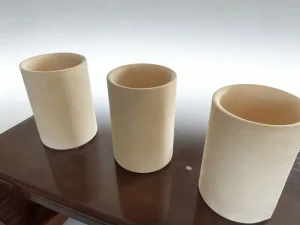
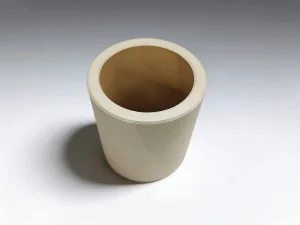
Explore our flagship, factory-direct stabilized zirconia powders, high-purity alumina, and extreme thermal-shock resistant ceramics engineered for rigorous industrial deployments.
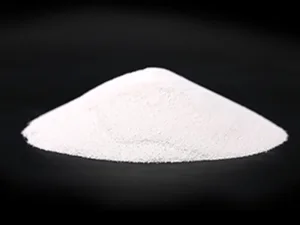
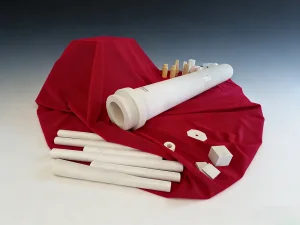
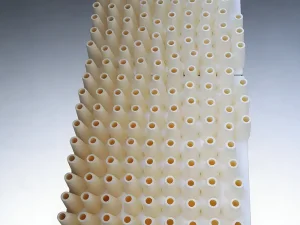
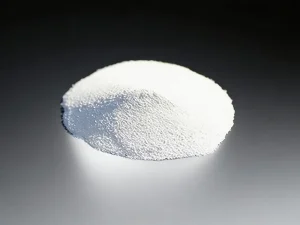
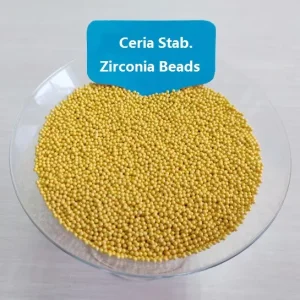
Established as a benchmark of excellence in industrial materials engineering, Yixing Qiangguang Ceramic Materials Co., Ltd. bridges advanced solid-state chemistry with large-scale industrial manufacturing.
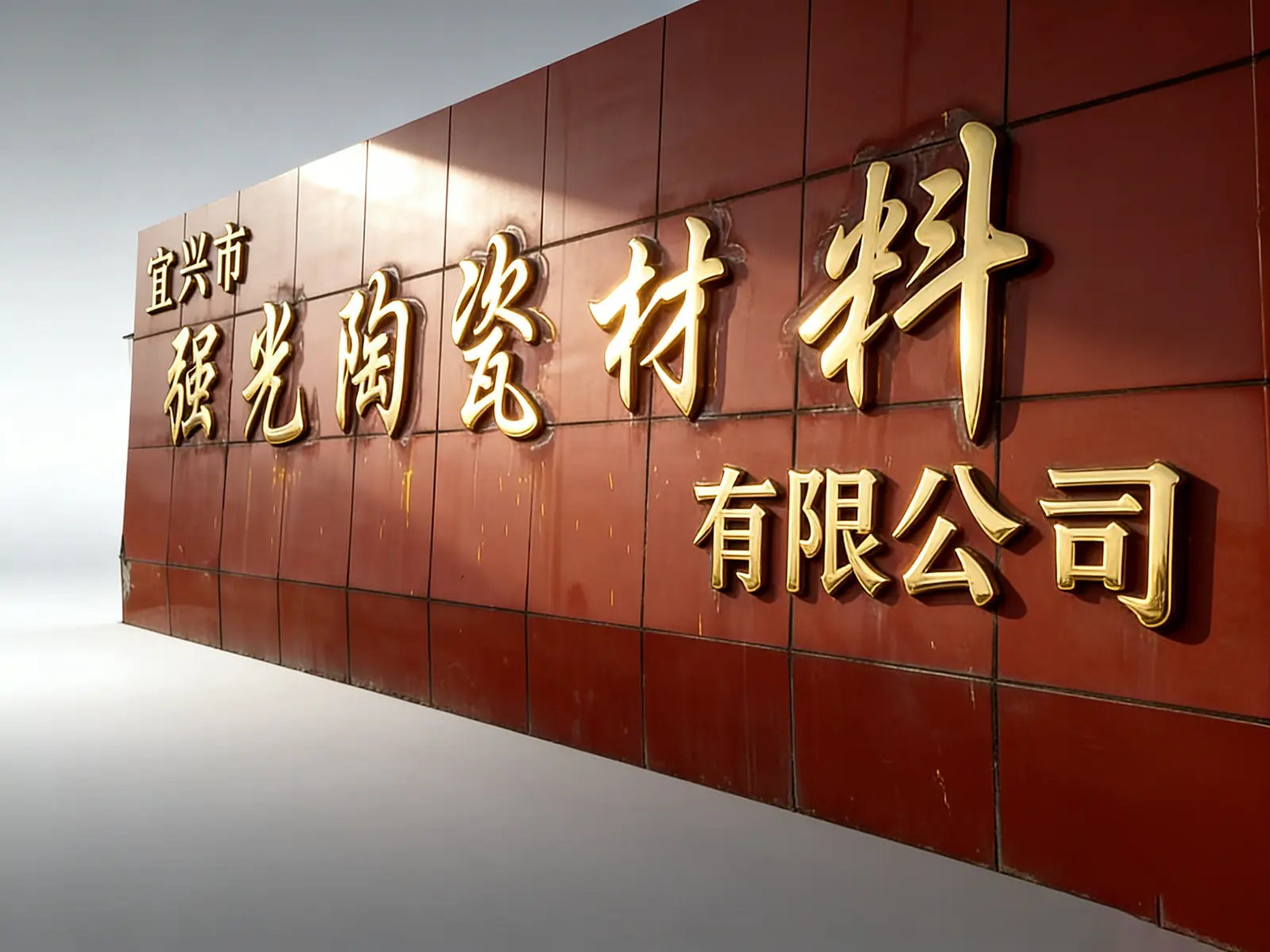
Founded in 2003, Yixing Qiangguang Ceramic Materials Co., Ltd. is a specialized, high-tech enterprise dedicated to the research, development (R&D), synthesis, precision machining, and tailored engineering applications of high-performance advanced ceramic materials. Operating from the industrial heartland of Jiangsu, China, Qiangguang stands out as one of the rare domestic manufacturers possessing an end-to-end industrial ecosystem.
Unlike specialized niche processors, our facility maintains absolute quality oversight across every link of The Ceramic Process: from ultra-fine raw powder preparation, precursor phase stabilization, spray drying, and complex green-body forming (cold isostatic pressing, slip casting, dry pressing), to high-temperature sintering profile design, diamond-tool precision machining, and final operational performance validation.
Our comprehensive materials portfolio encompasses state-of-the-art ceramic formulations, including Zirconia (YSZ, CSZ, MSZ, Ce-TZP), Yttria, Alumina, Magnesia, Aluminum Nitride (AlN), Boron Nitride (BN), Silicon Nitride (Si3N4), Silicon Carbide (SiC), and Aluminum Titanate, satisfying the most stringent mechanical, electrical, and chemical resistance benchmarks globally.
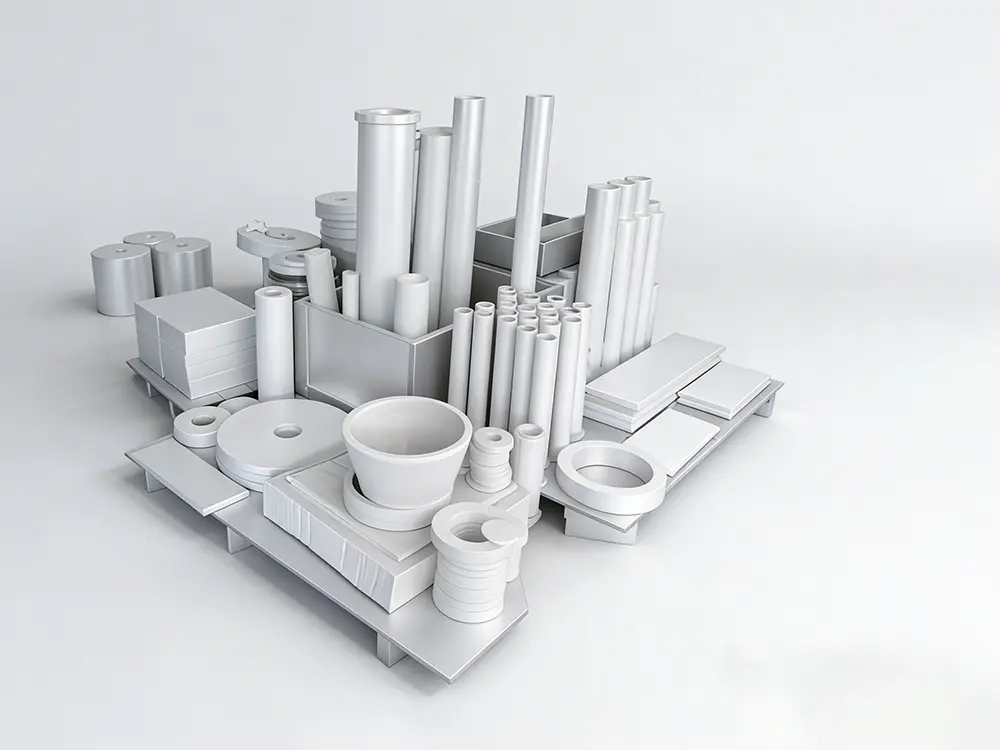
Benefiting from outstanding structural integrity, ultra-low wear rates, and chemical inertness, Qiangguang's engineered ceramics are extensively deployed across critical high-end verticals: food & pharmaceutical processing, new energy electric vehicles (NEVs), laser semiconductors, petrochemical flow systems, powder metallurgy, national defense, and aerospace engineering.
Presently, our products are widely distributed across China and exported globally to tier-one industrial hubs in Italy, the United Kingdom, Australia, Japan, Malaysia, Thailand, Hungary, and beyond. Guided by our principle of "Creating Value for Customers", we deliver cost-efficient, customized advanced ceramic solutions backed by dynamic after-sales tracking.
Macroeconomic market dynamics, material substitution trends, and structural shifts driving advanced ceramics demand across global manufacturing nodes.
The global technical ceramics market is projected to reach USD 140 Billion by 2030, exhibiting a CAGR of ~6.8%. Demand is rapidly transitioning from traditional refractory materials toward structural ceramics capable of enduring operational environments exceeding 1400°C under severe mechanical stress.
Engineered ceramics are systematically replacing legacy stainless steels, tungsten carbides, and superalloys in critical components. Attributes such as zero tribological galling, total immunity to acidic corrosion, lower mass density, and supreme dielectric breakdown resistance make ceramics indispensable.
China has evolved from a raw mineral exporter into the epicenter of precision ceramic engineering. Factories like Yixing Qiangguang leverage localized chemical precursor supply chains, advanced automated kilns, and cost-efficient precision tooling to deliver world-class technical ceramics at competitive global price points.
A whitepaper-level analysis of the chemical, physical, and thermal stages required to transform raw inorganic compounds into extreme-performance ceramic components.
| Process Stage | Primary Operations & Kinetics | Key Control Parameters | Impact on Material Properties |
|---|---|---|---|
| 1. Powder Synthesis & Doping | Chemical co-precipitation, hydrothermal synthesis, solid-state reaction, and precise oxide stabilizer addition ($Y_2O_3, CaO, MgO, CeO_2$). | Particle size distribution ($D_{50} < 0.5\,\mu m$), specific surface area (BET), purity ($>99.99\%$). | Determines microstructural homogeneity, green density potential, and ultimate fracture toughness ($K_{1c}$). |
| 2. Granulation & Slurry Prep | Wet ball milling, organic binder addition (PVA/PEG), and spray drying tower atomization. | Slurry viscosity, droplet particle size, residual moisture content ($<0.3\%$), spray temperature. | Ensures spherical granule flowability, preventing void formation and micro-cracks during pressing. |
| 3. Precision Forming | Cold Isostatic Pressing (CIP at $>200\,\text{MPa}$), Dry Pressing, Injection Molding (CIM), or Slip Casting. | Compaction pressure uniformity, mold design, green body density ($>55\%$ theoretical). | Establishes dimensional shape memory, green strength, and minimizes sintering shrinkage anisotropy. |
| 4. Sintering & Phase Control | High-temperature profile heating ($1400^\circ\text{C} - 1750^\circ\text{C}$), Spark Plasma Sintering (SPS), or Hot Isostatic Pressing (HIP). | Dwell time, oxygen partial pressure, grain boundary migration rates, heating/cooling curves. | Achieves full densification ($>99.5\%$), controls grain size ($<1\,\mu m$), and locks in tetragonal phase stability. |
| 5. Diamond Tool Machining | CNC surface grinding, cylindrical grinding, ultrasonic machining, and micro-lapping. | Coolant chemistry, diamond grit size, wheel feed rate, surface roughness ($Ra < 0.05\,\mu m$). | Delivers sub-micron dimensional tolerances ($\pm 0.002\,\text{mm}$) and eliminates surface micro-flaws. |
In high-performance structural ceramics, raw Zirconia ($ZrO_2$) exhibits three distinct crystallographic polymorphs across temperature ranges: Monoclinic ($m$-phase, stable up to 1170°C), Tetragonal ($t$-phase, stable between 1170°C and 2370°C), and Cubic ($c$-phase, stable above 2370°C). Pure zirconia undergoes a destructive 3% to 5% volume expansion during the $t \rightarrow m$ cooling transition, resulting in spontaneous catastrophic fracturing.
At the Yixing Qiangguang chemical synthesis facility, stabilizing oxide additives such as Yttria ($Y_2O_3$), Calcia ($CaO$), Magnesia ($MgO$), or Ceria ($CeO_2$) are introduced into the crystal matrix. This stabilizing action preserves the high-strength metastabilized tetragonal phase at room temperature. When a micro-crack attempts to propagate under mechanical stress, the stress field induces a stress-assisted transformation back to the monoclinic phase ($t \rightarrow m$). The local 4% volume expansion actively clamps the crack tip shut, giving Yttria-Stabilized Zirconia (YSZ) its legendary "ceramic steel" fracture toughness ($K_{1c} > 8-10\,\text{MPa}\cdot\text{m}^{1/2}$).
Tailored technical ceramic configurations engineered to solve complex tribological, thermal, and electrical degradation challenges in demanding industrial environments.
Challenge: Wafer processing chamber components suffer from severe plasma erosion and particle contamination under fluorine gas etching environments.
Qiangguang Solution: Ultra-high purity Alumina ($>99.99\%$) and Aluminum Nitride (AlN) end-effectors, gas distribution plates, and electrostatic chucks (ESC). Offers superior plasma etch resistance, exceptional thermal conductivity ($170-200\,\text{W/m}\cdot\text{K}$), and low dielectric loss.
Challenge: Metallic contamination in lithium iron phosphate ($LiFePO_4$) battery cathode slurries causes internal micro-shorts and battery fires.
Qiangguang Solution: High-density Ceria-Stabilized and Yttria-Stabilized Zirconia micro-beads ($0.05\,\text{mm} - 2.0\,\text{mm}$) paired with solid Zirconia mill liners. Guarantees zero metal ion leaching, sub-micron particle dispersing efficiency, and minimal wear rates ($<0.01\,\text{g/kg}$).
Challenge: Molten aluminum alloys cause rapid oxidation, thermal fatigue failure, and chemical attack on conventional steel dosing tubes.
Qiangguang Solution: Engineered Aluminum Titanate ($Al_2TiO_5$) riser tubes and stalk nozzles. Exhibits a near-zero coefficient of thermal expansion ($\alpha < 1.5 \times 10^{-6}/\text{K}$), outstanding non-wetting properties against molten aluminum, and supreme resistance to thermal shock.
Challenge: Medical device components require extreme biocompatibility, resistance to wear degradation, and zero ion cytotoxicity.
Qiangguang Solution: Medical-grade Yttria-Tetragonal Zirconia Polycrystal (Y-TZP) blanks and ceramic scalpels. Provides high flexural strength ($>1100\,\text{MPa}$), total tissue neutrality, inertness to steam sterilization, and ultra-sharp cutting edges for surgical scalpels.
Driving technological evolution through additive manufacturing, AI-assisted sintering, nanostructured grain boundaries, and decarbonized thermal processing.
Integration of Stereolithography (SLA) and Digital Light Processing (DLP) 3D printing for structural ceramics. Enables complex internal cooling channels, lightweight cellular lattice geometries, and rapid prototyping without expensive diamond tooling.
Deploying real-time machine learning thermal sensors in kilns to dynamically control heating ramp profiles. Digital twin simulations model grain growth kinetics, predicting and preventing thermal warping or micro-pore trapped voids.
Transitioning from sub-micron to ultra-fine nanograin structures ($<100\,\text{nm}$). Nano-composite ceramics (e.g., Zirconia-Toughened Alumina - ZTA) deliver elevated hardness, superplasticity at elevated temperatures, and superior fracture toughness.
Answers to common engineering, material selection, and factory procurement queries from international buyers and system integrators.
Discover our dedicated factory product offerings for high-wear industrial applications, thermal management, cutting tools, and biomedical systems.