Explore our premium factory-direct industrial ceramic products, engineered for high-temperature durability, dielectric isolation, and wear resistance.
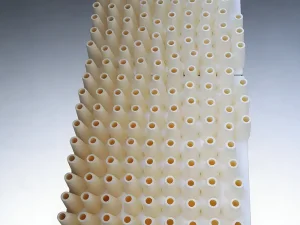
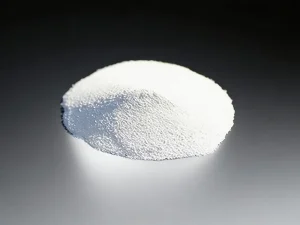
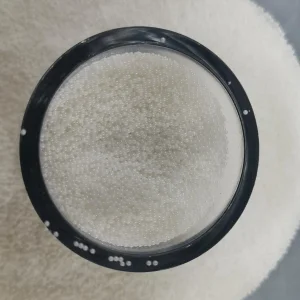
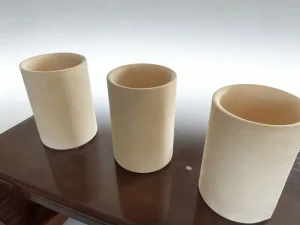
An in-depth technical analysis of Aluminum Oxide ceramic grades, crystal structures, and mechanical behavior across high-stress industrial environments.
Aluminum Oxide (Al₂O₃), commonly referred to as Alumina, stands as the most versatile and widely utilized advanced ceramic material in modern engineering. From semiconductor wafer processing equipment to deep-sea drilling pump seals, alumina material properties offer a unique blend of electrical insulation, extreme mechanical hardness, thermal resistance, and chemical inertness. Global procurement teams and systems engineers must evaluate specific purity thresholds, grain sizes, and sintering additives to optimize component lifespans while balancing cost efficiencies.
The macroscopic performance of wholesale alumina ceramic components is governed by its underlying crystallographic phase structure. While alumina exists in multiple polymorphs (including gamma, theta, and eta phases), Alpha-Alumina (α-Al₂O₃) represents the thermodynamically stable hexagonal close-packed (HCP) structure achieved through high-temperature calcination above 1200°C.
Technical Insight: Alpha-phase alumina exhibits high lattice energy, delivering exceptional mechanical stability, chemical passivity against strong acids/alkalis, and superior dielectric isolation across high-frequency RF applications.
When selecting wholesale alumina components from China factories, procurement directors should compare material formulations against standard testing criteria (such as ASTM C1161 for flexural strength and ISO 6474 for biomedical implants). Below is an authoritative comparative specification matrix detailing standard commercial grades:
| Property Parameter | Units | 95% Al₂O₃ | 99.0% Al₂O₃ | 99.5% High Purity | 99.9% Semiconductor Grade |
|---|---|---|---|---|---|
| Bulk Density | g/cm³ | 3.65 | 3.85 | 3.92 | 3.96 |
| Flexural Strength (3-point) | MPa | 310 | 360 | 400 | 450 |
| Compressive Strength | MPa | 2000 | 2400 | 2600 | 3000 |
| Elastic Modulus (Young's) | GPa | 300 | 340 | 370 | 390 |
| Thermal Conductivity (25°C) | W/m·K | 18 - 22 | 26 - 28 | 30 - 32 | 35 - 38 |
| Coefficient of Thermal Expansion | 10⁻⁶/K (20-1000°C) | 7.2 | 7.8 | 8.1 | 8.3 |
| Dielectric Constant (1 MHz) | - | 9.0 | 9.4 | 9.7 | 9.9 |
| Dielectric Breakdown Voltage | kV/mm | 15 | 18 | 25 | 32 |
| Surface Roughness (Polished Ra) | μm | < 0.4 | < 0.2 | < 0.05 | < 0.01 (Mirror) |
A Pioneering Chinese Manufacturer Driving Advanced Technical Ceramic Innovation Since 2003
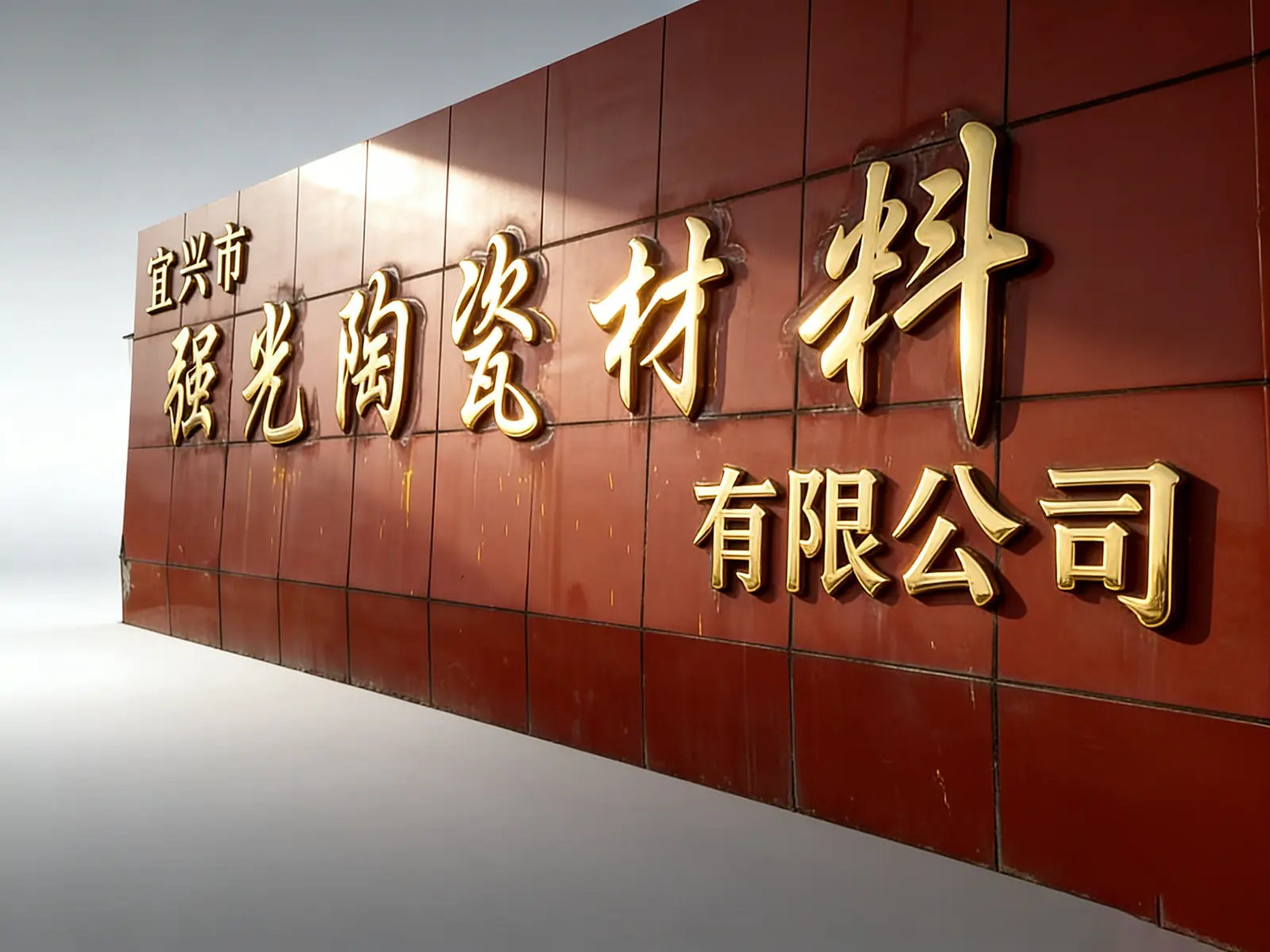
Founded in 2003, Yixing Qiangguang Ceramic Materials Co., Ltd. is a professional provider dedicated to the research and development (R&D), manufacturing, and application solutions of high-performance advanced ceramic materials. It is among the few enterprises in China that possess a complete industrial chain, covering key links from powder forming, sintering and precision machining to the provision of integrated application solutions.
The company is also a rare domestic manufacturer engaged in the R&D, production, and supply of a comprehensive portfolio of ceramic materials. Its product range covers zirconia, yttria, alumina, magnesia, aluminum nitride, boron nitride, silicon nitride, silicon carbide, aluminum titanate and other key ceramic materials for industrial use.
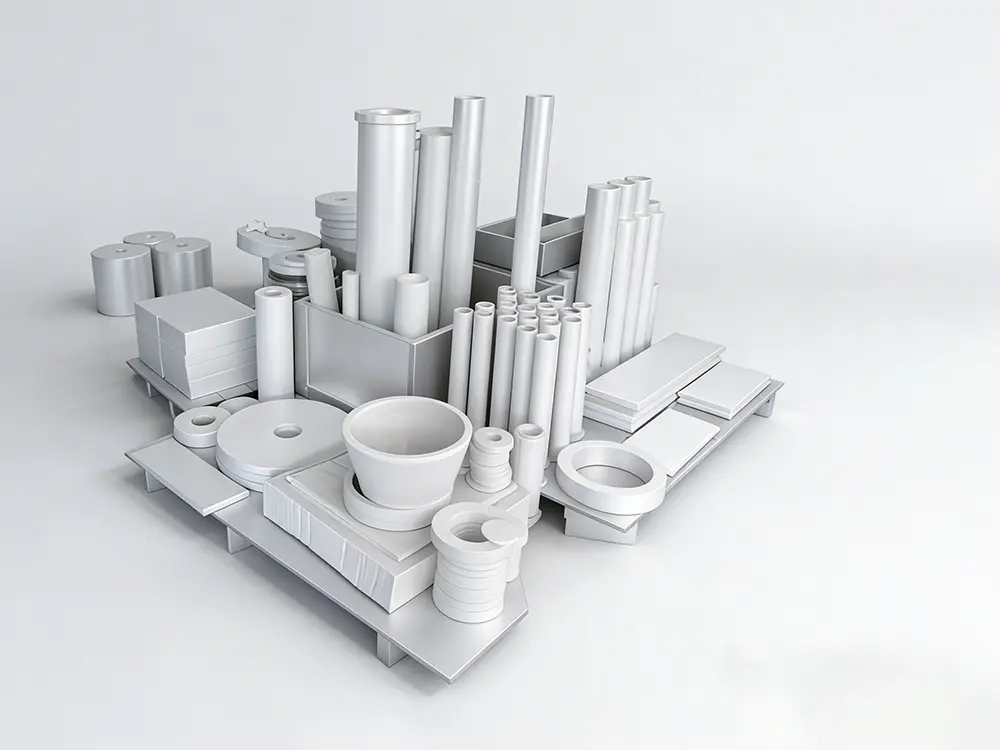
Benefiting from excellent product performance and stable quality, its products are extensively utilized in various high-end fields, such as food and medical industries, new energy vehicles, laser semiconductors, petrochemical engineering, powder metallurgy, national defense and military, as well as aerospace sectors.
Adhering to the core principle of "creating value for customers", Qiangguang provides customized and cost-efficient advanced ceramic solutions tailored to the specific demands of different customers. It is supported by high-quality after-sales services and a strict full-process tracking system, which effectively enhances cooperation efficiency and promotes continuous quality improvement.
At present, the company's products are sold well across the country and exported to Italy, the United Kingdom, Australia, Japan, Malaysia, Thailand, Hungary and other countries and regions. Committed to delivering high-quality products at reasonable prices, Qiangguang sincerely looks forward to establishing long-term and stable cooperative relations with global partners.
Analyzing the structural supply chain, technological scalability, and cost efficiency of leading Chinese technical ceramic clusters.
Leading Chinese ceramic hubs (such as Yixing, Jiangsu) maintain complete supply chains—from high-purity chemical precipitation powder processing to green body forming, high-temperature firing, and 5-axis CNC diamond grinding. This eliminates intermediary markups and guarantees rigorous quality control at each production phase.
Chinese factories utilize advanced shaping methodologies tailored to complex component geometries: Cold Isostatic Pressing (CIP) for structural density uniformity, Tape Casting for ultra-thin substrate sheets, and Low-Pressure Injection Molding (LPIM) for intricate 3D shapes.
Post-sintering shrinkage management is critical. Advanced Chinese facilities utilize high-speed diamond grinding wheels, ultrasonic machining, and laser drilling to achieve micro-tolerances down to ±0.001 mm and optical mirror finishes (Ra < 0.01 μm).
The sintering step converts compacted ceramic powder into a dense, solid crystalline structure. China’s leading ceramic suppliers leverage multi-atmosphere kilns including:
How technical alumina ceramic properties solve catastrophic engineering challenges across mission-critical sectors.
In plasma etch chambers and photolithography stages, 99.9% high-purity alumina is essential for wafer end-effectors, electrostatic chucks (ESC), dielectric windows, and high-frequency RF insulators due to its erosion resistance against aggressive fluorine/chlorine plasma environments.
Alumina powders serve as critical ceramic coatings on lithium-ion battery separators, drastically elevating melt-integrity temperatures up to 200°C to prevent short circuits. Additionally, high-alumina ceramic seals protect EV high-voltage DC contactors during high-current arc extinguishing.
Biocompatible high-purity alumina offers exceptional tribological properties (low friction coefficient) and zero ion leaching, making it ideal for medical metering pumps, ceramic joint implants, dental frameworks, and surgical cutting instruments.
Utilized in missile radomes, rocket engine thermal barrier components, and high-velocity armor plating. Alumina’s high modulus-to-weight ratio allows components to withstand severe mechanical shocks and aerodynamic drag heat.
In sandblasting nozzles, hydrocyclone linings, mud pump liners, and chemical slurry valves, alumina components outlast traditional tool steels and tungsten carbide alloys by 5 to 10 times in abrasive or acidic operating media.
Navigating technical specifications, quality assurance protocols, and next-generation ceramic manufacturing developments.
When issuing a Request for Quotation (RFQ) to Chinese factories for wholesale alumina products, technical purchasing managers should clearly define the following key criteria to prevent quality discrepancies:
The global advanced ceramics market is expected to surpass USD 15 Billion by 2030, driven by significant technological innovations:
1. Additive Manufacturing (3D Ceramic Printing): Stereolithography (SLA) and Direct Ink Writing (DIW) are revolutionizing alumina component fabrication, enabling complex internal cooling channels and lattice structures impossible with conventional molding.
2. Nanostructured Alumina Composites: Incorporating carbon nanotubes (CNTs) or zirconia phase transformation toughening (ZTA) to boost fracture toughness beyond 8 MPa·m1/2 while retaining alumina's cost benefits.
3. Carbon-Neutral & Sustainable Sintering: Chinese state-of-the-art factories are transitioning to hydrogen-fueled and fully electrified continuous kilns, dramatically reducing carbon intensity per kilogram of produced technical ceramics.
Expert answers regarding technical performance, material comparison, and custom purchasing workflows.
Alumina offers higher hardness (Mohs 9 vs. Zirconia Mohs 8.5), higher thermal conductivity (~30 W/m·K vs. Zirconia ~2.5 W/m·K), and lower material cost. However, Zirconia provides significantly superior flexural strength (>900 MPa) and fracture toughness due to its stress-induced phase transformation capability.
Standard prototyping cycles range between 2 to 3 weeks for green machining and sintering. For complex parts requiring specialized mold steel or 5-axis diamond finishing, lead times are typically 4 to 6 weeks. Fast-track prototyping options are available for urgent evaluation.
Yes, alumina components (specifically 95% and 99% grades) are routinely metallized using the Moly-Manganese (Mo-Mn) process or Active Metal Brazing (AMB). This enables strong hermetic bonding to metals such as Kovar, copper, or stainless steel for vacuum feedthroughs and power semiconductor packages.
While alumina retains excellent electrical insulation up to 1000°C, its dielectric breakdown strength decreases as temperature rises due to thermal excitation of charge carriers. Higher purity grades (99.5%+ Al₂O₃) experience much less degradation and are recommended for high-voltage, high-temperature applications above 500°C.
Global enterprises should verify ISO 9001:2015 quality management systems, ISO 14001 environmental standards, and compliance with international regulations such as RoHS and REACH. For medical-grade applications, ISO 13485 certification is required.
Direct wholesale access to specialized zirconia, magnesium-stabilized powders, and aluminum titanate ceramics from Yixing Qiangguang facilities.