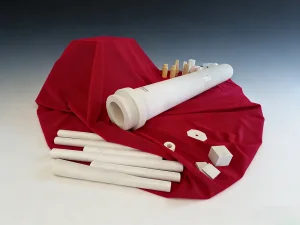
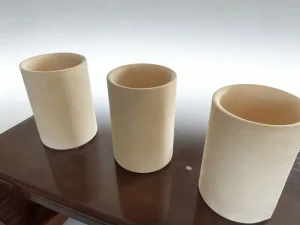
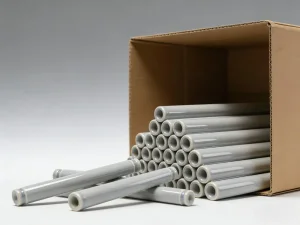
Explore our premium grade calcium-stabilized zirconia, YSZ, alumina, and magnesium oxide industrial ceramic components engineered for extreme thermal environments.
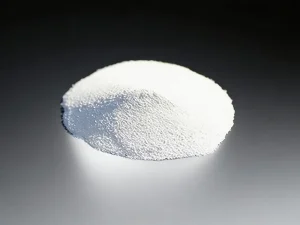

In modern high-temperature industrial engineering, selecting materials capable of withstanding extreme thermal environments without structural degradation, phase transformation, or creep failure is paramount. The metric known as "Ceramic Max Temperature" defines the operational thermal boundary at which an advanced ceramic material retains its mechanical integrity, dielectric strength, and chemical inertia.
Whether deploying refractory linings in molten metal processing, thermal barrier coatings (TBCs) in aerospace gas turbines, or electrostatic chucks (ESC) in semiconductor plasma chambers, identifying a verified wholesale ceramic max temperature supplier and factory is a critical step in avoiding catastrophic system failure and maximizing process ROI.
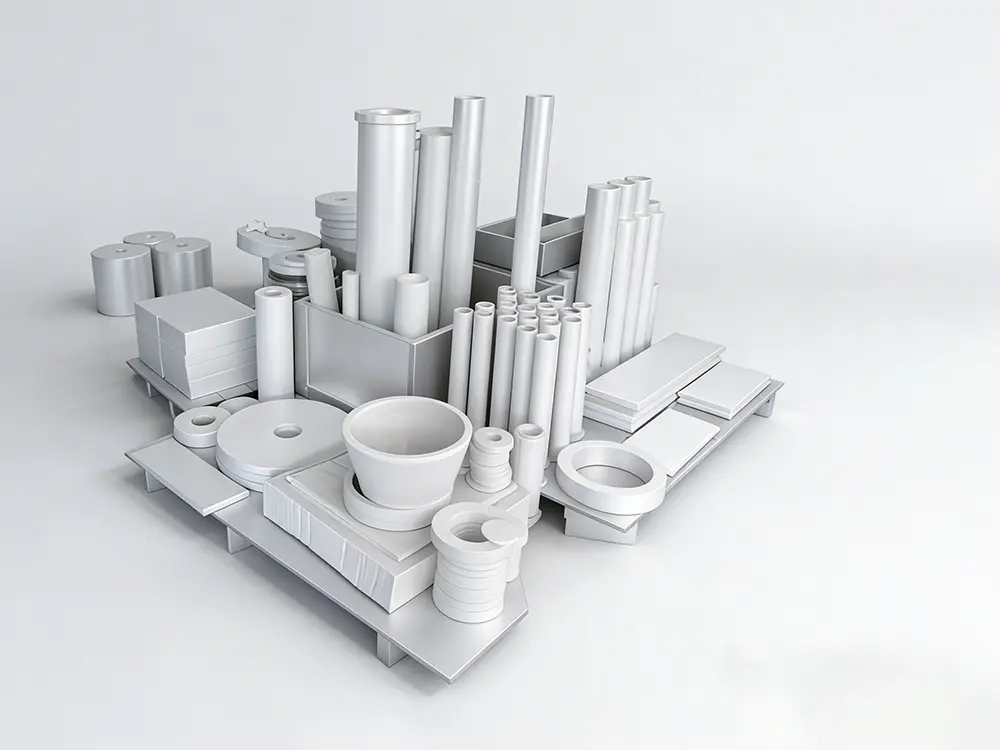
Founded in 2003, Yixing Qiangguang Ceramic Materials Co., Ltd. is a professional pioneer dedicated to the research and development (R&D), advanced manufacturing, and full-spectrum application engineering of high-performance technical ceramics. We stand as one of the elite manufacturing enterprises in China that possess a completely vertically integrated industrial chain.
Our infrastructure covers every essential link in modern material synthesis: from ultrafine raw powder chemical preparation and spray drying, to cold isostatic pressing (CIP), high-temperature sintering in gas-fired and electric kilns, and multi-axis diamond precision machining.
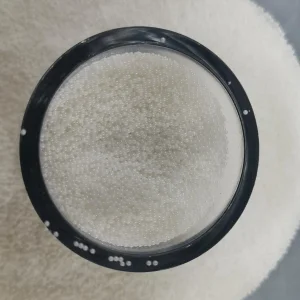
Our complete material portfolio includes: Yttria-Stabilized Zirconia (YSZ), Calcium-Stabilized Zirconia, High-Purity Alumina (Al₂O₃), Magnesium Oxide (MgO), Aluminum Nitride (AlN), Boron Nitride (BN), Silicon Nitride (Si₃N₄), Silicon Carbide (SiC), and Aluminum Titanate (Al₂TiO₅).
Engineering breakdown of primary industrial ceramic materials, detailing maximum service temperatures, thermal conductivity, coefficient of thermal expansion (CTE), and primary applications.
| Ceramic Material Type | Max Temp (Continuous) | Max Temp (Peak / Inert) | Thermal Shock (ΔT) | Thermal Conductivity | Primary Industrial Utility |
|---|---|---|---|---|---|
| Magnesium Oxide (MgO) | 2200°C | 2400°C | Moderate | 30-40 W/m·K | Molten metal crucibles, heating elements, nuclear fuel processing |
| Calcium-Stabilized Zirconia | 2000°C | 2200°C | High | 2.0-2.5 W/m·K | Refractory nozzles, continuous casting, induction furnaces |
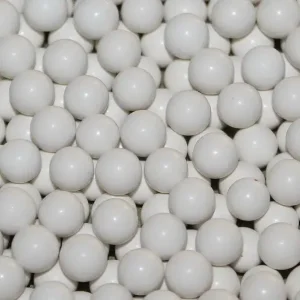
| Yttria-Stabilized Zirconia (YSZ) | 1500°C | 1700°C | Very High | 2.2-3.0 W/m·K | Thermal barrier coatings, structural wear components, SOFCs |
| High-Purity Alumina (99.8% Al₂O₃) | 1650°C | 1800°C | Moderate | 30 W/m·K | Furnace tubes, semiconductor substrate, high-voltage insulators |
| Silicon Nitride (Si₃N₄) | 1400°C | 1600°C | Exceptional | 20-30 W/m·K | Gas turbine blades, EV bearings, molten aluminum handling |
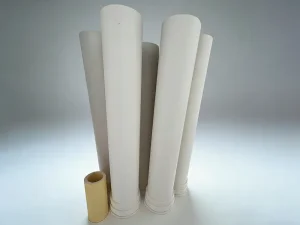
| Aluminum Titanate (Al₂TiO₅) | 1350°C | 1500°C | Ultra High (Near Zero CTE) | 1.5 W/m·K | Low-pressure die casting riser tubes, thermal insulation inserts |
| Boron Nitride (Hexagonal BN) | 900°C (Air) | 2000°C (Inert) | Exceptional | 60-120 W/m·K | High-temperature lubricants, vacuum furnace heat shields |
Why different ceramic compositions perform uniquely under extreme heat and thermal stress.
Pure zirconia undergoes destructive phase transitions from monoclinic to tetragonal and cubic during thermal cycles, leading to volumetric expansion and catastrophic cracking. By alloying with Calcia (CaO) or Yttria (Y₂O₃), Qiangguang locks the crystal structure into cubic/tetragonal phases, maintaining physical integrity at temperatures exceeding 2000°C.
Under continuous high thermal exposure, grain boundary sliding causes material creep. Our ultra-pure powder synthesis minimizes glass-phase impurities at grain boundaries, dramatically lowering creep rates in Alumina and Silicon Nitride components subjected to persistent structural loads at 1400°C+.
Aluminum Titanate (Al₂TiO₅) exhibits an extraordinarily low, near-zero CTE (α ≈ 1.5 × 10⁻⁶/K). Micro-cracking within its crystal lattice absorbs thermal shock, making it the premier choice for non-ferrous foundry molten aluminum dosing and riser tubes operating up to 1350°C.
How Yixing Qiangguang's centralized industrial ecosystem empowers global OEM/ODM procurement.
China holds over 70% of global rare-earth and zirconium mineral supply chains. We source ultra-purity raw powders locally, guaranteeing price stability and uninterrupted supply.
From custom powder formulation and spray drying to cold isostatic pressing and micron-level CNC grinding, every step is managed in-house for zero defect rates.
Advanced automation and high-capacity sintering kilns deliver superior material properties at 30-45% lower total cost of ownership compared to European or US suppliers.
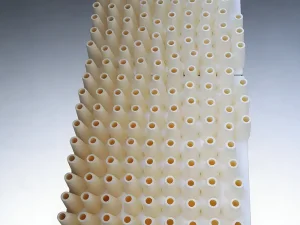
Fast CAD-to-prototype cycles. Complex geometry forming including internal threads, micro-hole arrays, and large-format structural plates customized within 14 business days.
Key technological shifts reshaping high-temperature material engineering across global industries.
Demand for hypersonic flight, atmospheric re-entry vehicles, and rocket propulsion systems has escalated interest in UHTCs capable of exceeding 2200°C without melting. Qiangguang is actively developing specialized Boron Nitride and Zirconia composites for thermal shield protection.
Sub-nanometer chip fabrication requires extreme thermal precision inside plasma etching and chemical vapor deposition (CVD) chambers. High-purity Alumina and Silicon Nitride electrostatic chucks (ESC) ensure thermal stability up to 1200°C under corrosive gas plasma.
Solid Oxide Fuel Cells (SOFC) and high-temperature electrolysis units rely on Yttria-Stabilized Zirconia (YSZ) as an oxygen-ion conducting electrolyte operating continuously between 800°C and 1000°C with exceptional structural reliability.
From heavy metallurgy to high-tech medical and laser equipment, our ceramics deliver operational confidence under extreme heat.
Magnesium Oxide and Calcia-Stabilized Zirconia crucibles, pouring nozzles, and thermal sensors resist attack by aggressive slags and molten metals at 1800°C to 2200°C.
Alumina and Silicon Nitride ceramic components serve as electrical insulators, laser cavity reflectors, and wafer handling arms operating under extreme laser radiation and thermal gradients.
Thermal barrier ceramic coatings, turbine shrouds, and radomes engineered from YSZ and Silicon Nitride withstand extreme supersonic heat cycles and harsh atmospheric abrasion.
Silicon Nitride rolling elements and ceramic substrates provide electrical isolation and high-speed thermal resilience inside next-generation 800V EV traction motors.
Refractory saggers, setter plates, and kiln furniture constructed from high-purity Alumina and Zirconia withstand thousands of continuous sintering cycles up to 1750°C.
Bio-inert YSZ ceramics and ultra-smooth alumina dispensing plungers deliver zero contamination, wear resistance, and steam sterilization endurance up to 500°C.
Adhering to our core principle of "Creating Value for Customers," Qiangguang exports premium ceramics worldwide.
Qiangguang's engineered components are exported to major industrial economies including Italy, the United Kingdom, Australia, Japan, Malaysia, Thailand, Hungary, and across North America and Europe.
Our dedicated international business division handles export compliance, customs documentation, tailored protective packaging (vacuum-sealed anti-vibration crating), and flexible DDP/FOB/CIF shipping logistics to guarantee safe global delivery.
Expert answers to critical thermal engineering and material procurement questions.
Ultra-High Temperature Ceramics (UHTCs) like Hafnium Carbide (HfC) and Tantalum Carbide (TaC) possess melting points exceeding 3900°C. For industrial wholesale ceramics, Magnesium Oxide (MgO) withstands up to 2400°C, while Calcia-Stabilized Zirconia operates reliably up to 2200°C in thermal refractoriness.
Continuous max temperature refers to the limit at which a ceramic maintains its structural, thermal, and chemical integrity indefinitely. Short-term peak temperature represents the maximum thermal surge a component can survive without immediate structural failure or phase transition.
Calcia-Stabilized Zirconia retains superior phase stability and resistance to destabilization at temperatures above 1600°C up to 2200°C, whereas Yttria-Stabilized Zirconia (YSZ) may undergo grain growth and phase transformation during prolonged exposure above 1500°C.
High continuous temperature tolerance does not automatically mean high thermal shock resistance. Materials like Silicon Nitride and Aluminum Titanate excel under rapid temperature fluctuations (ΔT), preventing micro-fractures caused by abrupt thermal expansion.
Yes. Our factory operates precision CNC diamond grinding equipment capable of achieving dimensional tolerances as tight as ±0.002mm and surface finishes down to Ra 0.05μm on fully sintered ceramic parts.
We execute strict full-process tracking, starting with raw material chemical composition analysis (ICP-OES), crystal phase confirmation (XRD), density testing (Archimedes method), and 100% CMM visual and dimensional inspections.
Direct wholesale catalog from Yixing Qiangguang Ceramic Materials Co., Ltd.