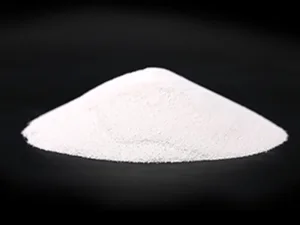
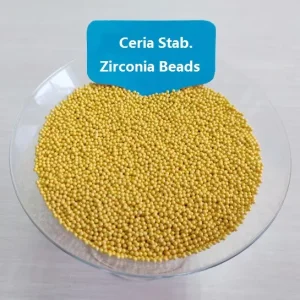
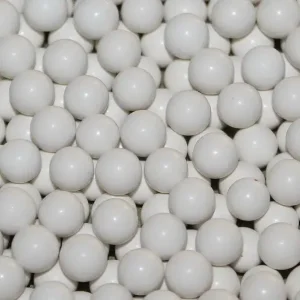
Explore our high-performance structural powders, stabilized zirconia media, and precision technical ceramic components engineered for demanding industrial dispersion, thermal management, and extreme wear environments.
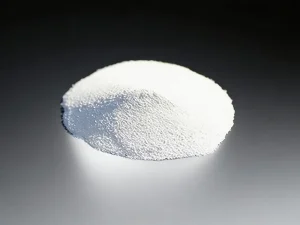
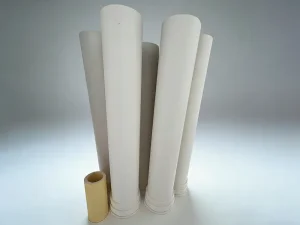
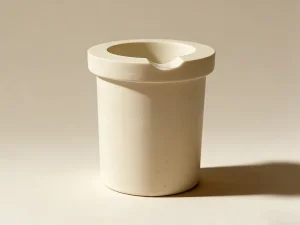
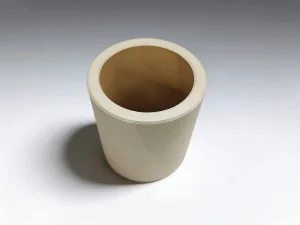
Navigating the paradigm shift from traditional silicates to structural, functional, and ultra-high-temperature technical ceramics across global advanced manufacturing supply chains.
The modern industrial sector is undergoing a profound material revolution. Driven by escalating demands in zero-emission transport, sub-nanometer semiconductor fabrication, extreme-environment energy generation, and biocompatible medical technologies, engineers are pushed to replace conventional metals and polymers. Technical ceramics—often termed engineering ceramics, industrial ceramics, or advanced structural ceramics—have transitioned from niche specialized compounds into indispensable pillars of modern high-tech production infrastructure.
Founded in 2003, Yixing Qiangguang Ceramic Materials Co., Ltd. stands as a premier enterprise dedicated to the research and development (R&D), precise manufacturing, and application engineering of high-performance advanced ceramic materials. Positioned at the forefront of China's ceramic innovation hub, it is among the very few domestic entities possessing a completely integrated, end-to-end industrial chain—seamlessly bridging key technical links from raw powder synthesis, spray drying, and cold isostatic forming to high-temperature sintering, ultra-precision diamond machining, and final component testing.
As a rare domestic enterprise providing a comprehensive, multi-material portfolio, Qiangguang’s production capacity spans Zirconia ($ZrO_2$), Yttria-Stabilized Zirconia (YSZ), Alumina ($Al_2O_3$), Magnesia ($MgO$), Aluminum Nitride ($AlN$), Boron Nitride ($BN$), Silicon Nitride ($Si_3N_4$), Silicon Carbide ($SiC$), and Aluminum Titanate ($Al_2TiO_5$).
Understanding the crystallographic behavior, stabilization dynamics, mechanical limits, and chemical inertness of engineered technical ceramics.
Selecting the correct ceramic material requires deep insight into the mechanical, thermal, electrical, and tribological tradeoffs of each chemical system. Pure Zirconia ($ZrO_2$), for instance, undergoes a destructive phase transition upon cooling from tetragonal to monoclinic structure, accompanied by a ~3-5% volumetric expansion that shatters monolithic bodies. To harness its extraordinary fracture toughness, phase stabilizers such as Yttrium Oxide ($Y_2O_3$), Calcium Oxide ($CaO$), Magnesium Oxide ($MgO$), or Cerium Oxide ($CeO_2$) are alloyed into the crystal lattice to yield stable Tetragonal Zirconia Polycrystals (TZP) or Partially Stabilized Zirconia (PSZ).
| Ceramic Material Type | Density ($g/cm^3$) | Flexural Strength ($MPa$) | Fracture Toughness ($MPa \cdot m^{1/2}$) | Thermal Conductivity ($W/m \cdot K$) | Max Service Temp ($^\circ C$) | Primary Industrial Utility |
|---|---|---|---|---|---|---|
| Yttria-Stabilized Zirconia (3YSZ) | 6.05 | 1000 - 1200 | 7.0 - 10.0 | 2.5 - 3.0 | 1200 | Precision grinding media, dental blanks, fuel cell electrolytes |
| Calcium-Stabilized Zirconia (CaSZ) | 5.60 | 450 - 650 | 5.5 - 6.5 | 2.0 - 2.5 | 1500 | Refractory nozzles, continuous steel casting, thermal barriers |
| Magnesia-Stabilized Zirconia (MgSZ) | 5.75 | 600 - 800 | 6.0 - 8.0 | 2.5 - 3.2 | 1400 | Thermal shock components, valve seats, molten metal handling |
| Ceria-Stabilized Zirconia (CeSZ) | 6.20 | 700 - 900 | 12.0 - 15.0 | 2.0 | 1100 | Ultra-heavy-duty wet milling beads, high-corrosion slurry pumps |
| High-Purity Alumina ($Al_2O_3$ 99.8%) | 3.92 - 3.96 | 380 - 450 | 3.5 - 4.5 | 30.0 | 1600 | Semiconductor insulating rings, wear plates, chemical nozzles |
| Magnesium Oxide Ceramics ($MgO$) | 3.58 | 200 - 300 | 2.0 - 3.0 | 40.0 - 60.0 | 2400 | High-temperature crucibles, nuclear rod insulation, heating elements |
| Silicon Nitride ($Si_3N_4$) | 3.25 | 850 - 1000 | 6.5 - 8.0 | 30.0 - 80.0 | 1400 | High-speed bearing balls, turbocharger rotors, EV power modules |
| Silicon Carbide ($SiC$) | 3.15 | 450 - 600 | 4.0 - 5.0 | 120.0 - 170.0 | 1650 | Mechanical seal rings, heat exchangers, armor plates |
YSZ ceramics utilize stress-induced transformation toughening. When a crack tip propagates through the matrix, the local stress concentration triggers a phase transformation from tetragonal ($t$) to monoclinic ($m$). The accompanying expansion exerts compressive stress on the crack, pinning it and imparting unprecedented fracture toughness ($>10 \text{ MPa}\cdot\text{m}^{1/2}$).
While YSZ excels in mechanical strength at room temperature, MgSZ and CaSZ possess microcracked microstructures that absorb sudden temperature shocks without catastrophic failure. This makes them ideal for steel mills, glass melt nozzles, and high-frequency thermal cycling environments.
The quality of technical ceramic components depends directly on feedstock chemical purity ($>99.99\%$) and particle size distribution ($D_{50} < 0.3 \mu m$). Coprecipitation chemical pathways eliminate agglomeration, ensuring uniform green density during cold isostatic pressing (CIP).
Why leading global original equipment manufacturers (OEMs) rely on Chinese ceramic processing hubs for agility, vertical integration, and cost-to-performance optimization.
The international supply chain for technical ceramics requires an intricate balance of rare-earth raw material access, power grid stability, specialized tooling capacity, and deep metallurgical engineering expertise. China has emerged as the definitive global powerhouse for technical ceramic manufacturing. By controlling raw rare-earth refining (such as Yttrium, Cerium, and Lanthanum oxides) right at the source, Chinese manufacturers eliminate international raw material tariff volatility and geopolitical supply bottlenecks.
Benefiting from excellent product performance and stable quality control systems, products from Yixing Qiangguang Ceramic Materials Co., Ltd. are extensively utilized in critical high-end sectors worldwide. These include food processing, sanitary medical devices, new energy vehicles, laser semiconductor manufacturing, petrochemical engineering, powder metallurgy, defense technology, and aerospace assemblies.
Adhering to our guiding principle of "Creating Value for Customers", Qiangguang provides fully customized, cost-efficient ceramic component designs tailored to exact engineering blueprints. Supported by an rigorous after-sales technical support network and a transparent full-process quality tracking system, we maximize operational uptime for our global trade partners.
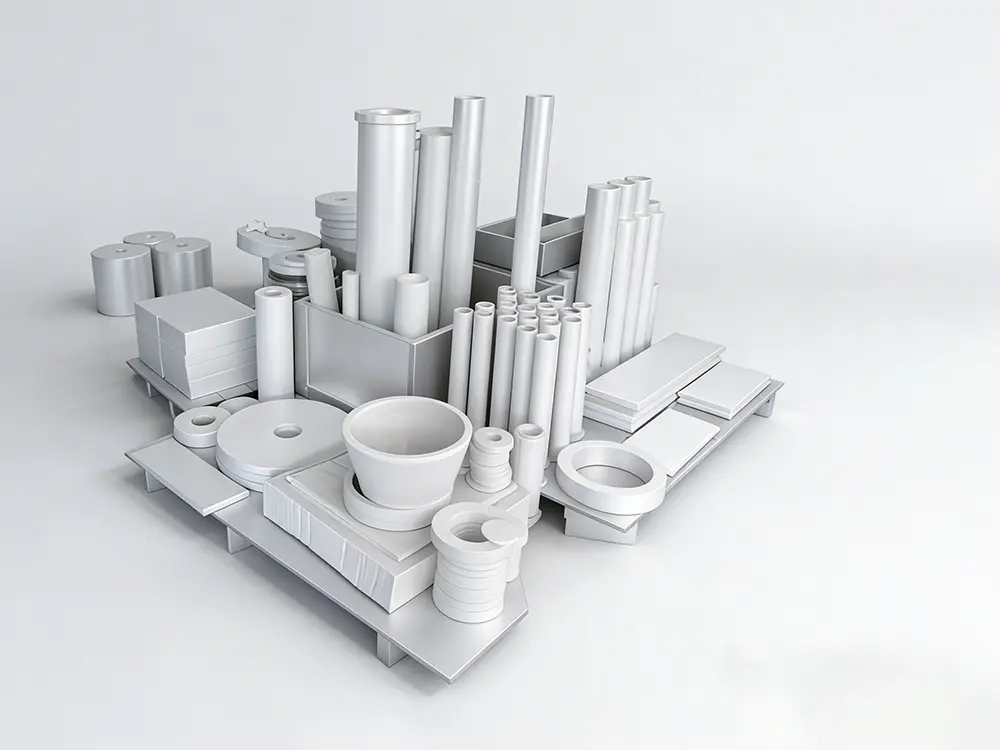
Direct access to high-purity $ZrO_2$ and $Al_2O_3$ feedstocks enables tight control over chemical dopants ($Y_2O_3, CaO, MgO$), guaranteeing batch-to-batch color, density, and grain boundary uniformity.
Post-sintering diamond grinding, ultrasonic drilling, and lap-polishing capability achieve dimensional tolerances up to $\pm 0.001\text{ mm}$ and surface roughness of $Ra < 0.01 \mu m$ for optical and semiconductor seals.
From low-volume prototype rapid tooling (5-7 business days) to high-volume multi-ton monthly container shipments, Chinese production hubs maintain unbeatable speed-to-market and total cost of ownership (TCO) metrics.
Discover how engineered ceramic supplies drive operational success across critical global and regional manufacturing sectors.
In the production of Lithium Iron Phosphate ($LiFePO_4$) and nickel-manganese-cobalt (NMC) cathode slurries, zero iron contamination is mandatory to prevent battery cell micro-short-circuits. Ultra-pure Yttria-Stabilized Zirconia (YSZ) beads (0.05mm - 0.5mm) enable nano-scale wet grinding down to $D_{90} < 100\text{ nm}$, delivering high energy density and safety for EV battery production lines in Germany, East Asia, and North America.
High-purity 3YSZ ceramics offer extreme biocompatibility, zero cytotoxicity, and radiopaque qualities. Used in dental CAD/CAM milling blocks, ceramic hip joint heads, surgical blades, and micro-fluidic pharmaceutical dosing pumps, our medical-grade ceramics meet stringent ISO 13485 requirements for European and American medical device integrators.
Wafer handling tools, plasma etch ring components, and laser insulation plates require high thermal conductivity, low dielectric loss, and immunity to fluorine/chlorine plasma erosion. High-purity Alumina ($Al_2O_3 > 99.8\%$) and Aluminum Nitride ($AlN$) components provide thermal dissipation exceeding $180 \text{ W/m}\cdot\text{K}$, essential for next-generation semiconductor fabrication plants in Japan, Taiwan, and Europe.
Offshore oil platforms and chemical processing refineries frequently encounter high-velocity abrasive slurries containing sand, acids, and high-pressure steam. Custom ceramic valve balls, seats, sleeve bushings, and mud pump liners fabricated from Magnesia-Stabilized Zirconia (MgSZ) outlast hardened steel by up to 10 to 15 times, dramatically cutting plant downtime and maintenance expenditures.
Pioneering additive manufacturing, nanostructure engineering, and AI-optimized green sintering pathways.
The future of wholesale technical ceramic manufacturing lies at the intersection of digitisation, additive fabrication, and atomic-level material manipulation. As engineered components demand complex internal cooling channels and lattice structures impossible to machine via traditional diamond tools, R&D is accelerating across three primary technological pillars:
Stereolithography (SLA) and Digital Light Processing (DLP) utilizing UV-curable ceramic slurries allow direct printing of YSZ and Alumina components with complex internal geometry. Sintered relative density exceeds 99.2%, matching traditional cold isostatic press quality.
By dispersing sub-micron Zirconia particles inside an Alumina matrix (ZTA) or vice versa (ATZ), metallurgists achieve synergistic material properties—combining Alumina's extreme hardness ($>18\text{ GPa}$) with Zirconia's high fracture toughness, eliminating moisture-induced degradation (aging).
Integrating IoT thermal sensors with AI predictive kinetics models optimizes firing thermal profiles in real-time. Microwave-assisted sintering and Spark Plasma Sintering (SPS) reduce holding times from hours to minutes, slashing factory carbon emissions by up to 40%.
Seamless international logistics, stringent quality assurance standards, and localized engineering consultation.
At present, Yixing Qiangguang Ceramic Materials Co., Ltd. maintains a robust international commercial presence. Our advanced ceramic components and grinding media products are exported nationwide and across key industrial markets, including Italy, the United Kingdom, Australia, Japan, Malaysia, Thailand, Hungary, and beyond.
Every batch of ceramic powder or finished component undergoes rigorous analytical verification: Laser Diffraction Particle Size Analysis (ISO 13320), X-Ray Fluorescence (XRF) chemical composition checks, Scanning Electron Microscopy (SEM) grain microstructure inspection, and density testing via Archimedes principle.
We provide full export documentation compliance including REACH, RoHS, FDA food-contact declarations, certificate of origin, and custom shock-proof export wood-crate packaging designed to protect brittle ceramic geometries during sea or air transit.
Committed to delivering high-quality products at reasonable direct-from-factory prices, Qiangguang warmly welcomes inquiries from international distributors, equipment OEMs, and industrial research institutions seeking long-term technical cooperation.
Expert answers to key engineering, selection, and commercial procurement questions for technical ceramics.
Answer: Choose YSZ (such as 3YSZ) when your primary requirements are ultra-high mechanical strength (flexural strength $>1000\text{ MPa}$), high wear resistance, and fine nano-dispersion wet grinding. Choose Calcium-Stabilized Zirconia (CaSZ) when your application involves extreme thermal cycling or direct exposure to molten metals at high operating temperatures ($>1400^\circ\text{C}$), as CaSZ exhibits superior thermal shock immunity and lower raw material unit cost.
Answer: Zirconia ceramic beads feature high specific density ($\approx 6.0\text{ g/cm}^3$), which provides significantly greater kinetic impact energy during mill rotation compared to glass ($\approx 2.5\text{ g/cm}^3$). Furthermore, zirconia possesses outstanding wear resistance, preventing metal contamination in high-purity applications such as pharmaceutical slurries, battery cathode materials, and high-end automotive paints.
Answer: Through state-of-the-art CNC diamond grinding, honing, and polishing equipment, we routinely manufacture custom ceramic components to dimensional tolerances of $\pm 0.001\text{ mm}$ ($\pm 1 \mu m$), flatnesses down to $\lambda/4$, and surface finishes as fine as $Ra < 0.01 \mu m$ for mechanical seal faces and semiconductor guide pins.
Answer: Magnesium Oxide ceramics feature a rare combination of exceptional electrical insulation resistance even at elevated temperatures ($>1500^\circ\text{C}$) combined with relatively high thermal conductivity ($40-60\text{ W/m}\cdot\text{K}$). This makes $MgO$ the premier choice for electrical heating element insulation, thermocouple tubes, and nuclear reactor control rod insulations.
Answer: Rapid tooling prototyping typically requires 2 to 3 weeks, including green-body machining and sintering cycles. High-volume wholesale production runs generally ship within 4 to 6 weeks, backed by standard stock programs for widely used zirconia bead sizes and standard alumina tube profiles.
Discover additional high-purity ceramic powders, ceria-stabilized grinding media, and structural ceramic balls for industrial fluid handling and micro-dispersion.