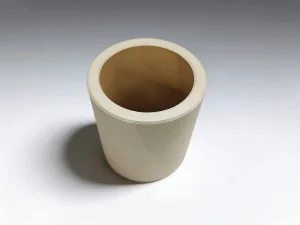
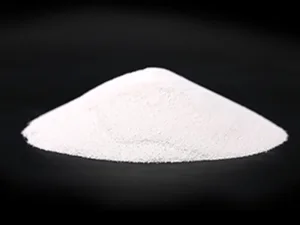
Direct factory supply of high-purity ceramic powders, precision structural beads, and engineered components for critical industrial applications.
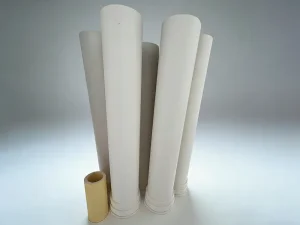

An exhaustive whitepaper review on material science advances, global procurement shifts, and critical ceramic material properties driving Industry 4.0.
The global market for advanced technical ceramics has entered a transformative era, transitioning from traditional insulating refractory components into highly specialized, structural, thermal, and electronic components essential for next-generation manufacturing. Valued at over USD 105 billion globally, the industry is driven by aggressive demand across semiconductors, electric vehicle (EV) powertrain systems, aerospace defense, renewable energy storage, and biomedical engineering.
Modern engineering demands materials capable of surviving environments where traditional superalloys and polymers experience immediate catastrophic failure. Technical ceramics—such as Yttria-Stabilized Zirconia (YSZ), Aluminum Nitride (AlN), Silicon Nitride (Si3N4), and High-Purity Alumina (Al2O3)—offer unprecedented mechanical hardness, dielectric strength, thermal stability up to 2000°C, and total chemical inertness against aggressive acids and molten metals.
Information Gain Insight: The modern supply chain no longer prioritizes simple component cost; global technical procurement teams actively evaluate structural ceramics on Total Cost of Ownership (TCO), mean time between failures (MTBF), precise grain boundary microstructures, and phase-transformation toughening characteristics.
To assist ceramic engine designers, procurement leaders, and metallurgists in material selection, the matrix below details the physical and thermal parameters of primary industrial technical ceramics:
| Ceramic Material | Density (g/cm³) | Flexural Strength (MPa) | Thermal Conductivity (W/m·K) | Max Operating Temp (°C) | Key Industrial Benchmark Application |
|---|---|---|---|---|---|
| Alumina (Al2O3 - 99.8%) | 3.92 - 3.98 | 350 - 450 | 28 - 35 | 1650 | Semiconductor Substrates, Insulators, Valve Seals |
| Yttria-Stabilized Zirconia (YSZ) | 6.05 | 900 - 1200 | 2.5 - 3.0 | 1500 | Biomedical Implants, Cutting Tools, High-Toughness Dies |
| Silicon Nitride (Si3N4) | 3.25 | 800 - 1100 | 30 - 90 | 1400 | EV Bearings, Turbocharger Rotors, Aerospace Nozzles |
| Aluminum Nitride (AlN) | 3.26 | 320 - 400 | 170 - 230 | 1300 (Inert) | Power Semiconductor Heat Sinks, LED Substrates |
| Magnesium Oxide (MgO) | 3.58 | 180 - 220 | 45 - 60 | 2300 | Thermocouple Insulation, Extreme Thermal Furnaces |
| Ceria-Stabilized Zirconia (Ce-TZP) | 6.20 | 600 - 800 | 3.0 | 1200 | Ultra-Dense Nanometer Wet Grinding Media |
How complete upstream powder formulation and precision downstream CNC machining deliver unmatched competitive value for global enterprises.
Founded in 2003, Yixing Qiangguang Ceramic Materials Co., Ltd. is a professional provider dedicated to the research and development (R&D), manufacturing, and application solutions of high-performance advanced ceramic materials. It is among the few enterprises in China that possess a complete industrial chain, covering key links from powder forming, sintering and precision machining to the provision of integrated application solutions.
The company is also a rare domestic manufacturer engaged in the R&D, production, and supply of a comprehensive portfolio of ceramic materials. Its product range covers zirconia, yttria, alumina, magnesia, aluminum nitride, boron nitride, silicon nitride, silicon carbide, aluminum titanate and other key ceramic materials for industrial use.
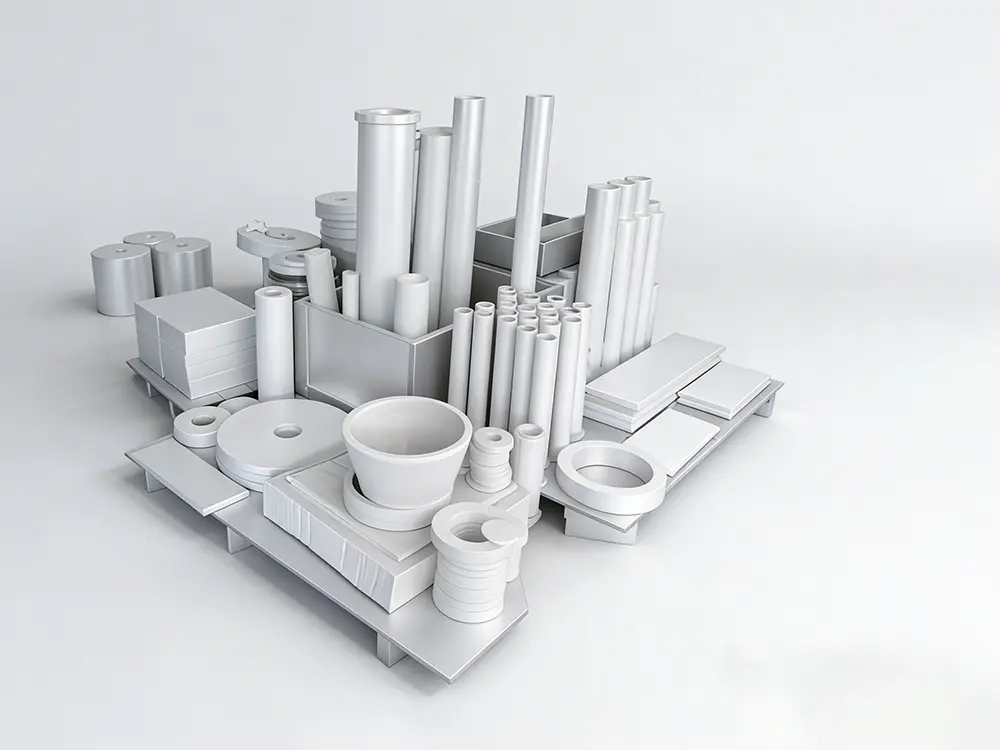
Benefiting from excellent product performance and stable quality, its products are extensively utilized in various high-end fields, such as food and medical industries, new energy vehicles, laser semiconductors, petrochemical engineering, powder metallurgy, national defense and military, as well as aerospace sectors.
Adhering to the core principle of "creating value for customers", Qiangguang provides customized and cost-efficient advanced ceramic solutions tailored to the specific demands of different customers. It is supported by high-quality after-sales services and a strict full-process tracking system, which effectively enhances cooperation efficiency and promotes continuous quality improvement.
At present, the company's products are sold well across the country and exported to Italy, the United Kingdom, Australia, Japan, Malaysia, Thailand, Hungary and other countries and regions. Committed to delivering high-quality products at reasonable prices, Qiangguang sincerely looks forward to establishing long-term and stable cooperative relations with global partners.
By controlling chemical synthesis, spray drying, cold isostatic pressing (CIP), vacuum sintering, and 5-axis diamond grinding in-house, we eliminate intermediate vendor markups and ensure rigorous batch consistency.
Our advanced ceramic toolroom enables dynamic rapid tooling and prototype turnaround within days, scaling seamlessly into high-volume automated batch sintering for global OEM clients.
Every powder batch undergoes laser diffraction particle size analysis and X-ray fluorescence (XRF), while finished structural components are inspected via coordinate measuring machines (CMM) and ultrasonic flaw detection.
In-depth analysis of structural technical ceramics engineered for severe chemical, mechanical, and thermal environments.
In plasma etching, wafer handling, and high-power laser diode encapsulation, metallic contamination or thermal distortion ruins process yields. Aluminum Nitride (AlN) substrates provide a high thermal conductivity of up to 230 W/m·K combined with an expansion coefficient matched perfectly to silicon, preventing thermal fatigue during intense cycling.
EV drive motors and high-voltage power electronics rely on Silicon Nitride (Si3N4) ceramic hybrid bearing balls and power modules. Si3N4 prevents electrical pitting caused by stray currents, resists extreme centrifugal stress at 20,000+ RPM, and drastically reduces rotational friction compared to chrome steel.
Hypersonic propulsion, rocket nozzle throats, and heavy armor demand lightweight materials capable of withstanding thermal shock and severe mechanical impact. Boron Nitride, Silicon Carbide, and structural Toughened Zirconia maintain structural integrity under high-velocity particle bombardment and rapid temperature spikes exceeding 1500°C.
Medical implantology relies on Yttria-Stabilized Zirconia (YSZ) and high-purity alumina for artificial joint replacement and dental frameworks. With zero ion leaching, high bio-inertness, and outstanding fracture toughness (K1c > 7 MPa·m½), YSZ eliminates allergic reactions and ensures multi-decade wear resistance.
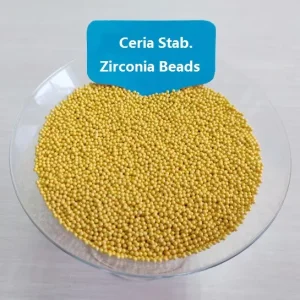
Industrial pumps, slurry valves, and downhole drilling bits encounter severe abrasion and corrosive media. Ceria-Stabilized Zirconia Beads and Magnesium Oxide Ceramics resist degradation from concentrated acids, alkali fluids, and abrasive quartz sand, extending equipment operational lifecycles up to 10-fold.
High-temperature vacuum furnaces require crucibles, setter plates, and heating element supports that will not react with molten metals or deform under creep stress. High-Purity Alumina and Aluminum Titanate provide low thermal expansion, non-wetting properties, and exceptional furnace longevity.
A structured technical roadmap for procurement officers, quality assurance engineers, and OEM supply management leaders.
Procuring wholesale technical ceramics requires rigorous verification of crystal phase purity. For instance, in Zirconia powders, ensuring the correct ratio of tetragonal phase retention (via 3mol% Y2O3 or CeO2 stabilization) is essential to unlock stress-induced transformation toughening. Incomplete phase stabilization leads to premature micro-cracking during thermal cycling.
Post-sintering diamond grinding, lapping, and polishing determine mechanical fatigue life. Surface roughness (Ra) down to 0.01 µm is available for micro-fluidic seals, high-voltage ceramic vacuum interrupters, and optical fiber ferrule components, minimizing friction and seal degradation.
Depending on application requirements, components are processed via:
Detailed chemical, mechanical, and industrial performance profile for our primary material lines.
Available as Yttria-Stabilized (YSZ), Ceria-Stabilized (Ce-TZP), Calcium-Stabilized (Ca-SZ), and Magnesium-Stabilized (Mg-SZ). Renowned for highest fracture toughness among ceramics, high density, low thermal conductivity, and self-healing phase characteristics.
Including Aluminum Nitride (AlN), Silicon Nitride (Si3N4), and Boron Nitride (BN). Offers phenomenal thermal dissipation, exceptional mechanical strength at high temperatures, high dielectric breakdown voltage, and excellent non-wetting properties against liquid metals.
Featuring High-Purity Alumina (Al2O3 up to 99.99%), Magnesium Oxide (MgO), Silicon Carbide (SiC), and Aluminum Titanate. Provides cost-effective mechanical hardness, extreme chemical inertness, high thermal shock resistance, and long-term electrical insulation.
Key technical shifts driving the next decade of advanced ceramic engineering and manufacturing.
Stereolithography (SLA) and Direct Ink Writing (DIW) for technical ceramics are revolutionizing custom component manufacturing. Complex internal cooling channels for gas turbine nozzles and lightweight lattice structures can now be 3D printed with YSZ or Alumina powders without expensive diamond tooling.
With hypersonic flight and next-generation nuclear fusion reactors advancing rapidly, demand for UHTCs like Silicon Carbide and Boron Nitride composites capable of exceeding 2200°C without oxidizing or melting is accelerating worldwide.
Clear answers to critical technical questions regarding material selection, custom tolerances, manufacturing lead times, and global shipping.
Explore our full range of raw ceramic powders, precision plates, grinding media, and structural thermal components.