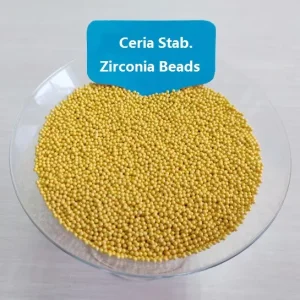
Engineered with extreme purity, ultra-high thermal shock resistance, and zero-contamination tolerances for modern plastic processing machinery.
The global plastics and polymers processing industry is undergoing a monumental shift toward high-precision, energy-efficient, and severe-duty manufacturing. Standard tool steel, bi-metallic alloys, and traditional metallic coatings no longer suffice for modern high-performance injection molding machines operating under corrosive polymer melt chemistry, abrasive filler materials (such as 50%+ glass fiber reinforcement), and ultra-high processing temperatures reaching beyond 400°C.
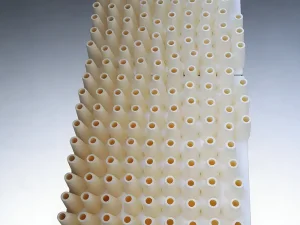
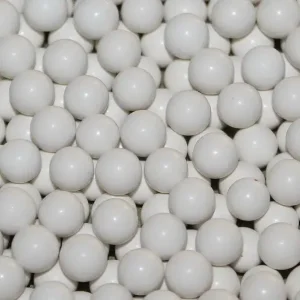
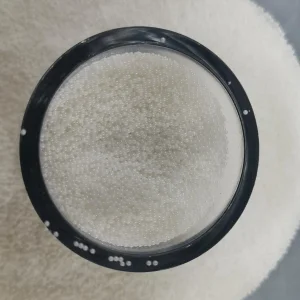
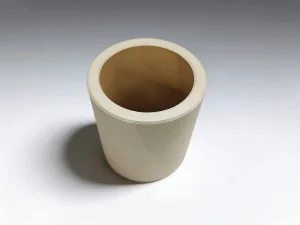
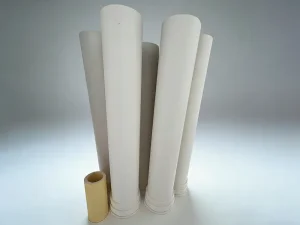
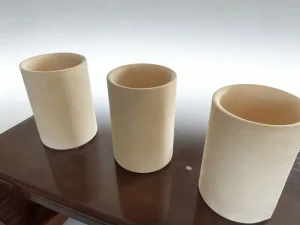
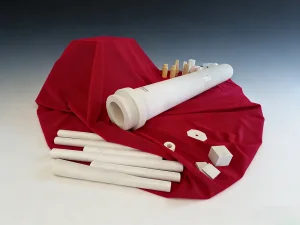
As premier Wholesale Injection Machine Parts Manufacturers & Suppliers, specialized ceramic technical component producers are replacing traditional alloy steel components—such as injection nozzles, check valve rings, screw tips, barrel liners, thermal insulators, and ceramic grinding/dispersion media—with engineering ceramics including Yttria-Stabilized Zirconia (YSZ), Magnesium-Stabilized Zirconia (MSZ), Alumina (Al2O3), Silicon Nitride (Si3N4), and Aluminium Titanate (Al2TiO5).
Why Tier-1 original equipment manufacturers (OEMs) and plastic injection molding facilities worldwide are restructuring their global component supply chains.
Engineering plastics infused with flame retardants, halogen-free additives, and carbon/glass fibers generate extreme abrasive friction and chemical corrosion. Ceramic injection components guarantee chemical inertness to acidic gases (e.g., released by PVC or Fluoropolymers) and zero structural erosion.
Advanced ceramics like Aluminum Nitride and Aluminium Titanate provide extraordinary thermal conductivity or precision thermal insulation depending on application requirements. Using ceramic thermal barrier components drastically reduces machine warm-up cycles and heat loss.
Frequent downtime for replacing worn metallic screws, nozzles, and check valve rings incurs catastrophic operational expenditure. Advanced ceramic injection machine parts provide up to 10x longer service lives, dramatically lowering Total Cost of Ownership (TCO).
China’s industrial advanced ceramics sector has evolved into an irreplaceable global hub for technical ceramic component fabrication. Through end-to-end integration—spanning raw mineral refining, nano-powder synthesis, cold isostatic pressing (CIP), high-temperature sintering, and CNC diamond-lap grinding—Chinese manufacturers deliver unrivaled economic and technical value.
Industrial Technical Ceramics vs Standard Tool Steel
| Material Property | Tool Steel (D2/CPM) | Alumina (Al2O3) | Zirconia (ZrO2) |
|---|---|---|---|
| Hardness (HV) | 700 - 800 HV | 1,500 - 1,800 HV | 1,200 - 1,400 HV |
| Flexural Strength | High | 350 MPa | 1,000 - 1,200 MPa |
| Corrosion Resistance | Moderate | Extreme (Acid/Base) | Extreme (Acid/Base) |
| Thermal Expansion | High (11-13 ×10⁻⁶/K) | Medium (8 ×10⁻⁶/K) | Low (10.5 ×10⁻⁶/K) |
Decades of dedicated research, vertical integration, and world-class quality assurance for global industrial partners.
Founded in 2003, Yixing Qiangguang Ceramic Materials Co., Ltd. is a professional provider dedicated to the research and development (R&D), manufacturing, and application solutions of high-performance advanced ceramic materials. It is among the few enterprises in China that possess a complete industrial chain, covering key links from powder forming, sintering and precision machining to the provision of integrated application solutions.
The company is also a rare domestic manufacturer engaged in the R&D, production, and supply of a comprehensive portfolio of ceramic materials. Its product range covers zirconia, yttria, alumina, magnesia, aluminum nitride, boron nitride, silicon nitride, silicon carbide, aluminum titanate and other key ceramic materials for industrial use.
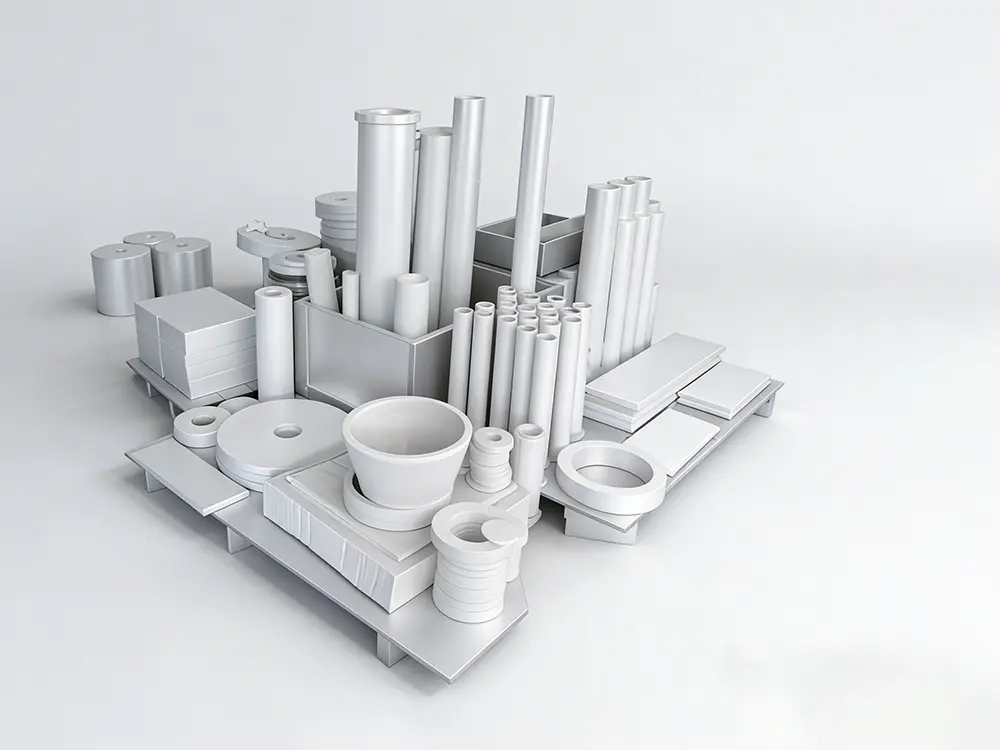
Benefiting from excellent product performance and stable quality, its products are extensively utilized in various high-end fields, such as food and medical industries, new energy vehicles, laser semiconductors, petrochemical engineering, powder metallurgy, national defense and military, as well as aerospace sectors.
Adhering to the core principle of "creating value for customers", Qiangguang provides customized and cost-efficient advanced ceramic solutions tailored to the specific demands of different customers. It is supported by high-quality after-sales services and a strict full-process tracking system, which effectively enhances cooperation efficiency and promotes continuous quality improvement.
At present, the company's products are sold well across the country and exported to Italy, the United Kingdom, Australia, Japan, Malaysia, Thailand, Hungary and other countries and regions. Committed to delivering high-quality products at reasonable prices, Qiangguang sincerely looks forward to establishing long-term and stable cooperative relations with global partners.
Tailor-made ceramic material configurations designed for high-stress industrial environments.
In medical-grade injection molding (syringes, implants, bio-fluid valves), metallic contamination from standard screw tip shear is intolerable. High-purity Yttria-Stabilized Zirconia (YSZ) and Alumina components eliminate particulate flaking and ensure 100% biocompatibility compliance.
Manufacturing high-voltage connectors and battery module enclosures requires PEEK, PPS, and LCP filled with high percentages of glass fibers. Ceria and Magnesium Stabilized Zirconia parts withstand severe abrasive sliding friction inside injection nozzles and barrels.
Optical grade PMMA/PC molding demands flawless surface finishes. Silicon Nitride (Si3N4) pin tips and micro-shut-off nozzles polished to sub-nanometer Ra micro-smoothness prevent plastic drooling and maintain pristine resin purity.
Expert answers to common engineering, procurement, and structural material selection inquiries.
Zirconia ceramics offer a unique combination of extremely high fracture toughness (up to 8-10 MPa·m1/2) and extreme hardness (over 1200 HV). Unlike bimetallic alloys which suffer from galvanic corrosion and abrasive wear under high-filler resins (e.g., 40-50% glass fiber), Zirconia components exhibit near-zero wear, maintain dimensional integrity of check valve rings, and prevent backflow leakage, keeping injection volume consistency accurate down to ±0.1%.
While Yttria-Stabilized Zirconia (YSZ) is superior at ambient to moderate temperatures, it can undergo low-temperature degradation (aging) under high-moisture steam environment between 200°C–300°C. Magnesium-Stabilized Zirconia (MSZ) exhibits superior thermal shock resistance, higher temperature thermal stability (up to 800°C+ without phase transformation), making it ideal for specialized hot-runner nozzles and severe thermal cycling injection parts.
Utilizing state-of-the-art CNC diamond grinding, ultrasonic machining, and laser measurement interferometry, we routinely achieve precision machining tolerances within ±0.001mm (1 micron), concentricity down to 0.002mm, and surface roughness as fine as Ra 0.05 μm for critical sealing and bearing surfaces.
Yes. Halogen-free flame retardants generate highly corrosive vapor byproducts during plasticization. Advanced ceramics like High-Purity Alumina (99.8%+ Al2O3) and Silicon Nitride are chemically inert across the entire pH spectrum (acidic and alkaline), completely preventing nozzle pitting, chemical degradation, and color contamination in processed parts.
For standard stock products and grinding media, orders ship within 3–7 business days. For custom OEM precision components requiring powder compaction tooling, CIP, sintering, and diamond finishing, standard lead times range between 3 to 5 weeks depending on geometry complexity and batch size.
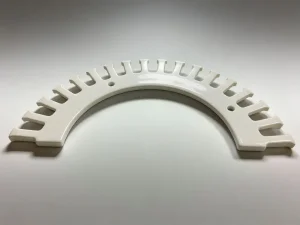
Ceramic thermal insulator plates (such as Aluminium Titanate or dense Alumina) installed between the mold and the machine platen prevent heat transfer into the hydraulic system. This minimizes mold heater band power consumption by 25%-35%, stabilizes temperature distribution within the mold cavity, and reduces hydraulic fluid oil cooling requirements.
Explore our extended industrial advanced ceramic catalog directly from China factory direct suppliers.