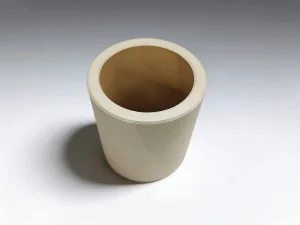
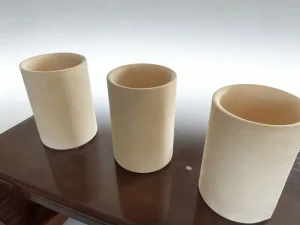
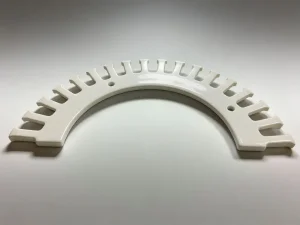
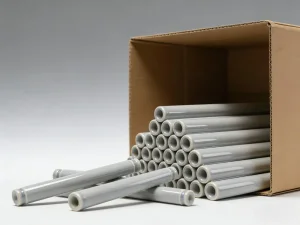
Explore our industrial-grade Zirconia, Alumina, and Stabilized Ceramic formulations engineered for extreme wear resistance, thermal isolation, and high-energy dispersion.
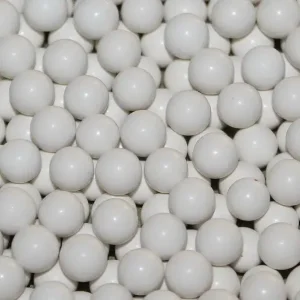
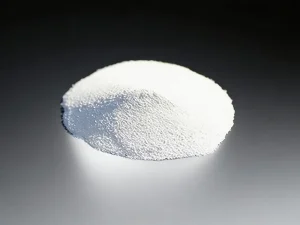
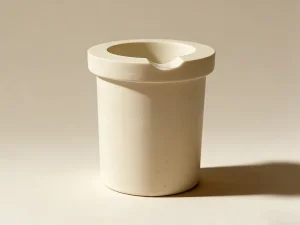
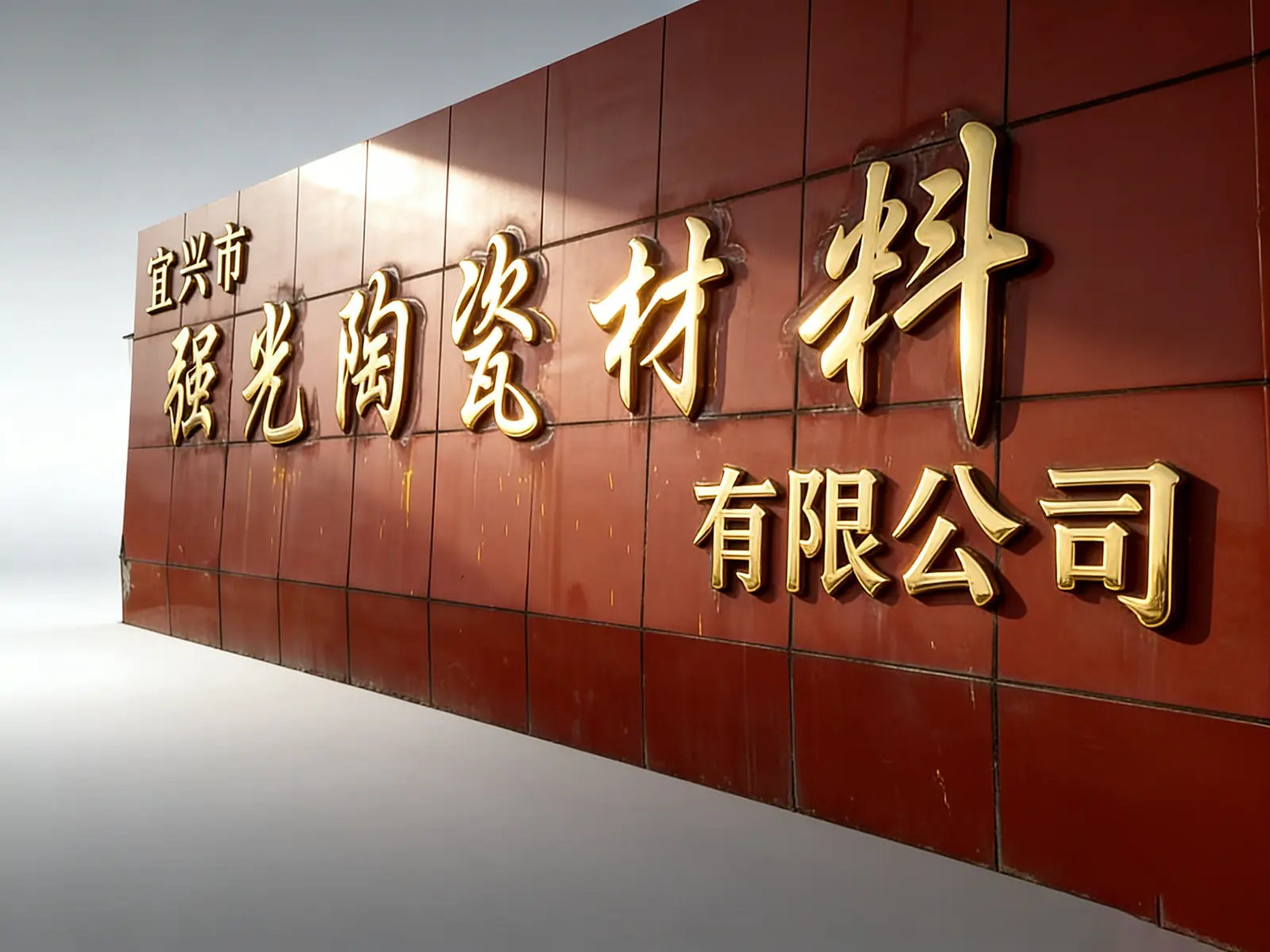
Founded in 2003, Yixing Qiangguang Ceramic Materials Co., Ltd. is a professional provider dedicated to the research and development (R&D), manufacturing, and application solutions of high-performance advanced ceramic materials. It is among the few enterprises in China that possess a complete industrial chain, covering key links from powder forming, sintering and precision machining to the provision of integrated application solutions.
The company is also a rare domestic manufacturer engaged in the R&D, production, and supply of a comprehensive portfolio of ceramic materials. Its product range covers zirconia, yttria, alumina, magnesia, aluminum nitride, boron nitride, silicon nitride, silicon carbide, aluminum titanate and other key ceramic materials for industrial use.
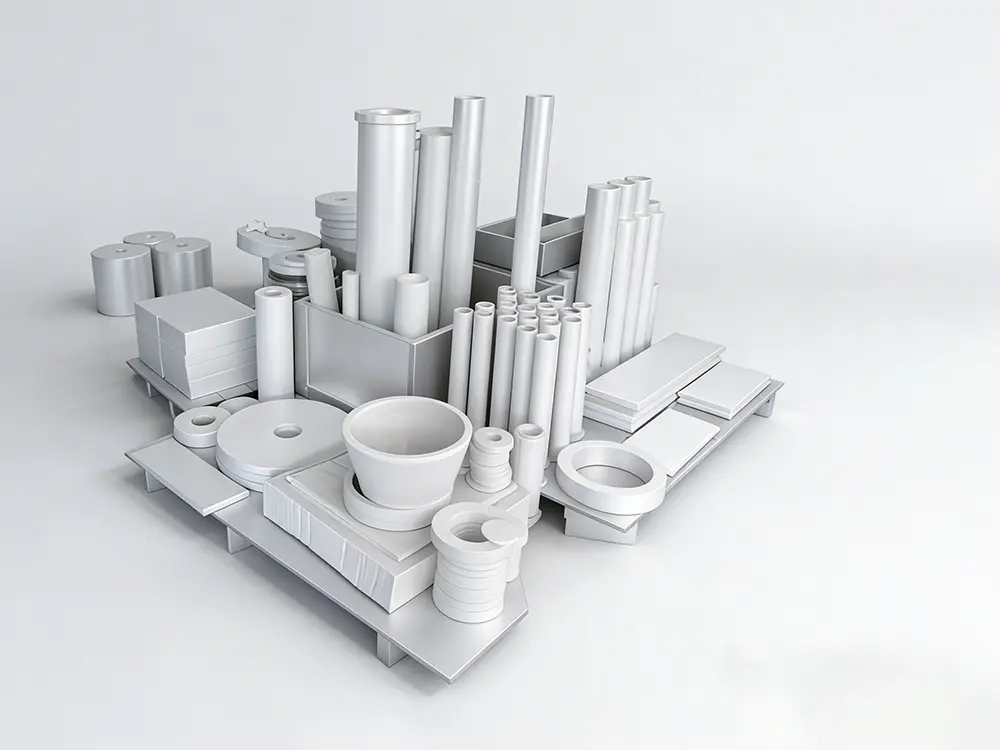
Benefiting from excellent product performance and stable quality, its products are extensively utilized in various high-end fields, such as food and medical industries, new energy vehicles, laser semiconductors, petrochemical engineering, powder metallurgy, national defense and military, as well as aerospace sectors.
Adhering to the core principle of "creating value for customers", Qiangguang provides customized and cost-efficient advanced ceramic solutions tailored to the specific demands of different customers. It is supported by high-quality after-sales services and a strict full-process tracking system, which effectively enhances cooperation efficiency and promotes continuous quality improvement.
At present, the company's products are sold well across the country and exported to Italy, the United Kingdom, Australia, Japan, Malaysia, Thailand, Hungary and other countries and regions. Committed to delivering high-quality products at reasonable prices, Qiangguang sincerely looks forward to establishing long-term and stable cooperative relations with global partners.
Understanding the stress-induced phase transformation mechanisms that transform brittle oxides into ceramic steel.
Pure Zirconia ($ZrO_2$) undergoes a disruptive phase change from tetragonal to monoclinic ($t \rightarrow m$) upon cooling past 1170°C, accompanied by a 3% to 5% volume expansion that leads to catastrophic cracking. PSZ solves this by incorporating stabilizing oxides such as MgO, CaO, or $Y_2O_3$, retaining metastable tetragonal precipitates within a cubic matrix at ambient temperatures.
Mg-PSZ consists of 8-10 mol% MgO addition, firing at high temperature followed by controlled aging to yield coherent submicron tetragonal precipitates. Mg-PSZ exhibits unmatched thermal shock resistance and superior fracture toughness in high-temperature, moisture-laden industrial environments compared to traditional ceramics.
While Y-TZP (Yttria Tetragonal Zirconia Polycrystal) offers exceptional fine-grained room-temperature bending strength, Ca-PSZ and Mg-PSZ provide exceptional resistance to low-temperature degradation (LTD) or hydrothermal aging in steam-heavy chemical production lines.
| Material Type | Density ($g/cm^3$) | Flexural Strength (MPa) | Fracture Toughness ($MPa\cdot m^{1/2}$) | Thermal Conductivity ($W/m\cdot K$) | Max Operating Temp (°C) |
|---|---|---|---|---|---|
| Mg-PSZ (Magnesia Stabilized) | 5.74 - 5.85 | 650 - 850 | 9.0 - 13.0 | 2.5 - 3.0 | 1400 |
| 3Y-TZP (Yttria Stabilized) | 6.00 - 6.08 | 900 - 1200 | 5.5 - 8.0 | 2.0 - 3.0 | 1000 |
| Ca-PSZ (Calcia Stabilized) | 5.60 - 5.75 | 500 - 700 | 7.0 - 9.5 | 2.2 - 2.8 | 1350 |
| Alumina ($Al_2O_3$, 99.5%) | 3.90 - 3.96 | 350 - 450 | 3.5 - 4.5 | 26.0 - 30.0 | 1600 |
| Silicon Nitride ($Si_3N_4$) | 3.20 - 3.30 | 750 - 950 | 6.0 - 7.5 | 20.0 - 35.0 | 1200 |
How global industries integrate PSZ components to dramatically extend service lifespan and reduce operational downtime.
In deep-well drilling and aggressive chemical metering, standard alloy components suffer from severe erosion and acid corrosion. Mg-PSZ valve balls, seats, and sleeves resist slurries, severe cavitation, and high pressures up to 20,000 PSI without structural degradation.
Due to its low thermal conductivity (under 3 W/m·K) and high coefficient of thermal expansion matching metallic substrates, PSZ is the premier material for thermal barrier coatings (TBCs) and structural insulating components in gas turbines and rocket propulsion chambers.
Y-TZP and biocompatible PSZ variants offer non-allergenic, bio-inert characteristics ideal for femoral heads in total hip replacements, dental abutments, and surgical blade inserts, benefiting from extreme fracture resistance and zero chemical leaching.
High purity aluminum nitride (AlN) and PSZ components act as critical end-effectors, wafer chucks, and insulator rings in plasma etching chambers where electrical insulation, zero thermal expansion mismatch, and plasma erosion resistance are mandatory.
Withstanding thermal shock and metallic adhesion, Mg-PSZ hot extrusion dies and wire drawing guides maintain dimensional integrity over thousands of cycles under extreme load, outperforming tungsten carbide by up to 500% in service life.
Zirconia beads (micro-milling media) engineered from PSZ deliver sub-micron grinding efficiency for lithium battery cathode slurry preparation, high-end printing inks, and pharmaceutical nano-emulsions with near-zero bead wear contamination.
From nanoscale chemical synthesis to high-precision 5-axis diamond machining: How Yixing Qiangguang executes ceramic engineering.
1. Hydrothermal Synthesis & Spray Drying: Nano-grade powders are coprecipitated with stabilizing salts (MgO, $Y_2O_3$) to ensure uniform elemental distribution. Organic binders are introduced prior to spray drying to form free-flowing spherical granules.
2. Isostatic Pressing (CIP): Cold Isostatic Pressing under hydrostatic pressures up to 250 MPa eliminates internal density gradients, yielding green bodies with uniform shrinkage characteristics during sintering.
3. Controlled Sintering & Thermal Aging: Green parts are fired in high-temperature kilns up to 1750°C. For Mg-PSZ, an exact secondary thermal treatment is executed to nucleate coherent tetragonal precipitates within the cubic matrix.
4. Diamond Grinding & CNC Machining: Ultra-hard ceramic blanks are machined using diamond-coated tooling, ultrasonic grinding, and lapping techniques to achieve tolerances down to $\pm 0.001\text{ mm}$ and surface roughness of $Ra < 0.05\ \mu\text{m}$.
Unlocking competitive procurement strategies for global industrial OEMs and wholesale distributors.
Located in Yixing, Jiangsu Province—the historical ceramic capital of China—our facility leverages an unmatched ecosystem of raw material refiners, specialized tooling manufacturers, and technical universities. This spatial concentration lowers transport overhead and accelerates component prototyping.
By executing every manufacturing phase in-house—from raw zircon sand purification to final laser metrology—Yixing Qiangguang mitigates supply bottleneck risks, ensuring stable lead times and raw material cost buffering during market volatility.
Every factory batch undergoes rigorous quality tracking. From Archimedes density testing to 3D coordinate measuring machine (CMM) verification, full batch certificates (CoA) are issued, meeting ISO 9001 and international regulatory guidelines.
Addressing engineering specifications, custom manufacturing capabilities, and wholesale procurement terms.
Discover our comprehensive inventory of Magnesium Stabilized Zirconia, Silicon Nitride, Aluminum Nitride, and Biomedical-grade Ceramics.