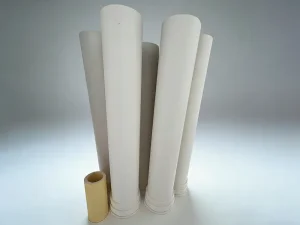
Explore direct OEM factory-grade ceramic components engineered for extreme mechanical stability, chemical inertness, and ultra-low wear rates.
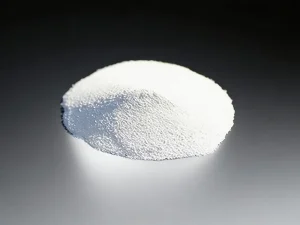
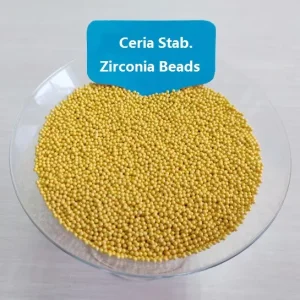
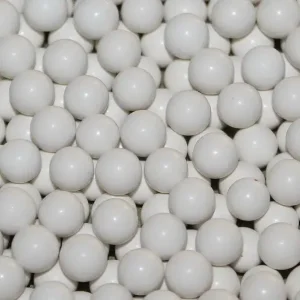
Analyzing the paradigm shift in rotating machinery: How Yttria-Stabilized Zirconia (Y-TZP) is replacing conventional chrome steel in extreme operating environments.
In modern industrial manufacturing, traditional steel bearings (such as AISI 52100 or 316 stainless steel) increasingly fail to satisfy requirements for extreme operating conditions. Factors such as corrosive liquid contact, magnetic field interference, vacuum outgassing, high thermal shocks, and non-lubricated friction environments have pushed traditional metallurgy to its physical limits.
Zirconia Ceramic Bearings (ZrO2) have emerged as the pinnacle solution across high-tech fields including semiconductor fabrication, lithium-ion battery manufacturing, aerospace guidance systems, and medical imaging devices. Unlike Silicon Nitride (Si3N4), which excels in ultra-high-speed spindle applications, Zirconia offers a unique combination of thermal expansion matching steel, superior fracture toughness (via transformation toughening), high load capacity, and absolute chemical non-reactivity.
This whitepaper provides procurement directors, mechanical design engineers, and industrial researchers with deep technical insights into sourcing directly from wholesale Zirconia ceramic bearing factories, evaluating sintering qualities, understanding phase stabilization (Y-TZP vs. Mg-PSZ vs. Ce-TZP), and optimizing operational ROI.
Backed by decades of material innovation, state-of-the-art precision powder metallurgy, and world-class quality controls.
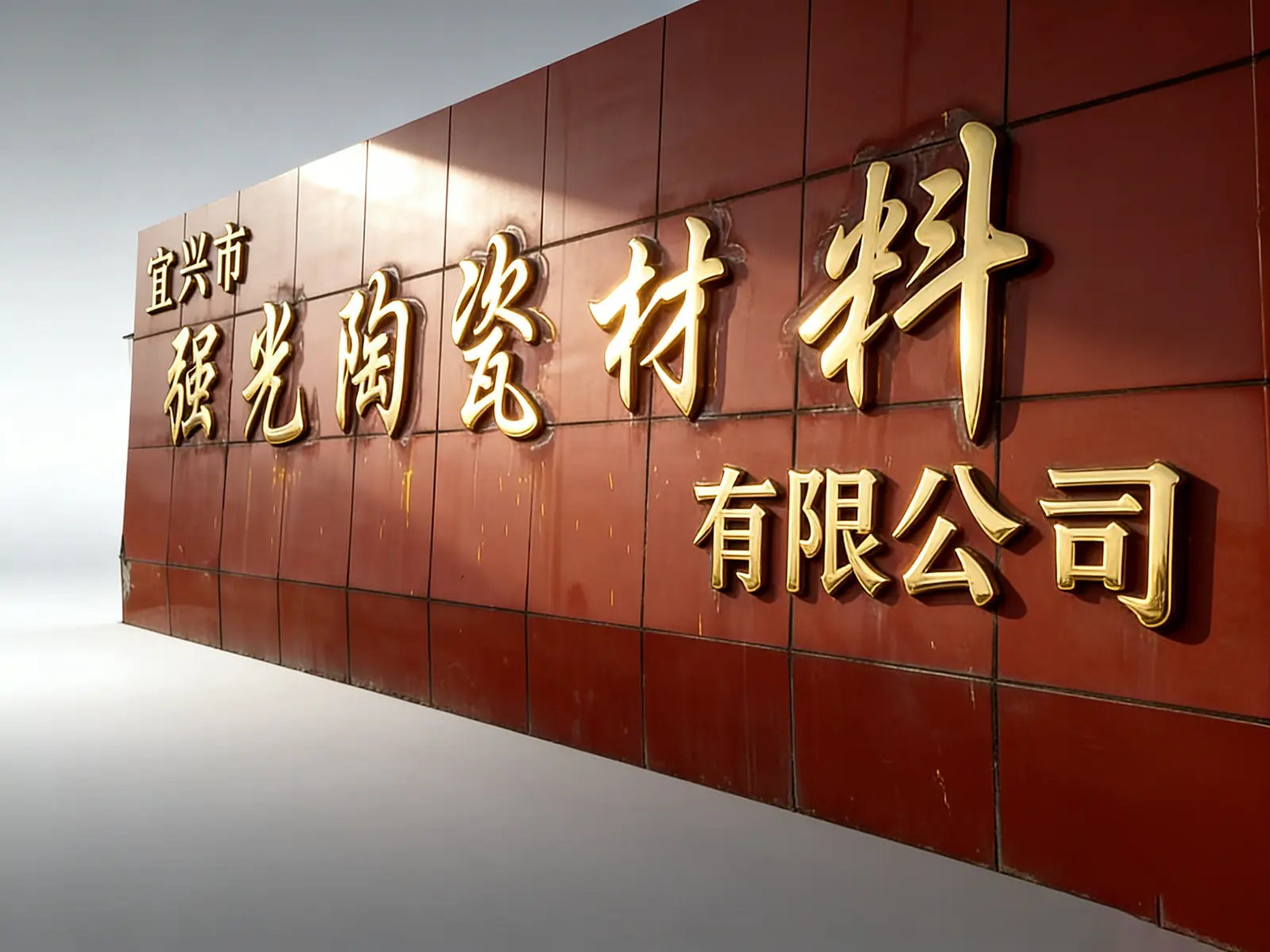
Founded in 2003, Yixing Qiangguang Ceramic Materials Co., Ltd. is a professional provider dedicated to the research and development (R&D), manufacturing, and application solutions of high-performance advanced ceramic materials. It is among the few enterprises in China that possess a complete industrial chain, covering key links from powder forming, sintering and precision machining to the provision of integrated application solutions.
The company is also a rare domestic manufacturer engaged in the R&D, production, and supply of a comprehensive portfolio of ceramic materials. Its product range covers zirconia, yttria, alumina, magnesia, aluminum nitride, boron nitride, silicon nitride, silicon carbide, aluminum titanate and other key ceramic materials for industrial use.
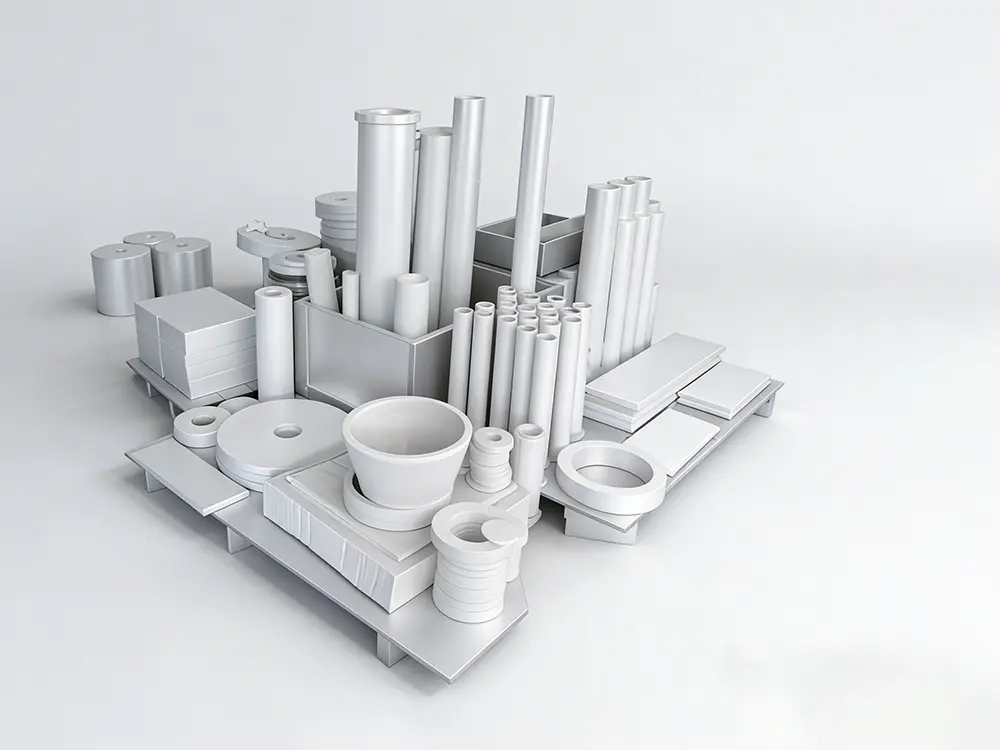
Benefiting from excellent product performance and stable quality, its products are extensively utilized in various high-end fields, such as food and medical industries, new energy vehicles, laser semiconductors, petrochemical engineering, powder metallurgy, national defense and military, as well as aerospace sectors.
Through stringent quality controls matching ISO 9001 standards, our zirconia ceramic bearing assemblies undergo sub-micron dimensional inspection, optical roundness checking, and phase purity testing before global dispatch.
Adhering to the core principle of "creating value for customers", Qiangguang provides customized and cost-efficient advanced ceramic solutions tailored to the specific demands of different customers. It is supported by high-quality after-sales services and a strict full-process tracking system, which effectively enhances cooperation efficiency and promotes continuous quality improvement.
At present, the company's products are sold well across the country and exported to Italy, the United Kingdom, Australia, Japan, Malaysia, Thailand, Hungary and other countries and regions. Committed to delivering high-quality products at reasonable prices, Qiangguang sincerely looks forward to establishing long-term and stable cooperative relations with global partners.
We provide full-scale OEM & ODM services for custom bearing geometries, including deep groove ceramic ball bearings, angular contact bearings, thrust bearings, and custom ceramic sleeve sleeves optimized for non-standard housing tolerances.
Understanding how Yttria (Y2O3), Magnesium (MgO), and Cerium (CeO2) stabilization prevent micro-cracking and deliver unmatched fracture toughness.
Pure Zirconia undergoes a phase transformation during cooling: from cubic (c) at elevated temperatures down to tetragonal (t), and finally to monoclinic (m) at room temperature. This tetragonal-to-monoclinic phase change involves a 3% to 5% volume expansion, which causes catastrophic micro-cracking in un-stabilized ceramics.
To overcome this limitation, our factory adds stabilizing oxides such as Yttria (Y2O3) to lock the crystal structure in the high-strength tetragonal phase at ambient temperatures. When a stress micro-crack propagates through a Y-TZP (Yttria-Stabilized Tetragonal Zirconia Polycrystal) bearing component, the localized stress triggers the tetragonal phase to convert into the larger monoclinic phase. This expansion creates compressive stress around the crack tip, effectively clamping the crack shut and stopping catastrophic failure—a phenomenon known as Stress-Induced Phase Transformation Toughening.
| Material Property | Zirconia (Y-TZP) | Silicon Nitride (Si3N4) | Alumina (Al2O3 99.5%) | Chrome Steel (AISI 52100) |
|---|---|---|---|---|
| Density (g/cm³) | 6.05 | 3.25 | 3.95 | 7.85 |
| Thermal Expansion (10⁻⁶/K) | 10.5 (Matches Steel!) | 3.2 | 8.0 | 12.5 |
| Vickers Hardness (HV 0.5) | 1,250 - 1,350 | 1,500 - 1,700 | 1,600 - 1,800 | 700 - 800 |
| Fracture Toughness (MPa·m^½) | 8.0 - 10.0 | 6.0 - 7.0 | 4.0 - 5.0 | 20.0 |
| Max Operating Temp (°C) | 800 | 1,000 | 1,500 | 150 |
| Magnetic Property | Non-Magnetic | Non-Magnetic | Non-Magnetic | Magnetic |
| Corrosion Resistance | Excellent (Acids & Alkalis) | Excellent | Excellent | Poor (Requires Grease) |
From nanoscale powder preparation to diamond abrasive micro-grinding, explore how custom orders transition through our vertically integrated facility.
High-purity Zirconium Dioxide (ZrO2) is blended with 3mol% Yttria and organic binders in liquid suspension. Spray drying atomizes the slurry into spherical, free-flowing granules with uniform particle size distribution for optimal pressing density.
Green bearing rings and rolling elements undergo Cold Isostatic Pressing at pressures exceeding 200 MPa. Isostatic compaction eliminates density gradients, preventing distortion or internal stress void formation during sintering.
Compacted green bodies are sintered in computer-controlled electric kilns at 1,450°C - 1,550°C. Sintering achieves >99.5% theoretical density, transforming porous powder into an ultra-hard, non-porous structural ceramic matrix.
Because sintered zirconia has extreme hardness, final dimensions, race grooves, and chamfers are ground using resin-bonded diamond grinding wheels, achieving dimensional tolerances down to ABEC-5, ABEC-7, or ABEC-9 standards.
Ceramic balls and raceways undergo magnetic fluid finishing or diamond slurry polishing to achieve surface roughness of Ra < 0.005 µm. This smooth mirror finish minimizes friction and enables lubrication-free operation.
Every bearing lot undergoes CMM dimensional validation, roundness analysis, and ultrasonic flaw detection. Final assembly takes place in Class 10,000 cleanrooms to guarantee zero contaminant particle entrapment.
Solving chronic failure points in medical equipment, semiconductor cleanrooms, chemical pumps, and electric vehicle drive units.
Because Zirconia ceramics are completely non-magnetic and bio-inert, Zirconia bearings operate seamlessly inside high-Tesla magnetic field zones of MRI machines and surgical robotics without magnetic distortion or corrosion from sterilizing chemicals.
In high-vacuum sputtering chambers and wafer handling robots, conventional grease lubricants outgas and contaminate wafers. Zirconia bearings operate dry without grease lubrication, surviving baking cycles above 400°C without particle generation.
Exposure to aggressive acids (H2SO4, HNO3) and caustic organic solvents rapidly destroys steel bearings. Zirconia bearings resist virtually all chemical acids, preventing metal ion contamination in lithium-ion battery slurry production.
High switching frequencies in EV inverters induce stray electrical currents through motor shaft bearings, causing electric erosion and fluting failure. Non-conductive Zirconia ceramic balls interrupt shaft currents completely.
Engineered for high cryogenic performance without brittle fracture, full ceramic ZrO2 bearings operate reliably in liquid nitrogen (-196°C) and subsea exploration equipment exposed to high saline hydrostatic pressure.
Standard chrome bearings undergo thermal expansion seizure above 180°C. High-purity Zirconia retain high structural rigidity and dimensional stability at operating temperatures up to 800°C without mechanical distortion.
Next-generation ceramic material developments: Nanostructured composites, additive ceramic manufacturing, and smart sensor integration.
Developing optimized matrix nanocomposites that combine the high hardness and thermal conductivity of Alumina (Al2O3) with the extreme fracture toughness of Y-TZP Zirconia. This hybrid matrix boosts wear life by 300% under high-frequency impact loads.
Transitioning from traditional subtractive diamond grinding to high-precision additive manufacturing. Direct LCM ceramic 3D printing enables internal cooling micro-channels and lightweight lattice raceways previously impossible to machine.
Embedding micro-thin piezoelectric film sensors directly onto ceramic raceways during sintering. Smart zirconia bearings will real-time broadcast micro-vibration, localized temperature spikes, and load redistribution directly to IoT industrial control networks.
Direct answers to engineering, procurement, and design questions regarding wholesale Zirconia ceramic bearing sourcing.
While Silicon Nitride is lighter and handles extreme RPMs better, Zirconia (ZrO2) has a thermal expansion coefficient (10.5 × 10⁻⁶/K) that is nearly identical to steel (12.5 × 10⁻⁶/K). This means Zirconia ceramic bearings can be press-fitted into standard steel housings or shaft assemblies without risk of thermal seizure or loosening as temperatures fluctuate. Additionally, ZrO2 offers higher fracture toughness among pure monolithic ceramics.
Yes. Full Zirconia bearings (with ZrO2 inner ring, outer ring, balls, and PTFE/PEEK cage) possess high self-lubricating properties due to low coefficient of friction (Ra < 0.005 µm polishing). They operate perfectly in dry, ultra-high vacuum (UHV), or submerged chemical environments where conventional petroleum grease would wash away or outgas.
Yixing Qiangguang Ceramic Materials Co., Ltd. operates a vertically integrated factory from raw powder formulation to final grinding. Every production batch undergoes X-ray Diffraction (XRD) phase verification, density displacement testing (>99.5%), coordinate measuring machine (CMM) dimensional checks, and surface roughness laser profiling before export.
We manufacture custom bore diameters, outer diameters, cage materials (PTFE, PEEK, PVDF, Stainless Steel, or Full-Complement Ball designs), load capacities, and precision grades from ABEC-1 to ABEC-9. Custom ceramic sleeves and hybrid configurations are also produced on demand.
Browse our complete range of specialized industrial ceramic components directly manufactured and exported worldwide.