Explore our premium selection of engineered ceramics, precision-manufactured grinding media, and structural powders designed for demanding high-temperature and extreme wear environments.
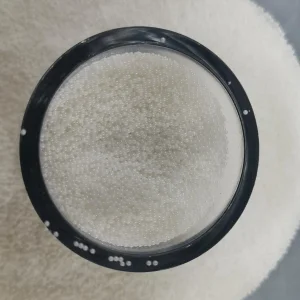
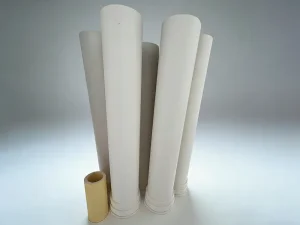
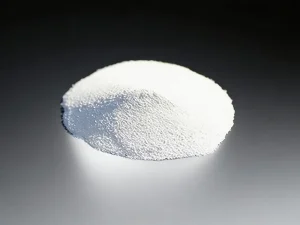
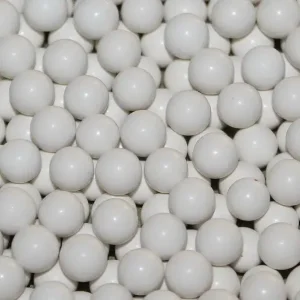
Founded in 2003, Yixing Qiangguang Ceramic Materials Co., Ltd. is a professional provider dedicated to the research and development (R&D), manufacturing, and application solutions of high-performance advanced ceramic materials. It is among the few enterprises in China that possess a complete industrial chain, covering key links from powder forming, sintering and precision machining to the provision of integrated application solutions.
The company is also a rare domestic manufacturer engaged in the R&D, production, and supply of a comprehensive portfolio of ceramic materials. Its product range covers zirconia, yttria, alumina, magnesia, aluminum nitride (AlN), boron nitride, silicon nitride, silicon carbide, aluminum titanate and other key ceramic materials for industrial use.
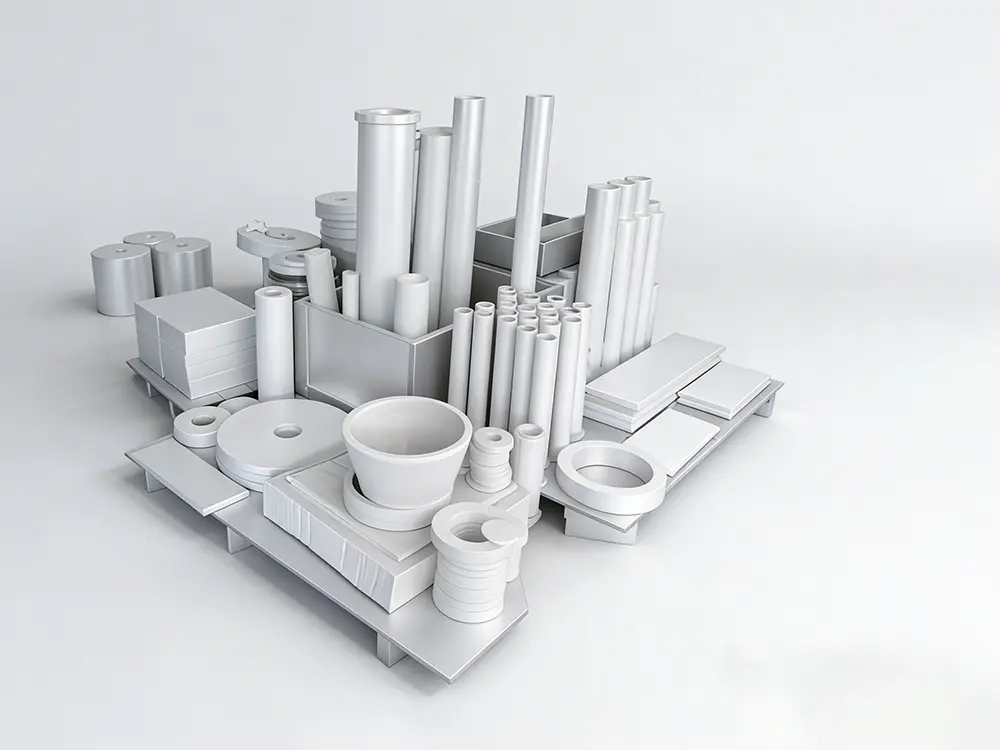
Benefiting from excellent product performance and stable quality, its products are extensively utilized in various high-end fields, such as food and medical industries, new energy vehicles, laser semiconductors, petrochemical engineering, powder metallurgy, national defense and military, as well as aerospace sectors.
Adhering to the core principle of "creating value for customers", Qiangguang provides customized and cost-efficient advanced ceramic solutions tailored to the specific demands of different customers. It is supported by high-quality after-sales services and a strict full-process tracking system, which effectively enhances cooperation efficiency and promotes continuous quality improvement.
At present, the company's products are sold well across the country and exported to Italy, the United Kingdom, Australia, Japan, Malaysia, Thailand, Hungary and other countries and regions. Committed to delivering high-quality products at reasonable prices, Qiangguang sincerely looks forward to establishing long-term and stable cooperative relations with global partners.
Aluminum Nitride (AlN) is a covalent bond compound featuring a hexagonal wurtzite crystal structure ($a = 3.114 \, \text{\AA}, c = 4.986 \, \text{\AA}$). In microelectronic packaging and high-power thermal management, AlN has emerged as the definitive substrate material replacing toxic Beryllium Oxide (BeO) and thermal-performance-limited Alumina ($\text{Al}_2\text{O}_3$).
Unlike metals where electrical conduction drives thermal transfer, AlN transfers thermal energy exclusively via lattice vibrations (phonons). Theoretical thermal conductivity reaches up to 320 W/m·K. Commercial sintered AlN produced by China factories yields 170 to 230 W/m·K by minimizing oxygen impurity defects within the lattice.
AlN exhibits a Coefficient of Thermal Expansion (CTE) of $4.5 \times 10^{-6}/\text{K}$ between 20°C and 400°C. This closely matches single-crystal Silicon ($3.5-4.0 \times 10^{-6}/\text{K}$), Silicon Carbide (SiC, $4.0-4.5 \times 10^{-6}/\text{K}$), and Gallium Nitride (GaN), drastically reducing interfacial shear stresses and micro-cracking during thermal cycling.
With a dielectric constant ($\epsilon_r$) of ~8.6 at 1 MHz and an exceptionally low dielectric loss tangent ($\tan\delta$) of $< 5 \times 10^{-4}$, AlN substrates prevent signal attenuation and phase delay in RF power amplifiers, 5G/6G millimeter-wave transceivers, and high-power microwave systems.
| Material Property | Aluminum Nitride (AlN) | Alumina ($\text{Al}_2\text{O}_3$ 96%) | Beryllium Oxide (BeO) | Silicon Nitride ($\text{Si}_3\text{N}_4$) |
|---|---|---|---|---|
| Thermal Conductivity (W/m·K) | 170 - 230 | 24 - 30 | 250 - 280 | 80 - 90 |
| Coefficient of Thermal Expansion ($10^{-6}/\text{K}$) | 4.5 | 6.8 | 7.5 | 3.2 |
| Dielectric Strength (kV/mm) | > 20 | 15 | 12 | 18 |
| Flexural Strength (MPa) | 350 - 400 | 330 | 230 | 700 - 850 |
| Toxicity & Handling Risk | Non-Toxic / Safe | Non-Toxic | Extremely Hazardous | Non-Toxic |
Global OEM procurers and power electronics designers increasingly leverage China's advanced ceramic ecosystem. China-based manufacturers like Yixing Qiangguang offer unmatched structural, economic, and technological advantages that streamline global procurement.
China commands over 70% of high-purity aluminum oxide feedstock supplies and advanced nitridation processing lines. By utilizing carbothermal reduction ($\text{Al}_2\text{O}_3 + 3\text{C} + \text{N}_2 \rightarrow 2\text{AlN} + 3\text{CO}$), our factories yield sub-micron powder with sub-0.8% lattice oxygen content, ensuring exceptional thermal consistency across production batches.
From Doctor Blade tape casting for thin substrates (0.25mm to 1.0mm) to Cold Isostatic Pressing (CIP) and pressureless vacuum sintering furnaces operating at 1800°C - 1900°C under pure Nitrogen, domestic factories eliminate outsourcing delays, offering rapid scaling from prototype samples to volume production run rates.
Full integration of Direct Bonded Copper (DBC), Active Metal Brazing (AMB with Zr/Ti active elements), Direct Plated Copper (DPC), and thick-film silver/palladium printing ensures seamless compatibility with modern surface-mount assembly (SMT) and wire-bonding workflows.
To utilize AlN in electronic circuits, high-adhesion metal circuits must be applied to the ceramic surface. Chinese manufacturing facilities implement four primary metallization pathways catered to specific voltage, thermal, and current density demands.
Uses Ag-Cu-Ti active alloy foil under high-vacuum brazing to join thick copper sheets (0.3mm–0.8mm) directly to AlN. Delivers high thermal cycling reliability, ideal for Automotive EV SiC traction inverters and high-voltage IGBTs.
Melts a eutectic $\text{Cu-O}$ fluid phase at 1065°C to anchor copper to AlN surface oxides. Offers low cost and robust conductivity for medium-to-high power modules and industrial motor drives.
Combines vacuum sputtering (Ti/Cu seed layer) with photolithography and electroplating. Delivers sub-10 micron line/space resolution, ideal for High-Power LED packaging and RF microwave devices.
Screen-printed silver/gold conductive pastes fired at 850°C. Coupled with high-speed UV laser drilling (via-holes), lapping, and polishing to achieve surface roughness $\text{Ra} < 0.02\,\mu\text{m}$.
Navigating international supply chains requires strict alignment with global environmental regulations and rigorous physical quality validation. Yixing Qiangguang enforces full lifecycle traceability.
All Aluminum Nitride powders, substrates, and components fully meet RoHS 3.0 (Directive 2015/863), REACH SVHC, and Conflict Minerals (CMRT) mandates. Materials are completely free of lead, cadmium, mercury, and toxic beryllium oxide.
Our manufacturing complex operates under strict quality management systems certified to ISO 9001:2015 and IATF 16949 automotive standards. Every manufacturing batch undergoes laser thermal diffusivity testing (Flash Method ASTM E1461) and ultrasonic C-scan non-destructive inspection.
We provide localized engineering support across North America, Europe, and Asia-Pacific. From FEA thermal simulation assistance to custom prototype samples delivered within 10 business days, our technical team works directly with your R&D engineers.
AlN ceramics excel in environments where intense thermal flux coincides with critical electrical insulation requirements.
Silicon Carbide (SiC) power modules operating at high switching frequencies demand rapid heat rejection. AMB AlN substrates dissipate localized hot-spots, maintaining junction temperatures ($T_j$) below critical thresholds.
High-purity AlN resists aggressive halogen plasmas (plasma etching/CVD processes). Integrated AlN ceramic heating plates deliver ultra-uniform thermal profiles across 300mm silicon wafers.
Solid-state laser diodes and industrial UV-C disinfection emitters create high heat density. DPC AlN submounts provide minimal thermal resistance, extending operational lifespan beyond 50,000 hours.
AlN substrates accommodate high RF energy while minimizing dielectric dissipation factor ($\tan\delta$), allowing clean signal transmission in GHz frequency bands.
High-voltage direct current (HVDC) power transmission units utilize heavy-copper bonded AlN components for superior partial discharge resistance and thermal endurance.
Lightweight, mechanically strong, and thermally stable under extreme environmental temperature swings from -55°C to +175°C.
As wide-bandgap (WBG) semiconductors like GaN and SiC replace traditional Silicon, global demand for high-performance thermal substrates is undergoing exponential growth.
Standard 170 W/m·K substrates are giving way to premium grade >200 W/m·K materials via grain boundary engineering and ultra-pure Yttria ($\text{Y}_2\text{O}_3$) sintering additives.
System-in-Package (SiP) and 3D stacking require ultra-thin ceramic substrates (0.15mm–0.25mm) with double-sided micro-vias for vertical interconnection.
Chinese advanced factories are deploying energy-efficient continuous tunnel kilns and closed-loop nitrogen recycling to reduce the carbon footprint per substrate produced.
Direct insights addressing engineer and procurement officer search intent regarding performance, cost, machining, and logistics.
Explore additional advanced ceramic solutions, precision grinding media, structural ceramic components, and specialized oxide powders engineered by Yixing Qiangguang.