Explore our core engineering ceramic materials, precision components, and specialized oxide formulation solutions direct from our Chinese manufacturing complex.
Understanding the fundamental relationship between crystallographic purity, grain boundaries, and mechanical resilience in industrial applications.
Aluminum Oxide (Al₂O₃) is one of the most versatile structural technical ceramic materials available globally. The material operates predominantly in the stable alpha-alumina (α-Al₂O₃) phase, which exhibits a hexagonal close-packed (HCP) crystal structure with oxygen anions and aluminum cations occupying two-thirds of the octahedral interstices.
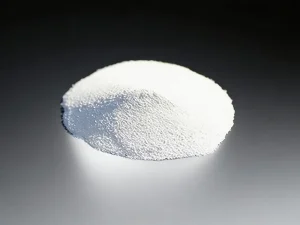
This dense ionic lattice is responsible for Alumina’s extreme chemical stability, high melting temperature (2072 °C), and exceptional mechanical hardness. By meticulously controlling raw material calcination and grain growth inhibitors such as Magnesium Oxide (MgO), Yixing Qiangguang Ceramic Materials Co., Ltd. achieves ultra-uniform grain boundary networks that mitigate stress concentrations under thermal and mechanical loads.
The industrial performance of China Alumina Ceramics is fundamentally governed by percentage purity, ranging from 92% commercial grade to 99.99% ultra-high purity (5N):
| Property Parameter | Test Standard | Al₂O₃ 95% | Al₂O₃ 99.5% | Al₂O₃ 99.8% (5N Grade) |
|---|---|---|---|---|
| Density (g/cm³) | DIN EN 623-2 | 3.65 - 3.70 | 3.89 - 3.92 | 3.96 - 3.98 |
| Flexural Strength (MPa) | DIN EN 843-1 | 320 - 350 | 380 - 420 | 450 - 500 |
| Modulus of Elasticity (GPa) | DIN EN 843-2 | 300 | 370 | 390 - 400 |
| Hardness (Vickers HV10) | DIN EN 843-4 | 13.5 GPa | 16.5 GPa | 18.0 GPa |
| Thermal Conductivity (W/m·K) | DIN EN 821-2 | 18 - 22 | 30 - 35 | 36 - 40 |
| Dielectric Strength (kV/mm) | IEC 60243-1 | 15.0 | 18.5 | 22.0 |
| Thermal Shock Resistance ΔT (°C) | Water Quench | 200 °C | 220 °C | 250 °C |
Quantitative analysis of thermal, mechanical, electrical, and tribological characteristics engineered for severe service environments.
Alumina ceramics feature a Vickers hardness exceeding 16.5 GPa, second only to diamond, silicon carbide, and boron carbide among industrial materials. This gives them an extraordinary resistance to sliding abrasion and slurry erosion.
In wet grinding and high-velocity pneumatic conveying environments, 99.5% Al₂O₃ exhibits a volumetric wear rate up to 20 times lower than high-chromium alloy steels, dramatically cutting plant downtime and preventing metal ion contamination in battery precursor slurries.
With an electrical resistivity surpassing 10¹4 Ω·cm at room temperature and maintaining robust insulation up to 1000 °C, high-purity alumina is the industry gold standard for high-voltage feedthroughs, substrate boards, and vacuum interrupters.
Its low dielectric loss tangent (tan δ < 0.0003 at 1 MHz) makes it indispensable in high-frequency RF applications, semiconductor plasma chambers, and power electronics substrates where signal dissipation must be minimized.
Operating continuously at temperatures up to 1600 °C - 1700 °C under oxidative and reducing atmospheres, alumina ceramics exhibit low coefficient of thermal expansion (8.0 × 10⁻⁶/K between 20-1000 °C).
While silicon nitride offers superior thermal shock resistance, fine-grained high-purity alumina processed via Cold Isostatic Pressing (CIP) delivers an optimum balance of high thermal conductivity (up to 35 W/m·K) and structural integrity at elevated thermal gradients.
Demonstrating two decades of technical mastery, full-spectrum powder synthesis, and precision machining expertise.
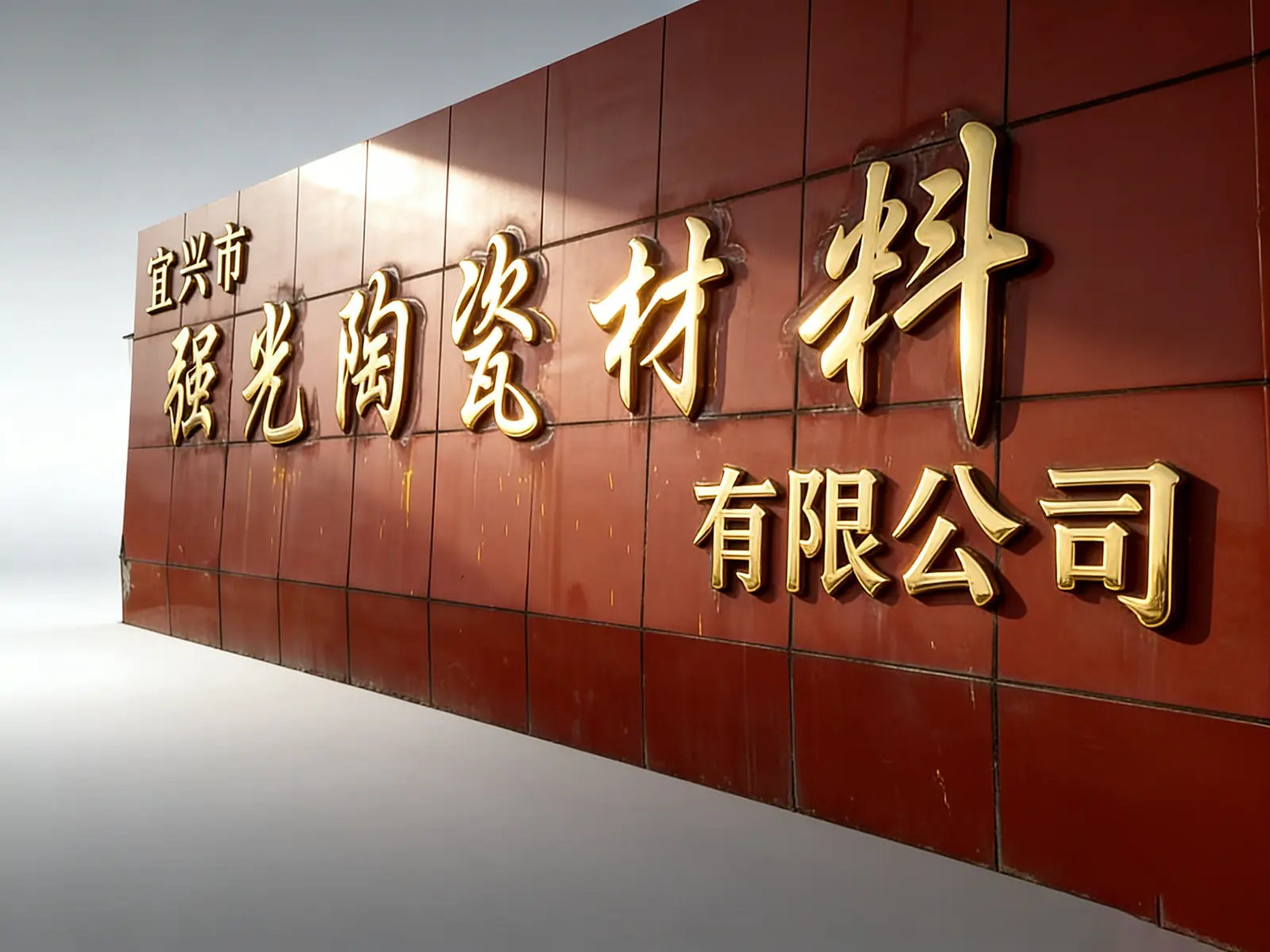
Founded in 2003, Yixing Qiangguang Ceramic Materials Co., Ltd. is a recognized pioneer dedicated to the research, development, custom synthesis, and precision fabrication of high-performance advanced ceramic components. Situated in Yixing—China's historical center of ceramic engineering—our facility represents one of the rare domestic enterprises possessing a fully integrated industrial ecosystem.
Our operational framework spans every critical link of the manufacturing value chain: from high-purity ceramic powder processing, spray drying, and precision green body forming (Cold Isostatic Pressing, Dry Pressing, Injection Molding, and Tape Casting) to ultra-high-temperature sintering and diamond CNC machining.
Unlike single-material fabricators, Qiangguang offers a comprehensive advanced material matrix, including: Zirconia (ZrO₂), Yttria (Y₂O₃), Alumina (Al₂O₃), Magnesia (MgO), Aluminum Nitride (AlN), Boron Nitride (BN), Silicon Nitride (Si₃N₄), Silicon Carbide (SiC), and Aluminum Titanate (Al₂TiO₅).
Deploying tailored ceramic solutions across semiconductor, renewable energy, aerospace, and medical engineering sectors.
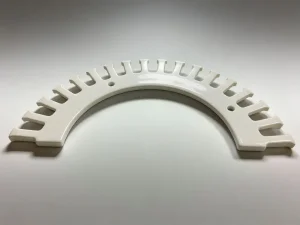
In plasma etching and chemical vapor deposition (CVD) equipment, 99.8% ultra-purity alumina ceramics serve as end-effectors, vacuum chucks, dielectric windows, and plasma spray rings. Their resistance to fluorinated plasma erosion prevents particulate generation and maintains micro-chip yield.
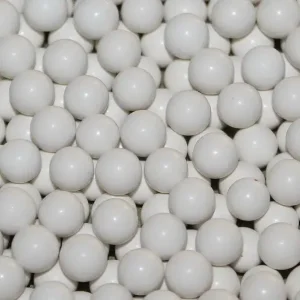
Alumina ceramics provide high-dielectric seal rings and ceramic insulators for high-voltage direct current (HVDC) relays in EV powertrains. Furthermore, high-purity alumina ceramic balls serve as ultra-durable milling media for lithium iron phosphate (LFP) battery slurry grinding.
Bio-inert high-purity alumina exhibits zero tissue cytotoxicity and minimal wear rate. It is extensively utilized in precise fluid metering pump pistons, dialysis machine components, and bio-ceramic wear surfaces engineered for lifelong reliability.
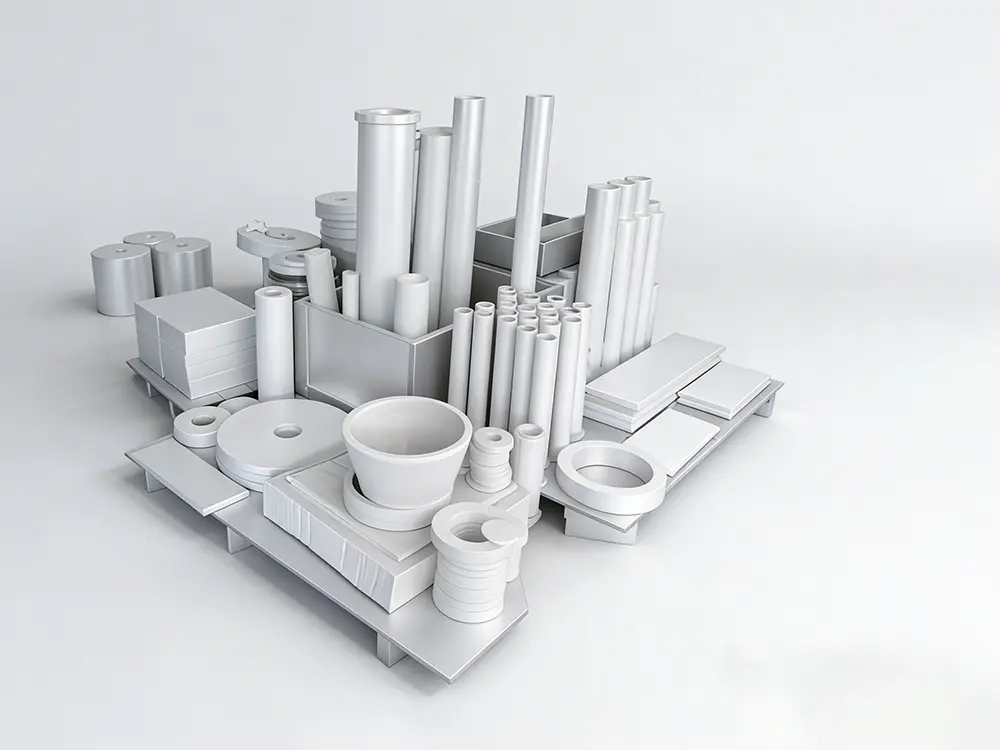
Adhering to our corporate guiding principle of "Creating Value for Customers", Qiangguang delivers tailored, cost-efficient ceramic solutions backed by robust quality control systems. We enforce stringent full-process tracking—from raw powder verification via X-ray Fluorescence (XRF) to Coordinate Measuring Machine (CMM) dimensional verification.
Our manufacturing and processing standards conform fully to international regulatory mandates, including ISO 9001:2015 quality management systems, RoHS, and REACH compliance. Dedicated engineering teams support global clients with rapid prototyping, DFM (Design for Manufacturability) analysis, and localized customs clearance support.
Today, our products are widely adopted in key industrial markets across Italy, the United Kingdom, Australia, Japan, Malaysia, Thailand, Hungary, and North America.
Strategic R&D directions shaping the next decade of structural ceramic engineering.
Leveraging Stereolithography (SLA) and Digital Light Processing (DLP) to manufacture complex, topology-optimized internal cooling channels in alumina components without expensive diamond tooling.
Developing sub-micron Zirconia-Toughened Alumina (ZTA) matrices that achieve flexural strengths exceeding 800 MPa and fracture toughness values > 8 MPa·m1/2, overcoming inherent brittle limitations.
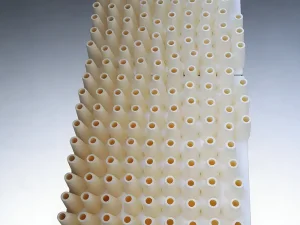
Engineering porous alumina support structures and high-purity thermal barrier coatings tailored for solid oxide electrolyzer cells (SOEC) and high-temperature hydrogen generation units.
In-depth technical answers addressing material selection, machining limits, and property trade-offs.
The primary difference lies in the silicate glass phase at grain boundaries. 95% Alumina contains flux additives, making it easier to sinter and more cost-effective for general mechanical wear parts. 99.5% Alumina has a higher density, superior dielectric strength, higher thermal conductivity (30-35 W/m·K vs 18-22 W/m·K), and far greater resistance to aggressive chemical etching.
Alumina ceramics have a moderate thermal shock resistance parameter (ΔT approx. 200 °C to 250 °C depending on geometry). For applications with rapid thermal cycling exceeding 300 °C/second, we often recommend Silicon Nitride (Si₃N₄) or Aluminum Titanate (Al₂TiO₅) from our product line due to their lower coefficients of thermal expansion.
Yes. Prior to sintering (in the green or biscuit state), alumina can be machined with carbide tools. Post-sintering, due to its high hardness (Vickers ~16.5 GPa), diamond grinding, lapping, and EDM (for conductive grades) are required. Qiangguang routinely achieves tolerances of ±0.001 mm and surface finishes down to Ra < 0.05 µm.
Yixing Qiangguang integrates the entire supply chain—from raw powder preparation to diamond finishing—ensuring strict quality control, lower production overheads, rapid sample turnaround, and export-grade international compliance across Europe, Asia, and the Americas.
Explore our extended series of zirconia, magnesium oxide, and high-performance grinding media products designed for specialized industrial operations.