Explore high-purity powders, structural components, and grinding media engineered for high-stress industrial environments.
Strategic analysis of global supply chain integration, material synthesis breakthroughs, and vendor selection frameworks.
The global industrial ecosystem is undergoing an unprecedented paradigm shift driven by rapid technological advancements in semiconductor fabrication, electric vehicle (EV) battery chemistry, aerospace thermal management, and precision mechanical engineering. At the epicenter of this industrial evolution lies the domain of Advanced Technical Ceramics—non-metallic, inorganic engineered solids that exhibit extreme mechanical hardness, thermal resistance, dielectric strength, and chemical inertness under conditions that cause conventional metals and polymers to fail catastrophically.
Historically concentrated within niche European and North American laboratories, the global manufacturing nexus for technical ceramics has decisively shifted toward specialized Chinese industrial clusters. Today, prospective international buyers searching for reliable China ceramic vendors, manufacturers, and factories are no longer merely seeking low-cost commodity suppliers; they are looking for enterprise partners capable of deep vertical integration, precise microstructural control, custom OEM CAD/CAM precision machining, and strict adherence to international quality management systems (ISO 9001, ISO 13485, IATF 16949, RoHS, and REACH).
Information Gain Key Takeaway: Modern China ceramic manufacturing leverages fully integrated supply chains—from raw precursor powder chemical synthesis (such as high-purity alumina spray drying and yttria co-precipitation) to final Cold Isostatic Pressing (CIP), High-Temperature Sintering, and 5-axis CNC Diamond Machining—reducing lead times by up to 45% compared to Western counterparts.
Case Study: Yixing Qiangguang Ceramic Materials Co., Ltd. — Full Industrial Chain Leadership
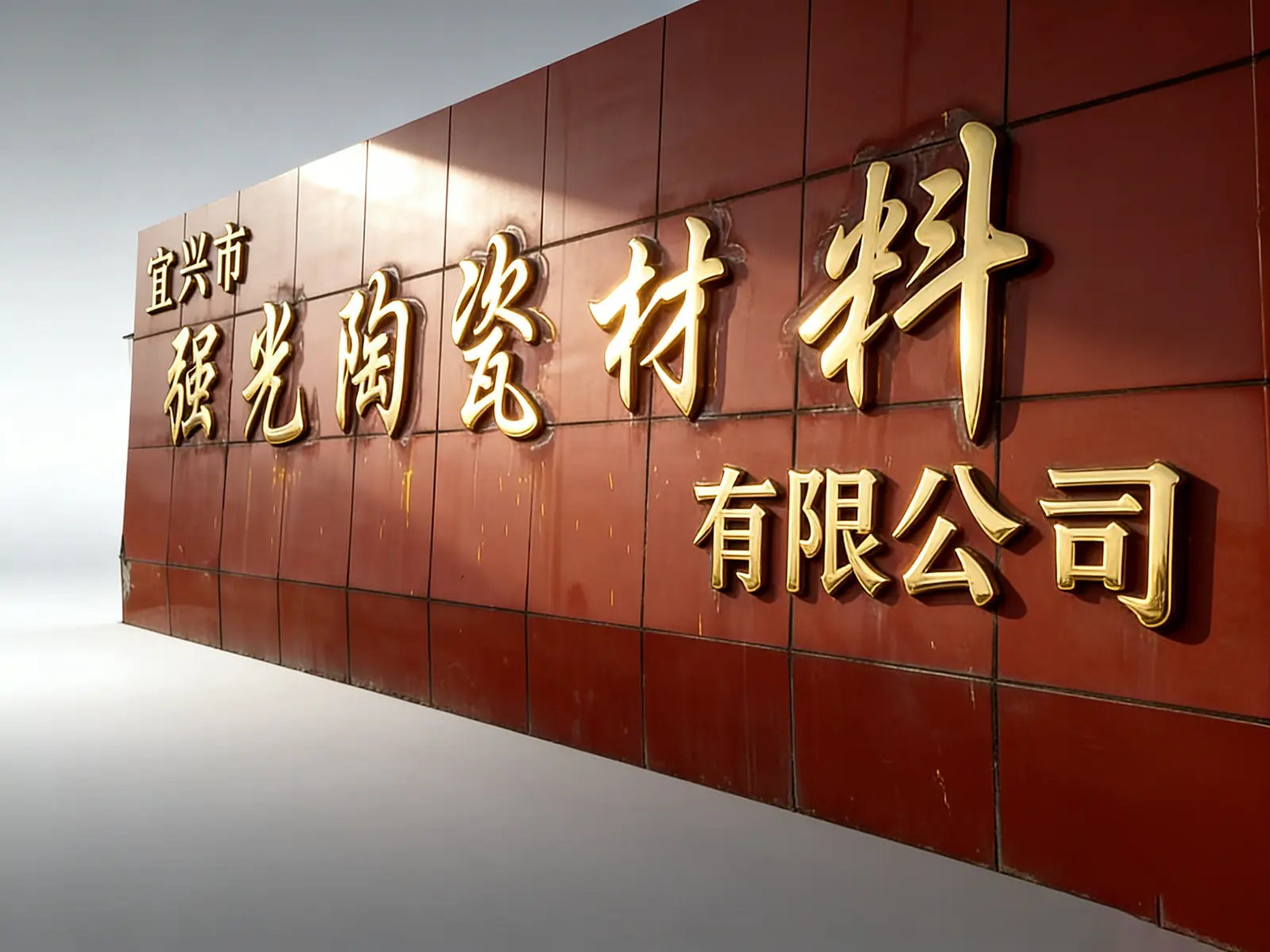
Founded in 2003, Yixing Qiangguang Ceramic Materials Co., Ltd. is a professional provider dedicated to the research and development (R&D), manufacturing, and application solutions of high-performance advanced ceramic materials. It is among the few enterprises in China that possess a complete industrial chain, covering key links from powder forming, sintering and precision machining to the provision of integrated application solutions.
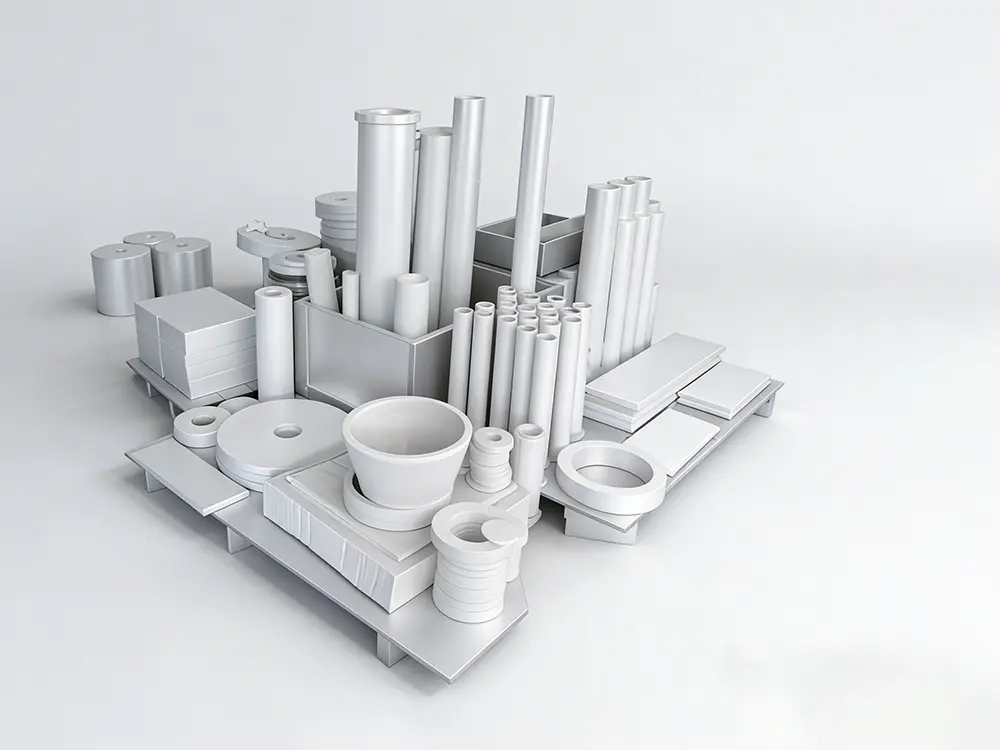
The company is also a rare domestic manufacturer engaged in the R&D, production, and supply of a comprehensive portfolio of ceramic materials. Its product range covers zirconia, yttria, alumina, magnesia, aluminum nitride, boron nitride, silicon nitride, silicon carbide, aluminum titanate and other key ceramic materials for industrial use.
Adhering to the core principle of "creating value for customers", Qiangguang provides customized and cost-efficient advanced ceramic solutions tailored to the specific demands of different customers. It is supported by high-quality after-sales services and a strict full-process tracking system, which effectively enhances cooperation efficiency and promotes continuous quality improvement.
At present, the company's products are sold well across the country and exported to Italy, the United Kingdom, Australia, Japan, Malaysia, Thailand, Hungary and other countries and regions. Committed to delivering high-quality products at reasonable prices, Qiangguang sincerely looks forward to establishing long-term and stable cooperative relations with global partners.
In-depth structural breakdown of oxide and non-oxide ceramics for demanding industrial applications.
When selecting leading China ceramic manufacturers, enterprise procurement directors must evaluate the material science portfolio offered by the factory. Advanced technical ceramics are primarily divided into two main categories: Oxide Ceramics and Non-Oxide Ceramics, each possessing distinct thermal, physical, and electrical characteristics.
Available in purity ranges from 95% to 99.8%. Alumina offers excellent electrical insulation, high mechanical hardness, and cost efficiency. Widely used for wear-resistant components, substrate bases, and chemical grinding media.
Including Yttria-Stabilized Zirconia (YSZ) and Calcium-Stabilized Zirconia (CSZ). Zirconia is renowned for its extraordinary fracture toughness (up to 8-10 MPa·m1/2), resistance to thermal shock, and self-healing phase transformation capability.
Featuring Aluminum Nitride (AlN) with high thermal conductivity (>170-230 W/m·K) and low CTE matched with silicon, alongside Aluminium Titanate (Al₂TiO₅) designed for zero-thermal expansion and molten metal contact.
| Material Type | Density (g/cm³) | Flexural Strength (MPa) | Thermal Conductivity (W/m·K) | Max Service Temp (°C) | Primary Application Field |
|---|---|---|---|---|---|
| Alumina (99.5% Al₂O₃) | 3.90 - 3.95 | 380 - 450 | 30 - 35 | 1600 | Electronics, Pump Seals, Grinding Balls |
| Yttria Zirconia (3Y-TZP) | 6.00 - 6.05 | 900 - 1200 | 2.5 - 3.0 | 1100 | Fine Dispersion, Medical Implants, Valves |
| Silicon Nitride (Si₃N₄) | 3.20 - 3.25 | 800 - 1000 | 30 - 90 | 1400 | High-Speed Bearings, Aerospace Rotors |
| Aluminum Nitride (AlN) | 3.26 - 3.30 | 320 - 400 | 170 - 230 | 1000 (air) | Semiconductor Heaters, Laser Heat Sinks |
| Aluminium Titanate (Al₂TiO₅) | 3.30 - 3.50 | 30 - 60 | 1.5 - 2.5 | 1400 | Low-Pressure Die Casting Riser Tubes |
Evaluating vendor reliability through rigorous engineering qualification and supply chain auditing.
For international enterprise buyers—ranging from tier-1 automotive suppliers to semiconductor equipment manufacturers—sourcing advanced ceramics from China requires a transparent auditing methodology. To minimize procurement risk and guarantee batch-to-batch consistency, global buyers evaluate factories based on four critical technical pillars:
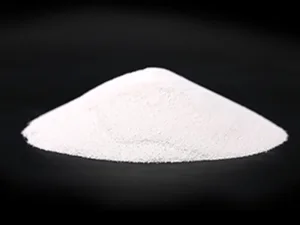
The microstructural performance of final sintered ceramics is determined at the powder stage. Leading factories employ automated spray drying towers, precise dopant milling (such as Y₂O₃ in zirconia or MgO in alumina), and laser diffraction particle size analysis (D50/D90) to guarantee uniform compaction density.
High-density sintering requires state-of-the-art thermal processing, including Cold Isostatic Pressing (CIP) up to 200 MPa followed by computer-controlled vacuum sintering, gas-pressure sintering (GPS), or Hot Isostatic Pressing (HIP) to eliminate internal micro-voids and achieve >99.5% theoretical density.
Because ceramics shrink between 15% and 22% during sintering, high-precision applications require post-sintering diamond grinding, ultrasonic drilling, and optical polishing. Leading Chinese vendors feature CMM (Coordinate Measuring Machine) verification, laser interferometry, and surface roughness analyzers.
Full enterprise compliance demands full batch traceability from raw chemical lot number to final CMM inspection report. Factories like Qiangguang maintain robust ERP tracking, ISO 9001 quality audits, and environmental compliance certifications for global export confidence.
How advanced technical ceramics empower critical high-tech manufacturing globally.
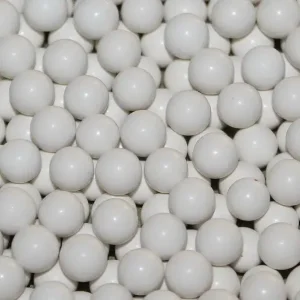
In the production of cathode/anode slurry for EV batteries, zero metal contamination is mandatory. Yttria-stabilized zirconia beads (0.1mm - 2.0mm) provide ultra-low wear rates and superior grinding efficiency for sub-micron particle dispersion.
Aluminum Nitride (AlN) and high-purity alumina serve as critical electrostatic chucks (ESC), wafer carriers, and vacuum chambers in photolithography and plasma etching due to high thermal conductivity and RF plasma erosion resistance.
Ceramic valve balls, seats, and pump plungers made from alumina and zirconia withstand extreme abrasion, strong acid corrosion, and high cavitation pressure, extending system operational life up to 10x over high-grade stainless steels.
Expert insights into customized ceramic manufacturing, ordering protocols, and technical evaluation.
Explore our additional portfolio of high-density powders, engineering ceramics, and custom components.