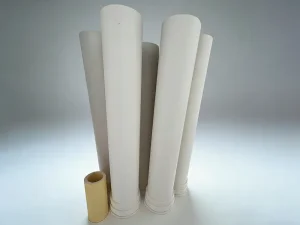
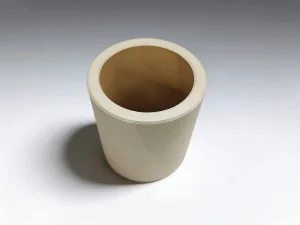
Explore our certified catalog of high-purity alumina, yttria-stabilized zirconia, magnesium-stabilized zirconia, and aluminum titanate structural components designed for extreme environments.
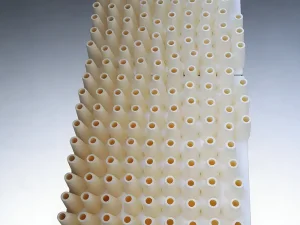
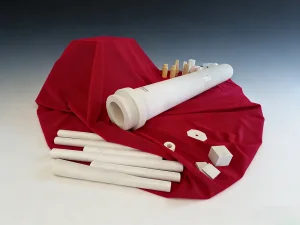
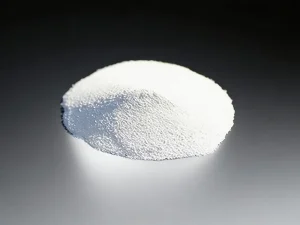
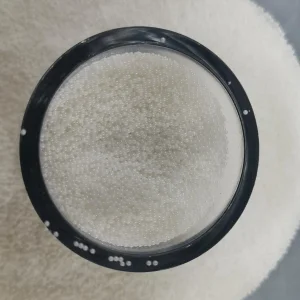
Founded in 2003, Yixing Qiangguang Ceramic Materials Co., Ltd. is a world-class professional enterprise dedicated to the research, development (R&D), precision synthesis, and industrial application of high-performance advanced ceramic materials. Operating from Yixing—the renowned center of ceramic innovation in China—the company stands out as one of the rare domestic manufacturers possessing an end-to-end integrated industrial ecosystem. This vertically integrated framework spans raw powder synthesis, precision green shaping, ultra-high-temperature sintering, micrometer-level diamond machining, and rigorous quality assurance.
With over two decades of technical expertise, Yixing Qiangguang manufactures a comprehensive portfolio of oxide and non-oxide technical ceramic materials. Our advanced material spectrum encompasses Zirconia ($ZrO_2$), Yttria-Stabilized Zirconia ($YSZ$), High-Purity Alumina ($Al_2O_3$), Magnesia ($MgO$), Aluminum Nitride ($AlN$), Boron Nitride ($BN$), Silicon Nitride ($Si_3N_4$), Silicon Carbide ($SiC$), and Aluminum Titanate ($Al_2TiO_5$).
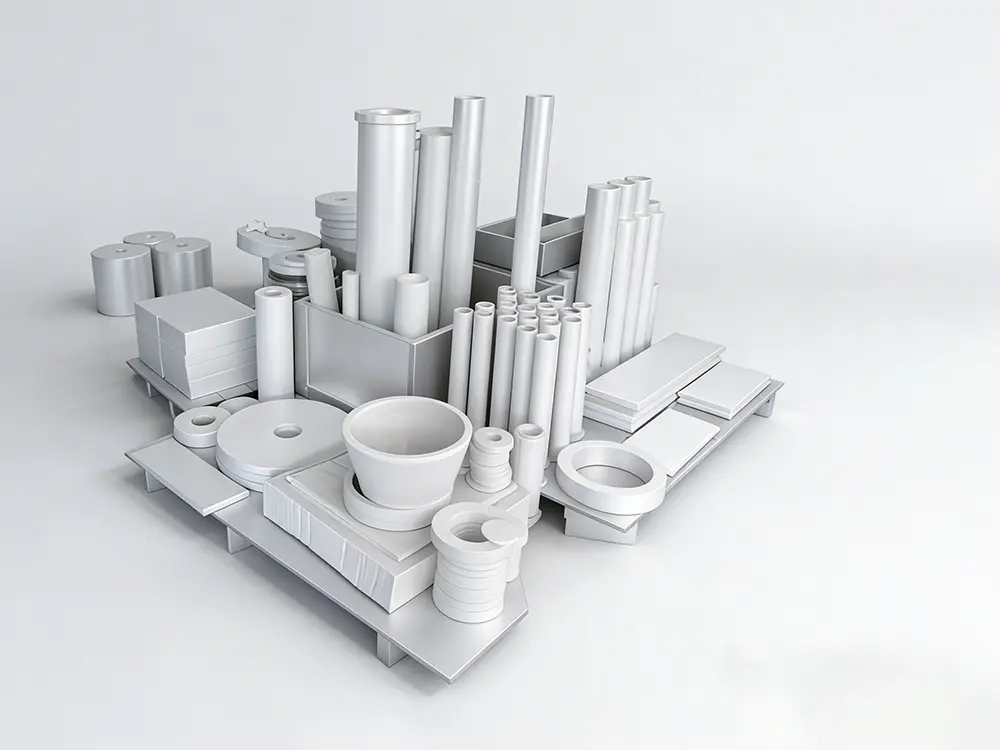
Adhering strictly to our core principle of "creating value for customers," Qiangguang provides customized, cost-efficient ceramic solutions tailored to the exacting demands of global OEMs, system integrators, and tier-1 industrial buyers. Our production lines are backed by full-process digital tracking systems, ISO-certified quality protocols, and fast-response technical support.
Benefiting from superior mechanical strength, dielectric reliability, and thermal stability, Qiangguang's engineered ceramics are heavily deployed across high-tech domains including food & medical equipment, new energy vehicles (NEVs), laser semiconductors, petrochemical engineering, powder metallurgy, defense & military, and aerospace systems.
Today, our high-performance technical ceramics maintain a strong footprint across domestic engineering sectors and are exported internationally to key industrial markets including Italy, the United Kingdom, Australia, Japan, Malaysia, Thailand, Hungary, and beyond.
Selecting the appropriate technical ceramic formulation requires an in-depth understanding of thermo-mechanical, electrical, and chemical property trade-offs. The structural review matrix below presents empirical physical metrics for our core ceramic materials to assist design engineers in specification selection.
| Ceramic Material Family | Density ($g/cm^3$) | Flexural Strength ($MPa$) | Fracture Toughness ($MPa\cdot m^{1/2}$) | Thermal Conductivity ($W/m\cdot K$) | Max Working Temp ($^\circ\text{C}$) |
|---|---|---|---|---|---|
| 99.5% Alumina ($Al_2O_3$) | 3.90 - 3.95 | 380 - 450 | 4.0 - 5.0 | 28 - 35 | 1600 |
| Yttria-Stabilized Zirconia (3Y-TZP) | 6.05 - 6.08 | 1000 - 1200 | 9.0 - 12.0 | 2.5 - 3.0 | 1150 |
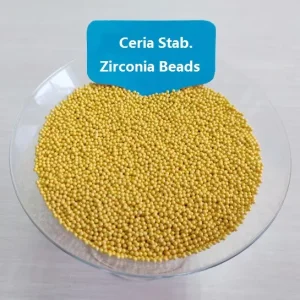
| Ceria-Stabilized Zirconia (Ce-TZP) | 6.20 | 700 - 850 | 13.0 - 16.0 | 2.2 | 1000 |
| Magnesium-Stabilized Zirconia (Mg-PSZ) | 5.75 - 5.85 | 650 - 800 | 8.5 - 10.0 | 2.5 | 1400 |
| Aluminum Nitride ($AlN$) | 3.25 - 3.30 | 320 - 400 | 2.5 - 3.5 | 170 - 230 | 1400 (Inert) |
| Aluminum Titanate ($Al_2TiO_5$) | 3.30 - 3.60 | 30 - 60 | 1.5 - 2.5 | 1.5 - 2.0 | 1450 |
| Magnesium Oxide ($MgO$) | 3.58 | 200 - 250 | 2.0 - 3.0 | 45 - 60 | 2300 |
Yttria-Stabilized Zirconia (YSZ) exhibits an extraordinary mechanical phenomenon known as stress-induced phase transformation toughening. Under stress concentration (such as a propagating micro-crack tip), metastable tetragonal zirconia crystals transform into a monoclinic phase. This phase change is accompanied by a ~4% volumetric expansion that exerts compressive stress on the crack tip, effectively arresting crack growth and imparting steel-like fracture toughness ($K_{IC} > 10\text{ MPa}\cdot\text{m}^{1/2}$).
In semiconductor packaging and power electronic modules (IGBTs, high-power LEDs), thermal dissipation is paramount. While $99.5\%\text{ }Al_2O_3$ provides robust dielectric strength ($18\text{ kV/mm}$), Aluminum Nitride ($AlN$) provides an ultra-high thermal conductivity up to $230\text{ W/m}\cdot\text{K}$ (over 6 times that of Alumina) while closely matching the Coefficient of Thermal Expansion (CTE) of Silicon chips ($4.5 \times 10^{-6}/\text{K}$).
China's manufacturing prowess in advanced ceramics has shifted from basic structural shapes to precision-engineered sub-assemblies for extreme operating environments. Our customized material solutions address severe friction, corrosive chemicals, high voltage, and ultra-high temperatures.
High-purity biomedical grade YSZ and Alumina ceramics are non-reactive, bio-inert, and exceptionally wear-resistant. Key products include precision ceramic pump pistons for micro-dosing fluids, surgical cutting blades, dental implants, and wear-free bearing surfaces in blood pumps.
In NEVs, thermal runaway prevention and electrical isolation are critical. We produce high-voltage ceramic relay enclosures, ceramic seals for EV battery connectors, and ultra-durable zirconia grinding media for milling cathode ($LFP/NCM$) and anode materials down to sub-micron scales.
Precision wafer chucks, end-effectors, gas distribution plates, and laser cavities demand extreme dimensional stability and chemical resistance to plasma etching. Our high-density $AlN$ and $99.99\%\text{ }Al_2O_3$ deliver zero outgassing and micrometric coplanarity.
Corrosive slurry erosion quickly destroys metallic valves. Qiangguang's Magnesium-Stabilized Zirconia ($Mg-PSZ$) and Silicon Nitride valve balls, seats, and pump sleeves offer immunity to acid/alkali degradation and withstand severe hydrodynamic cavitation.
Aluminum Titanate ($Al_2TiO_5$) features near-zero thermal expansion and high non-wetting properties against molten aluminum and magnesium alloys. It is the premier choice for low-pressure die casting riser tubes, stalks, and pouring spouts.
Demanding extreme strength-to-weight ratios and thermal resistance, our ultra-high temperature ceramics (UHTCs), silicon nitride radomes, and heat shield tiles operate flawlessly in environments exceeding $1500^\circ\text{C}$.
The modern landscape of technical ceramic manufacturing demands far more than raw powder compaction. Yixing Qiangguang integrates Industry 4.0 automation across the entire production chain to deliver unmatched consistency, rapid prototyping, and cost control for global supply chains.
Starting from ultra-fine, chemical-precipitated micro-powders, we utilize automated spray drying towers to form free-flowing spherical granules. Our multi-axis hydraulic dry presses and ultra-high-pressure Cold Isostatic Presses (CIP, operating up to $250\text{ MPa}$) ensure uniform green body density. This eliminates internal density gradients and guarantees zero warping during sintering.
Sintering is the core microstructural evolution step. Our factory operates computerized high-temperature shuttle kilns, vacuum sintering furnaces, and Gas Pressure Sintering (GPS) equipment reaching $1800^\circ\text{C}$. Strict atmosphere control (Oxygen, Nitrogen, Argon, Vacuum) achieves densities exceeding $99.5\%$ of theoretical maximums with fully closed grain boundaries.
Post-sintering ceramics exhibit extreme Mohs hardness (9+). We utilize 5-axis CNC diamond grinding centers, ultrasonic machining rigs, and double-sided lapping machines. We routinely achieve tight tolerances of $\pm 0.001\text{ mm}$, cylindricity of $0.002\text{ mm}$, and mirror surface finishes down to $Ra < 0.02\text{ }\mu\text{m}$.
Every production batch undergoes exhaustive non-destructive and metrological inspection. Our Quality Control laboratory is equipped with Zeiss CMMs (Coordinate Measuring Machines), Laser Interferometers, X-Ray Fluorescence (XRF) powder analyzers, Scanning Electron Microscopes (SEM) for grain morphology inspection, and helium leak detectors.
Procuring technical ceramic components globally requires more than finding competitive pricing; it demands absolute supply chain transparency, international compliance, and engineering co-development. Qiangguang provides end-to-end framework support for international procurement teams.
By integrating powder synthesis with in-house tooling and precision diamond finishing, we reduce component procurement costs by 30% to 50% compared to European or North American suppliers, while matching or exceeding material specifications.
Our production facilities strictly comply with ISO 9001:2015 Quality Management Standards, REACH chemical regulations, RoHS environmental mandates, and FDA/USP Class VI bio-compatibility criteria for medical-grade ceramic lines.
We support flexible Incoterms (EXW, FOB, CIF, DDP) with express air freight and sea container shipments to Europe, Asia-Pacific, and the Americas. Rapid tooling capabilities enable green body sample delivery in as fast as 7 to 10 business days.
As global high-tech sectors push toward miniaturization, higher thermal loads, and extreme operational stresses, advanced ceramics will play an increasingly foundational role. Qiangguang's R&D technology roadmap focuses on four breakthrough domains:
Transitioning beyond traditional pressing molds, we are scaling Stereolithography (SLA) and Direct Ink Writing (DIW) ceramic 3D printing technologies. This allows the rapid production of complex internal cooling channels, lightweight lattice structures, and customized patient-specific implants in Alumina and Zirconia without expensive tooling costs.
By engineering grain sizes down to sub-50 nanometers and introducing secondary phases (such as Zirconia-Toughened Alumina - ZTA, and Silicon Carbide Whiskers), next-generation ceramics will exhibit superplastic deformation capabilities, eliminating catastrophic brittle failure modes.
The global shift toward solid-state lithium batteries requires stable, high-conductivity ceramic solid electrolyte membranes (such as Garnet-type LLZO and NASICON-type LATP). Our R&D team is actively optimizing ultra-thin, highly dense ceramic electrolyte sheets for next-gen energy storage.
Aligning with global ESG mandates, our manufacturing facilities are upgrading to hydrogen-assisted high-temperature kilns and solar-powered electric sintering systems to drastically reduce scope 1 and scope 2 carbon emissions during powder calcination and sintering cycles.
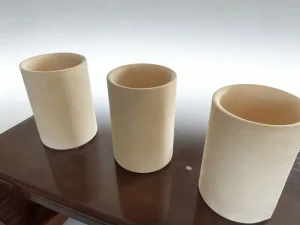
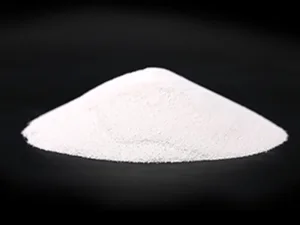
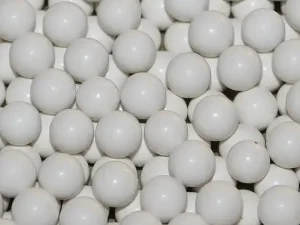
Browse our secondary selection of specialized ceramic grinding media, high-toughness stabilized powders, and precision thermal components.
Direct engineering answers to common intent inquiries regarding technical ceramics selection, manufacturing tolerances, chemical stability, and supply chain logistics.