Engineered Raw Powders, Thermal-Resistant Components & High-Purity Industrial Solutions
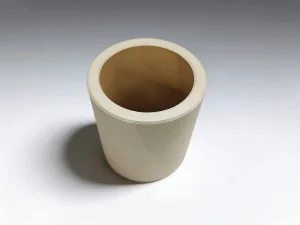
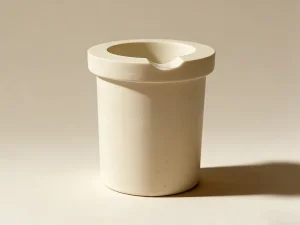
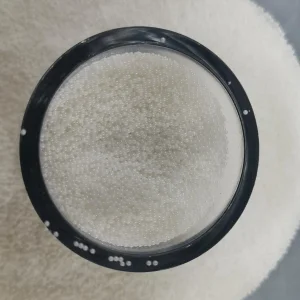
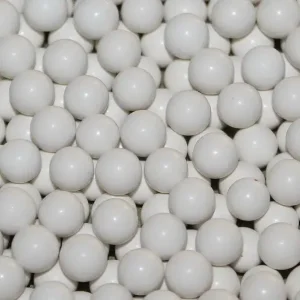
Integration of Raw Material Beneficiation, High-Purity Powder Processing, and Structural Ceramic Manufacturing
Founded in 2003, Yixing Qiangguang Ceramic Materials Co., Ltd. is a professional provider dedicated to the research and development (R&D), manufacturing, and application solutions of high-performance advanced ceramic materials. It is among the few enterprises in China that possess a complete industrial chain, covering key links from powder forming, sintering and precision machining to the provision of integrated application solutions.
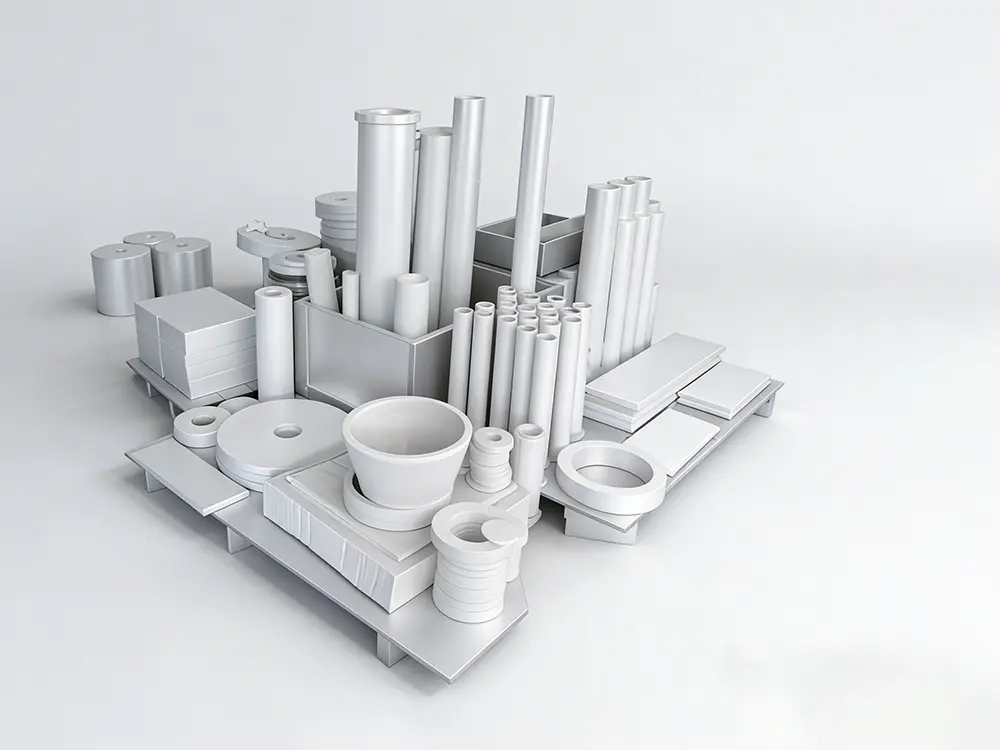
The company is also a rare domestic manufacturer engaged in the R&D, production, and supply of a comprehensive portfolio of ceramic materials. Its product range covers zirconia, yttria, alumina, magnesia, aluminum nitride, boron nitride, silicon nitride, silicon carbide, aluminum titanate and other key ceramic materials for industrial use.
Benefiting from excellent product performance and stable quality, its products are extensively utilized in various high-end fields, such as food and medical industries, new energy vehicles, laser semiconductors, petrochemical engineering, powder metallurgy, national defense and military, as well as aerospace sectors.
Core Operating Principle: Adhering to the core principle of "creating value for customers", Qiangguang provides customized and cost-efficient advanced ceramic solutions tailored to the specific demands of different customers. It is supported by high-quality after-sales services and a strict full-process tracking system, which effectively enhances cooperation efficiency and promotes continuous quality improvement.
Market Shifts, Supply Chain Dynamics, and the Evolution from Traditional Clays to Synthetic Technical Ceramics
The global clay and ceramic supplies market is experiencing a profound technological transformation. Historically centered around traditional silicate clays (kaolin, ball clay, and bentonite) for sanitaryware, refractories, and traditional pottery, the market has rapidly pivoted toward high-purity synthetic powders and structural technical ceramics. Today, China stands as the epicenter of this dual-market architecture, commanding both the refining capacity of specialized industrial clays and the advanced synthesis of high-performance oxides and non-oxide ceramics.
Driven by intensive demands from semiconductor manufacturing, electric vehicle (EV) battery production, medical implants, and green energy infrastructure, global procurement strategies are shifting. Enterprise buyers no longer evaluate ceramic suppliers purely on bulk pricing; instead, emphasis is placed on sub-micron grain size uniformity, tight sinterability parameters, trace chemical purity (reaching 99.999%), and total lifecycle thermal shock tolerance.
| Material Category | Primary Industrial Drivers | Key Technical Metrics | China Supply Chain Advantage |
|---|---|---|---|
| Refined Industrial Clays (Kaolin, Bentonite) | Refractories, Paper Coating, Technical Porcelain, Metallurgy | Al₂O₃ content (>45%), Fe₂O₃ (<0.5%), Plasticity Index | Abundant raw deposits, large-scale calcination, competitive cost per ton |
| Stabilized Zirconia (YSZ / MSZ) | Ultra-fine Grinding Media, Biomedical Implants, Fuel Cells, Thermal Barrier Coatings | Fracture Toughness (>9 MPa·m1/2), Flexural Strength (>1000 MPa) | Complete hydro-metallurgical refining to spray-dried powder and sintered beads |
| High-Thermal Nitrides (AlN, Si₃N₄) | Power Semiconductor Substrates, Laser Diodes, EV Inverters | Thermal Conductivity (170–230 W/m·K), High Electrical Insulation | Advanced carbothermal reduction techniques and precision cleanroom sintering |
| Thermal Shock Alloys (Aluminium Titanate) | Non-ferrous Metal Casting, Low-Pressure Die Casting Riser Tubes | Near-zero Thermal Expansion Coefficient, Non-wetting by molten Al | Integrated powder forming to precision machining capability |
Detailed Analysis of High-Performance Industrial Oxide & Non-Oxide Ceramics
Pure zirconia undergoes destructive phase transitions during thermal cycling. By doping with Yttrium Oxide (YSZ) or Magnesium Oxide (MSZ), the tetragonal phase is stabilized at room temperature. Under stress, a phase transformation from tetragonal to monoclinic absorbs crack energy, delivering exceptional fracture toughness (>9 MPa·m1/2), making YSZ ideal for grinding beads, cutting tools, and wear parts.
Aluminum Nitride exhibits extraordinary thermal conductivity (up to 200 W/m·K) combined with high electrical resistivity. This rare synergy makes AlN the definitive substrate material for microelectronics, high-power LEDs, insulated gate bipolar transistors (IGBTs), and semiconductor RF modules where heat dissipation is critical.
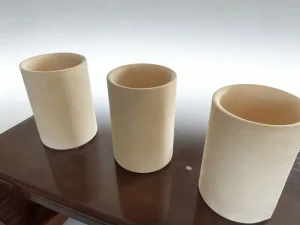
Characterized by micro-cracked crystalline structures resulting from severe thermal expansion anisotropy, Aluminium Titanate offers ultra-low thermal expansion and superior resistance to thermal shock. It remains un-wetted by molten aluminum and copper alloys, making it vital for foundry riser tubes and dosing nozzles.
Ranging from 95% to 99.99% purity, Alumina ceramics provide exceptional dielectric strength, extreme hardness, and high corrosion resistance. Used broadly in high-voltage insulators, chemical pump seals, and industrial wear plates, alumina remains the most versatile structural ceramic material worldwide.
Magnesium oxide ceramics provide unmatched stability under reducing atmospheres and ultra-high temperature exposure (>2000°C). MgO is essential for crucible production in precious metal smelting, nuclear material handling, and high-temperature furnace lining components.
Silicon Carbide (SiC) and Silicon Nitride (Si₃N₄) ceramics represent the pinnacle of mechanical durability at extreme temperatures. Si₃N₄ ceramic bearings enable hyper-velocity aerospace turbines, while SiC components serve in aggressive chemical heat exchangers and semiconductor wafer boats.
Navigating Next-Generation Manufacturing Processes, Green Sintering, and Additive Manufacturing
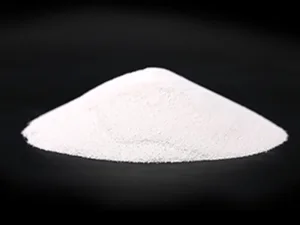
Modern advanced ceramics require raw powders with particle sizes below 100 nanometers and narrow size distribution. Chemical co-precipitation, hydrothermal synthesis, and flame spray pyrolysis are replacing traditional mechanical milling, producing powders with exceptional sinterability at lower thermal thresholds.
Decarbonization mandates are driving the adoption of Spark Plasma Sintering (SPS), Flash Sintering, and Microwave Sintering. These techniques reduce densification times from hours to minutes, suppressing grain growth and significantly cutting energy consumption per kilogram of ceramic output.
Stereolithography (SLA) and Selective Laser Sintering (SLS) of ceramic slurries allow the creation of ultra-complex internal geometries—such as turbine cooling channels and porous bone scaffolds—that were previously impossible using conventional cold pressing and CNC grinding.
Deploying Advanced Technical Ceramics Across High-Tech and Critical Infrastructure Domains
Aluminum Nitride substrates and ceramic electrostatic chucks (ESC) provide thermal dissipation and electrical isolation required in high-density wafer processing and 5G RF amplifiers.
Yttria Stabilized Zirconia (YSZ) micro-beads are used to grind lithium iron phosphate (LFP) cathode materials down to nano-scale, drastically enhancing energy density and charge rates.
High-purity alumina and bio-inert zirconia components serve as precise dosing pumps, homogenizers, joint prostheses, and surgical tools due to non-reactivity and extreme wear resistance.
Silicon Carbide and dense Magnesium Oxide ceramics resist aggressive acids, alkalis, and slurry erosion, prolonging the lifespan of valve trim, spray nozzles, and seal rings in refineries.
Ultra-high temperature ceramic composites (UHTCs) and Magnesium Stabilized Zirconia offer thermal barrier protection for rocket nozzles, hypersonic nose cones, and military armor plating.
Aluminium Titanate riser tubes and boron nitride spouts prevent metallic adhesion and thermal fatigue, enabling continuous, clean molten metal casting in high-volume foundries.
From Raw Chemical Beneficiation to Sintering and Micron-Precision Machining
For international buyers and enterprise engineers, procuring technical ceramic components from China requires strict quality verification across five crucial manufacturing stages:
Selection of high-purity precursors followed by ball milling, chemical doping, and spray drying to produce free-flowing spherical powders optimized for high-density compaction.
Applying Dry Cold Isostatic Pressing (CIP), Injection Molding (CIM), or Slip Casting to achieve green bodies with uniform density and minimal shrinkage variance during sintering.
High-temperature sintering in gas-tight shuttle kilns, vacuum furnaces, or nitrogen/argon atmospheres to guarantee theoretical density and eliminate micro-porosity.
Post-sintering surface finishing using diamond grinding wheels, ultrasonic machining, and laser lapping to achieve dimensional tolerances as tight as ±0.001 mm.
Full inspection using Coordinate Measuring Machines (CMM), Scanning Electron Microscopy (SEM) for grain analysis, laser particle analyzers, and non-destructive dye penetrant testing.
Committed to delivering high-quality products at reasonable prices, Qiangguang sincerely looks forward to establishing long-term and stable cooperative relations with global partners across Italy, the United Kingdom, Australia, Japan, Malaysia, Thailand, Hungary, and beyond.
Expert Guidance on Material Selection, OEM Customization, and Global Sourcing
Yttria Stabilized Zirconia (YSZ) offers superior room-temperature mechanical strength and finer grain size, making it ideal for precision grinding media and structural wear components. Magnesium Stabilized Zirconia (MSZ) exhibits higher thermal shock resistance and maintains structural integrity under extreme thermal cycling and high temperatures above 1000°C.
China possesses a complete supply chain integration from rare-earth and raw ceramic mineral refining to advanced sintering kilns. Yixing Qiangguang Ceramic Materials Co., Ltd. controls the full industrial process from powder forming to precision diamond machining, delivering global quality standards at optimized factory-direct costs.
For nano-grinding in battery materials or pharmaceuticals, YSZ ceramic beads (density ~6.0 g/cm³) are ideal due to zero contamination and high density. For cost-effective industrial mineral grinding, high-purity alumina ceramic balls offer an economical balance between wear rate and energy efficiency.
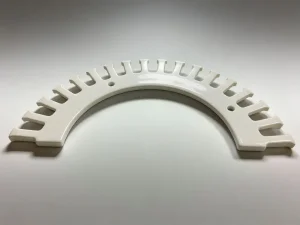
Yes. Qiangguang specializes in tailored advanced ceramic solutions. With CNC precision machining, laser cutting, and custom molds, we can manufacture complex shapes, micro-holes, and tight tolerances according to customer drawings and operational requirements.
Our products are exported worldwide to Italy, the United Kingdom, Australia, Japan, Malaysia, Thailand, Hungary, and many other regions across Europe, North America, and Southeast Asia, supported by comprehensive export documentation and international freight handling.
We execute a strict full-process tracking system covering chemical purity verification, density testing, surface roughness analysis, and ultrasonic flaw detection. Every production batch includes a Certificate of Analysis (COA) to guarantee complete compliance with technical specifications.
High-Density Nitrides, Specialized Oxides, Precision Ceramic Components & Media