
Explore our premier portfolio of high-purity ceramic powders, engineered components, and precision molded products designed for extreme mechanical, thermal, and chemical environments.
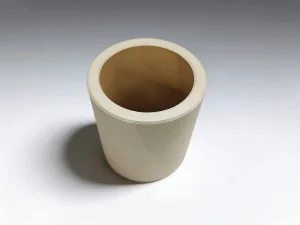
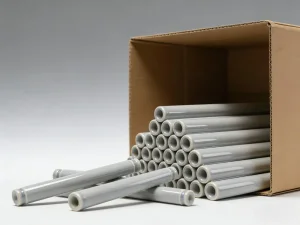
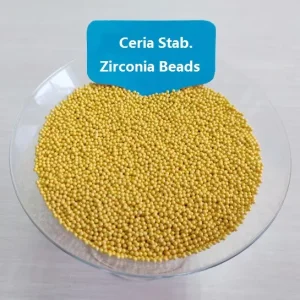
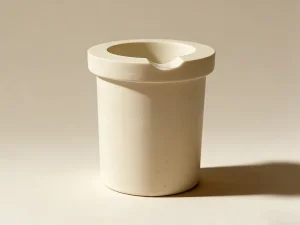
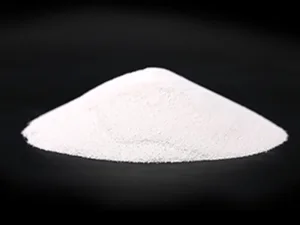
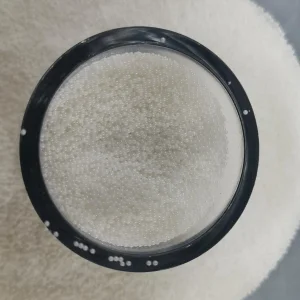
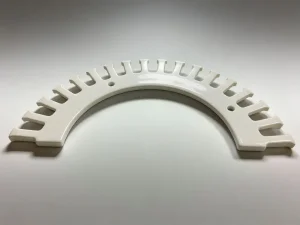
Founded in 2003, Yixing Qiangguang Ceramic Materials Co., Ltd. has established itself as an authoritative leader in the research, development, custom molding, and precision synthesis of technical ceramics.
Founded in 2003, Yixing Qiangguang Ceramic Materials Co., Ltd. is a professional provider dedicated to the research and development (R&D), manufacturing, and application solutions of high-performance advanced ceramic materials. It is among the few enterprises in China that possess a complete industrial chain, covering key links from powder forming, sintering and precision machining to the provision of integrated application solutions.
The company is also a rare domestic manufacturer engaged in the R&D, production, and supply of a comprehensive portfolio of ceramic materials. Its product range covers zirconia, yttria, alumina, magnesia, aluminum nitride, boron nitride, silicon nitride, silicon carbide, aluminum titanate and other key ceramic materials for industrial use.
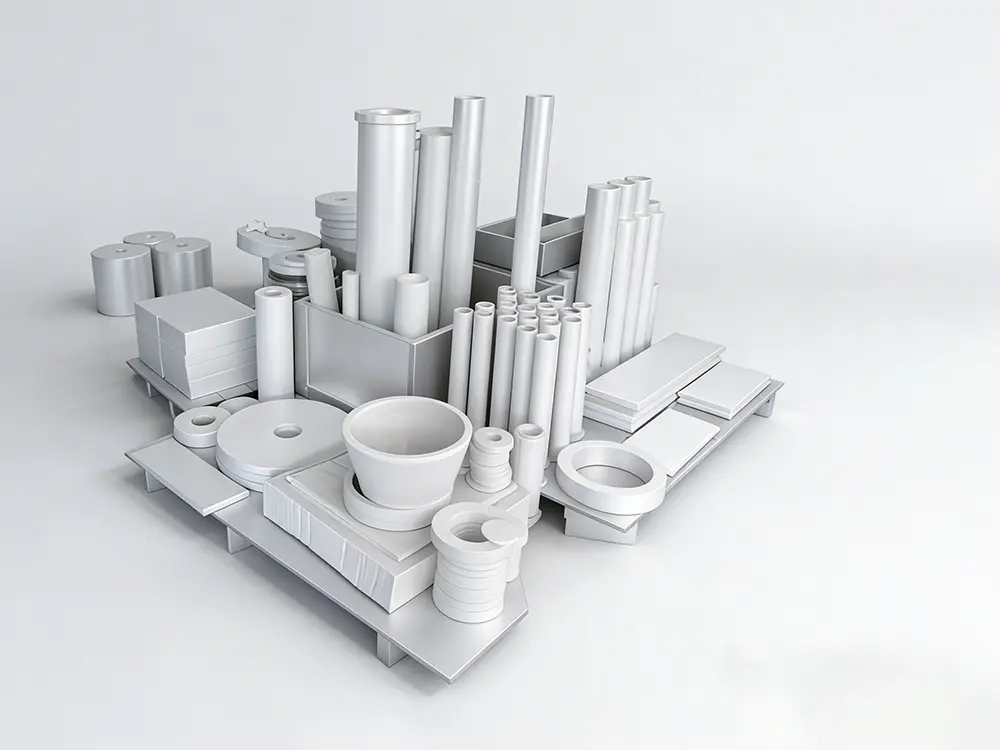
Benefiting from excellent product performance and stable quality, its products are extensively utilized in various high-end fields, such as food and medical industries, new energy vehicles, laser semiconductors, petrochemical engineering, powder metallurgy, national defense and military, as well as aerospace sectors.
Adhering to the core principle of "creating value for customers", Qiangguang provides customized and cost-efficient advanced ceramic solutions tailored to the specific demands of different customers. It is supported by high-quality after-sales services and a strict full-process tracking system, which effectively enhances cooperation efficiency and promotes continuous quality improvement.
At present, the company's products are sold well across the country and exported to Italy, the United Kingdom, Australia, Japan, Malaysia, Thailand, Hungary and other countries and regions. Committed to delivering high-quality products at reasonable prices, Qiangguang sincerely looks forward to establishing long-term and stable cooperative relations with global partners.
Modern industrial molding requires an intimate understanding of crystal lattice mechanics, phase transformation, and dense compaction. China's industrial molding industry has evolved from simple dry pressing to sophisticated multi-axis Ceramic Injection Molding (CIM) and Isostatic Pressing.
| Material Class | Primary Molding Process | Thermal Conductivity | Vickers Hardness (HV) | Key Industrial Applications |
|---|---|---|---|---|
| Yttria-Stabilized Zirconia (YSZ) | Ceramic Injection Molding (CIM), CIP | 2.5 - 3.0 W/m·K | 1200 - 1350 HV | Valve components, wear sleeves, medical implants, structural pins |
| Silicon Nitride (Si3N4) | Hot Isostatic Pressing (HIP), GPS | 30 - 40 W/m·K | 1400 - 1600 HV | Bearing balls, EV motor rotators, high-speed cutting tools |
| Aluminum Nitride (AlN) | Tape Casting, CIP, Vacuum Sintering | 170 - 230 W/m·K | 1100 - 1200 HV | Semiconductor heat sinks, LED substrates, RF power modules |
| Silicon Carbide (SiC) | Reaction Sintering (RBSiC), SSiC | 120 - 200 W/m·K | 2200 - 2600 HV | Mechanical seal rings, armor plates, chemical pump impellers |
| Aluminium Titanate (Al2TiO5) | Slip Casting, Isostatic Molding | 1.5 - 2.0 W/m·K | 800 - 950 HV | Aluminum casting riser tubes, molten metal nozzles, exhaust ports |
Combining plastic injection technology with technical powder metallurgy, CIM allows complex 3D geometric shapes to be produced with high dimensional consistency. It dramatically reduces post-sintering CNC diamond grinding costs.
By applying uniform hydrostatic pressure (exceeding 200 MPa) from all sides, CIP eliminates internal green body density gradients. This results in isotropic shrinkages during high-temperature sintering and exceptional structural integrity.
Next-generation 3D ceramic printing (SLA/DLP) coupled with high-speed green machining allows rapid prototyping without expensive tooling, shortening R&D cycles for complex aerospace components from months to days.
China’s industrial transformation has positioned its advanced ceramic and molding manufacturing ecosystem as the most integrated and resilient globally. By synthesizing upstream mineral processing, chemical synthesis, precision toolmaking, and automated sintering under single geographic clusters, manufacturers deliver unmatched agility.
From raw sub-micron powder preparation (e.g. spray drying, chemical coprecipitation) to micro-scale diamond grinding, complete vertical ownership eliminates third-party dependencies, ensures strict lot-to-lot consistency, and drives down total cost of ownership (TCO).
Deploying AI-driven kiln atmosphere control, optical pyrometry monitoring, and automated thermal profile adjustment guarantees minimal porosity and maximum grain structure density across massive high-volume production runs.
Our flexible manufacturing lines allow rapid transitioning from initial pilot-scale engineering samples (1-10 pcs) to mass production (1,000,000+ pcs) without compromising mechanical tolerances or delivery lead times.
Engineered industrial molding components act as critical performance enablers across demanding operational environments where metals fail due to wear, oxidation, thermal degradation, or electrical breakdown.
Materials: Aluminum Nitride (AlN), High-Purity Alumina ($Al_2O_3$), Silicon Carbide (SiC).
Problem Solved: Rapid heat dissipation requirement in high-power EUV wafer chucks and LED packages.
Performance Gain: Exceptional thermal conductivity (>200 W/m·K) matched with high electrical resistivity and low dielectric loss.
Materials: Silicon Nitride ($Si_3N_4$), Yttria-Stabilized Zirconia (YSZ).
Problem Solved: Electrical erosion in high-RPM motor bearings caused by stray shaft currents.
Performance Gain: Non-conductive, ultra-lightweight hybrid ceramic ball bearings with 5x fatigue lifespan compared to chrome steel.
Materials: Structural Zirconia, Reaction-Bonded Silicon Carbide.
Problem Solved: Severe abrasive slurry wear and corrosive acid attack in chemical dosing pumps.
Performance Gain: Near-zero cavitation erosion, zero corrosion swelling, extending seal life up to 800%.
Materials: Magnesium Oxide (MgO), Boron Nitride (BN), YSZ coatings.
Problem Solved: Thermal barrier isolation under extreme shock and temperatures exceeding 1600°C.
Performance Gain: Superior phase stability and phase-transformation toughening preventing catastrophic crack propagation.
Materials: Aluminium Titanate ($Al_2TiO_5$), Ceria-Stabilized Zirconia.
Problem Solved: Non-wetting requirement against molten aluminum and aggressive slag during continuous casting.
Performance Gain: Low CTE, extreme thermal shock resistance, completely eliminating thermal spalling in nozzles and riser tubes.
Materials: Bio-inert High-Toughness Zirconia Ceramic.
Problem Solved: Prevention of metallic ion leaching and particle contamination during aseptic liquid filling.
Performance Gain: Mirror surface polish ($Ra < 0.01 \mu m$), absolute chemical inertness, full steam sterilization resistance.
Procuring industrial molded ceramics from China requires a structured evaluation framework that balances material selection, tooling investment, tolerance requirements, and international compliance.
Early engineering intervention is vital. Avoiding sharp internal corners, designing uniform wall thickness, and specifying realistic surface roughness ($Ra$) values can reduce molding complexity and lower unit costs by up to 40%.
High-grade hardened steel or tungsten carbide molds for CIM and dry pressing yield millions of cycles. Partnering with suppliers who offer in-house tool design ensures rapid modifications and long-term mold maintenance inclusion.
For automotive and aerospace clients, demanding Advanced Product Quality Planning (APQP), Failure Mode Effects Analysis (FMEA), and full Production Part Approval Process (PPAP) verification ensures zero defective parts reaching assembly lines.
Connecting OEM buyers across Europe, the Americas, and Asia-Pacific with seamless export logistics, certified material origin verification, and dedicated local language technical engineering support.
All manufactured lots conform strictly to ISO 9001:2015 quality management and ISO 14001 environmental frameworks. Full compliance with RoHS 3, REACH SVHC, and FDA bio-compatibility testing is standard for relevant lines.
With direct export hubs serving Italy, the UK, Australia, Japan, Malaysia, Thailand, Hungary, and North America, we offer tailored Incoterms (DDP, CIF, FOB) alongside VMI (Vendor Managed Inventory) buffering options.
Every delivery is accompanied by full CMM dimensional inspection sheets, XRD phase purity analysis, density measurement reports, and laser diffraction grain size distribution profiles.
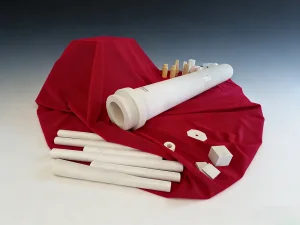
Browse our complete direct factory supply catalog. Click on any product below to examine detailed technical data sheets, powder purity levels, and customization options.
Answers to technical, commercial, and operational questions commonly raised by global procurement directors and materials engineers when selecting Chinese industrial molding suppliers.
Yttria-Stabilized Zirconia (YSZ, typically 3mol% Y2O3) offers extremely high flexural strength (900-1200 MPa) and fine grain size, making it ideal for room-temperature wear parts and sharp edge retention. Magnesium-Stabilized Zirconia (Mg-PSZ), on the other hand, possesses a micro-structural phase system that delivers vastly superior thermal shock resistance and fracture toughness at elevated temperatures (up to 800°C–1000°C), making it preferable for high-heat refractory and metal-forming dies.
CNC Diamond Grinding is a subtractive process applied to fully sintered ceramic blocks. While it achieves sub-micron tolerances, it is slow and expensive for complex shapes. CIM is a net-shape molding process that injects ceramic powder blended with organic binders into complex molds. It dramatically lowers unit cost for high-volume, intricate parts, requiring only minimal final diamond grinding on critical mating faces.
As-sintered ceramic parts typically hold tolerances of ±0.5% to ±1% of nominal dimensions due to sintering shrinkage (typically 15-22%). However, with post-sintering precision diamond grinding, lapping, and honing, we routinely achieve dimensional tolerances of ±0.001 mm (1 micron) with surface roughness as fine as Ra 0.005 μm.
While Alumina is cost-effective, its thermal conductivity is approximately 20–30 W/m·K. Aluminum Nitride provides exceptional thermal conductivity (170–230 W/m·K)—approaching 7 to 8 times that of Alumina—while maintaining identical electrical insulation properties and matching Silicon's Coefficient of Thermal Expansion (CTE), preventing thermal stress fractures in semiconductor packaging.
Every shipment includes a comprehensive Quality Inspection Certificate (COA), material composition analysis via XRF/XRD, density verification reports (Archimedes method), surface roughness test profiles, and dimensional CMM inspection charts. Full material safety data sheets (MSDS) and RoHS/REACH compliance letters are attached to shipping manifests.
Standard prototype tooling and initial sample production generally take between 3 to 5 weeks depending on component complexity and material choice. Rapid green machining prototyping can deliver preliminary samples in as little as 10 to 14 days. Full mass-production runs follow within 2 to 4 weeks post sample approval.
Yes, our in-house engineering team specializes in Design for Manufacturability (DFM). We work directly with client CAD models to optimize wall thicknesses, radius fillets, joint interlocks, and thermal gradient behaviors, ensuring seamless material transition from metals to technical ceramics without compromising structural safety margins.
Yixing Qiangguang operates a fully integrated supply chain. We control the chemical coprecipitation, calcination, and spray-drying processes for our ceramic powders. Every powder batch is tested for grain size distribution (D50/D90 laser diffraction), specific surface area (BET), and chemical purity before entering the molding shop.